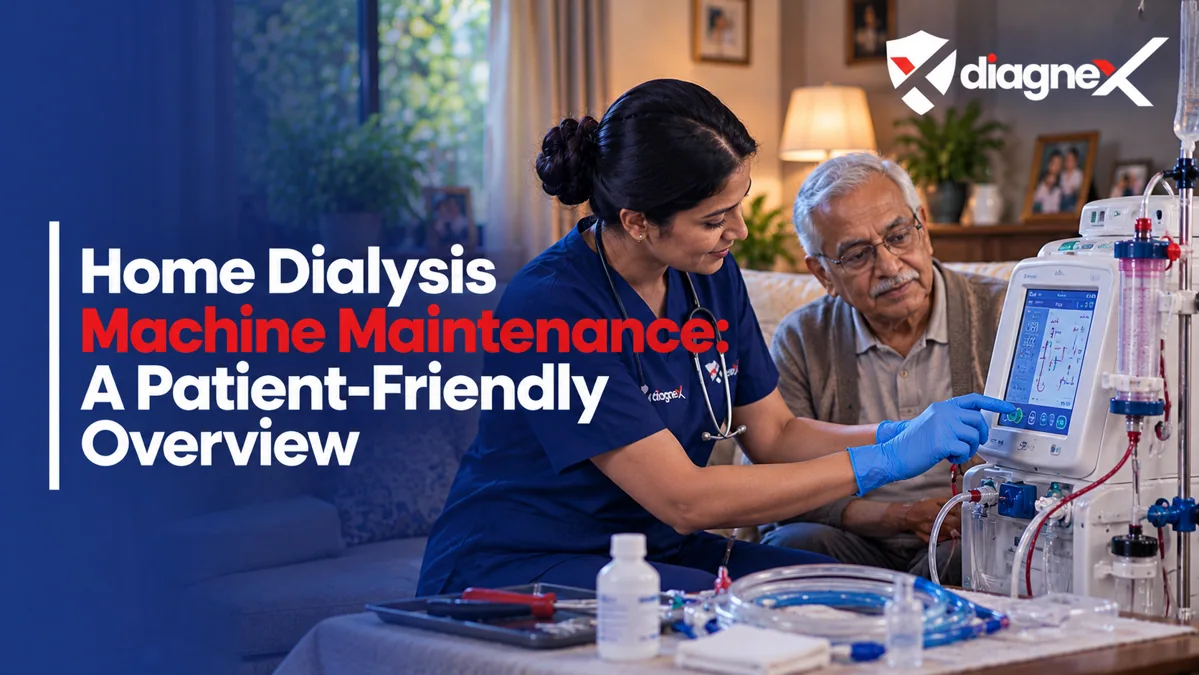
home dialysis machine maintenance is an important part of planning safe home hemodialysis. Families researching dialysis machine maintenance, home dialysis machine cleaning, and home dialysis troubleshooting should understand how these issues connect with home dialysis safety. The exact treatment, equipment and safety process should always follow the patient's nephrology and home dialysis team.
Home dialysis machine maintenance is part of using home hemodialysis safely, but patients and families are not expected to become medical-equipment technicians. The usual goal is to follow the cleaning, disinfection, alarm-response and routine checks taught by the home dialysis programme while leaving internal repairs and preventive servicing to trained technical staff.
The exact maintenance routine depends on the dialysis machine. Different systems use different cleaning cycles, water-treatment components, filters, cartridges and alarm messages, so the manufacturer's instructions and the dialysis provider's training should always take priority over generic advice. A useful way to think about maintenance is to divide it into three levels: what the patient or care partner does around each treatment, what is done periodically as part of the home programme, and what only an authorised technician should do.
What Does Home Dialysis Machine Maintenance Include?
Maintenance is broader than cleaning the outside of the machine. It includes keeping the equipment and treatment area clean, running the correct rinse or disinfection cycles, changing approved consumables when required, watching for leaks or damaged cables, understanding machine alarms and arranging scheduled technical servicing.
For a water-based home hemodialysis setup, maintenance may also extend to the RO or other water-treatment system. That can include filter changes, disinfection, water-quality checks and technical review according to the installed equipment.
What Patients Are Usually Trained to Do
Home hemodialysis training typically teaches patients and care partners how to prepare the machine, respond to alarms, clean the equipment, record treatment information, dispose of used supplies and reorder consumables. These are operational tasks that belong within the home treatment programme rather than informal self-teaching. The exact responsibilities vary by system, but a patient or care partner may be trained to:
- Prepare the machine before treatment
- Complete the required rinse or disinfection routine
- Clean approved external surfaces
- Respond to specific alarms using the trained procedure
- Check supplies and expiry dates
- Record treatment or maintenance information
- Contact the support team when an alarm or fault is outside their training
The important boundary is that routine home care does not mean opening the machine, replacing internal components or attempting electrical repairs. This detail should be confirmed with the home dialysis team because the exact process depends on the patient's machine, vascular access and prescription.
Cleaning After a Dialysis Session
The machine and treatment area usually need attention after every dialysis session. This may include disposing of single-use supplies, wiping approved external surfaces, clearing the treatment area and completing the machine's programmed cleaning or disinfection process.
Patients should use only the products and methods approved for their system. A disinfectant that is suitable for one machine may be inappropriate for another, and household cleaning products can damage equipment or leave unsafe residues if used incorrectly. The home dialysis programme should provide a clear sequence for what happens at the end of treatment so that cleaning is consistent rather than improvised from session to session.
Cleaning Is Not the Same as Disinfection
Cleaning removes visible dirt or residue. Disinfection is intended to reduce microorganisms within or on the equipment according to the machine's validated process. Some systems automate much of this process, while others require the user to start a specific programme or prepare an approved disinfectant.
Families should not assume that wiping the outside of the machine means the dialysis system is fully disinfected. Internal fluid pathways may require their own machine-controlled cycle.
Why the Rinse Cycle Matters
Some dialysis machines use rinse cycles before or after disinfection. These cycles help clear residual cleaning or disinfecting chemicals from internal pathways.
If the machine requires a mandatory rinse, treatment should not begin until that cycle has been completed according to the instructions. Patients should not shorten or bypass a rinse to save time.
External Surface Cleaning
The outside of the machine should be kept clean and free from dust, dried fluid and unnecessary clutter. The approved method usually involves wiping specified surfaces without allowing liquid to enter vents, electrical connections or openings. For more on the practical service arrangements, review dialysis on wheels before deciding what information the care team needs.
The patient should also keep the area under and around the equipment reasonably free from dust. Excess dust can interfere with equipment performance, ventilation or service access.
Keep the Machine Dry and Well Positioned
A home dialysis machine should be positioned away from avoidable water spills, direct heat and conditions that could block ventilation. Cables and tubing should not be crushed under furniture or stretched across walking routes. If the setup includes a separate RO or water-treatment unit, both systems should remain accessible enough for routine inspection and technical servicing.
Protect the Equipment From Children and Pets
Children and pets should not have unsupervised access to dialysis equipment, treatment supplies, tubing or electrical connections. Even when the machine is not running, pulling cables, damaging tubing or contaminating supplies can create safety problems before the next session.
What to Check Before Each Treatment
A brief visual and operational check before treatment can help identify obvious problems early. The patient or care partner should follow the provider's own pre-treatment checklist rather than creating a substitute. Typical checks may include:
- No visible damage to cables or connectors
- No unresolved leaks
- Required consumables are available and within expiry
- The machine has completed required cleaning or disinfection
- The approved water and electrical connections are ready
- There are no unresolved maintenance or alarm messages
Home Dialysis Machine Alarms: What They Mean
Dialysis machines use alarms to warn the user that something needs attention. Some alarms relate to blood flow, pressure, air detection, temperature, water or dialysate conditions, power, sensors or the equipment's own self-checks.
An alarm is not automatically a sign that the machine is broken. Many alarms are designed to stop or pause part of the treatment until the user performs a specific trained check.
The patient should follow the alarm instructions supplied for the exact machine. Guessing, repeatedly silencing alarms or continuing treatment without understanding the cause can create unnecessary risk.
When an Alarm Can Be Managed at Home
Some alarms are expected parts of home dialysis training. For example, the patient may be taught how to check a line, verify a connection or follow an on-screen troubleshooting sequence.
The key rule is to stay within the training. If the alarm does not clear after the approved steps, keeps returning or is accompanied by a clinical problem, the patient should contact the home dialysis support team.
When an Alarm Needs Technical Support
Technical support is appropriate when the machine reports a fault the patient has not been trained to resolve, when the same alarm repeatedly returns, when a required self-test fails or when the machine cannot complete its normal cleaning, disinfection or setup sequence. Patients should not open the machine casing, bypass sensors, alter internal settings or attempt electrical repairs. Those actions belong to authorised service personnel.
What to Do if the Machine Will Not Start
If the machine does not start normally, first follow the machine-specific checks taught during training. These may include confirming power, required connections and whether the machine is in a mandatory cleaning or rinse state. If the cause is not obvious or the machine remains unavailable, contact technical support rather than repeatedly cycling power or attempting unapproved repairs.
What to Do After a Power Cut
A power failure can interrupt treatment, cleaning or disinfection. The correct response depends on the dialysis machine and what stage it was in when power was lost.
Some systems may require a rinse or other recovery process before they can return to service. Patients should follow the machine-specific power-failure procedure and should not assume that treatment can simply restart from the point where it stopped.
What to Do if Water Supply Fails
For systems that depend on household water, loss of water supply or pressure can interrupt treatment and water-treatment functions. The patient should follow the approved interruption procedure and contact the home dialysis team if needed. An unapproved alternative water source should not be connected simply to keep the machine running.
Leaks Around the Dialysis Machine
Any unexpected fluid leak should be taken seriously. The first priority is to follow the provider's trained procedure, protect electrical connections from water and identify whether the machine should be taken out of service.
A recurring leak, internal leak or leak from an uncertain source should be reported to technical support. The patient should not remove panels or attempt to tighten internal fittings.
Blood Leak Alarms
Dialysis machines include systems designed to detect blood where it should not be present in the dialysate pathway. A blood leak alarm therefore requires the exact response taught for the machine.
Patients should follow the device instructions and home dialysis team's procedure rather than trying to override the alarm. Some machines also require specific disinfection after certain blood-leak events.
Repeated Alarms Are a Pattern Worth Reporting
An alarm that clears once may not indicate a lasting equipment problem. An alarm that appears repeatedly across treatments is different. Repetition can signal a connection issue, a component approaching the end of its service life, a water problem or a technical fault. Keeping a simple record of the alarm, time and circumstances can help the technical team identify the cause more efficiently.
Why a Maintenance Log Is Useful
A maintenance log can help families track when cleaning, filter changes, service visits and recurring alarms occurred. It does not need to be complicated; many programmes already provide a paper or digital record. Useful information may include the date, type of maintenance performed, unresolved issue, technician visit and any component replaced.
Scheduled Preventive Maintenance
Preventive maintenance is different from day-to-day cleaning. It involves technical inspections and servicing intended to keep the machine operating within its required performance range. If the family is considering support at home, the Diagnex guide to home nursing explains the service pathway and its limits.
The manufacturer or provider determines the schedule. The machine may also display a maintenance reminder when service is due. A patient should not postpone a required service indefinitely just because treatments still appear to be running normally.
Who Performs Preventive Maintenance?
Preventive maintenance should be handled by authorised technical personnel according to the manufacturer's instructions. It can involve internal checks, component replacement, calibration or other tasks that are not appropriate for patients to perform. Families should know who provides technical servicing, how to book it and whether a backup machine or alternate treatment plan is available if equipment must be taken out of service.
Water-Treatment System Maintenance
If the home setup includes a separate RO or other water-treatment system, it has its own maintenance needs. Depending on the equipment, these may include changing sediment filters, servicing carbon stages, replacing cartridges, disinfecting the system and monitoring water quality. The patient may be responsible for some routine steps after training, but technical servicing and formal water testing may remain with the provider.
Why Filter Replacement Matters
Filters do not work indefinitely. Sediment filters collect particles, carbon eventually becomes exhausted and other cartridges have defined service lives. Delaying replacement can reduce the reliability of the water-treatment pathway even if the machine still appears to function. The replacement schedule should come from the equipment instructions and home dialysis programme, not from visual inspection alone.
Consumables Are Part of Maintenance Planning
Running out of required cartridges, disinfectant supplies, filters or treatment disposables can interrupt home dialysis. Inventory management is therefore part of keeping the treatment system operational. Families should maintain the stock level recommended by the provider, rotate supplies by expiry date and reorder before they reach the minimum reserve level.
Do Not Use Damaged or Expired Supplies
A package that is damaged, wet, contaminated or expired should not be used simply because the patient does not want to miss a session. Contact the provider for replacement instructions. Machine maintenance and supply management work together: a well-serviced machine still cannot be used safely if the required approved consumables are unavailable.
Temperature, Heat and Direct Sunlight
Home dialysis equipment should generally be kept within the environmental conditions specified by the manufacturer. Excessive heat or direct sunlight can affect equipment performance, while poor ventilation can contribute to overheating. Families should not cover vents or place the machine tightly inside enclosed furniture unless the installation instructions specifically permit it.
What if the Machine Makes a New Noise?
A new or unusual sound may be harmless, but it can also indicate a pump, fan or other component behaving differently. If the sound is not explained by the normal treatment sequence, report it rather than ignoring it through repeated sessions. The same applies to new vibration, burning smell, visible overheating or other unusual equipment behaviour.
What if the Machine Is Dropped or Moved?
A machine that has been dropped, struck or moved in a way that may have damaged it should be assessed according to the provider's procedure before the next treatment. Home dialysis equipment should not be casually relocated to another room if doing so changes approved water, drainage or electrical connections.
Moving House With Home Dialysis Equipment
A move to a new home normally requires a new home-readiness assessment because the electrical supply, water quality, water pressure, drainage and room layout can all be different. Families should tell the home dialysis provider before moving the equipment so the new site can be assessed and commissioned appropriately.
Travel and Portable Home Dialysis Equipment
Some home hemodialysis systems are designed with portability in mind, but travel still requires planning. The patient should confirm how the machine is transported, what supplies are needed, whether destination water is acceptable and how technical support will be accessed.
Maintenance routines do not disappear during travel. The machine still needs the cleaning, disinfection and storage conditions specified for that system.
When the Machine Should Be Taken Out of Service
A machine may need to be taken out of service when there is an unresolved technical fault, failed required self-test, persistent leak, damage, repeated alarm that cannot be safely cleared or another condition identified by the manufacturer or provider. The patient should then use the backup treatment plan arranged by the home dialysis programme rather than continuing with equipment that has not been cleared for use.
What Patients Should Never Try to Repair
Patients should not open the machine casing or attempt internal electrical, software, sensor, pump or circuit repairs. They also should not bypass alarms, alter service settings or install unapproved parts.
These restrictions are not because home users are incapable. They exist because dialysis equipment is a medical device whose internal safety systems need controlled servicing and verification after repair.
Maintenance and Infection Prevention
Machine maintenance supports infection prevention, but it is only one part of the process. Safe vascular-access care, hand hygiene, appropriate disinfection and correct handling of consumables remain equally important. A clean machine does not compensate for poor access technique, and good access care does not compensate for missed equipment disinfection.
When a Clinical Problem Is Not a Machine Problem
Dizziness, chest pain, breathlessness, loss of consciousness, severe weakness or another serious symptom during dialysis should not be treated as a technical troubleshooting problem. The patient should follow the emergency procedure taught by the dialysis team and seek urgent medical care when indicated. Technical support can address the machine, but it cannot replace clinical assessment.
Questions to Ask the Home Dialysis Provider
Families should understand the maintenance plan before the first home treatment. Useful questions include:
- Which cleaning steps do we perform after every treatment?
- What disinfection cycle does this machine require?
- Which filters or cartridges will we change ourselves?
- Who performs scheduled preventive maintenance?
- Which alarms are we expected to troubleshoot?
- When should we stop treatment and call support?
- Is technical support available outside normal hours?
- What happens if the machine must be taken out of service?
A Simple Home Dialysis Machine Maintenance Checklist
A patient-friendly routine can be summarised as follows: For home dialysis machine maintenance, the safest approach is to follow the programme's training and the selected equipment instructions rather than improvise at home. This point is part of home dialysis machine maintenance, and the exact home procedure should follow the patient's dialysis programme and selected equipment.
- Follow the trained cleaning and disinfection schedule
- Keep the machine and surrounding area clean and dry
- Check for visible damage, leaks or unusual behaviour
- Use only approved supplies and cleaning products
- Complete required rinse cycles fully
- Track recurring alarms and report unresolved faults
- Replace approved filters or consumables on schedule
- Attend scheduled preventive maintenance
- Keep technical and clinical support contacts accessible
This checklist is only a framework. The machine-specific instructions and home dialysis programme should remain the operational guide. For care planning beyond this article, compare kidney care with the instructions already given by the treating professional.
The Bottom Line
Home dialysis machine maintenance is mainly about consistency and boundaries. Patients and care partners handle the routine cleaning, disinfection, supply checks and alarm responses included in their training, while authorised technicians handle preventive servicing and internal repairs.
Home dialysis machine alarms should be taken seriously but not feared. Many are designed to guide the user through a trained safety check. The important question is whether the alarm clears after the approved steps. If it does not, treatment should not continue by guesswork. The safest home dialysis setup is one where the family knows what to clean, what to check, what to record, when to call technical support and when a clinical symptom needs urgent medical attention instead of machine troubleshooting.
Frequently Asked Questions
How often should a home dialysis machine be cleaned?
The cleaning routine is machine-specific. Many systems require cleaning or disinfection after treatment and may also have scheduled maintenance cycles. Follow the exact schedule taught by the home dialysis programme.
Can I clean a dialysis machine with household disinfectant?
Do not use an unapproved household product on or inside the machine. Use only the cleaning and disinfection products and methods specified for the equipment.
What should I do when my home dialysis machine alarms?
Follow the machine-specific alarm steps taught during training. If the alarm does not clear, keeps returning or is accompanied by a clinical problem, contact the home dialysis support team.
Can I repair my home dialysis machine myself?
Routine user maintenance may be part of training, but internal electrical, mechanical, software or sensor repairs should be handled by authorised service personnel. This is also part of routine home dialysis safety, so any uncertainty should be clarified with the treating or home dialysis team before the next treatment.
What happens if the machine needs servicing before my next dialysis session?
Contact the home dialysis programme. The team should guide you on technical service and the backup treatment plan if the machine cannot be used safely.
Does the home RO system also need maintenance?
Yes. If the setup uses an RO or another water-treatment system, filters, cartridges, disinfection and technical checks may be required according to the equipment and programme.
Should I keep a record of machine alarms and maintenance?
Yes. A simple log can help the provider identify recurring problems and track service, filter replacement and other maintenance events.
When should I stop trying to troubleshoot and seek medical help?
Serious patient symptoms such as chest pain, severe breathing difficulty, loss of consciousness or sudden severe weakness require clinical or emergency attention. They should not be managed as equipment problems.
This point should be confirmed with the home dialysis team because the exact process can vary by patient, machine and programme..
Related Diagnex guides
Explore Home Dialysis services, other Home Dialysis guides and Home Dialysis Machine Price in India: What Patients Need to Know.
Diagnex publishes general healthcare information to support care planning. Individual decisions about diagnosis, prescriptions and treatment remain with the treating professional. Read our medical content policy and editorial standards.