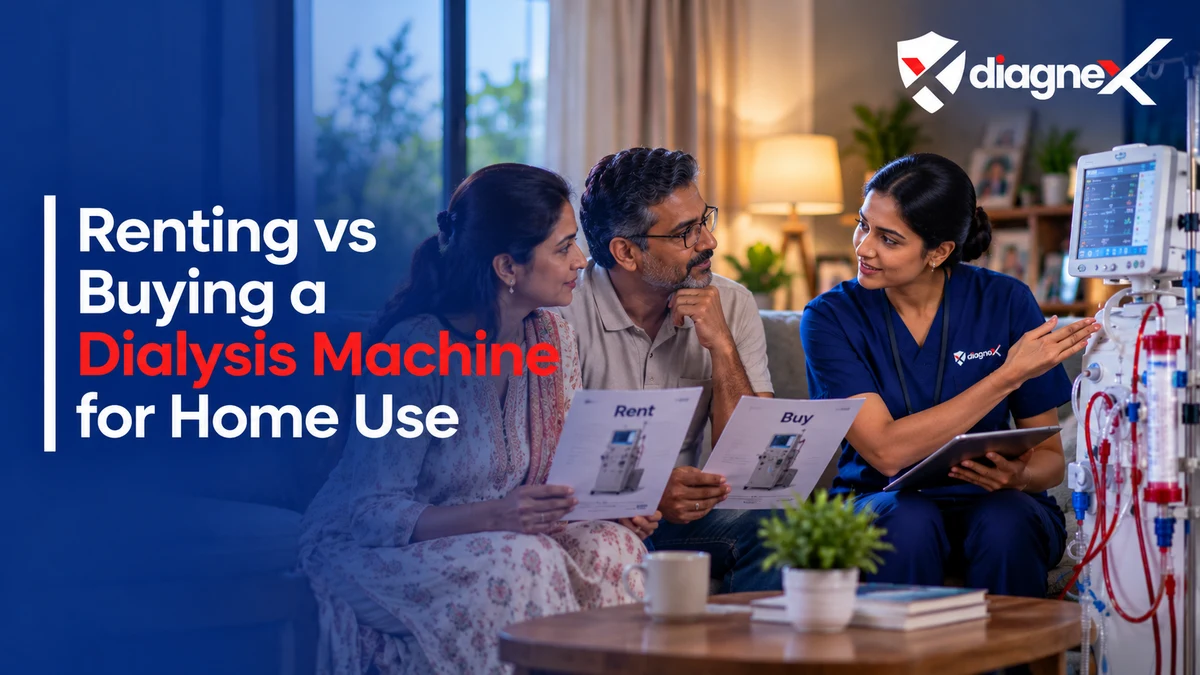
Families planning home hemodialysis may be offered different equipment models: buying the dialysis machine, renting it, leasing it, or using a managed home-dialysis programme in which the machine remains part of the provider's service. The lowest upfront option is not automatically the lowest long-term cost, and owning the machine is not automatically better than renting it. The right choice depends on the patient's prescribed dialysis programme, expected duration of home treatment, maintenance responsibilities, consumable availability, technical support, water-treatment requirements and what happens if the machine breaks down. This guide explains how to compare dialysis machine rental with purchase for home use without treating the equipment decision separately from the patient's clinical care plan.
Renting vs Buying a Dialysis Machine: What Is the Main Difference?
- The family or patient generally pays a larger upfront amount
- The machine may become the family's asset
- Maintenance responsibility depends on the warranty and service contract
- Long-term ownership costs need to be planned
- Upfront equipment cost may be lower
- The machine remains owned by the provider or equipment company
- A recurring rental or programme fee may apply
- Maintenance and replacement support may be included depending on the contract
There Is No Universal Best Option
- How long home dialysis is expected to continue
- Whether the patient may return to in-centre dialysis
- Whether the dialysis schedule may change
- Whether the provider includes maintenance and replacement equipment
- How reliable the local service network is
- Whether the family wants to manage equipment ownership
Before Comparing Rental and Purchase, Confirm Clinical Suitability
- The prescribed dialysis schedule
- Vascular-access suitability
- Home water and electrical requirements
- Who will perform or supervise treatment
- Emergency and backup dialysis arrangements
1. Upfront Cost
Buying a machine generally involves a larger upfront equipment payment than a rental model. Rental or managed-service models may reduce the initial equipment expense but replace it with recurring fees. Families should compare:
- Initial payment
- Security deposit where applicable
- Installation charges
- Monthly rental or programme fees
- Contract duration
2. Monthly or Recurring Cost
- Rental or lease charge
- Maintenance plan
- Technical-support charges
- Consumables
- RO or water-treatment servicing
- Utilities
3. Total Cost Over Time
- Expected duration of home dialysis
- Total rental payments over that period
- Purchase price
- Maintenance and repair costs
- Replacement or upgrade risk
4. Maintenance Responsibility
Maintenance responsibility is one of the most important differences between equipment models. In a rental or managed programme, maintenance may be included, but families should confirm this in writing. For a purchased machine, families should clarify:
- Warranty coverage
- Annual maintenance contract options
- Preventive maintenance schedule
- Cost of service visits
- Cost of replacement parts
5. What Happens if the Machine Breaks Down?
- Who provides technical support?
- How is a fault reported?
- Is on-site service available?
- Is a replacement machine available if repair is delayed?
- Who pays for replacement transport and installation?
- Where will the patient receive dialysis while the machine is unavailable?
6. Warranty
- Warranty duration
- Parts covered
- Labour covered
- Home service visits
- Exclusions
- Costs after the warranty ends
7. Service Contract After Warranty
- Annual maintenance contract
- Parts replacement
- Emergency repairs
- Technician travel
8. Consumables Are Usually Separate From Ownership
- Dialyser
- Blood-line set
- Access-related supplies
- Machine-specific cartridges or disposable components
- Cleaning and disinfection supplies
9. Consumable Compatibility Can Affect Long-Term Cost
- What consumables are required per treatment?
- Are they reliably available locally?
- Are they included in the session package?
- What happens if the usual consumable is out of stock?
10. RO and Water-Treatment Equipment May Be Separate
- What water-treatment system the machine requires
- Who owns the RO system
- Whether the RO is rented, purchased or bundled
- Who maintains it
- Who pays for filters and membranes
11. Plumbing and Electrical Work Usually Remain Home Setup Costs
- Water connection
- Drainage
- Electrical work
- Earthing
- Dedicated circuit where required
- Power backup
12. Installation and Removal Charges
- Delivery
- Installation
- Commissioning
- Technical testing
13. Flexibility if the Patient Returns to In-Centre Dialysis
- Change in medical stability
- Vascular-access problems
- Change in patient preference
- Change in family or staffing support
- Home infrastructure problems
14. Flexibility if the Dialysis Prescription Changes
A patient's dialysis schedule or equipment needs may change over time. Rental may offer more flexibility when the provider can change or replace equipment within the programme. With a purchased machine, families should confirm whether the equipment can support foreseeable changes in:
- Treatment frequency
- Session duration
- Home-dialysis model
- Monitoring requirements
15. Risk of Owning Equipment That Is No Longer Needed
- Move back to centre-based treatment
- Receive a transplant
- Change dialysis modality
- Move to a different home or care setting
- Require a different machine or support model
16. Rental Contract Duration
- Minimum rental period
- Notice period
- Early termination charges
- Deposit refund terms
- Responsibility for equipment damage
- Charges for relocation
17. Security Deposits and Advance Payments
- Is the deposit refundable?
- What deductions can be made?
- When is the refund processed?
- What condition must the machine be returned in?
18. Relocating the Machine
- Who disconnects the machine
- Who transports it
- Who reinstalls it
- Whether the new home's water and electrical systems require reassessment
- What relocation charges apply
19. Ownership and Resale Value
A purchased machine becomes an asset only if the family has the legal right to own and later transfer or resell it under the applicable supplier arrangement. Families should not assume that resale will recover a significant part of the purchase cost. Resale practicality can be affected by:
- Machine age
- Service history
- Technical support
- Parts availability
- Buyer requirements
20. Replacement and Technology Changes
- How long the model is expected to be supported
- Whether spare parts are likely to remain available
- Whether software or hardware updates are required
- What happens if the provider later changes its supported machine platform
When Renting May Be More Practical
- The family wants lower initial equipment expenditure
- The expected duration of home dialysis is uncertain
- The patient may return to in-centre dialysis
- Maintenance and replacement support are included
- The family prefers not to manage long-term equipment ownership
- The provider offers a clear supported rental programme
When Buying May Be More Practical
- Long-term home dialysis is expected
- The family can manage the larger upfront cost
- A reliable service network is available
- Consumables and spare parts are consistently available
- The machine is suitable for the patient's expected treatment needs
- The total ownership cost compares favourably with long-term rental
When Neither Rental nor Purchase Should Proceed Yet
- Home-hemodialysis eligibility has not been confirmed
- The dialysis prescription is still unclear
- Vascular-access problems are unresolved
- The home assessment has not been completed
- Water and electrical requirements are unknown
- There is no reliable technical-service plan
- Backup dialysis arrangements are not established
Rental vs Purchase: Compare the Whole Care System
- Machine cost
- RO and water treatment
- Installation
- Maintenance
- Breakdown replacement
- Consumables
- Professional staffing
- Technical support
- Backup dialysis
- Contract flexibility
How to Compare the Financial Side
- Deposit or advance
- Monthly rental or programme fees
- Installation charges
- Maintenance not included in the rental
- Removal or relocation charges
- Early termination costs
- Machine purchase price
- Installation
- Warranty limitations
- Maintenance contract
- Repairs and parts
- Potential replacement or upgrade cost
Do Not Forget the Costs That Are the Same in Both Models
- Dialysis consumables
- RO or water-treatment servicing
- Electricity
- Water
- Professional dialysis staffing where required
- Laboratory tests
- Nephrologist follow-up
- Vascular-access care
- Backup dialysis
What to Check in a Dialysis Machine Rental Agreement
- Exact machine model
- Rental period
- Monthly or session-based rental charge
- Deposit
- Installation
- Maintenance
- Breakdown support
- Replacement equipment
- Damage responsibility
- Relocation
- Termination
- Machine removal
- Items explicitly excluded
What to Check Before Buying a Dialysis Machine
- Nephrologist approval
- Compatibility with the prescribed treatment
- Water-treatment requirements
- Electrical and backup-power requirements
- Consumable availability
- Installation support
- Warranty
- Maintenance contract
- Spare-parts availability
- Local technician coverage
- Breakdown backup plan
Can Families Rent a Dialysis Machine and Arrange Treatment Separately?
- Nephrologist supervision
- A prescribed dialysis schedule
- Vascular-access plan
- Trained treatment support
- Consumables
- Water treatment
- Monitoring
- Emergency and backup dialysis arrangements
Does Renting Include a Dialysis Nurse or Technician?
Not necessarily. Machine rental and professional dialysis staffing are separate service components unless the provider clearly bundles them. Families should ask whether the quoted programme includes:
- Dialysis professional
- Staff travel
- Monitoring
- Documentation
- Backup staffing
Does Rental Include the RO Plant?
- Included in the machine rental
- Rented separately
- Purchased separately
- Included in a managed home-dialysis programme
Does Buying Include Installation and Training?
Not always. A purchase quote may include the machine only, while installation, commissioning, water setup, training and service contracts are charged separately. Families should ask for an itemised equipment and setup quotation.
Rental vs Buying for Elderly or Bedridden Patients
- Professional dialysis staffing
- Positioning and mobility support
- Reliable equipment replacement
- Emergency transfer
- Continuity if the patient's condition changes
Questions to Ask Before Choosing Rental or Purchase
- How long is home dialysis expected to continue?
- Could the patient reasonably return to in-centre dialysis?
- What is the total rental cost over the expected period?
- What is the total purchase and maintenance cost over the same period?
- Who pays for repairs?
- Is a replacement machine provided during breakdowns?
- Are installation and removal included?
- Is the RO system included?
- Are consumables included?
- What are the termination terms?
- What happens if the patient moves?
- What happens if the dialysis prescription changes?
Rental vs Purchase Comparison Checklist
- Upfront payment
- Recurring equipment cost
- Deposit
- Installation
- Maintenance
- Warranty
- Repair cost
- Replacement-machine support
- RO and water treatment
- Consumables
- Technical support
- Contract flexibility
- Relocation
- Exit or termination cost
- Expected duration of home use
The Better Option Is the One That Keeps the Treatment Supported
Renting can reduce the initial equipment burden and may offer more flexibility, while buying can make financial sense for some patients who expect long-term home dialysis and have reliable maintenance support. The decision should be based on the complete supported care system rather than machine ownership alone. The most important questions are whether the equipment matches the nephrologist's prescription, can be serviced reliably, has compatible consumables, and has a clear backup plan if it cannot be used. Families considering Home Hemodialysis can speak with Diagnex to understand the assessment, home-readiness and care-planning process and discuss appropriate equipment and service models for their locality, subject to nephrologist approval, clinical suitability and service availability.
Frequently Asked Questions
Is it better to rent or buy a dialysis machine for home?
There is no universal best option. Renting may reduce upfront cost and offer flexibility, while buying may be more practical for some long-term users. The total cost, maintenance, breakdown support and expected duration of home dialysis should be compared.