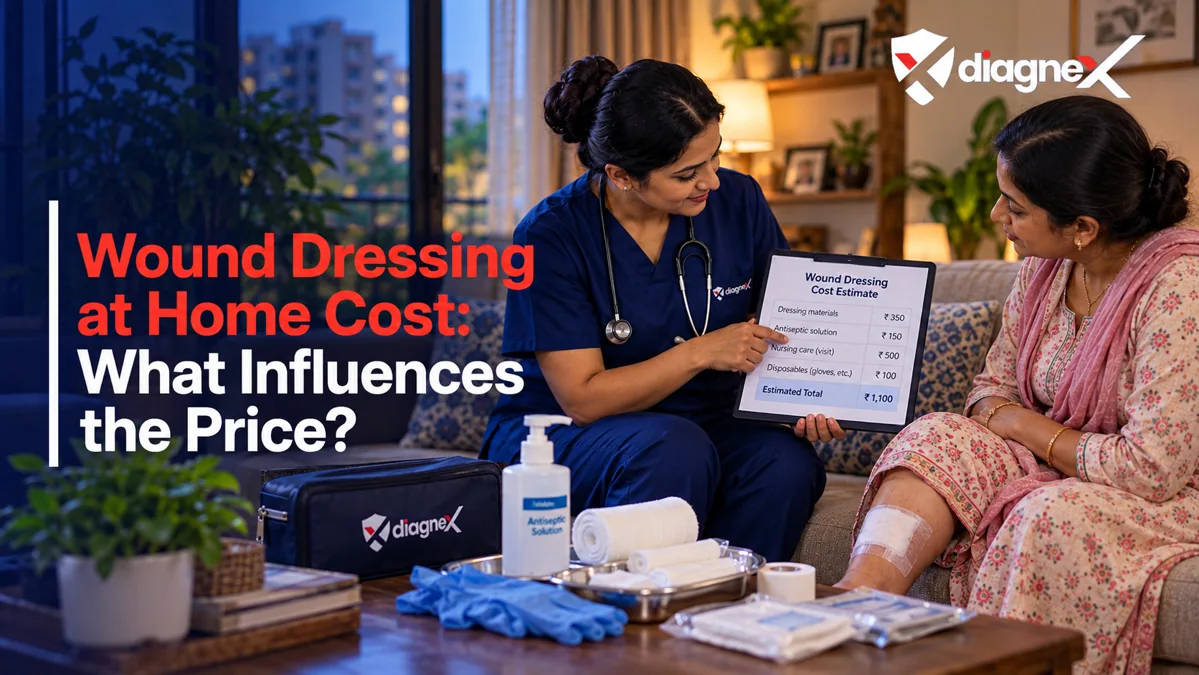
The cost of wound dressing at home can vary significantly because not every wound requires the same level of nursing time, dressing material, frequency of visits, or clinical supervision. A simple post-procedure dressing may be relatively straightforward, while a deep bedsore, diabetic foot wound, infected wound, or complex surgical wound may need more time, specialised consumables, repeated assessment, and closer coordination with the treating doctor.
For related context, read IV Drip at Home Cost: What Changes the Price? and Suture Removal at Home Cost: What Affects the Price?.
For related context, read IV Drip at Home Cost: What Changes the Price? and Suture Removal at Home Cost: What Affects the Price?.
For families comparing wound dressing at home cost, the most useful question is not only, "What is the price per visit?" It is also, "What does this wound actually require?"
A proper estimate should consider the wound type, dressing plan, consumables, expected visit duration, frequency, location, and whether additional procedures such as debridement, suture removal, drain care, or broader nursing support are needed. Diagnex should confirm the final charge only after reviewing the actual requirement rather than applying one flat rate to every wound.
Why Wound Dressing at Home Does Not Have One Fixed Price
A wound dressing visit can range from a short, routine procedure to a more involved clinical visit. The price changes because the workload and material requirements are different.
For example, a small clean wound that needs basic cleaning and a simple dressing is not equivalent to: • a large pressure ulcer; • an infected wound with heavy drainage; • a diabetic foot ulcer; • a deep post-surgical wound; • a wound requiring packing; • a wound needing debridement; • a wound managed with advanced dressings; • a patient requiring repeated nursing visits.
This is why wound dressing quotes should be based on the individual case.
The Main Factors That Influence Wound Dressing at Home Cost
1. Type of Wound
The wound itself is one of the biggest cost drivers. A minor wound, surgical incision, bedsore, diabetic ulcer, burn, infected wound, and chronic non-healing wound can all require different techniques and supplies.
Diagnex's Wound Care and Dressing service covers wound dressing as a clinical procedure, while more specific pathways such as Bedsore and Pressure Ulcer Care or Wound Debridement may be more appropriate for complex cases.
2. Size and Depth of the Wound
A small superficial wound generally requires less time and fewer materials than a large or deep wound. Larger wounds may require more gauze, larger dressings, more cleansing solution, additional protective layers, and longer procedure time.
Depth also matters. A wound that needs packing, cavity management, or detailed assessment is more complex than a flat surface wound.
3. Dressing Materials and Consumables
Consumables can materially affect the total cost. Some wounds need only basic materials such as saline, gauze, gloves, tape, and a simple dressing. Others may require foam dressings, alginates, hydrocolloids, antimicrobial dressings, collagen products, cavity dressings, or other specialised materials.
Published home-care providers in India commonly separate nursing charges from consumable costs, and some charge wound materials at actual cost or MRP. This is one reason two dressing visits that take the same amount of nursing time can have different final prices. For more on the practical service arrangements, review wound care at home before deciding what information the care team needs.
4. Frequency of Dressing Changes
A wound that needs dressing once or twice a week will have a very different monthly cost from a wound that needs daily care.
The treating professional should decide the dressing frequency based on the wound, drainage, infection risk, dressing product, and treatment plan. More frequent dressing is not automatically better. The important point is to follow the clinical schedule rather than changing dressings unnecessarily.
5. Time Required for Each Visit
A straightforward dressing may take relatively little time. A complex wound may require wound inspection, measurements, careful removal of the old dressing, cleansing, packing, documentation, pressure-relief advice, and communication with the treating clinician.
Longer or more complex visits can therefore cost more than a short routine dressing.
6. Nurse Skill and Clinical Complexity
Some wounds can be managed through routine nursing care. Others need a nurse who is experienced with complex wounds, diabetic foot care, pressure ulcers, post-surgical wounds, drains, or advanced dressings.
The professional level required may influence the cost. The goal should be to match the nurse's skill level to the actual wound rather than choosing solely on price.
7. Location and Travel
Home nursing services involve travel time as well as procedure time. The patient's locality, distance, traffic conditions, urgency, and requested visit timing can affect availability and pricing.
This is especially relevant when repeated visits are required over several days or weeks.
8. Same-Day, Early-Morning, Late-Evening, or Urgent Visits
Urgent or time-specific visits may be priced differently from routine scheduled visits because staffing and travel arrangements can be more difficult.
Families should mention timing requirements while requesting a quote so that the estimate reflects the actual need.
How Much Does a Nurse Charge for Wound Dressing at Home?
There is no single market price that applies across India. Published rates from home-care providers vary by city, wound complexity, visit duration, professional qualification, and whether consumables are included.
For Diagnex, the more responsible approach is to confirm the cost after reviewing: • wound type; • wound size and depth; • dressing instructions; • dressing materials required; • visit frequency; • locality; • whether the patient needs only a procedure visit or broader nursing support.
This avoids quoting a misleading flat figure for very different clinical situations.
What Is Usually Included in a Wound Dressing Visit?
The exact scope should be confirmed before booking. A wound dressing visit may include: • review of available wound-care instructions; • removal of the old dressing; • wound and surrounding skin observation; • prescribed cleansing; • application of the new dressing; • basic infection-control measures; • documentation of wound changes; • advice on when the next dressing or medical review is due.
Depending on the service arrangement, consumables may be included, supplied by the family, or charged separately.
What May Be Charged Separately?
Items that may be separate from the basic nursing visit can include: • specialised dressing materials; • antimicrobial dressings; • large-volume consumables; • wound packing materials; • prescribed topical products; • debridement; • suture or staple removal; • surgical drain care; • negative-pressure wound therapy supplies; • doctor consultation; • urgent or unusual visit timing.
Families should ask for clarity on what is included before confirming repeated visits.
Bedsore Dressing Cost at Home
Bedsore dressing cost can be higher than a simple wound dressing because pressure ulcers may require more detailed wound assessment, larger dressings, repeated visits, pressure-relief planning, and specialised wound products.
The cost also depends on the stage and size of the pressure ulcer, drainage, infection, tissue condition, and whether debridement is required.
Bedsore treatment should not focus only on dressing. Pressure relief, repositioning, skin protection, moisture management, and nutrition are also important. Families managing a pressure injury can review Diagnex's Bedsore and Pressure Ulcer Care pathway.
Surgical Wound Dressing Cost at Home
Surgical wound dressing cost depends on the type of operation, size and location of the incision, whether the wound is closed or open, whether stitches or staples are present, drainage, infection risk, and the prescribed dressing.
A straightforward clean incision may require a simpler visit. A wound that has opened, become infected, or requires packing may need more involved care and medical review. If the family is considering support at home, the Diagnex guide to home nursing explains the service pathway and its limits.
Patients who need broader recovery support can also consider Post-Operative Care at Home rather than arranging each procedure separately.
Diabetic Wound Dressing Cost
Diabetic foot wounds often require more than routine dressing. Regular wound review, pressure relief, circulation assessment, infection monitoring, and specialised dressings may all influence the total cost.
The cost should therefore be considered in the context of the complete treatment plan, not only the dressing visit.
A wound that is not improving may need additional medical assessment rather than simply more frequent dressing.
Infected Wound Dressing Cost
An infected wound may require repeated dressing, but the infection itself may also need antibiotics, drainage, debridement, cultures, or medical review.
The total care cost can therefore be higher than the dressing charge alone.
If redness, swelling, pain, pus-like drainage, odour, fever, or wound deterioration is increasing, medical review should take priority over comparing the price of another routine dressing.
How Debridement Affects Wound Care Cost
Wound debridement is a separate clinical intervention from routine dressing. If dead or damaged tissue needs to be removed, the procedure may require additional professional skill, time, consumables, pain management, and follow-up.
Diagnex's Wound Debridement service should be considered only when debridement has been clinically advised and the wound is appropriate for the planned setting.
Single Visits Versus Repeated Wound Care
The cost structure can differ depending on whether a patient needs one dressing or a series of visits.
A single post-procedure dressing may only require one visit. A chronic wound may require repeated care over several weeks.
When repeated nursing is needed for wound care as well as medicines, monitoring, mobility support, catheter care, or other needs, Home Nursing Services may be more practical than arranging every task as a separate visit.
How to Compare Wound Dressing Quotes Properly
The lowest per-visit price is not always the lowest overall cost. When comparing providers, ask: • Is the nurse visit included? • Are consumables included or separate? • Which dressing materials are being used? • Is wound assessment included? • Is documentation included? • Is the nurse qualified for the wound type? • Is travel included? • Are urgent timing charges separate? • What happens if the wound deteriorates? • Is doctor coordination available when required? • Is debridement or another procedure being quoted separately?
A clear quote is more useful than a single headline price.
Why Very Cheap Wound Dressing Can Be a False Economy
Wound care involves infection control, appropriate materials, correct technique, and recognition of complications. A low price is not useful if the wound is repeatedly dressed without proper assessment, if the wrong materials are used, or if worsening infection is missed.
The right objective is safe and appropriate care at a transparent price, not simply the cheapest visit.
Can Families Reduce Wound Care Costs Safely?
Some costs can be managed without compromising care.
Families can: • keep prescribed consumables organised and avoid unnecessary wastage; • schedule routine visits in advance where possible; • follow the recommended dressing frequency rather than changing dressings unnecessarily; • protect the dressing from becoming wet or contaminated; • follow pressure-relief or offloading instructions; • report deterioration early before the wound becomes more complex; • clarify whether recurring nursing needs can be consolidated into a broader care plan.
Cost-saving should never involve reusing dressings, skipping necessary reviews, or substituting prescribed materials without approval.
What Information Is Needed for an Accurate Wound Dressing Quote?
Before requesting a quote, keep the following information ready: • type of wound; • wound location; • approximate size; • whether it is superficial or deep; • current dressing instructions; • dressing frequency; • dressing materials prescribed; • whether there is infection, drainage, odour, or bleeding; • whether debridement is required; • whether stitches, staples, or a drain are present; • patient locality; • preferred visit timing; • whether additional nursing support is needed. For care planning beyond this article, compare surgery dressing at home with the instructions already given by the treating professional.
The more complete the information, the more accurate the quote can be.
How to Request a Wound Dressing Cost From Diagnex
To receive a wound dressing at home cost estimate, share the wound details, dressing instructions, locality, expected frequency, and any specific consumables or procedures required.
Diagnex can review the requirement and route the enquiry to the appropriate Clinical Procedures at Home or nursing pathway. The final price should be confirmed based on the actual care requirement rather than a generic rate.
For a service quote, use the Diagnex Contact page.
Frequently asked questions
What affects wound dressing at home cost?
The main factors are wound type, size, depth, complexity, dressing materials, nurse skill level, visit duration, frequency, locality, and whether additional procedures are required.
Are dressing materials included in the cost?
This depends on the service arrangement. Some providers include basic consumables, while specialised dressings may be charged separately. Confirm this before booking.
Why does bedsore dressing cost more than a simple dressing?
Pressure ulcers can require larger or specialised dressings, more detailed assessment, repeated visits, pressure-relief planning, and sometimes debridement.
Why can surgical wound dressing cost vary?
The price depends on incision size, wound condition, dressing type, drainage, infection, whether packing is needed, and whether stitches, staples, or drains are involved.
Is daily wound dressing always necessary?
No. Dressing frequency depends on the wound and the clinical plan. Some dressings can stay in place longer, while others need more frequent changes.
Does a more expensive dressing always heal a wound faster?
No. The dressing needs to match the wound. A specialised product is useful only when it is clinically appropriate.
Can Diagnex give a wound dressing quote before the visit?
A quote can be more accurate when the wound type, locality, dressing frequency, and required consumables are known. Complex wounds may need further clinical information before the final charge is confirmed.
Pricing Note
This article explains the factors that influence wound dressing cost and does not publish a fixed Diagnex tariff. Service charges should be confirmed for the individual requirement because wound complexity, consumables, location, and visit frequency can vary.
Related Diagnex services and guides
Explore the Clinical Procedures service pathway and the Clinical Procedures article library for more information.
Diagnex publishes general healthcare information to support care planning. Individual decisions about diagnosis, prescriptions and treatment remain with the treating professional. Read our medical content policy and editorial standards.