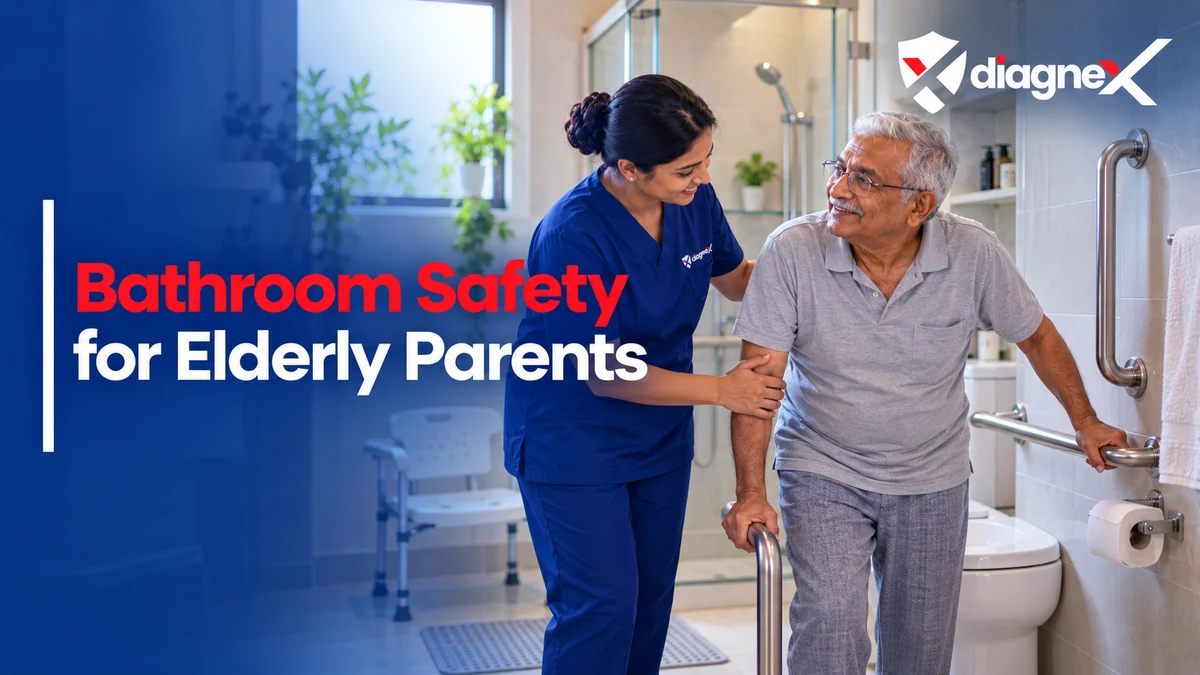
Age-related changes in balance, strength, vision and mobility can make ordinary bathroom routines more difficult.
Diagnex1895 words
Bathrooms can be one of the highest-risk areas in the home for elderly parents because they combine wet surfaces, confined spaces, transfers, changes in floor level and activities that often require bending or standing for longer periods. Bathroom safety for elderly people should therefore focus on more than simply adding a grab bar. A safer setup considers flooring, toilet and shower transfers, lighting, layout, night-time access, footwear and whether the older person needs assistance from a caregiver.
Why Bathroom Safety Matters for Elderly Parents
Age-related changes in balance, strength, vision and mobility can make ordinary bathroom routines more difficult. Common bathroom risks include: A useful bathroom safety plan should be based on how the person actually moves and transfers rather than on a generic list of products.
Wet or slippery flooring
Stepping over a high shower threshold
Standing for too long while bathing
Low toilet height
Poor lighting
Loose bath mats
Reaching for unstable towel rails
Rushing because of urgent toileting
1. Start With a Bathroom Safety Assessment
Watch how the elderly parent uses the bathroom during a normal routine. Look at: These observations help identify which changes are actually necessary.
How they enter and exit
Whether they hold onto furniture or walls
How they sit and stand from the toilet
How they enter the shower
Whether they become tired while bathing
Whether they rush
Whether a caregiver needs space to assist
2. Reduce Slipping on Wet Floors
Wet flooring is one of the most obvious bathroom hazards. Anti slip flooring for elderly people can help improve grip, but it should not create raised edges or loose material that becomes a new trip hazard. Families should also:
Dry spills promptly
Avoid loose bath mats
Keep soap and water from pooling
Use stable surfaces near the shower and toilet
3. Use Grab Supports Appropriately
Grab bars can make transfers safer when they are securely installed and positioned for the individual. Potential locations include: The exact height and placement should match how the person stands, sits and transfers. A towel rail should not be treated as a substitute for a properly installed support bar.
Beside the toilet
Near the shower entrance
Inside the shower
Near a bathtub if one is still used
4. Make Toilet Transfers Safer
Standing from a low toilet can be difficult for someone with weak legs, arthritis or poor balance. Depending on the person, safety changes may include: If transfers are becoming increasingly difficult, a physiotherapist or occupational therapist may help recommend safer techniques or equipment.
Secure grab support
A raised toilet support
More space for caregiver assistance
Removing nearby clutter
5. Make Shower Entry and Exit Safer
Shower thresholds, wet surfaces and stepping over edges can increase fall risk. Review:
Whether there is a high step into the shower
Whether secure support is available
Whether the person can turn safely
Whether a caregiver can assist without crowding the space
6. Consider a Shower Seat When Appropriate
A stable shower seat can reduce the need to stand for long periods during bathing. It may be useful when the older person has: The seat should be stable, suitable for the shower space and positioned so transfers remain safe.
Reduced endurance
Balance problems
Weakness
Fear of falling
7. Keep Toiletries Within Easy Reach
Reaching low shelves, bending deeply or stretching overhead can destabilise balance. Place frequently used items such as soap, shampoo and towels where they can be reached safely from the normal bathing position.
8. Improve Bathroom Lighting
Good lighting helps the person see changes in floor level, wet areas and fixtures clearly. Pay particular attention to:
The route into the bathroom
The toilet area
The shower area
Night-time access
9. Make Night-Time Bathroom Access Safer
Many bathroom falls happen at night when the person is sleepy, the room is dark or toileting is urgent. Reduce risk by reviewing: Frequent night-time toileting may also require medical review depending on the situation.
Lighting between bed and bathroom
Clear pathways
Walking aid placement
Footwear
Whether assistance is needed overnight
10. Avoid Loose Mats
Loose bath mats can slide or curl underfoot. If a mat is used, it should be stable and designed to reduce slip risk without creating a raised edge.
11. Make the Bathroom Door Safer
Door design matters if the older person falls inside the bathroom or needs caregiver assistance. Families should consider:
Whether the door blocks access when open
Whether help can enter quickly
Whether the doorway is wide enough for a walking aid
12. Keep the Bathroom Uncluttered
Small stools, buckets, laundry baskets and cleaning items can narrow pathways and increase trip risk. Keep the main transfer areas clear.
13. Review Footwear and Barefoot Walking
Some elderly people prefer to walk barefoot in the bathroom, while others use slippers. The safest option depends on floor surface, balance and footwear stability. Loose or poorly fitting slippers may increase risk.
14. Plan for Caregiver Assistance
If the older person needs help with bathing or toileting, the bathroom should allow enough space for the caregiver to assist safely. The caregiver should not need to twist, overreach or support the person's full weight in an unstable position.
15. Review Water Temperature and Tap Access
The older person should be able to control taps without excessive reaching or awkward movement. Families should also ensure water temperature can be managed safely.
16. Make Storage Safer
Avoid storing everyday items on very high shelves or near the floor. Frequently used bathroom supplies should remain easy to reach.
17. Review Bathroom Safety After a Fall
If a fall occurs in the bathroom, do not assume the solution is simply adding more grab bars. Review: Repeated falls should prompt broader fall-risk and medical assessment.
Where the fall happened
Whether the floor was wet
Whether the person was transferring
Whether dizziness was present
Whether they were rushing
Whether walking aids were available
18. Bathroom Safety for Elderly Parents With Dementia
Memory or cognitive changes may increase risk if the person forgets how to use equipment, becomes disoriented or rushes. Helpful measures may include:
Consistent layout
Clear visual cues
Simple fixtures
Supervision when needed
Reduced clutter
19. Bathroom Safety After Hospital Discharge
Temporary weakness after hospitalisation can make previously safe bathroom routines difficult. Families may need to reassess: As strength returns, unnecessary equipment can be reduced.
Toilet transfers
Shower entry
Walking aid use
Caregiver support
Need for a shower seat
20. When Professional Assessment Is Useful
A physiotherapist, occupational therapist or other appropriate professional may be useful when the elderly parent has: Professional assessment can help match equipment and transfer techniques to the person's actual abilities.
Repeated bathroom falls
Difficulty getting on or off the toilet
Difficulty entering the shower
New weakness
A new walking aid
Recent hospitalisation
Grab Bars for Elderly Bathrooms: What Families Should Know
Grab bars can be helpful, but placement matters more than simply having them. Families should avoid: Secure installation and appropriate positioning are essential.
Using decorative towel rails as supports
Installing bars where the person cannot reach them naturally
Adding equipment that blocks transfer space
Anti-Slip Flooring for Elderly Bathrooms
The goal of anti-slip flooring is to improve grip without creating new trip hazards. Families should consider:
Surface grip when wet
Ease of cleaning
Transitions between floor surfaces
Whether mats or coverings can move
Bathroom Safety and Fall Prevention
Bathroom modifications work best when combined with broader fall-prevention measures. These may include:
Strength and balance support
Medication review when indicated
Vision assessment
Appropriate footwear
Correct walking-aid use
Caregiver assistance
Elderly Bathroom Safety Checklist
Families can use this practical checklist:
Floor provides good grip
Loose mats are removed or secured
Grab support is stable and well positioned
Toilet transfers are manageable
Shower entry is safe
Shower seat is available if needed
Lighting is adequate
Night-time route is clear
Toiletries are within reach
Door access allows help to enter
Walking aids are available
Caregiver has enough space to assist
When Bathroom Safety Changes Are Not Enough
If the older person continues to fall, cannot transfer safely or needs increasing assistance, the issue may be broader than the bathroom itself. They may need:
More caregiver support
Physiotherapy
Medical review
A wider home safety assessment
When Should Families Seek Medical Advice?
Medical review may be appropriate when bathroom falls or near-falls are associated with:
Dizziness
New weakness
Sudden mobility decline
New confusion
Repeated falls
The Bottom Line
So, how can families improve bathroom safety for elderly parents? Focus first on the activities that create the greatest risk: walking on wet surfaces, getting on and off the toilet, entering and leaving the shower, reaching for support and using the bathroom at night. Grab bars, anti-slip flooring, lighting and shower seating can all help when they match the person's actual mobility needs. The safest bathroom is not the one with the most equipment. It is the one that allows the older person to move and transfer with the right level of support and the fewest avoidable hazards.
Frequently Asked Questions
What are the most important bathroom safety changes for elderly people?
The main priorities are reducing slippery surfaces, improving lighting, supporting safe toilet and shower transfers, keeping toiletries within reach and making night-time access safer.
Where should grab bars be placed in an elderly bathroom?
Common locations include beside the toilet and near or inside the shower, but the exact position should match the individual's transfer pattern and reach.
Is anti-slip flooring useful for elderly bathrooms?
Yes, when it improves grip without introducing raised edges or loose materials that can become trip hazards.
Should every elderly person use a shower chair?
No. A shower chair may be useful for people with reduced endurance, weakness or balance problems, but equipment should match actual need.
How can night-time bathroom falls be reduced?
Keep the bed-to-bathroom route clear, improve lighting, place walking aids within reach and reassess whether the person needs night-time assistance.
Can a caregiver make bathroom transfers safer?
Yes, if the caregiver is trained for the person's level of mobility and has enough space to assist. Increasing transfer difficulty may also need professional assessment.
When is a professional bathroom safety assessment useful?
It may be useful after repeated falls, new weakness, recent hospitalisation, difficulty with transfers or when new mobility equipment is being considered.
When should bathroom falls be medically assessed?
Repeated falls, dizziness, sudden weakness, new confusion or significant mobility decline should prompt appropriate medical evaluation.
Share the patient requirement and locality. Diagnex can help route the enquiry to the relevant service pathway without replacing the treating professional's clinical judgement.