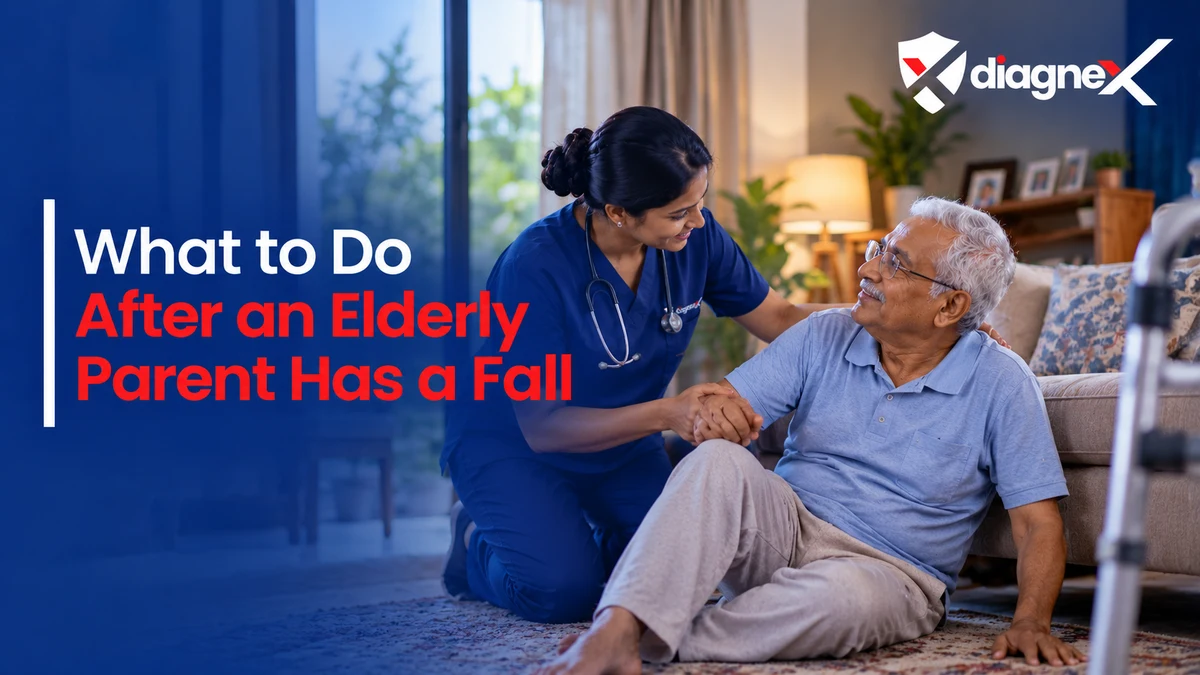
A fall in an elderly parent should be taken seriously, even when there is no obvious injury. The first priority is to check for signs that need urgent medical attention. After the immediate situation is safe, families should also try to understand why the fall happened and what support may reduce the chance of another one. What to do after an elderly fall depends on the person's symptoms, whether they hit their head, whether they can move normally and whether the fall was linked to dizziness, weakness, medicines, poor balance or an environmental hazard.
What Should You Do Immediately After an Elderly Parent Falls?
- Severe pain
- Bleeding
- Loss of consciousness
- New weakness
- Confusion
- Difficulty breathing
- Visible deformity
- Inability to move normally
Should You Help Them Stand Up Immediately?
Not automatically. If the person has severe pain, cannot move a limb normally, appears confused, has hit their head or may have a serious injury, avoid forcing them to stand. If there is no obvious injury and the person feels able to move, help should still be slow and controlled. Do not pull forcefully on the arms.
When Is Urgent Medical Care Needed After a Fall?
- Loss of consciousness
- A significant head injury
- Severe or worsening pain
- Inability to stand or walk
- New weakness or numbness
- Marked confusion
- Breathing difficulty
- Heavy bleeding
- A visibly deformed limb
- Another serious or sudden symptom
What If the Elderly Parent Hit Their Head?
- Loss of consciousness
- Persistent vomiting
- Worsening headache
- Increasing sleepiness
- New confusion
- Weakness
- Changes in speech
- Unusual behaviour
What Should You Observe After the Fall?
- New pain
- Increasing bruising
- Difficulty walking
- Dizziness
- Reduced appetite
- New confusion
- Unusual sleepiness
- Fear of moving
Write Down What Happened
- Where the fall happened
- What time of day it occurred
- What the person was doing
- Whether they felt dizzy
- Whether they tripped
- Whether a walking aid was being used
- Whether they had eaten and drunk normally
- Any recent medicine changes
Why Did the Fall Happen?
- Reduced strength
- Poor balance
- Dizziness
- Unsafe footwear
- Poor vision
- Medication side effects
- Urgent toileting
- Loose rugs or clutter
- Poor lighting
- Incorrect walking-aid use
When Should a Doctor Review the Fall?
- There have been repeated falls
- Dizziness is present
- There is new weakness
- Walking has become noticeably worse
- There has been a medication change
- The person is unusually sleepy or confused
- There is unexplained pain
When Is Physiotherapy Helpful After a Fall?
- Strength
- Balance
- Walking pattern
- Transfers
- Use of walking aids
- Confidence with movement
Why Fear of Falling Matters
- Less walking
- More sitting
- Loss of strength
- Greater dependence
- Higher future fall risk
Should the Elderly Parent Rest After a Fall?
Some rest may be appropriate, especially if the person is sore or tired. However, prolonged unnecessary inactivity can contribute to weakness when no injury requires it. The right level of activity should depend on symptoms, injury status and healthcare guidance.
Review Walking Aids
- The aid is the correct height
- The person uses it consistently
- The technique is correct
- The aid is still appropriate
Review Footwear
Review the Home Environment
- Lighting
- Loose rugs
- Clutter
- Electrical cables
- Wet floors
- Stairs
- Bathroom access
Review Bathroom Safety
- Non-slip surfaces
- Grab support
- Toilet transfers
- Shower access
- Lighting
- Whether the person was rushing
Review Night-Time Falls Separately
- Poor lighting
- Urgent toileting
- Walking aids being out of reach
- Sleepiness
- Night-time confusion
- Difficulty getting out of bed
Review Medicines After a Fall
Some medicines may contribute to dizziness, drowsiness or blood-pressure changes. If the fall followed a recent prescription change or the person has become more sleepy or unsteady, discuss this with the prescribing clinician. Do not stop or change medicines independently.
Review Hydration and Meals
- Eating normally
- Drinking enough
- Losing weight
- Feeling nauseated
- Skipping meals
What If Falls Are Becoming Frequent?
- Medicines
- Vision
- Strength
- Balance
- Walking aids
- Home safety
- Cognition
- Caregiver support
Can a Caregiver Help Prevent Another Fall?
- Assisting with transfers
- Keeping pathways clear
- Making walking aids accessible
- Supporting safe toileting
- Observing dizziness or new weakness
- Reporting near-falls
Should Care Hours Be Increased After a Fall?
Sometimes. A temporary increase in support may be useful when the person is sore, less confident or recovering from an injury. Longer-term changes may be needed if the fall reveals new dependence with mobility, toileting or night-time safety.
How to Make the Home Safer After a Fall
- The location where the fall happened
- Routes used at night
- Bathroom access
- Lighting
- Floor hazards
- Furniture used for transfers
When Is a Formal Fall Risk Assessment Useful?
What About Balance Exercises After a Fall?
Balance exercises can be helpful for some older adults, but the right exercises depend on the person's mobility and risk level. A physiotherapist can help decide whether exercises for balance, strength, transfers or walking are appropriate. Avoid assuming that generic online exercises are safe for every elderly person.
What Should Families Do in the First Few Days After a Fall?
- Monitor for new or worsening symptoms
- Arrange medical review if indicated
- Review walking and transfers
- Check footwear and walking aids
- Review the fall location
- Consider physiotherapy
- Update the care plan if support needs changed
Update the Elder Care Plan
- Does the parent need more mobility assistance?
- Does toileting support need to change?
- Are night-time hours still safe?
- Should physiotherapy be added?
- Are caregiver hours sufficient?
- Does the home need modification?
When Should Families Seek Urgent Care Instead of Waiting?
The Bottom Line
So, what should you do after an elderly parent has a fall? First check for serious injury and seek urgent medical care when needed. Then document what happened, monitor for delayed symptoms and review the likely causes. If falls are becoming frequent, look beyond the immediate environment. Medicines, dizziness, vision, weakness, balance, walking aids, toileting and caregiver coverage may all need review. Appropriate medical assessment, elderly physiotherapy and targeted fall-prevention changes can help reduce the chance of another fall while preserving mobility and independence.
Frequently Asked Questions
Should an elderly person see a doctor after every fall?
What should I do immediately after my elderly parent falls?
Can an elderly person seem fine after a fall and still be injured?
Yes. Some injuries or symptoms may become more apparent later. Monitor for new pain, worsening mobility, confusion, sleepiness or other changes and seek medical assessment if concerns develop.
When is physiotherapy recommended after an elderly fall?
What causes frequent falls in elderly people?
Should activity be reduced after a fall?
It depends on injury and symptoms. Unnecessary prolonged inactivity can contribute to weakness, while appropriate safe movement may support recovery. Follow healthcare guidance when injury is suspected.