A burn may look simple at first, but the depth, size, location, cause, and the patient's general condition all affect how it should be managed. Some small, superficial burns can heal with basic home care, while deeper or more extensive burns need medical assessment and, in some cases, specialist burn care.
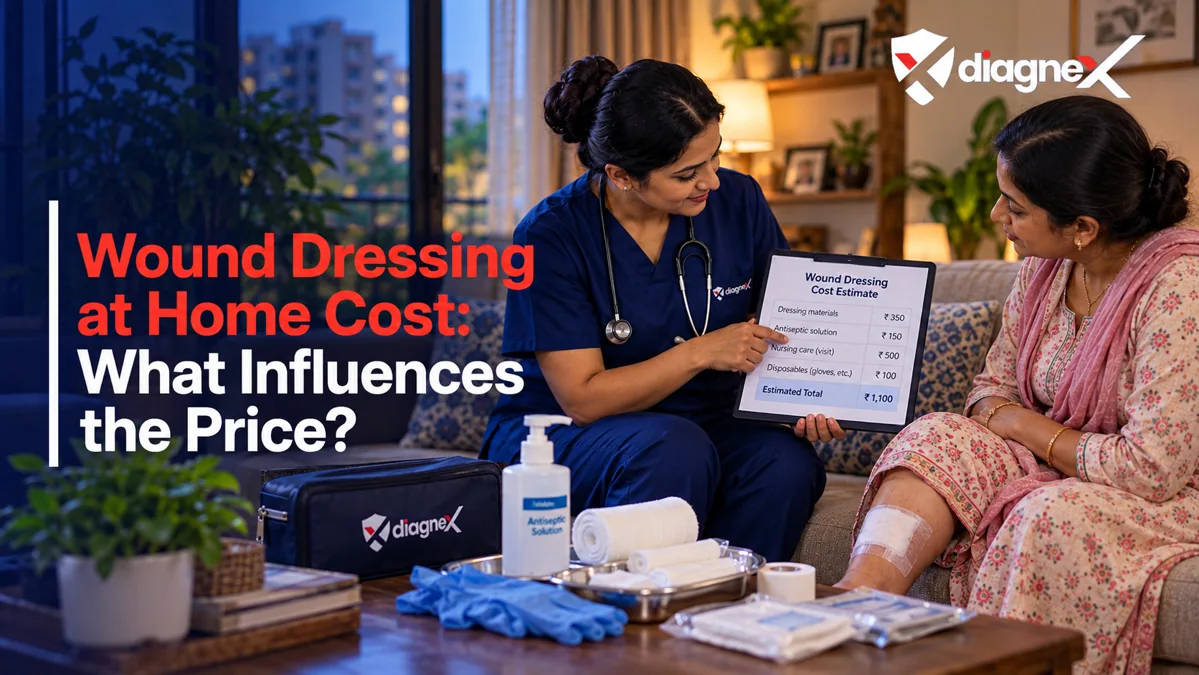
For related context, read Suture Removal at Home: When Is It Appropriate? and Wound Dressing at Home Cost: What Influences the Price?.
For related context, read Suture Removal at Home: When Is It Appropriate? and Wound Dressing at Home Cost: What Influences the Price?.
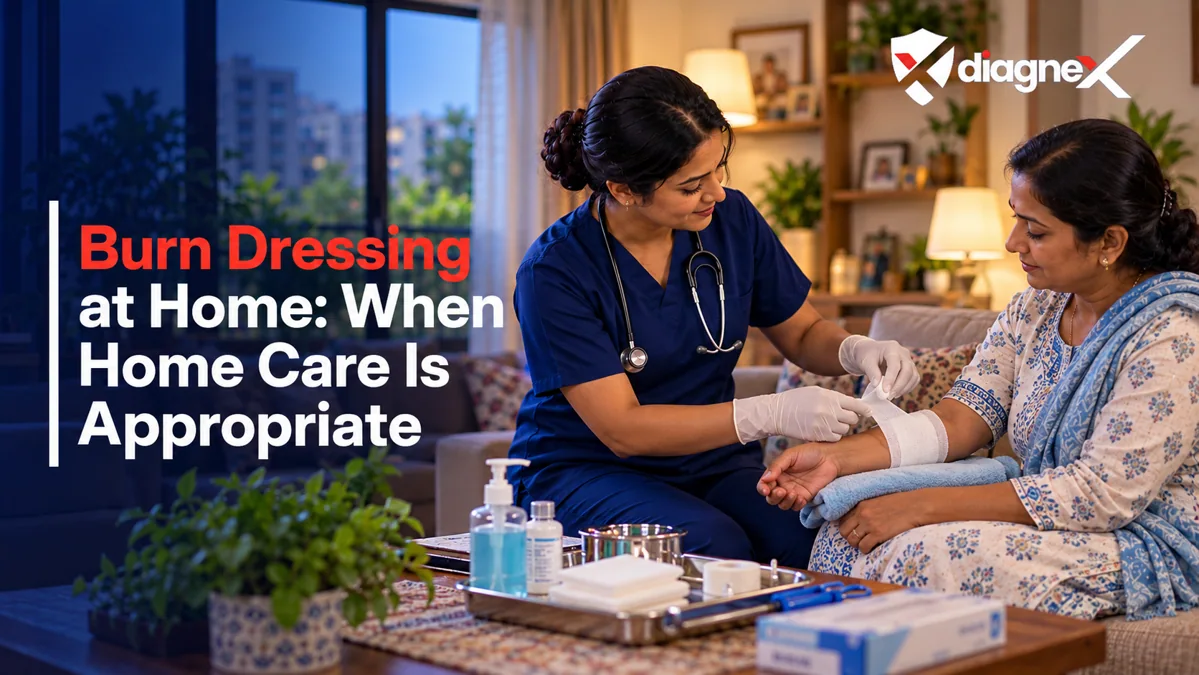
Burn dressing at home can be appropriate when the injury has already been assessed, the burn is suitable for home management, and the treating professional has given a clear wound care plan. In these situations, a trained home nurse may help with dressing changes, wound observation, infection prevention, and documentation of healing progress.
The most important point is that home dressing should not be used to avoid necessary medical review. Burns involving deeper tissue, larger areas, the face, hands, feet, genital area, major joints, chemical exposure, electrical injury, or suspected smoke inhalation may require urgent or specialist assessment.
What Is Burn Dressing at Home?
Burn dressing at home refers to wound care provided in the patient's home for a burn that has been considered appropriate for outpatient or home management. The exact dressing plan depends on the depth and condition of the burn, whether blisters are intact or open, the amount of drainage, the location of the wound, and the treating clinician's instructions.
A home dressing visit may involve: • reviewing the prescribed wound care plan; • checking the burn and surrounding skin; • removing the old dressing carefully; • assessing pain, drainage, swelling, redness, odour, and tissue changes; • cleaning the wound as advised; • applying the prescribed sterile dressing or non-adherent dressing; • securing the dressing without excessive pressure; • documenting changes; • advising when the next review is due.
For burn wounds that require professional dressing support, Diagnex's Wound Care and Dressing service is the most relevant internal pathway.
When Is Home Care Appropriate for a Burn?
Home care may be appropriate for a small burn when the injury is superficial or a clinician has confirmed that it can be managed outside hospital, the patient is medically stable, pain is controlled, and there are no concerning signs of infection or deeper tissue damage.
The NHS notes that small burns and scalds can often be treated at home, while severe, large, or deep burns may require hospital treatment. The American Burn Association also recommends specialist consultation for potentially deep burns and for burns involving high-risk areas or significant body surface area.
A home nurse can support the wound care plan, but the decision about whether a burn is suitable for home treatment should come before repeated dressing begins.
Examples of Situations That May Be Suitable for Home Dressing
Examples may include a small burn that has already been assessed, a healing partial-thickness burn with a defined dressing plan, or a patient discharged from hospital with instructions for ongoing local wound care.
Suitability depends on the individual case. A burn that appeared minor initially can still worsen, so repeated review is important.
Which Burns Should Not Be Managed as Routine Home Dressing?
Some burn injuries should be assessed promptly rather than treated as a routine home procedure. This includes burns that are large, deep, rapidly worsening, or caused by electricity or chemicals. For more on the practical service arrangements, review home nursing before deciding what information the care team needs.
Medical assessment is especially important for: • full-thickness or suspected deep burns; • burns involving the face, hands, feet, genital area, perineum, or major joints; • chemical burns; • electrical burns; • suspected smoke inhalation or airway injury; • burns associated with major trauma; • poorly controlled pain; • burns in patients with significant medical conditions that may complicate recovery; • any burn with signs of serious infection or systemic illness.
The American Burn Association notes that all potentially deep burns may benefit from specialist consultation, even when the total surface area is relatively small.
Burns in Children Need Extra Caution
Children can require a lower threshold for specialist review because burn depth, pain management, dressing changes, fluid requirements, and safeguarding concerns may be more complex.
The American Burn Association states that all pediatric burns may benefit from burn center referral depending on the circumstances. Families should therefore seek clinical guidance before assuming that repeated home dressing is sufficient.
What Should Be Done Immediately After a Burn?
First aid should begin before dressing is considered. The priority is to stop the burning process and cool the affected area safely.
The NHS advises cooling a burn under cool running water for 20 minutes as soon as possible, ideally within 3 hours of the injury. Clothing or jewellery near the burn can be removed if it is not stuck to the skin.
Do not apply ice directly to a burn. The World Health Organization also advises against applying paste, oil, turmeric, or raw cotton because these can worsen injury or contaminate the wound.
Once immediate first aid has been completed, the patient should be assessed if the burn is more than minor or if there is uncertainty about its depth or severity.
Do Not Burst Burn Blisters
Burn blisters should generally be left intact unless a healthcare professional has decided that they need to be managed as part of wound care. Breaking a blister unnecessarily can increase the risk of infection.
If a blister has already opened, the wound may require a non-adherent or sterile dressing according to the treating plan.
What Happens During a Burn Dressing Visit at Home?
The process depends on the prescribed dressing method and the condition of the burn.
Before the Dressing
The home nurse may review the cause of the burn, date of injury, previous treatment, dressing instructions, medications, pain level, and any recent changes in the wound.
A clean, well lit working area should be prepared. The required wound care supplies should be available before the dressing starts.
For general preparation before a home clinical procedure, families can review the Home Clinical Procedure Safety Checklist for Families.
During the Dressing
The old dressing is removed carefully. If a dressing is adhering to the wound, it should not be pulled away forcefully. The burn and surrounding skin are checked for healing, drainage, redness, swelling, odour, bleeding, or tissue changes.
The wound is then managed according to the clinical plan. The recommended sterile dressing or non-adherent dressing is applied and secured without excessive pressure.
The nurse should also note whether pain is improving, stable, or worsening. Increasing pain can be an important sign that the wound needs further review.
After the Dressing
The patient or caregiver should know when the next dressing is due, how to keep the dressing clean and dry if required, and which symptoms need earlier assessment.
Repeated home procedures also require consistent infection-control practices. Diagnex's guide on How Infection Control Works During a Clinical Procedure at Home explains the general principles of hand hygiene, clean preparation, and safe handling.
Why Sterile Dressing Technique Matters
Burned skin has lost part of its normal protective barrier, which can increase susceptibility to infection. Dressing technique therefore matters.
Depending on the wound plan, sterile or clean technique may be advised. The healthcare professional should use the method appropriate to the burn, dressing product, and clinical setting. If the family is considering support at home, the Diagnex guide to wound care at home explains the service pathway and its limits.
Families should avoid touching the wound surface or the inner surface of a clean dressing. Used dressings should not be reused, and dressing products should not be shared between patients.
Which Dressing Is Used for a Burn?
There is no single dressing that is best for every burn. Dressing choice depends on burn depth, wound moisture, drainage, blister status, tissue condition, location, pain, and the stage of healing.
Different burns may be managed with non-adherent dressings, gauze-based dressings, absorbent dressings, antimicrobial products, or other wound materials according to professional assessment.
Families should not change dressing products simply because another product looks similar or is easier to obtain. A dressing can affect moisture balance, comfort, and wound protection, so the treating plan should guide the choice.
How Often Should a Burn Dressing Be Changed?
There is no universal dressing interval for every burn. Some dressings are intended to remain in place for several days, while others may need more frequent changes because of drainage, contamination, or the type of product used.
MedlinePlus advises following the healthcare provider's instructions for dressing changes because frequency depends on the wound and the dressing method.
Changing the dressing unnecessarily can disturb healing tissue and increase discomfort. On the other hand, a dressing that becomes soaked, contaminated, loose, or foul smelling may need earlier review.
Signs That a Burn Wound Needs Medical Review
A burn should be reassessed if it is worsening instead of improving. Warning signs can include: • increasing redness around the burn; • swelling that is increasing; • worsening pain; • pus-like or foul-smelling drainage; • fever; • increasing wound depth; • new black, white, or leathery tissue; • spreading redness; • heavy bleeding; • a wound that is not healing as expected.
A sudden deterioration in the patient's general condition is also a reason for medical review.
When the Situation May Be Urgent
Urgent assessment may be required if the burn is deep or extensive, pain is severe, the patient has difficulty breathing, there was smoke exposure, the burn was caused by electricity or chemicals, or the patient becomes faint, confused, or acutely unwell.
In these situations, another routine home dressing should not delay hospital or specialist care.
What Should Not Be Applied to a Burn at Home?
Avoid home remedies that have not been recommended by the treating team. The World Health Organization specifically advises against applying oil, paste, turmeric, raw cotton, or ice directly to a fresh burn.
Creams, ointments, antimicrobial products, and other topical treatments should only be used when they are appropriate for that burn and have been recommended by a clinician.
The safest approach is to follow the burn-specific plan rather than experimenting with household products.
When Is a Home Nurse Helpful for Burn Wound Care?
A home nurse may be useful when a patient has been discharged with a burn dressing plan, repeated dressing changes are required, mobility makes clinic visits difficult, or the wound needs ongoing observation.
The nurse can support: • dressing changes; • wound observation; • infection prevention; • documentation of healing; • pain-related observations; • escalation when the wound changes; • caregiver education within the treating plan.
If the patient needs broader nursing support during recovery, Home Nursing Services may be more appropriate than isolated procedure visits.
Burn Dressing After Hospital Discharge
Some patients return home after hospital treatment while the burn still needs dressing changes and follow-up. In these cases, the discharge instructions should remain the main guide for home care.
Keep the discharge summary, dressing plan, prescribed medicines, review dates, and contact details of the treating team available. If the patient has wider nursing needs after discharge, Post-Hospital Nursing may also be relevant.
How to Prepare for Burn Dressing at Home
Before arranging the visit, keep the following information ready: • when the burn occurred; • what caused the burn; • where the burn is located; • whether it was assessed by a doctor or hospital; • the current dressing plan; • the type of dressing being used; • whether there are blisters; • whether drainage, redness, swelling, odour, fever, or increasing pain is present; • any prescribed medicines; • the next planned medical review. For care planning beyond this article, compare surgery dressing at home with the instructions already given by the treating professional.
This information helps the healthcare team decide whether the request is suitable for routine home wound care or whether the patient needs further assessment first.
How to Arrange Burn Dressing at Home With Diagnex
If burn dressing at home has been advised, share the burn location, cause, date of injury, clinical instructions, current dressing plan, locality, and any changes since the last review.
Diagnex can review the requirement and route the enquiry to the appropriate Clinical Procedures at Home or nursing pathway based on the requested care, professional requirement, locality, and available clinical information.
For service coordination, use the Diagnex Contact page.
Frequently asked questions
Can burn dressing be done at home?
Yes, selected burns can be dressed at home when the injury is suitable for home management and a clear care plan is available. Large, deep, chemical, electrical, or otherwise high-risk burns may need hospital or specialist treatment.
Should a burn always be covered with a sterile dressing?
Many burn wounds are protected with a clean or sterile non-adherent dressing, but the exact method depends on the burn. Follow the dressing plan given by the treating professional.
Can I put ice on a burn?
No. Ice can worsen tissue injury. Cool running water is generally recommended for initial cooling rather than ice.
Should I burst a burn blister before dressing it?
Do not deliberately burst a blister unless a healthcare professional has advised and is managing the blister as part of the wound care plan.
How do I know if a burn is infected?
Increasing redness, swelling, worsening pain, pus-like or foul-smelling drainage, fever, or deterioration in the wound can suggest infection and should prompt medical review.
Can a home nurse change burn dressings?
A trained nurse can support prescribed burn dressing changes at home when the wound is appropriate for home care and the necessary instructions and supplies are available.
How long does a minor burn take to heal?
Healing time varies according to burn depth, size, location, patient health, and complications. Small superficial burns may heal relatively quickly, while deeper burns can take longer and may require specialist care.
References and further reading
This article provides general education and does not replace individual medical assessment. Clinical points were cross-checked against current burn guidance from the NHS, MedlinePlus, the World Health Organization, and the American Burn Association.
Related Diagnex services and guides
Explore the Clinical Procedures service pathway and the Clinical Procedures article library for more information.
Diagnex publishes general healthcare information to support care planning. Individual decisions about diagnosis, prescriptions and treatment remain with the treating professional. Read our medical content policy and editorial standards.