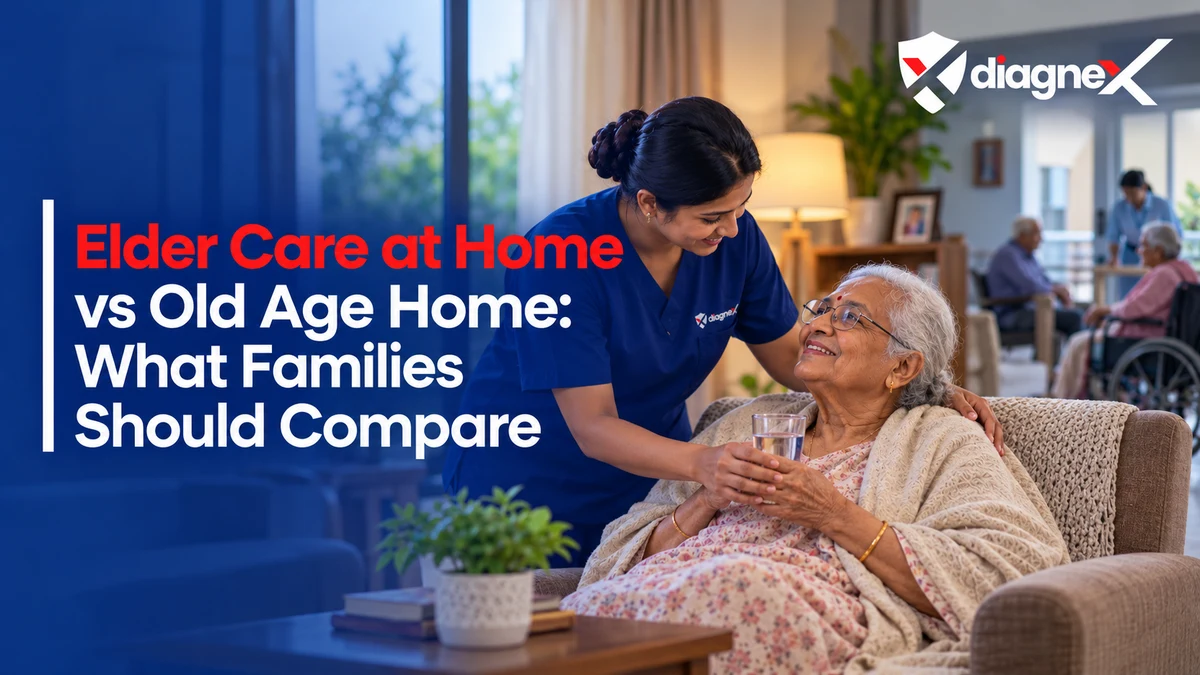
Families deciding between elder care at home and an old age home are choosing between two different care settings, not simply two versions of the same service. Home care allows an older person to remain in familiar surroundings while receiving support there. An old age home or residential senior-care setting provides accommodation and care within a shared facility. Neither option is automatically better for every elderly person. The right choice depends on the person's independence, health needs, safety, social preferences, family availability, home environment and the actual quality of the care arrangement being considered.
Elder Care at Home vs Old Age Home: What Is the Basic Difference?
Elder care at home brings support to the older person's existing residence. The person may receive help from family caregivers, professional caregivers, nurses, physiotherapists or other professionals depending on need. An old age home provides residential accommodation together with a defined level of support. The exact services can vary widely between facilities. Families should therefore compare specific care models rather than assume that every old age home or every home-care arrangement provides the same level of support.
Is an Old Age Home the Same as Assisted Living?
Not necessarily. The terms old age home, retirement home, senior living and assisted living are sometimes used loosely, but they may describe different levels of support. Some residential settings mainly provide accommodation, meals and basic assistance. Others may provide more structured personal care, supervision or access to healthcare services. Before comparing home care vs assisted living elderly options, ask what the particular facility actually provides.
Who May Be Better Suited to Elder Care at Home?
- Wants to remain in their own home
- Has a suitable and reasonably safe home environment
- Has family members who want to remain closely involved
- Needs help with daily activities but not institutional-level support
- Has access to caregivers or other professionals when required
- Benefits from maintaining existing neighbourhood and social routines
Who May Prefer or Need a Residential Old Age Home?
- The person wants a community living environment
- The home is difficult to adapt safely
- Family support is very limited
- Reliable home caregiving is difficult to maintain
- The person prefers structured meals and activities
- The facility can appropriately support the person's level of dependency
Home Care vs Old Age Home: Independence
Home care often allows an elderly person to continue living within familiar routines and surroundings. They may have greater control over meals, visitors, sleeping patterns and everyday household choices. Residential settings may have more structured routines because meals, activities and staffing are shared across residents. Some older adults appreciate this structure, while others may experience it as a loss of control.
Home Care vs Old Age Home: Familiarity and Emotional Comfort
Staying at home can preserve familiarity with the person's bedroom, belongings, neighbours and local environment. This may be especially meaningful for someone who has lived in the same home for many years. Moving to a residential setting can require adjustment, but some people may feel more secure or less isolated once they settle into a community. Personality and preference matter as much as practical care needs.
Home Care vs Old Age Home: Social Interaction
One potential advantage of a residential senior-care setting is easier access to other residents and organised social activities. For an older person who is isolated at home, this may be valuable. However, living in a facility does not automatically guarantee meaningful social connection. Home-based care can also support social engagement through family visits, neighbours, community activities and companionship from caregivers.
Home Care vs Old Age Home: Family Involvement
Home care can make family participation easier because the person remains within the family's existing routine and location. Family members may be more involved in appointments, meals, decisions and everyday interaction. In a residential setting, family involvement depends on distance, visiting arrangements and how the facility communicates with relatives. Families should ask how updates, concerns and care decisions are shared.
Home Care vs Old Age Home: Supervision
The level of supervision depends on the arrangement. At home, supervision can be tailored from a few hours a day to more extensive coverage. In an old age home, staff may be present within the facility, but staffing levels and the amount of direct one-to-one supervision can vary. Families should not assume that residential care automatically means constant individual attention.
Home Care vs Old Age Home: Personal Care
Both settings may provide support with activities such as bathing, dressing, grooming, mobility and toileting. At home, the level of personal care can be customised around the older person's routine. In a residential facility, personal care is delivered within the facility's staffing model and schedule. Ask how much assistance is available and whether the facility can support the person's current level of dependency.
Home Care vs Old Age Home: Nursing and Medical Needs
This is one of the most important areas to clarify. A caregiver at home generally provides non-clinical daily support, while nurses and other healthcare professionals may be added when clinical care is required. An old age home may or may not have on-site nursing or medical support. The level of clinical care varies by facility. Families should ask specifically about: Do not assume that every residential senior-care setting can manage complex medical needs.
- Nursing availability
- Medication support
- Wound care
- Emergency response
- Doctor access
- Hospital transfer arrangements
Home Care vs Old Age Home: Emergency Response
At home, the emergency plan depends on the caregiver, family availability, local services and how quickly help can be reached. In a residential facility, staff may be available on site, but families should ask how emergencies are recognised, escalated and transferred for medical care. The important issue is the actual response system, not simply whether care takes place at home or in a facility.
Home Care vs Old Age Home: Safety
- Bathroom safety
- Lighting
- Stairs
- Trip hazards
- Access to help
- Mobility equipment
Home Care vs Old Age Home for Elderly People Living Alone
An older person living alone may still manage well with part-time or full-time home care if the arrangement provides enough support. A residential setting may become more practical when the person cannot safely manage long periods alone, reliable home coverage is difficult to arrange or the person prefers community living. Living alone should trigger a care assessment, not an automatic move.
Home Care vs Old Age Home for Dementia or Cognitive Problems
Cognitive impairment can significantly affect the choice of care setting. Some people benefit from remaining in familiar surroundings with structured home support, while others may eventually need a more controlled environment with continuous supervision. Families should evaluate wandering risk, night-time confusion, ability to recognise the home environment and the availability of trained supervision. New or rapidly worsening confusion should be medically assessed.
Home Care vs Old Age Home After Hospital Discharge
After hospitalisation, many older adults need temporary support before their long-term care needs are clear. Home care may allow the person to recover in familiar surroundings with caregiver, nursing or rehabilitation support as required. A residential setting may be considered if returning home is not safe or if the family cannot organise adequate support. The discharge plan and clinical requirements should guide the decision.
Home Care vs Old Age Home for Couples
For elderly couples, staying at home may allow both partners to remain together in their existing environment. A residential setting may also allow couples to live together, depending on the facility's accommodation and care model. Families should consider whether one partner has substantially greater care needs than the other and whether the chosen setting can support both appropriately.
What About Loneliness at Home?
One concern with home-based elder care is social isolation, especially when children live elsewhere and the older person has limited local contact. A caregiver can provide companionship, but family contact, neighbours, social activities and community involvement may still be important. If isolation is a major problem, a good residential community may offer more regular interaction.
What About Loss of Privacy in a Residential Setting?
Residential care can involve shared spaces, staff routines and sometimes shared accommodation. Families should ask about room arrangements, visitor policies, privacy during personal care and how residents' belongings are handled. For some people, greater social contact is worth the reduced privacy. Others strongly prefer the control and personal space of home.
How Should Families Compare Cost?
Cost comparisons can be misleading unless the services included are similar. Home care costs may include caregiver hours, nursing, physiotherapy, equipment, home modifications and other support. Residential fees may include accommodation, meals and some level of assistance, with additional charges for higher dependency or healthcare services. Families should compare total expected cost rather than only the base price.
Questions to Ask About Elder Care at Home
- How many hours of caregiver support are needed?
- Can the person safely remain alone at any time?
- Is nursing or rehabilitation required?
- Who provides backup when the caregiver is absent?
- Is the home physically suitable?
- How will family members receive updates?
- How will care needs be reassessed?
Questions to Ask an Old Age Home or Assisted Living Facility
- What level of personal care is included?
- What happens if dependency increases?
- Is nursing available?
- How are medical emergencies handled?
- What are the staffing arrangements?
- How are meals and dietary needs managed?
- What social activities are available?
- What are the visiting policies?
- How are families updated?
- What additional charges may apply?
How Should Families Assess Quality in Either Setting?
- Clear roles and responsibilities
- Reliable staffing
- Appropriate training
- Respectful communication
- Care-plan documentation
- Escalation processes
- Family communication
- Ability to adapt when needs change
Should the Elderly Parent Be Involved in the Decision?
Wherever possible, yes. The older person's preferences about privacy, social life, routines, independence and location should be part of the decision. A technically suitable arrangement may still fail if the person feels deeply uncomfortable with it. Families should discuss specific concerns rather than presenting the decision as a simple choice between staying home and being moved elsewhere.
When Might Home Care No Longer Be Practical?
- The home cannot be made reasonably safe
- The person needs continuous supervision that cannot be staffed reliably
- Care needs exceed what the home arrangement can safely support
- Family coordination becomes unmanageable
- The older person prefers a residential community
When Might an Old Age Home Not Be the Right Fit?
- The facility cannot support the person's clinical needs
- The older person strongly prefers and can safely remain at home
- The level of personal supervision is insufficient
- The environment does not match the person's cognitive or mobility needs
- Family access and communication are poor
A Simple Comparison Guide
- The person strongly prefers familiar surroundings
- The home can be made safe
- Reliable caregivers and professionals are available
- Family wants close day-to-day involvement
- Care needs can be managed safely at home
- The person prefers community living
- Living alone at home is increasingly difficult
- Home staffing is unreliable or impractical
- The facility can provide the required level of support
- Social structure and shared services are important
The Bottom Line
So, elder care at home vs old age home: what should families compare? Compare the actual care environment, not just the label. Look at independence, safety, personal care, medical needs, supervision, social contact, family involvement, emergency response, cost and the older person's own preferences.
Home care may allow an older person to remain in familiar surroundings with highly customised support. A good residential setting may offer community, structured services and a different form of supervision. Neither is universally better. The right choice is the setting that can safely and sustainably meet the person's current needs while preserving dignity, choice and quality of life.
Frequently Asked Questions
Is elder care at home better than an old age home?
Not in every case. Home care may suit someone who values familiar surroundings and can be supported safely at home. A residential setting may suit someone who prefers community living or whose home-care arrangement is difficult to sustain.
What is the difference between an old age home and assisted living?
The terms are not always used consistently. Some facilities mainly provide accommodation and basic support, while assisted-living models may offer more structured help with daily activities. Families should compare the actual services offered.
Is home care cheaper than an old age home?
It depends on the level of support required. Home care may involve caregiver hours, nursing, equipment and home modifications, while residential fees may include accommodation and meals. Compare total expected cost and services.
Can elderly people with dementia stay at home?
Some can, if the home environment, supervision and support are sufficient. Others may eventually need a more controlled setting. The decision should be based on safety, cognition and available care.
Does an old age home always have nurses?
No. Nursing availability varies by facility. Families should ask specifically about clinical support, medical emergencies and what happens if care needs increase.