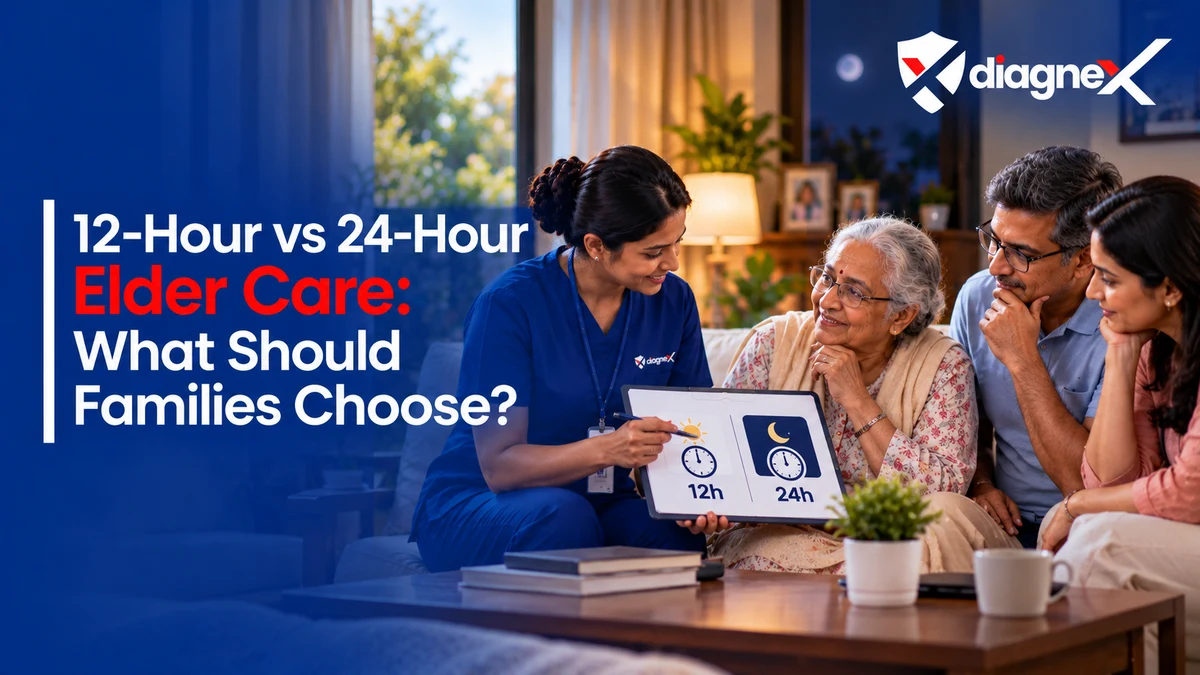
Families arranging elder care at home often hear two options described as if they are the same: a live-in caregiver and 24-hour shift care. They can both provide extensive support, but the staffing model, rest expectations and level of continuous coverage can be very different. A live-in caregiver usually stays in the elderly person's home and supports them according to an agreed routine, with defined rest and sleep periods. Shift care uses caregivers who work scheduled blocks and hand over responsibility to the next person, allowing active coverage to continue across the day and night. If you are comparing a live in caregiver vs 24 hour shift arrangement, the key question is not simply how long someone is present in the home. It is whether the person needs occasional support overnight or truly requires active assistance at unpredictable times around the clock.
What Is a Live-In Caregiver?
A live-in caregiver for elderly parents resides in the home during the care arrangement and provides support during agreed working periods. Depending on the person's needs, this may include: The important point is that living in the home does not mean being actively on duty every minute of the day and night. A live-in caregiver still needs sleep, rest, meals and time off. Families should therefore clarify what is expected overnight and what happens if the elderly person regularly needs assistance during those rest periods.
- Bathing and personal hygiene
- Dressing and grooming
- Toileting assistance
- Meals and feeding support
- Walking and transfers
- Medication reminders
- Companionship
- Accompaniment to appointments
- Routine supervision
What Is Shift Care?
Shift care uses multiple caregivers working defined blocks of time so that one person can hand over responsibility to another. For example, continuous coverage may be organised through two 12-hour shifts or another provider-defined schedule. The main advantage of this model is that the caregiver coming on duty is expected to be available and alert during the assigned shift rather than also trying to sleep in the home while remaining responsible for frequent night-time needs.
Live-In Caregiver vs 24-Hour Shift Care: What Is the Main Difference?
The biggest difference is how continuous support is delivered. A live-in model provides continuity through one primary caregiver who stays in the home but also has defined rest periods. A shift-care model provides continuity of coverage through more than one caregiver, with each person working a scheduled period before handing over. This makes shift care more suitable when frequent active support is needed during both the day and night, while a live-in caregiver may work well when the older person needs substantial daytime assistance but usually sleeps safely through the night.
When Might a Live-In Caregiver Be Appropriate?
- Need help with most daytime activities
- Prefer the familiarity of one main caregiver
- Live alone and benefit from someone being present in the home
- Generally sleep through the night
- Can call for help if an occasional night-time need arises
- Do not require constant clinical monitoring
When Might Shift Care Be More Appropriate?
- Frequent night-time toileting
- Repeated transfers during the night
- High fall risk after dark
- Wandering or night-time confusion
- Frequent repositioning needs
- Inability to call for help reliably
- Unpredictable supervision needs
- A level of dependency that makes long uninterrupted caregiver rest unrealistic
Does a Live-In Caregiver Provide 24-Hour Care?
Not necessarily. This is one of the most important distinctions for families to understand. A live-in caregiver may be physically present in the home for most or all of the day, but the arrangement can still include off-duty periods, sleep and breaks. True 24-hour active coverage usually requires a staffing structure that ensures another caregiver takes over when the first caregiver rests. Always ask the provider to explain exactly what 'live-in' and '24-hour' mean in operational terms.
Can One Caregiver Work Continuously for 24 Hours?
Families should not plan around one person providing continuous active care without adequate rest. Caregiving involves physical attention, judgment and repeated interaction. Fatigue can affect reliability and safety. If the older person regularly requires help throughout the night, a structured shift model is generally more realistic than expecting a single caregiver to remain continuously alert.
Which Model Provides Better Continuity?
Live-in care often provides stronger continuity of relationship because the elderly person interacts with the same caregiver for much of the routine. This can be helpful when the person is uncomfortable with frequent changes or benefits from familiarity. Shift care may involve more than one caregiver, so relationship continuity may be lower. However, well-managed handovers can preserve continuity of the care plan even when the individual caregiver changes. The right question is whether continuity of relationship or continuity of active coverage is more important for the older person's needs.
Why Handovers Matter in Shift Care
Shift care depends on good handovers. The incoming caregiver should understand what happened during the previous shift and whether anything important has changed. A useful handover may cover: Without clear handovers, information can be lost even when coverage itself is continuous.
- Meals and fluid intake
- Medication reminders
- Mobility changes
- Toileting
- Falls or near-falls
- Sleep or behavioural changes
- Upcoming appointments
- Any concerns already reported to the family
Live-In Caregiver vs Shift Care for Dementia
The choice depends on how the person's cognitive changes affect safety. A live-in caregiver may work well when the elderly person benefits from a familiar face and has relatively predictable routines. Shift care may be more appropriate when there is frequent night-time wandering, repeated confusion after dark or a need for active supervision during hours when a live-in caregiver would normally be resting. New or worsening confusion should be medically assessed rather than assumed to be normal ageing.
Live-In Caregiver vs Shift Care for Fall Risk
A live-in model may be sufficient when falls are primarily a daytime concern and the elderly person can manage safely overnight. Shift care may be more appropriate when the person repeatedly gets out of bed at night, needs help to use the bathroom or has a history of night-time falls. Repeated falls should also prompt medical review and a broader fall-risk assessment rather than being treated only as a staffing issue.
Live-In Caregiver vs Shift Care After Hospital Discharge
After hospitalisation, care needs may temporarily be higher than usual. A live-in caregiver may be enough when the person needs extensive practical help during the day but is stable overnight. Shift-based coverage may be more appropriate when weakness, toileting needs, confusion or mobility limitations create repeated night-time assistance needs. Clinical procedures such as wound care, injections or device management should be assigned separately to appropriately qualified healthcare professionals where required.
What About a 24-Hour Caretaker?
The phrase 24 hour caretaker can be ambiguous. Some providers may use it to describe a live-in caregiver, while others may mean active coverage delivered through multiple shifts. Families should ask: The wording matters less than the actual staffing structure.
- Is one person assigned or more than one?
- What are the working hours?
- When does the caregiver sleep?
- What happens if the elderly person needs repeated help overnight?
- Who covers breaks and leave?
How Do Rest and Sleep Work in Live-In Care?
- Where the caregiver will sleep
- Expected overnight interruptions
- Whether uninterrupted rest is possible
- What happens after a difficult night
- How time off is handled
- Who provides replacement during leave
How Does Shift Care Handle Rest?
In shift care, rest is mainly managed by limiting each caregiver's active duty to a defined shift. When the shift ends, responsibility transfers to another caregiver. This can make the model more suitable for people who need frequent or unpredictable support at night, because the person on duty is not simultaneously expected to sleep.
Which Model Is Better for Parents Living Alone?
For an elderly parent living alone, both models can work depending on the person's level of independence. A live-in caregiver may be suitable when the parent needs substantial assistance but can still sleep safely through most nights. Shift care may be safer when the parent cannot reliably manage night-time toileting, transfers, confusion or emergencies without active help. Ask whether the parent can safely remain without active supervision while the live-in caregiver is sleeping.
Which Model Is Better When Children Live Abroad?
For families living abroad, the staffing model should be easy to understand and monitor. In a live-in arrangement, ask how attendance, rest, leave and replacement are managed. In shift care, ask how handovers, schedule changes and missed shifts are handled. In both models, families should know:
- Who the local point of contact is
- How important changes are reported
- What happens if a caregiver is absent
- Who reviews the care plan when needs change
Live-In Caregiver vs Shift Care: Which Is More Flexible?
A live-in arrangement may offer more routine continuity, but it can become strained if the older person's needs expand beyond the original role. Shift care can be easier to scale because additional coverage can be added through another shift or different staffing pattern. The better option depends on whether the family values one familiar caregiver or needs coverage that can expand more easily across the full day and night.
Which Model Is More Expensive?
Cost depends on staffing hours, service model, caregiver experience and provider terms. Shift care often involves more active staffing hours and may therefore cost more than a live-in arrangement. However, families should not compare only the headline price. Clarify whether the quoted amount includes: The cheapest model is not automatically the most appropriate if it does not safely cover the elderly person's actual needs.
- Night coverage
- Replacement support
- Supervision
- Leave coverage
- Care coordination
- Additional charges for holidays or schedule changes
Can Families Start With Live-In Care and Move to Shift Care Later?
Yes. Care needs can change over time. A family may begin with a live-in caregiver and move to shift-based coverage if the older person develops: The reverse can also happen. After recovery from illness or surgery, a person who initially needed shift care may later manage well with a live-in caregiver or fewer hours of support.
- Frequent night-time toileting needs
- Repeated falls
- Increasing confusion
- More extensive mobility dependence
- Frequent overnight interruptions
- Greater supervision needs
When Is Neither Model Enough?
Neither live-in caregiving nor shift-based non-clinical care replaces hospital treatment or professional nursing when those are required. Families should seek urgent medical attention for serious or sudden symptoms such as severe breathing difficulty, chest pain, loss of consciousness, sudden weakness or other medical emergencies. If the person needs clinical procedures or professional nursing monitoring, those needs should be addressed separately from the caregiver staffing model.
Questions to Ask Before Choosing a Live-In Caregiver
- What are the caregiver's active working hours?
- What rest and sleep periods are expected?
- How many night interruptions are realistic?
- What happens when the caregiver is off duty?
- Who covers leave and absence?
- Can the arrangement change if overnight needs increase?
Questions to Ask Before Choosing Shift Care
- How many caregivers will be involved?
- How long is each shift?
- How are handovers documented?
- What happens if the incoming caregiver is late or absent?
- How are changes in the elderly person's condition communicated?
- Can shift timing be adjusted if needs change?
A Simple Decision Guide
- The elderly person needs substantial daily support
- Overnight needs are occasional rather than frequent
- Relationship continuity is important
- The caregiver can receive adequate sleep and rest
- Family or backup support is available if needs suddenly increase
- Active help is needed during both day and night
- Overnight toileting or transfers are frequent
- Wandering or confusion requires supervision
- The person cannot safely wait while a caregiver sleeps
- The family wants clearly defined continuous coverage
The Bottom Line
So, live-in caregiver vs shift care for elderly parents: which should families choose? A live-in caregiver can provide strong continuity and extensive daily support when the older person usually allows the caregiver to rest and sleep at night. Shift care is more appropriate when support needs are frequent, unpredictable or spread across the full day and night.
Do not assume that a live-in caregiver automatically provides 24-hour active care. Ask how rest, sleep, leave and overnight interruptions are handled. The best elder care at home model is the one that provides enough active coverage for the parent's real needs while remaining safe and sustainable for both the older person and the caregiver.
Frequently Asked Questions
What is the difference between a live-in caregiver and 24-hour shift care?
Is a live-in caregiver available 24 hours a day?
When is shift care better than a live-in caregiver?
Can one live-in caregiver provide 24-hour care?
Which option is better for dementia care?
Which option is more suitable for an elderly parent living alone?
Either can work. A live-in caregiver may suit someone who needs extensive daily help but sleeps safely. Shift care may be more appropriate when the parent cannot safely remain without active support at night.
Can a live-in caregiver arrangement be changed to shift care later?
Does 24-hour shift care mean a nurse is always present?
No. Caregiver staffing and nursing are separate decisions. Shift care may provide continuous non-clinical support, while nursing should be added only when there are clinical needs.