Stitch removal at home is a short clinical procedure, but it should still begin with a proper wound review. The nurse does not simply cut and pull out the sutures. Before removal, the wound needs to be checked for healing, redness, swelling, drainage, wound separation, bleeding, and other signs that could change the plan.
For related context, read Suture Removal at Home Cost: What Affects the Price? and Suture Removal at Home: When Is It Appropriate?.
For related context, read Suture Removal at Home Cost: What Affects the Price? and Suture Removal at Home: When Is It Appropriate?.
For patients who have difficulty travelling after surgery, home removal can be convenient when the treating surgeon or doctor has already advised that the stitches are ready to come out. The exact timing depends on the body area, the procedure, wound tension, healing progress, and whether the sutures are absorbable or non-absorbable.
A home visit should therefore combine the procedure itself with a basic assessment of whether the wound appears ready for removal.
When Is Stitch Removal at Home Appropriate?
Stitch removal at home may be appropriate when the patient is clinically stable, the treating team has advised removal, and the wound can be safely assessed and accessed in the home.
It may be particularly useful when: • the patient has limited mobility after surgery; • repeated travel to a clinic is difficult; • the wound is healing without obvious complications; • the removal date or review plan has been documented; • a qualified nurse is available to perform the procedure.
Diagnex's Suture and Staple Removal service is the most relevant pathway when a patient has been advised to have non-dissolvable sutures or staples removed at home.
What Information Should Be Ready Before the Nurse Arrives?
Before the visit, keep the discharge summary, procedure details, wound-care instructions, removal date, medicine list, and any recent wound changes ready.
The nurse should ideally know: • when the surgery or injury occurred; • where the wound is located; • whether the sutures are known to be removable; • whether the patient has had fever, increasing pain, drainage, swelling, or bleeding; • whether the patient has diabetes, poor circulation, or another condition that may affect healing; • whether the surgeon has requested a wound review before removal.
Patients who are still recovering from surgery may also benefit from a broader Post-Operative Care at Home plan if they need wound care, monitoring, mobility support, medicines, or other recovery assistance.
What Happens at the Start of the Visit?
The visit should begin with hand hygiene, review of the available instructions, and inspection of the wound before any stitch is removed. For more on the practical service arrangements, review home nursing before deciding what information the care team needs.
A clean, well-lit working area is helpful. The nurse may arrange sterile or clean supplies depending on the clinical plan and procedure requirements.
Families can prepare more effectively by following the Home Clinical Procedure Safety Checklist for Families, which covers the practical setup for procedures carried out at home.
The Nurse Reviews the Wound First
The nurse may look for: • whether the wound edges are closed; • redness or warmth; • swelling; • drainage or odour; • bleeding; • tenderness; • wound separation; • areas where a stitch appears embedded; • whether the skin is healing evenly.
This wound review matters because stitches should not be removed automatically just because a certain number of days has passed.
How Is Stitch Removal Performed?
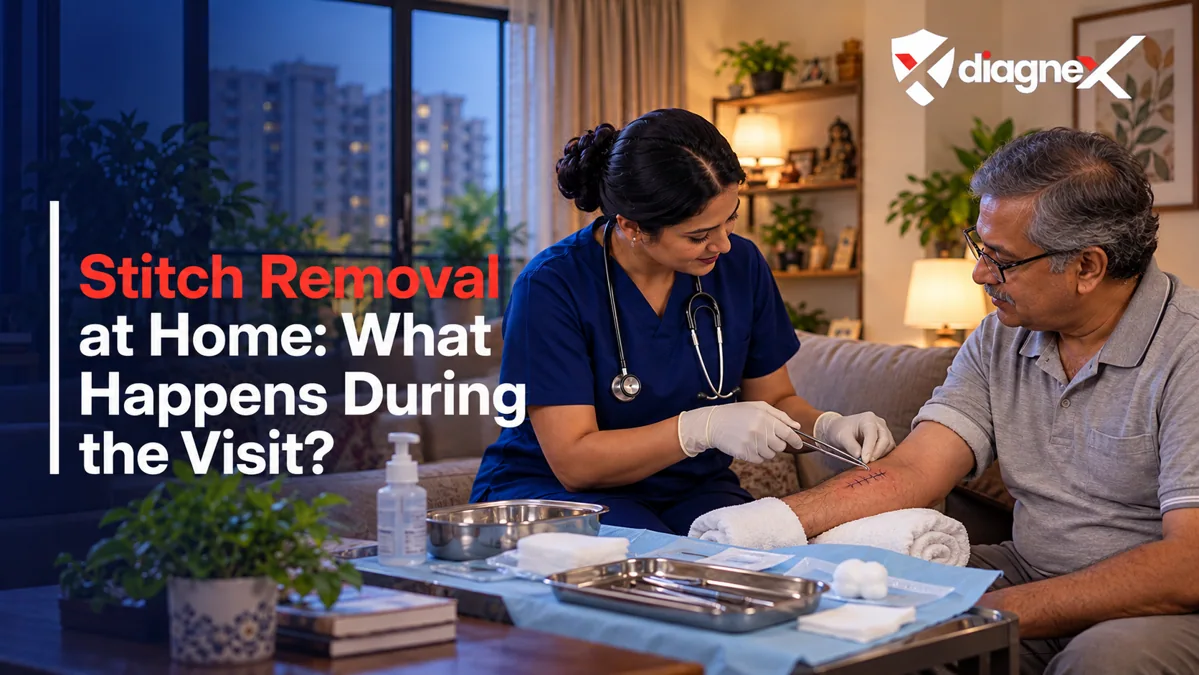
Once the wound appears suitable for removal, the nurse prepares the required instruments and follows the prescribed technique.
The general process may include: • cleaning the area if required; • identifying each stitch; • lifting the knot gently; • cutting the suture close to the skin; • removing it carefully so that the exposed external part is not dragged unnecessarily through the tissue; • checking that the full suture has been removed; • repeating the process for the remaining stitches; • reassessing the wound after removal.
MedlinePlus advises that the healthcare provider should tell the patient when stitches need to be removed and that follow-up is important to confirm the wound is healing properly.
Does Stitch Removal Hurt?
Most patients describe a brief pulling, pinching, or tugging sensation. The procedure is usually quick, although discomfort can vary depending on the wound location, skin sensitivity, the number of stitches, and whether any sutures have become tight or embedded.
Severe pain should not be ignored. If a stitch is difficult to remove or the patient experiences unexpected pain, the nurse should reassess rather than forcing the procedure.
What Happens if the Wound Starts to Open?
If the wound edges begin to separate while stitches are being removed, the nurse may stop further removal and contact the treating clinician.
The wound may need additional support such as adhesive strips, redressing, or medical review depending on the degree of separation.
For patients who still need dressing support after removal, Diagnex's Wound Care and Dressing service may be relevant.
What Happens After the Stitches Are Removed?
After all appropriate stitches have been removed, the nurse checks the wound again.
Depending on the wound, the area may: • be left uncovered; • receive a light dressing; • be supported with adhesive strips; • require continued wound care; • need a follow-up review.
The wound may look closed, but it has not immediately regained full strength. Patients should still avoid excessive stretching, friction, or activity that places unnecessary tension on the area.
The NHS advises patients to ask when stitches should be removed, whether they are dissolvable, and how the wound should be cared for after surgery.
How Is a Wound Review Different From the Removal Procedure?
The removal procedure is only one part of the visit. Wound review focuses on whether the wound is progressing appropriately.
A nurse may document: • wound edge closure; • skin colour; • swelling; • drainage; • tenderness; • any remaining sutures; • wound separation; • signs of infection.
This is especially important after surgery because an apparently simple stitch-removal visit can reveal a wound that needs more attention. If the family is considering support at home, the Diagnex guide to wound care at home explains the service pathway and its limits.
When Should Stitch Removal Be Delayed?
Removal may need to be delayed when the wound appears not to have healed sufficiently, even if the planned date has arrived.
Recent NHS community wound guidance notes that a nurse may leave sutures or clips in place longer when the wound has not healed enough and that different body areas heal at different rates.
Reasons to delay removal can include: • wound edges that are not fully closed; • increasing redness or swelling; • pus or foul-smelling drainage; • persistent bleeding; • worsening pain; • tension across the wound; • uncertainty about whether the suture should be removed; • the treating clinician requesting a later review.
What Warning Signs Need Medical Review?
Contact the treating professional if there is: • increasing redness; • increasing pain; • swelling; • pus-like or foul-smelling drainage; • fever; • wound separation; • persistent bleeding; • new numbness or tingling; • stitches or staples coming out too early.
MedlinePlus specifically advises medical review for redness, pain, pus, fever, bleeding that does not stop, numbness, wound opening, or stitches coming out prematurely.
Can Surgical Staples Be Removed During the Same Type of Visit?
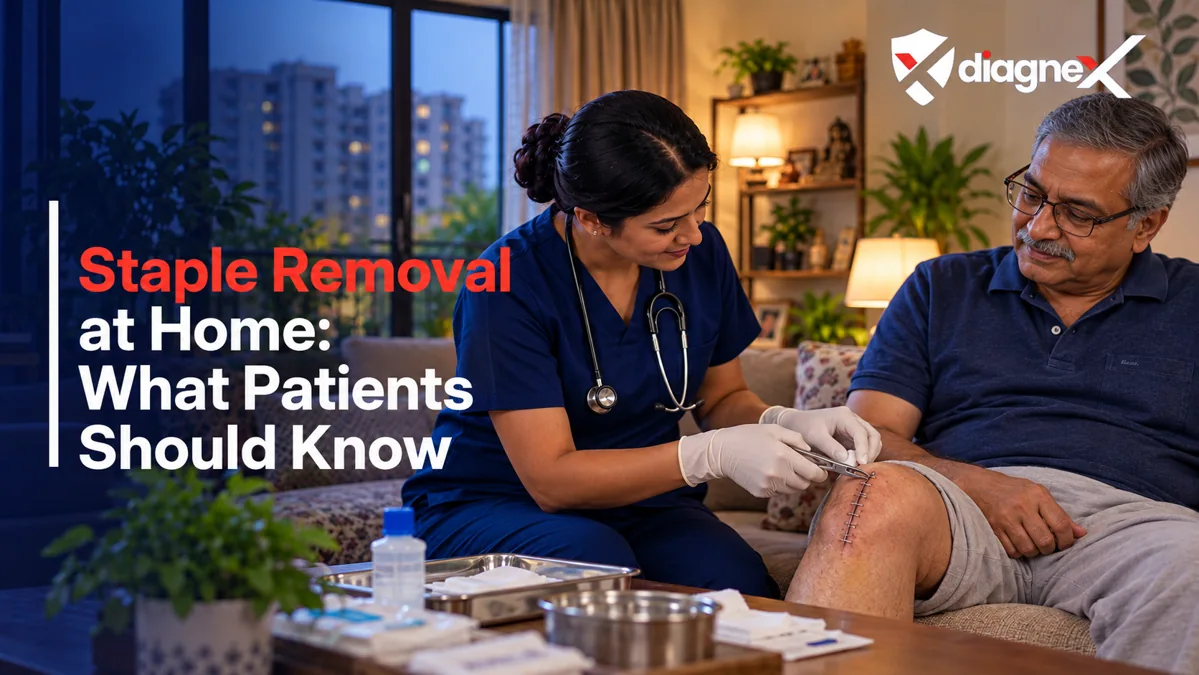
Yes, selected surgical staples can also be removed at home when the treating team has advised removal and the wound is healing appropriately.
Staples require a specific removal device and should not be removed using household tools. The wound should be assessed before and after removal in the same way as a sutured wound.
Can Dissolvable Stitches Be Removed?
Dissolvable sutures are designed to break down naturally and usually do not need routine removal.
Patients should not pull on a stitch simply because part of it is visible. If a dissolvable suture is causing irritation, protruding, or not dissolving as expected, the treating clinician or nurse should advise what to do.
The exact plan depends on the suture material and the operation.
How Should the Wound Be Cared for After Stitch Removal?
After removal, follow the wound-care instructions given by the treating team.
General precautions may include: • keeping the area clean; • avoiding unnecessary rubbing; • using adhesive strips if advised; • protecting the wound from excessive stretching; • following bathing instructions; • watching for redness, drainage, bleeding, or reopening.
Patients who still need ongoing nursing support after surgery may benefit from Home Nursing Services rather than arranging each procedure separately.
What if the Patient Still Needs Dressing Changes?
Some wounds continue to need dressing after the stitches are removed. This can happen when part of the wound remains open, drainage continues, or the treating plan includes further wound care.
In these cases, the stitch-removal visit may become part of a wider wound-care plan rather than a stand-alone procedure.
The article Surgical Wound Dressing at Home After an Operation explains how dressing care can continue during post-surgical recovery.
How Long Does a Stitch Removal Visit Take?
The time depends on the number of stitches, wound location, ease of access, wound condition, and whether additional dressing or wound care is needed.
A straightforward removal may be relatively quick. A wound that needs careful review, partial removal, redressing, or escalation can take longer.
The goal should be safe wound assessment and removal rather than completing the visit as quickly as possible. For care planning beyond this article, compare surgery dressing at home with the instructions already given by the treating professional.
How to Prepare the Home for the Visit
Before the nurse arrives: • choose a clean, well-lit area; • keep pets and unnecessary visitors away; • have the discharge instructions ready; • keep prescribed dressing materials available if required; • make sure the wound can be accessed comfortably; • do not remove stitches or clips yourself; • do not apply creams or antiseptics unless advised.
If the visit is being arranged as part of a broader home procedure pathway, Clinical Procedures at Home may be the most relevant service category.
How to Arrange Stitch Removal at Home With Diagnex
To arrange stitch removal at home, share the operation or injury details, wound location, removal date advised by the treating team, current wound condition, locality, and whether any dressing support is also required.
Diagnex can review the requirement and route the enquiry to the appropriate service based on the procedure, professional requirement, locality, and available clinical information.
For booking and service coordination, use the Diagnex Contact page.
Frequently asked questions
Can a nurse remove stitches at home?
Yes, a qualified nurse may remove non-dissolvable stitches at home when the treating team has advised removal and the wound appears ready.
Does the nurse check the wound before removing stitches?
Yes. The wound should be reviewed for closure, redness, swelling, drainage, pain, bleeding, and separation before removal begins.
What happens if some stitches are not ready to come out?
The nurse may leave selected stitches in place and recommend further review rather than removing them simply because the planned date has arrived.
Can the wound reopen after stitch removal?
Yes, especially if the wound has not healed sufficiently or is under tension. This is why wound assessment before removal is important.
Can I shower after the stitches are removed?
This depends on the wound and the treating instructions. Follow the advice given by the surgeon, doctor, or nurse rather than assuming the same rule applies to every wound.
Should I remove a loose stitch myself?
No. A loose or protruding stitch should be assessed rather than pulled out at home.
References and further reading
This article provides general education and does not replace the wound-specific instructions provided by the treating surgeon or clinician. Clinical points were cross-checked against current MedlinePlus and NHS guidance.
Related Diagnex services and guides
Explore the Clinical Procedures service pathway and the Clinical Procedures article library for more information.
Diagnex publishes general healthcare information to support care planning. Individual decisions about diagnosis, prescriptions and treatment remain with the treating professional. Read our medical content policy and editorial standards.