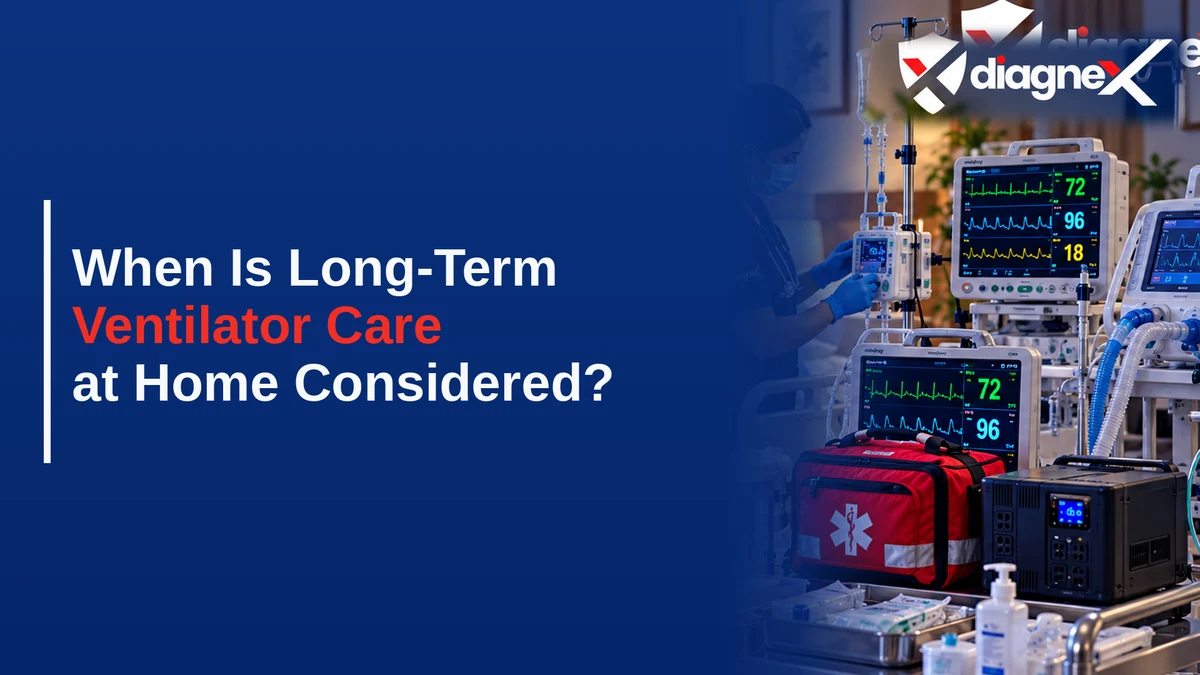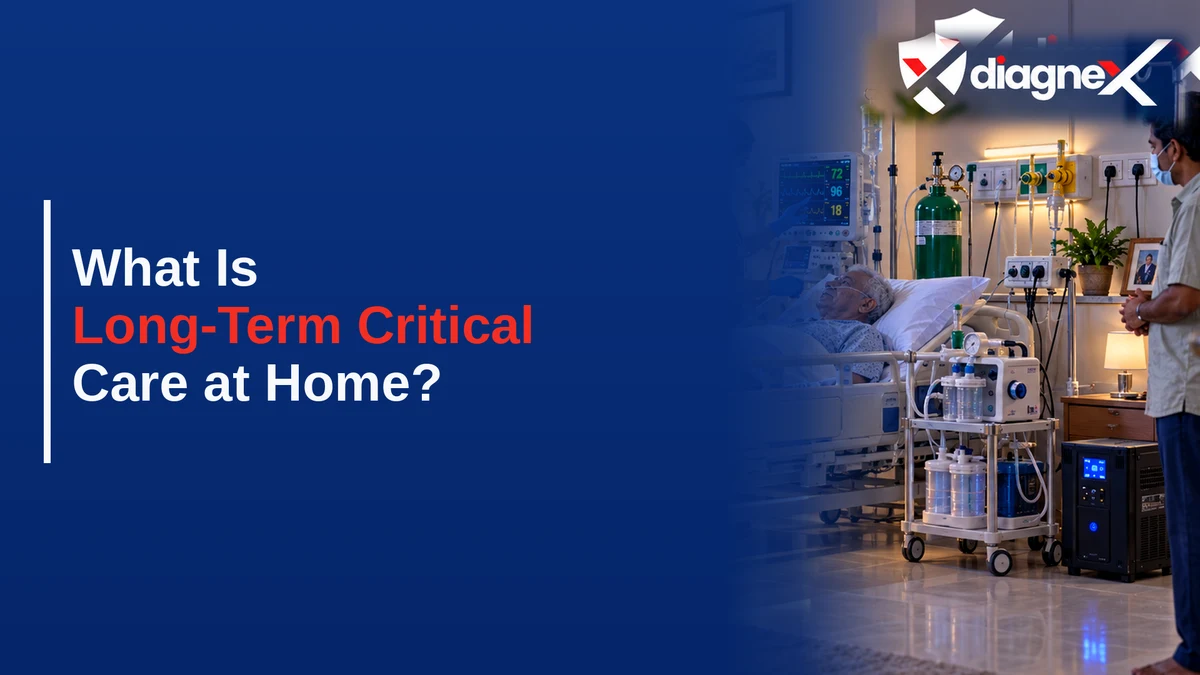
Some patients continue to need significant medical and nursing support long after an acute hospital or ICU admission has ended. Their care may involve oxygen, respiratory equipment, feeding support, medical devices, regular monitoring, skilled nursing, rehabilitation and repeated review over months or longer. Long term critical care at home refers to a structured home-care plan for selected patients whose medical dependency is expected to continue beyond a short post-discharge period.
What Does Long-Term Critical Care at Home Mean?
- Skilled nursing
- Regular or continuous monitoring of selected clinical parameters
- Oxygen therapy where prescribed
- Respiratory support where clinically indicated
- Medication and infusion support
- Feeding and nutrition support
- Wound, catheter, tube or device care
- Mobility and pressure-area care
- Rehabilitation
- Ongoing doctor review
- Emergency escalation and hospital-transfer planning
Who May Need Long-Term Critical Care at Home?
Long-term home critical care may be considered for selected patients who remain significantly dependent but are clinically suitable for home-based care. Examples may include patients who: The diagnosis alone does not determine suitability. Two patients with the same condition may need very different levels of care.
- Remain dependent after a prolonged ICU stay
- Need long-term oxygen or prescribed respiratory support
- Have chronic neurological or neuromuscular conditions with high care needs
- Have severe chronic respiratory illness requiring structured support
- Need feeding tubes, catheters or other long-term medical devices
- Have major mobility limitations and need skilled nursing
- Require prolonged step-down or high-dependency care
1. Long-Term Care Begins With Clinical Suitability
- Clinical stability
- Respiratory dependency
- Monitoring requirements
- Medication and infusion complexity
- Airway or secretion-management needs
- Nutrition and feeding support
- Mobility and pressure-care needs
- Risk of sudden deterioration
- Availability of trained professionals
- Ability to transfer the patient back to hospital if required
2. The Care Plan Should Be Designed for Months, Not Just Discharge Day
A short-term discharge plan may focus on getting the patient safely home. Long-term care also needs a sustainable operating plan. Families should understand:
- What support is required every day
- Which tasks require a nurse or other trained professional
- Which supplies need regular replacement
- How equipment will be maintained
- How the care plan will be reviewed
- How backup staff or equipment will be arranged
- What changes should trigger a higher level of care
3. Skilled Nursing May Be a Core Part of the Plan
- Clinical observations
- Medication administration
- Infusion support where prescribed
- Respiratory and oxygen care
- Airway or suction care where required
- Feeding support
- Wound, catheter or tube care
- Repositioning and pressure care
- Documentation and escalation
4. Monitoring Should Be Clinically Purposeful
Long-term care does not mean monitoring everything continuously forever. The treating team should specify which parameters matter and how frequently they should be checked. Depending on the patient, this may include: Monitoring intensity should increase or decrease when the patient's clinical needs change.
- Heart rate
- Blood pressure
- Oxygen saturation
- Respiratory rate
- Temperature
- Fluid intake or output where relevant
- Other patient-specific observations
5. Home ICU for Chronic Illness May Involve Respiratory Support
- The prescribed respiratory support
- Who manages the equipment
- Monitoring requirements
- Power backup
- Oxygen backup where clinically required
- Equipment maintenance and servicing
- What changes require urgent escalation
6. Equipment Reliability Becomes More Important Over Time
- Supplier or support contact
- Routine maintenance requirements
- Battery or backup information
- Required consumables
- Expected replacement process
- What happens if the device fails
7. Power Backup Must Be Sustainable
- Device batteries
- UPS support
- Inverter capacity
- Building backup power
- Generator support where appropriate
- Battery testing and replacement
- What happens during an extended outage
8. Oxygen Backup Should Be Reviewed Regularly
- The primary oxygen source
- The prescribed oxygen delivery
- The backup source where clinically required
- How backup availability is checked
- How replacement supply is arranged
- When oxygen needs require clinical reassessment
9. Nutrition and Feeding Can Become Long-Term Care Needs
- Feeding method
- Feed or diet prescription
- Schedule
- Positioning
- Required consumables
- Monitoring for tolerance or complications
- Review of nutritional progress
10. Pressure Care and Skin Protection Need Ongoing Attention
- Regular repositioning
- Skin checks
- Pressure-relieving mattress or cushions where indicated
- Moisture and hygiene management
- Adequate nutrition
11. Rehabilitation May Still Be Important
- Maintaining joint movement
- Preventing avoidable deconditioning
- Improving transfers
- Building strength where possible
- Improving sitting or walking ability
- Supporting greater independence in daily activities
12. Family Roles Should Be Defined Clearly
- Daily routines
- Comfort and companionship
- Appointment coordination
- Supply tracking
- Communication with the care team
- Non-clinical assistance where safe
13. Caregiver Burden Should Be Addressed
- Whether family members are getting adequate rest
- Whether one person is carrying most of the coordination burden
- Whether professional coverage is sufficient
- Whether backup caregivers are available
- Whether the family's role remains realistic over time
14. Supplies Need a Replenishment System
- Medicines
- Dressings
- Syringes
- Feeding supplies
- Suction consumables
- Catheter or device supplies
- Oxygen-related accessories
15. Medical Records Should Stay Current
- Diagnosis and relevant history
- Current medication list
- Oxygen or respiratory support
- Medical devices
- Recent clinical changes
- Recent reports
- Treating-team contacts
- Escalation and hospital-transfer plan
16. The Plan Should Include Regular Clinical Review
- Is the current level of support still necessary?
- Has the patient's dependency increased or decreased?
- Do medicines need adjustment?
- Can monitoring be reduced or should it increase?
- Does equipment still match the patient's needs?
- Are rehabilitation goals changing?
- Is the home still an appropriate care setting?
17. Long-Term Care Should Have an Escalation Plan
- Patient-specific warning signs
- Who to contact first
- Equipment-support contacts
- Power and oxygen backup
- Ambulance or transport contacts
- Preferred hospital and alternatives
- When the patient should no longer remain at home
How Is Long-Term Critical Care Different From Short-Term Home ICU Care?
Short-term home ICU care often focuses on a defined period after acute illness, hospital discharge or a temporary high-dependency phase. Long-term critical care must also address sustainability. This includes:
- Ongoing staffing
- Equipment servicing
- Supply chains
- Caregiver burden
- Regular reassessment
- Changing rehabilitation goals
- Long-term escalation planning
How Is Long-Term Critical Care Different From Routine Chronic Care?
Routine chronic care may involve medicines, regular doctor visits and support with daily living. Long-term critical care generally involves greater medical dependency, more skilled nursing, more equipment or devices, closer monitoring and a more detailed emergency plan. The distinction should be based on the patient's actual level of dependency rather than on the diagnosis alone.
Can a Home ICU Be Used for Chronic Illness?
For selected patients with chronic illness and high medical dependency, a home ICU-style care plan may sometimes be appropriate. However, the home should not be treated as a substitute for hospital care when the patient's condition is unstable or when required treatment cannot be delivered reliably outside a facility. The decision should be based on clinical suitability, available professionals, equipment, power and oxygen continuity, monitoring needs and transfer logistics.
When May Long-Term Critical Care at Home Not Be Appropriate?
- Persistent or increasing clinical instability
- Need for treatment that cannot be provided reliably at home
- Increasing respiratory or other life-support dependency beyond the home plan
- Inability to maintain power or oxygen continuity
- Repeated equipment failures
- Inability to provide required skilled staffing
- Unsafe or impractical emergency transfer
- Caregiver capacity becoming unsustainable
- The treating team recommending facility-based care
Questions Families Should Ask Before Choosing Long-Term Home Critical Care
- Why is long-term home critical care appropriate for this patient?
- What level of nursing is required?
- What equipment will be needed long term?
- Who maintains and services the equipment?
- What monitoring is required?
- What power and oxygen backup are required?
- How are medicines and consumables replenished?
- What rehabilitation goals are realistic?
- How often will the care plan be reviewed?
- What signs mean the patient needs hospital care?
- What happens if family capacity changes?
Long-Term Critical Care at Home Checklist
- Clinical suitability has been assessed
- The expected level of dependency is understood
- Nursing arrangements are sustainable
- Essential equipment is appropriate and maintainable
- Power backup is reliable
- Oxygen backup is planned where prescribed
- Medicines and consumables have a replenishment system
- Nutrition and feeding needs are addressed
- Mobility, rehabilitation and pressure care are planned
- Caregiver roles are realistic
- Medical records are current
- Regular clinical review is scheduled
- Emergency transport and hospital-transfer arrangements are understood
Long-Term Critical Care Should Remain Dynamic
A long-term home critical-care plan should never become a static arrangement that continues unchanged simply because it has been in place for months. The patient's condition, equipment, nursing intensity, rehabilitation goals and family capacity should all be reviewed over time. Care may become less intensive as the patient improves, or it may need to escalate if dependency increases. Families exploring Home ICU / Advanced Care at Home can speak with Diagnex to understand the assessment and care-planning process and discuss appropriate next steps, subject to clinical suitability and service availability.
Frequently Asked Questions
What is long term critical care at home?
Who may need long term ICU care at home?
Can chronic illness be managed with a home ICU setup?
Sometimes, for selected patients. The setup should be based on the patient's actual dependency and reviewed regularly. A home environment should not be used when the patient requires treatment or monitoring that cannot be delivered reliably there.
Does long-term critical care always require 24-hour nursing?
Not necessarily. Nursing coverage depends on the patient's clinical stability, monitoring needs, respiratory support, procedures, mobility and risk of deterioration. The treating and home-care teams should define the appropriate level.
What equipment may be needed long term?
How often should a long-term home critical-care plan be reviewed?
Can long-term critical care become less intensive?
Yes. If the patient's condition improves, monitoring, nursing, equipment and other support may be reduced after clinical review. Changes should be based on current need rather than on time alone.
When should a long-term home critical-care patient return to hospital?
SEO Details
SEO Title: What Is Long-Term Critical Care at Home? Meta Description: Learn what long term critical care at home means, who may need it, what support and equipment it can involve, and how long-term home ICU care is reviewed over time. Primary Keyword: long term critical care at home Secondary Keywords: long term ICU care at home, home ICU for chronic illness, home critical care Suggested URL: /blog/what-is-long-term-critical-care-at-home