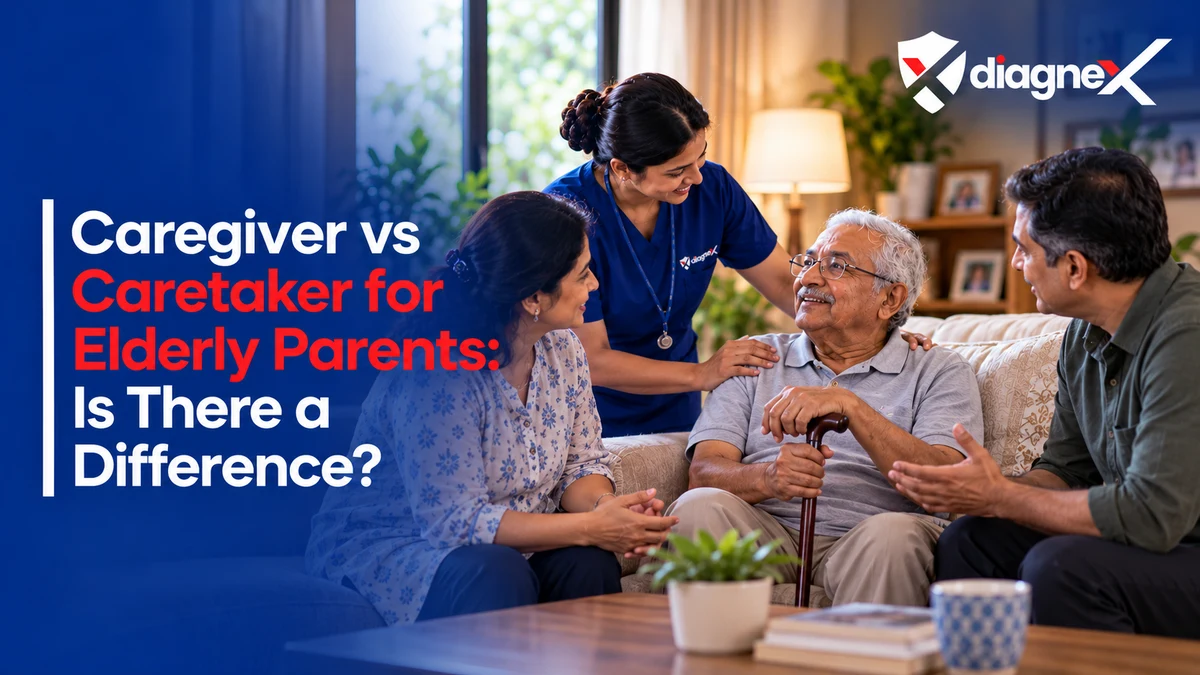
Families looking for help for an ageing parent often come across several terms: caregiver, caretaker, home attendant, elder companion and nurse. These labels can sound as though they describe clearly different roles, but in everyday home-care use the terminology is not always consistent. The practical question is therefore not only caretaker vs caregiver for elderly parents. It is what the person will actually do, what training they have, which responsibilities are included and which tasks require a qualified healthcare professional.
Caregiver vs Caretaker for Elderly Parents: What Is the Basic Difference?
In ordinary usage, both caregiver and caretaker may refer to a person who helps an older adult with everyday activities at home. Different families and service providers may use the terms differently. The word caregiver usually places more emphasis on direct personal support and assistance with daily living. The word caretaker can sometimes be used more broadly for someone who looks after a person, home or routine. In elder care, however, the two labels may overlap considerably. For that reason, families should avoid choosing a service based only on the title. Ask for a clear written description of duties.
What Does a Caregiver for an Elderly Person Usually Do?
A caregiver for elderly parents generally supports non-clinical activities of daily living and helps the older person remain as safe and independent as possible at home. Depending on the care plan, responsibilities may include: The exact role should depend on the older person's abilities and the agreed care plan. A caregiver should not automatically take over every task. Where it is safe, the aim should be to support the person in continuing activities they can still perform independently.
- Bathing and personal hygiene assistance
- Dressing and grooming
- Toileting assistance
- Help with walking and transfers
- Meal and feeding assistance
- Medication reminders
- Companionship
- Accompaniment to appointments
- Basic observation of changes in routine or behaviour
- Care-related household support
What Does a Caretaker for an Elderly Person Usually Do?
The term caretaker for elderly people is often used to describe a similar home-support role. Depending on the provider or family, a caretaker may assist with: In some settings, caretaker may be used as a broader, less specific term than caregiver. In others, the two words may be treated as interchangeable. This is why families should ask what the assigned person's responsibilities actually include rather than relying on terminology alone.
- Personal care
- Mobility
- Meals
- Toileting
- Companionship
- Supervision
- Routine household assistance connected to the senior's care
What Is a Home Attendant?
Home attendant is another term commonly used for a person who supports an older adult or patient with routine daily activities at home. A home attendant may provide assistance with hygiene, mobility, meals, toileting and general supervision, depending on the arrangement. Again, the title does not by itself establish a clinical qualification. If a service is described as home attendant care, ask whether the person is trained for the specific activities your parent requires and whether any clinical procedures are excluded from the role.
Are Caregiver, Caretaker and Home Attendant the Same?
They can overlap, but families should not assume that the terms always mean exactly the same thing. The most useful way to compare roles is across five areas: Two providers may use different titles for workers who perform very similar duties. Conversely, two people with the same title may have very different training and experience.
- Daily activities the person assists with
- Training received
- Experience with similar elderly clients
- Level of supervision
- Tasks that are outside the person's scope
Caregiver vs Nurse: This Difference Matters More
The distinction between a caregiver and a nurse is generally more important than the distinction between caregiver and caretaker. A caregiver, caretaker or home attendant usually supports everyday activities and non-clinical care. A nurse is a qualified healthcare professional who provides nursing care that requires clinical training. Examples of needs that may require nursing support include: Families should not ask a non-clinical caregiver to perform procedures simply because the person has seen them done before.
- Wound and dressing care
- Injections
- Certain catheter-related procedures
- Management of some feeding tubes or medical devices
- Prescribed clinical monitoring
- Other nursing procedures directed by a treating clinician
Can a Caregiver or Caretaker Give Medicines?
This is an area where families should define responsibilities carefully. A caregiver or caretaker may be able to support routine medication reminders and help the family maintain an organised schedule. For example, the caregiver may remind the parent that it is time for a prescribed medicine or inform the family that supplies are running low. However, changing doses, deciding whether to stop a medicine, giving injections or carrying out other clinical medication procedures should follow medical advice and be handled by appropriately qualified professionals where required.
Can a Caregiver Help With Bathing and Toileting?
Yes. Personal care is one of the common reasons families arrange caregiver support. Depending on the person's abilities, a caregiver may help with: These activities should be handled with privacy, respect and clear consent wherever possible. Families should also check whether the caregiver has practical experience with the level of assistance required, particularly when the parent has significant mobility limitations.
- Getting safely into and out of the bathroom
- Bathing
- Dressing
- Grooming
- Toileting
- Changing continence products when part of the care plan
Can a Caregiver Help With Walking and Transfers?
A trained caregiver may assist an older person with routine mobility, including walking and moving between a bed, chair and bathroom. The caregiver should understand the parent's mobility limitations and the agreed method of assistance. If transfers are physically complex or the person has recently experienced a major decline, a physiotherapist or appropriate healthcare professional may need to assess mobility and recommend safer techniques or equipment.
Does a Caregiver Need Medical Training?
Not every caregiving role requires medical training. A person helping an independent senior with companionship, meals and appointments needs a different skill set from someone supporting an elderly person who requires extensive mobility and personal-care assistance. Useful caregiver training may include: Clinical procedures should remain with appropriately qualified healthcare professionals.
- Personal care techniques
- Safe mobility assistance
- Transfer support
- Basic fall-safety awareness
- Feeding assistance
- Communication with older adults
- Recognising when a change should be reported
- Understanding the limits of the caregiver role
Which Is Better: Caregiver or Caretaker for Elderly Parents?
Neither title is automatically better. A better question is: which person has the right experience, training, reliability and temperament for your parent's specific needs? For example, one family may need someone primarily for companionship, meals and appointments. Another may need extensive assistance with toileting, transfers and personal hygiene. The job title matters less than whether the person is suited to that actual role.
How Should Families Compare a Caregiver and Caretaker?
Role Clarity
Training
Experience
Verification
Communication
Supervision
Backup
What Should a Good Elderly Caregiver Be Able to Do?
- Patience
- Respectful communication
- Reliability
- Attention to hygiene
- Ability to follow instructions
- Awareness of personal boundaries
- Willingness to report meaningful changes
- Comfort with the agreed level of personal care
What Should a Caregiver or Caretaker Not Do?
- Diagnose a medical condition
- Change prescribed medication
- Perform clinical procedures they are not qualified to perform
- Make major healthcare decisions
- Take control of an older person's finances without proper authority
- Prevent appropriate contact with family members
Is a Caregiver Only for Bedridden Elderly People?
No. A caregiver can support older adults across a wide range of independence levels. A relatively independent senior may need help only with: Someone with greater dependency may require assistance with personal care, mobility, toileting and longer periods of supervision. Care should be matched to function and safety rather than age or whether the person is bedridden.
- Appointments
- Meal routines
- Companionship
- Selected household activities
- Periodic supervision
When Does an Elderly Parent Need a Home Attendant?
- Difficulty bathing or dressing
- Reduced mobility
- Need for toileting assistance
- Difficulty preparing or eating meals
- Need for routine supervision
- Difficulty attending appointments alone
- Living alone with limited family support
When Is a Caregiver Not Enough?
Caregiver support may not be sufficient when the older person requires acute medical treatment, continuous clinical monitoring or procedures that need professional nursing skills. Families should seek appropriate medical assessment if there is a sudden or significant change in health, such as severe breathing difficulty, chest pain, loss of consciousness, sudden weakness or other emergency symptoms. Home support should complement appropriate healthcare, not replace it.
Caregiver vs Caretaker for Parents Living Alone
- What hours the caregiver will be present
- Whether the parent can safely remain alone outside those hours
- How absences are handled
- How family members receive updates
- What happens if the parent falls or becomes unwell
- Who provides backup when the regular caregiver is unavailable
Caregiver vs Caretaker When Children Live Abroad
- Who confirms attendance?
- Who provides local supervision?
- How are important changes reported?
- Who coordinates replacements?
- Who responds when a parent needs help outside the normal routine?
Should You Hire a Caregiver Directly or Through a Provider?
Both models can work. Direct hiring may provide continuity and a straightforward relationship, but the family usually has to manage verification, scheduling, leave, replacement and supervision. An organised elder care provider may handle some of these responsibilities, but families should still ask how the system actually works. The strongest arrangement is the one that combines a suitable caregiver with dependable processes around that caregiver.
Questions to Ask Before Hiring a Caregiver, Caretaker or Home Attendant
- What exact tasks will you help with?
- Which tasks are outside your role?
- What experience do you have with elderly clients?
- Have you supported someone with similar mobility or personal-care needs?
- What training have you received?
- How would you respond to a fall or sudden change?
- How do you handle medication reminders?
- How do you maintain privacy during personal care?
- Who should the family contact if you are absent?
- How will important observations be communicated?
Red Flags to Watch For
Regardless of whether the person is called a caregiver, caretaker or attendant, some warning signs deserve attention. These include: A single issue may be correctable. A repeated pattern should be taken seriously.
- Repeated lateness or absence
- Poor personal hygiene
- Disrespectful communication
- Ignoring the older person's preferences
- Unclear answers about experience or training
- Trying to perform clinical tasks without appropriate qualification
- Unexplained requests for money
- Failure to report falls or major changes
- Discouraging family communication
- Your parent repeatedly saying they feel unsafe or uncomfortable
A Simple Way to Choose Between the Terms
- What will this person do?
- What training and experience do they have?
- Who supervises or supports them?
- What happens when the parent's needs exceed their role?
The Bottom Line
So, is there a difference between a caregiver and a caretaker for elderly parents? Sometimes there is, but the terminology is not used consistently enough to make the title the main basis for choosing care. In many home-care settings, caregiver, caretaker and home attendant may describe overlapping non-clinical support roles.
What matters is the actual scope of work, training, experience, reliability and supervision. Families should also clearly separate non-clinical caregiving from nursing and other professional healthcare responsibilities. The right person is not the one with the most impressive title. It is the one whose skills and role match your parent's real needs while supporting safety, dignity and independence.
Frequently Asked Questions
Is a caregiver the same as a caretaker for elderly people?
What does a caregiver for an elderly person do?
What does a caretaker for elderly parents do?
What is the difference between a home attendant and a caregiver?
In many home-care settings, the roles overlap. Home attendant is often used for a person who assists with routine daily activities. What matters is the defined scope, training and experience.
Is a caregiver the same as a nurse?
No. A caregiver generally provides non-clinical daily support, while a nurse provides professional clinical nursing care. Families should not assume a caregiver is qualified to perform nursing procedures.