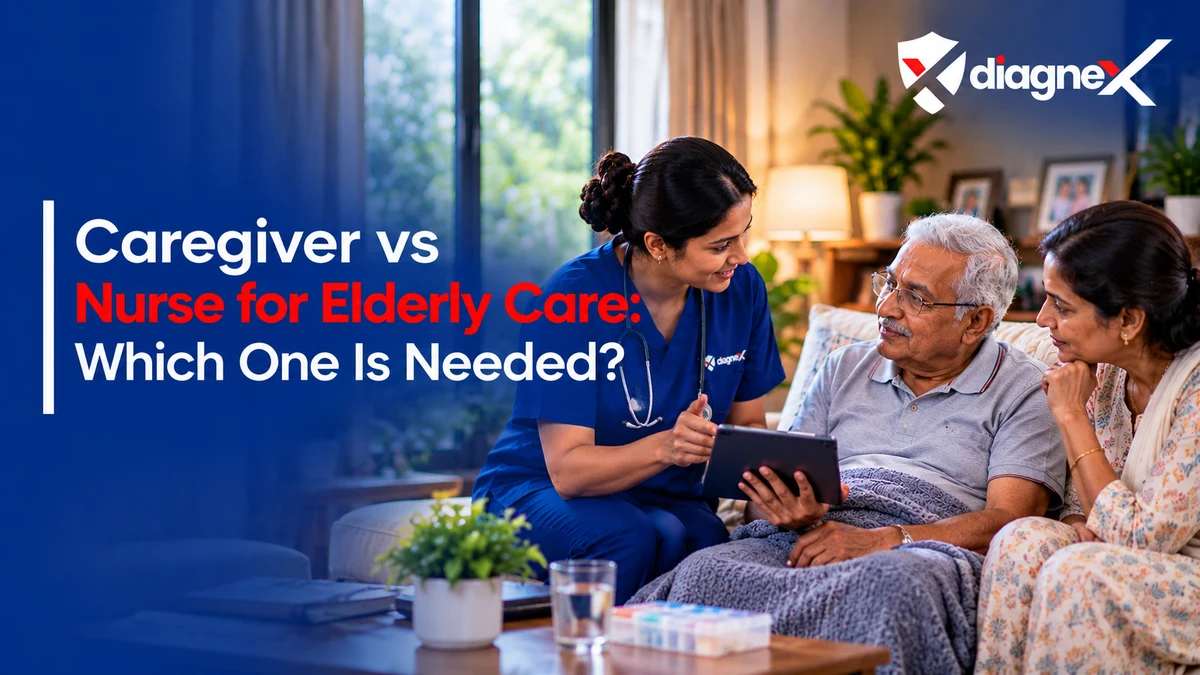
Families arranging care for an ageing parent often face a basic question: does the person need a caregiver at home, a nurse, or both? The answer depends on whether the main need is everyday assistance or clinical care. A caregiver generally supports activities of daily living such as bathing, mobility, meals, toileting, companionship and routine medication reminders. A nurse provides professional nursing care, including clinical procedures and monitoring that require nursing training. Understanding the difference between a caregiver vs nurse for elderly care helps families choose the right level of support without asking a caregiver to perform clinical tasks or paying for nursing when the primary need is non-clinical help.
Caregiver vs Nurse for Elderly Care: What Is the Main Difference?
The simplest distinction is this: A caregiver primarily helps the older person manage daily life. A nurse primarily provides clinical nursing care. Some responsibilities may appear similar from the outside, but the required training and scope can be very different. For example, reminding a parent that it is time to take a prescribed tablet is very different from administering an injection or managing a wound dressing.
What Does a Caregiver for an Elderly Person Do?
- Bathing and personal hygiene
- Dressing and grooming
- Toileting
- Walking and transfers
- Meals and feeding assistance
- Medication reminders
- Companionship
- Accompaniment to appointments
- Basic care-related household tasks
- Reporting changes in routine, mobility or behaviour
What Does a Nurse Do in Elderly Care at Home?
- Wound and dressing care
- Injections
- Catheter-related care
- Feeding-tube care
- Prescribed clinical monitoring
- Post-operative nursing support
- Support after hospital discharge
- Observation and reporting of clinical changes
Caregiver vs Nurse: A Practical Comparison
Daily Personal Care
Mobility and Transfers
Medication Reminders
Medication Administration
Wound Care
Catheter or Feeding-Tube Care
Companionship
Clinical Monitoring
When Does an Elderly Parent Usually Need a Caregiver?
- Difficulty bathing independently
- Need for help dressing
- Reduced mobility
- Toileting assistance
- Meal and feeding support
- Routine medication reminders
- Need for companionship
- Difficulty attending appointments alone
- Need for supervision during parts of the day
When Does an Elderly Parent Usually Need a Nurse?
- Prescribed injections
- Wound or dressing care
- Professional management of certain medical devices
- Post-operative nursing
- Clinical monitoring after discharge
- Other nursing procedures directed by a treating clinician
Can an Elderly Person Need Both a Caregiver and a Nurse?
Yes. In many home-care situations, the two roles complement each other. For example, an older adult recovering after hospitalisation may need a nurse for wound care while also needing a caregiver for bathing, meals, toileting and mobility during the rest of the day. Similarly, a person with a chronic condition may require occasional nursing visits while relying on a caregiver for everyday support. Using both roles can be more appropriate than expecting one person to perform every type of care.
Caregiver vs Nurse After Hospital Discharge
Discharge from hospital is one of the most common times families become unsure about which type of home support is needed. Before arranging care, review the discharge instructions carefully. A caregiver may help with: A nurse may be needed for: The care plan should follow the older person's actual discharge needs rather than using a standard home-care package.
- Bathing
- Meals
- Walking
- Toileting
- Medication reminders
- Accompanying the person to follow-up appointments
- Wound dressings
- Injections
- Clinical device care
- Prescribed monitoring
- Other nursing procedures
Caregiver vs Nurse for Bedridden Elderly People
Being bedridden does not automatically answer whether a caregiver or nurse is required. A bedridden person may need a caregiver for: The same person may also require nursing if there are wounds, clinical devices, injections or other medical needs. The more dependent the older person is, the more important it becomes to define responsibilities clearly.
- Personal hygiene
- Feeding assistance
- Toileting support
- Positioning assistance within an agreed plan
- Companionship
Caregiver vs Nurse for Medication Support
Medication is one of the easiest areas for role confusion. A caregiver may remind the parent that a prescribed medicine is due and help maintain an organised routine. A nurse may be involved when administration requires professional nursing skill or when the care plan includes clinical monitoring related to medication. Neither a caregiver nor nurse should independently change a prescription without appropriate medical direction.
Caregiver vs Nurse for Dementia or Memory Problems
An older adult with cognitive changes may need supervision, routine and companionship even if there are no nursing procedures. In that situation, a trained caregiver may be the main support. A nurse may become necessary if the person also has clinical needs that require professional nursing care. New or worsening memory, confusion or behavioural changes should also be medically assessed rather than assumed to be part of normal ageing.
Caregiver vs Nurse for Mobility Problems
Mobility assistance by itself does not always require a nurse. A caregiver may help with walking, transfers and routine movement if the care plan and training are appropriate. When mobility decline is new, severe or related to rehabilitation needs, a physiotherapist or doctor may need to assess the person. A nurse is not automatically the correct professional for every mobility problem.
Where Does a Physiotherapist Fit In?
- Strength
- Balance
- Walking
- Transfers
- Functional movement
Where Does a Doctor Fit In?
A doctor evaluates medical conditions, diagnoses problems and makes treatment decisions. A caregiver does not replace a doctor, and a nurse does not independently replace the treating clinician's role in diagnosis and medical management. Families should seek medical assessment when there is a new or significant change in health.
How to Decide Whether You Need a Caregiver or Nurse
Daily Living Needs
Clinical Needs
These include nursing procedures, wound care, injections, device care and other prescribed clinical tasks. These needs generally point toward nursing support. If both categories are present, the answer may be a combined care plan.
Questions Families Should Ask Before Hiring
- Which tasks does my parent need help with every day?
- Are any of these tasks clinical?
- Does the person require wound or device care?
- Are injections or other nursing procedures prescribed?
- Can the older person safely remain alone for part of the day?
- Is rehabilitation also required?
- Who will supervise and coordinate the different professionals?
- What happens if the person's needs change?
What Should a Caregiver Not Be Asked to Do?
- Diagnose illness
- Change medication doses
- Administer procedures outside their training
- Manage complex medical devices without appropriate qualification
- Make medical treatment decisions
What Should Families Check Before Hiring a Nurse?
When arranging senior nursing care, families should confirm the nurse's relevant qualifications and experience for the required procedures. Also clarify: A nurse should not be selected solely because the family believes nursing is automatically 'better' than caregiving. The service should match the actual clinical requirement.
- Which nursing tasks are included
- Whether care follows a doctor's instructions or discharge plan
- How observations are documented
- How clinical concerns are escalated
- What happens if the nurse is unavailable
Which Is More Expensive: Caregiver or Nurse?
Cost can vary substantially depending on shift duration, qualifications, complexity and service model. Nursing care is typically linked to professional clinical requirements, while caregiver services are usually centred on daily living support. Families should compare what is included rather than assuming one category always has a fixed price. Using a nurse for tasks that do not require nursing may increase cost unnecessarily, while using a caregiver for clinical tasks may create safety risks.
Can a Caregiver Become a Substitute for a Nurse?
Not simply through experience. A caregiver may become highly experienced at supporting elderly clients, but experience does not automatically create a professional nursing qualification. If a task requires nursing skill or professional clinical judgment, it should be assigned accordingly.
Can a Nurse Replace a Caregiver Completely?
Sometimes a nurse may also assist with personal care, but using a nurse for all routine daily activities is not always necessary or practical. For a person who needs extensive daily assistance plus occasional clinical procedures, a combined model may be more appropriate. The care plan should focus on matching each task to the right professional.
Caregiver vs Nurse for Parents Living Alone
When an elderly parent lives alone, consider both clinical needs and how much practical support is required throughout the day. Ask: A nurse visiting briefly for a clinical procedure may not solve a broader daily-living problem. Likewise, a caregiver staying for many hours may not solve a clinical nursing need.
- Can the parent manage meals and hygiene alone?
- Can they walk and use the bathroom safely?
- Can they follow medication routines?
- Are clinical procedures required?
- Who responds if there is a fall or sudden change?
- Can the parent safely remain alone between visits?
Caregiver vs Nurse When Children Live Abroad
- What the caregiver is responsible for
- What the nurse is responsible for
- Who coordinates appointments and updates
- How changes in the parent's condition are escalated
- Who reviews the care plan when needs change
When Is Home Care Not Enough?
Neither a caregiver nor home nurse can replace hospital-level care when an older person requires acute treatment or continuous hospital monitoring. Families should seek urgent medical attention for serious or sudden symptoms such as severe breathing difficulty, chest pain, loss of consciousness, sudden weakness or other medical emergencies. The availability of home support should not delay appropriate emergency care.
A Simple Decision Guide
- Bathing
- Dressing
- Meals
- Toileting
- Mobility
- Companionship
- Routine reminders
- Wound care
- Injections
- Clinical device care
- Prescribed nursing procedures
- Professional nursing monitoring
The Bottom Line
So, caregiver vs nurse for elderly care: which one is needed? Choose based on the type of support required, not on which title sounds more professional. A caregiver is generally appropriate for non-clinical help with everyday activities, while a nurse is appropriate when the older person requires professional nursing care.
Many elderly people need only one of these roles. Others, especially after hospitalisation or when living with complex health conditions, may need both. The safest approach is to define each task clearly, assign it to the right professional and review the arrangement whenever the older person's condition or level of independence changes.
Frequently Asked Questions
What is the difference between a caregiver and nurse for elderly care?
Can a caregiver give injections to an elderly person?
Does an elderly person need a nurse after hospital discharge?
It depends on the discharge plan. Nursing may be required if there are wounds, injections, clinical devices or other prescribed nursing needs. A caregiver may also be needed for daily activities such as bathing, meals and mobility.
Can a caregiver help with medicines?
Can a nurse also help with bathing and feeding?
When do elderly parents need both a caregiver and a nurse?
Is a nurse better than a caregiver for elderly people?
Neither is inherently better. They perform different roles. The appropriate choice depends on whether the older person's main needs are non-clinical, clinical or a combination of both.