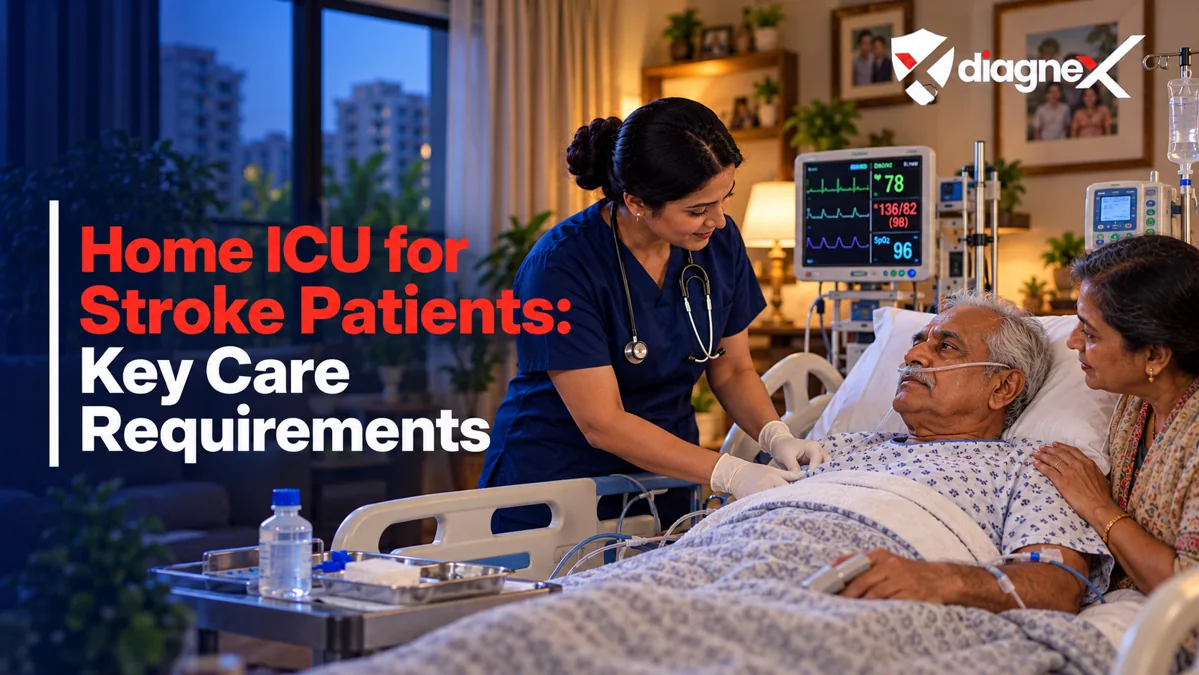
Home ICU after major surgery can be considered for selected patients who are stable enough to leave hospital but still need more clinical support than ordinary home recovery.
For related context, read Home ICU After Cardiac Surgery: What to Plan and Home ICU for Stroke Patients: Key Care Requirements.
For related context, read Home ICU After Cardiac Surgery: What to Plan and Home ICU for Stroke Patients: Key Care Requirements.
This may apply after major abdominal, thoracic, vascular, orthopaedic, cancer or other complex surgery when the patient has left the acute postoperative phase but continues to need close nursing, oxygen, wound or drain care, medication support, mobility assistance, glucose checks, fluid monitoring or rehabilitation.
The key distinction is stability. NICE recommends specialist postoperative recovery areas such as high-dependency units or intensive care units for patients at high risk of complications or mortality. A home ICU is therefore not a substitute for this immediate high-risk postoperative phase. It is a possible step-down pathway only after the treating team decides that hospital-level intervention is no longer expected to be needed and that the remaining care can be delivered safely at home.
What Does Step-Down Care at Home Mean?
Step-down care sits between full hospital critical care and routine home recovery.
The patient may no longer need continuous access to an operating theatre, emergency imaging, invasive monitoring or rapid specialist intervention, but may still need more support than a family can safely provide alone.
The Home ICU service pathway can be relevant when the discharge plan calls for higher-dependency nursing, monitoring or equipment in the home.
Who May Be Considered for Home ICU After Major Surgery?
A patient may be considered when the surgeon and treating team believe the condition is clinically stable, the postoperative course is predictable enough for home management and the required nursing and equipment can be arranged safely.
The patient may still need help with oxygen, wound care, drains, mobility, medicines, nutrition, glucose monitoring or other defined tasks.
Who Is Suitable for ICU Care at Home? explains why the diagnosis or surgery type alone does not determine whether home ICU is appropriate.
Who May Not Be Suitable?
Patients with active major bleeding, unstable blood pressure, rapidly worsening breathing, uncontrolled pain, repeated vomiting with deterioration, suspected sepsis, new neurological deficits, uncontrolled arrhythmia or a need for urgent procedures or imaging should generally remain in hospital or return there promptly.
A home setup cannot safely replace an operating theatre, radiology department, laboratory, blood bank or specialist surgical team.
Is ICU at Home Safe? What Needs to Be in Place explains why patient stability and a realistic hospital-escalation pathway are essential.
The Discharge Plan Should Define the Home ICU
The home-care plan should be built from the hospital discharge instructions.
It should identify the operation performed, current diagnoses, medicines, wound and drain instructions, oxygen needs, activity restrictions, nutrition plan, VTE prevention, follow-up, laboratory tests and warning signs.
Hospital ICU to Home: How the Transition Is Planned explains why staffing, equipment, caregiver training and handover should be settled before the patient leaves hospital.
Home ICU Is Not the Same as a Hospital ICU
A hospital ICU can provide invasive monitoring, emergency procedures, blood transfusion, rapid imaging, laboratory testing, airway management, resuscitation and immediate specialist review.
A home ICU can reproduce selected bedside capabilities for a stable patient, but not the full hospital system.
Families should therefore think of home ICU as planned post-acute care, not as a way to manage an unstable postoperative patient outside hospital.
Vital-Sign Monitoring Should Be Individualised
Some patients may need scheduled monitoring of blood pressure, pulse, temperature, oxygen saturation or blood glucose.
The treating team should define which readings matter, how often they should be checked and what changes require a call or transfer.
Families should not use generic target ranges from another patient because acceptable values depend on the operation, comorbidities and current treatment.
Oxygen May Be Needed Temporarily
Some patients leave hospital with prescribed oxygen, particularly after thoracic surgery, prolonged ventilation, postoperative lung problems or critical illness. For more on the practical service arrangements, review home nursing before deciding what information the care team needs.
The oxygen flow rate and target saturation should come from the treating team. Increasing oxygen requirements, new severe breathlessness or falling saturation should trigger clinical review rather than repeated adjustment at home.
Oxygen is a treatment with a prescribed goal, not a general response to every episode of fatigue or shortness of breath.
Breathing Exercises and Chest Care May Continue
Deep breathing, coughing techniques or an incentive spirometer may be recommended after some operations.
These measures can support lung expansion and secretion clearance when they are used as instructed. Pain control is often important because a patient who cannot breathe deeply or cough because of pain may recover more slowly.
New fever, chest congestion, increasing breathlessness or falling oxygen saturation requires review rather than simply increasing breathing exercises.
Pain Control Is Part of Safe Recovery
NICE recommends planning postoperative pain management according to the person's age, frailty, comorbidities, kidney and liver function, allergies, medicines and cognitive function.
Pain should be controlled well enough for breathing, coughing, sleep and mobilisation without causing unsafe sedation.
Increasing pain, pain that changes character or pain accompanied by fainting, severe breathlessness, abdominal rigidity or another major change should be reported promptly.
Watch for Excessive Sedation
Opioids and other medicines can cause drowsiness, confusion, constipation and slower breathing.
A patient who is unusually difficult to wake, breathing slowly, newly confused or unable to stay awake needs urgent assessment rather than simply having the next dose delayed without medical advice.
Medication timing, dose changes and opioid reduction should follow the treating team's plan.
Surgical Wound Care Needs Clear Instructions
The CDC advises patients to understand how to care for the wound before leaving hospital and to contact a healthcare provider for signs such as increasing redness, pain, drainage or fever.
The home team should know whether the wound should remain covered, when dressings are changed, whether showering is permitted and when sutures or staples are reviewed.
Post-Operative Care at Home may be relevant when structured wound care, medication support and recovery assistance are needed after discharge.
Surgical Drains Need a Written Plan
Some patients return home with drains.
The discharge plan should specify how the drain is secured, whether output needs to be measured, what amount or colour change is expected and when removal will be reviewed.
Sudden heavy bleeding, loss of suction, accidental dislodgement, rapidly increasing output, fever or worsening pain should be reported according to the surgical plan.
Do Not Remove Drains, Sutures or Staples Without Instructions
The timing of drain, suture or staple removal depends on the operation and wound.
Families should not remove them simply because a certain number of days has passed. The surgeon or responsible clinical team should determine whether the wound is ready.
If the incision opens, drains heavily or appears infected, the patient may need reassessment before any removal is attempted.
Surgical Site Infection Needs Early Attention
The CDC identifies redness and pain around the surgical site, cloudy drainage and fever as common signs of surgical site infection.
Hand hygiene should be performed before and after wound care, and visitors should avoid touching the wound or dressings.
A suspected surgical site infection should be reported promptly because treatment may involve antibiotics, drainage or additional surgical care depending on the cause.
Venous Thromboembolism Prevention May Continue After Discharge
Major surgery and reduced mobility can increase the risk of deep-vein thrombosis and pulmonary embolism.
NICE recommends assessing surgical patients for both VTE and bleeding risk and giving patients and carers information on prevention before discharge. Depending on the operation and risk, the plan may include mobilisation, compression devices or anticoagulant medicine.
Families should follow the prescribed duration and method rather than stopping prophylaxis because the patient has returned home.
Watch for Signs of DVT or Pulmonary Embolism
New one-sided leg swelling, calf pain or tenderness can be concerning for deep-vein thrombosis.
Sudden unexplained breathlessness, chest pain, coughing blood, collapse or marked oxygen deterioration can be signs of pulmonary embolism and require urgent assessment.
A home ICU should make escalation faster, not create a reason to observe these symptoms at home.
Anticoagulants Increase Bleeding Risk
Some postoperative patients are discharged on anticoagulants for VTE prevention or another medical reason.
The family should know the medicine, dose, duration and what to do if a dose is missed. Unexpected major bleeding, black stools, vomiting blood, severe weakness or neurological symptoms require urgent medical attention.
Do not start, stop or change anticoagulants independently.
Early Mobility Usually Supports Recovery
The NHS advises moving around as soon as the doctor considers it appropriate after surgery because movement supports blood flow, wound healing and muscle strength.
The exact activity level depends on the operation, weight-bearing restrictions, pain, blood pressure, breathing and overall stability.
A patient who is very weak after ICU may need supervised mobilisation rather than simply being told to walk more.
Physiotherapy Should Follow Surgical Restrictions
Physiotherapy may address bed mobility, transfers, walking, breathing exercises, strength and deconditioning.
The programme must respect the surgeon's restrictions, including weight-bearing limits, abdominal precautions, spinal precautions or protection of a reconstructed area.
Physiotherapy at Home may be relevant when the treating team considers home-based rehabilitation safe and useful. If the family is considering support at home, the Diagnex guide to medical equipment on rent explains the service pathway and its limits.
Post-ICU Weakness Can Delay Recovery
Patients who spent a prolonged period in ICU may leave hospital with marked weakness, fatigue and reduced endurance.
They may need help standing, transferring, toileting or walking even when the surgical problem itself is improving.
This is one reason step-down care may need to combine nursing with rehabilitation rather than focus only on vital signs.
Delirium and Confusion Need Medical Attention
Older adults and patients recovering from major surgery or ICU may develop confusion or delirium.
New confusion can be related to infection, medicines, dehydration, pain, sleep disruption, low oxygen, metabolic problems or other complications.
A sudden change in mental state should not be dismissed as normal ageing or ordinary postoperative tiredness.
Nutrition Supports Healing
Appetite may be poor after major surgery, but recovery still requires adequate nutrition and hydration.
The nutrition plan should reflect the operation and any restrictions. Some patients may need high-protein intake, texture modification, supplements or tube feeding, while others may have fluid, kidney, cardiac or diabetes-related limits.
Persistent vomiting, inability to meet nutritional needs, rapid weight loss or signs of dehydration should be reported.
Bowel Function Often Changes After Surgery
Anaesthesia, opioids, reduced mobility and changes in food and fluid intake can contribute to constipation.
The discharge plan may include a bowel regimen, especially when opioid pain medicines are used.
Severe abdominal pain, repeated vomiting, increasing abdominal swelling or inability to pass stool or gas can require urgent review, particularly after abdominal surgery.
Urinary Retention and Catheter Care May Be Relevant
Some patients leave hospital with a urinary catheter or have temporary difficulty emptying the bladder.
If a catheter is present, the team should follow the prescribed catheter-care plan and maintain unobstructed drainage.
New fever, lower abdominal pain, blocked urine flow, significant blood in the urine or sudden worsening confusion should be reported.
Blood Glucose May Need Closer Monitoring
Major surgery, infection, steroids, nutrition changes and reduced activity can affect blood glucose.
Patients with diabetes may need a temporary change in monitoring frequency after discharge. The treating team should define the plan and thresholds for action.
Home nurses can support prescribed glucose checks, but treatment changes remain with the appropriate clinician.
Fluid Balance and Electrolytes May Need Follow-Up
Patients who have had major abdominal surgery, kidney problems, prolonged ICU stays, large fluid shifts or diuretic treatment may need follow-up blood tests and fluid assessment.
Reduced urine output, persistent dizziness, marked swelling, severe weakness or recurrent vomiting can indicate a problem that needs review.
The home team should know which laboratory tests are scheduled and who will review the results.
Home ICU Nursing Requires Defined Competencies
The nurse should be selected for the procedures the patient actually needs.
These may include vital-sign observation, oxygen, wound and drain care, medicines, injections, glucose checks, catheter care, pressure-area prevention, feeding support and clinical documentation.
Home Nursing may be relevant when defined skilled nursing is required in addition to family or caregiver support.
Not Every Patient Needs 24-Hour Nursing
Nursing intensity should match the patient's dependency and risk.
One patient may need continuous coverage for a period because of oxygen, multiple drains or significant weakness, while another may need scheduled nursing visits plus family support.
The plan should be reassessed as the patient becomes more independent.
Equipment Should Follow the Clinical Plan
Possible equipment may include a hospital bed, pressure-relief mattress, blood-pressure monitor, pulse oximeter, oxygen source, suction machine, infusion or syringe pump, wheelchair, commode or mobility aids.
Not every patient needs all of these devices.
Equipment should be selected from the discharge assessment rather than from a generic Home ICU checklist.
Power and Oxygen Backup May Be Necessary
If essential care depends on oxygen, suction, infusion pumps or another powered device, the family needs a realistic failure plan.
Backup power, replacement consumables, technical support and emergency contacts should be arranged before discharge.
The amount of backup required depends on the device and the time needed to reach the receiving hospital.
Caregiver Training Should Happen Before Discharge
Family members should understand what they are expected to do and which tasks remain clinical responsibilities.
Training may include safe transfers, wound observation, drain recording, medicines, oxygen precautions, nutrition, fall prevention and recognition of emergency symptoms.
A written handover reduces confusion when care is shared between family and professional staff.
Follow-Up and Laboratory Testing Remain Essential
Home care does not replace surgical review.
The plan should include follow-up appointments, wound or drain reviews, laboratory tests and rehabilitation appointments where required. For care planning beyond this article, compare bedridden patient care at home with the instructions already given by the treating professional.
If transport is difficult, the family should ask the treating team which reviews can safely be done at home or remotely and which require hospital attendance.
Every Home ICU Needs an Escalation Plan
The family and care team should know which hospital will receive the patient, how transport will be arranged and whom to contact first when the condition changes.
The plan should also identify which records, medication lists and operative documents should travel with the patient.
A clear escalation pathway is as important as the bedside equipment.
When Should a Patient Return to Hospital?
Urgent hospital assessment is needed for: • severe or rapidly worsening breathlessness; • new chest pain, collapse or fainting; • uncontrolled bleeding or rapidly increasing drain output; • sudden severe abdominal pain or marked abdominal swelling; • repeated vomiting with deterioration; • new confusion, severe drowsiness or inability to wake normally; • signs of stroke or another new neurological deficit; • rapidly spreading wound redness, wound opening or fever with marked deterioration; • new one-sided leg swelling with breathlessness or chest pain; • a rapidly rising oxygen requirement or falling oxygen saturation; • any other major change identified in the surgical discharge plan.
The patient-specific instructions from the surgeon and treating team should always take priority.
When Home ICU May No Longer Be Appropriate
Home care may no longer be safe if the patient becomes unstable, needs repeated emergency diagnostics, develops uncontrolled bleeding, worsening respiratory failure, severe infection, bowel obstruction, organ dysfunction or another complication requiring hospital intervention.
The setting should also be reassessed if adequate nursing, equipment, backup power or emergency transport can no longer be maintained.
Returning to hospital when clinical needs increase is a safety decision, not a failure of step-down care.
A Practical Step-Down Care Checklist After Major Surgery
Before discharge, families can confirm: • The treating team agrees that home care is appropriate. • The operation and current diagnoses are documented. • Vital-sign and oxygen-monitoring instructions are clear. • Wound and drain care instructions are written down. • Pain medicines and sedation precautions are understood. • VTE prevention and anticoagulant instructions are clear. • Mobility restrictions and rehabilitation goals are documented. • Nutrition, bowel and bladder plans are defined. • Diabetes or fluid-monitoring needs are written down when relevant. • Nursing competencies and shift coverage are confirmed. • Required equipment has been installed and tested. • Backup power and oxygen are available when essential. • Follow-up appointments and laboratory tests are scheduled. • Emergency contacts and hospital-transfer arrangements are written down. • Family caregivers know which changes require immediate escalation.
How to Arrange Step-Down Home ICU Care With Diagnex
To plan post surgery ICU care at home, share the hospital discharge plan, surgery performed, current vital-sign and oxygen needs, wound and drain status, medicines, mobility, nutrition, catheter or feeding requirements, nursing procedures, equipment needs, follow-up plan and locality.
Diagnex can review whether the requirement fits Home ICU, Home Nursing, Post-Operative Care at Home, Physiotherapy at Home or another care pathway based on the treating team's plan and the patient's current stability. Exact staffing, equipment and service availability are confirmed for the specific locality and clinical requirement.
For service coordination, use the Diagnex Contact page.
Frequently asked questions
What is post surgery ICU care at home?
It is a step-down home-care arrangement for selected stable patients who have completed the acute hospital phase after major surgery but still need substantial nursing, monitoring, oxygen, wound care, medicines, equipment or rehabilitation.
Can every major-surgery patient go to home ICU?
No. Home ICU is only appropriate when the treating team considers the patient sufficiently stable and the required care can be delivered safely outside hospital.
Does a patient need continuous monitoring at home?
Not necessarily. Monitoring should match the patient's diagnosis, surgery and discharge plan. Some patients need scheduled observations rather than continuous multiparameter monitoring.
Can surgical drains be managed at home?
Yes, selected patients can go home with drains when the surgical team provides clear instructions on care, output monitoring, warning signs and follow-up.
How is blood-clot risk managed after major surgery?
The plan may include early mobilisation, compression devices or prescribed anticoagulant medicine depending on the patient's VTE and bleeding risk. The treating team's instructions should be followed exactly.
When is a nurse needed after major surgery?
Nursing may be needed for defined clinical tasks such as wound or drain care, oxygen, injections, glucose monitoring, catheter care, medicines or closer observation.
When should a patient in home ICU return to hospital?
Severe breathlessness, uncontrolled bleeding, collapse, new chest pain, major wound problems, rapidly worsening infection, new neurological symptoms or another sudden major deterioration should trigger urgent hospital escalation according to the discharge plan.
References and further reading
This article provides general education and does not replace a surgeon, intensivist or hospital discharge plan. Clinical points were cross-checked against current NICE guidance on perioperative care and venous thromboembolism prevention, CDC guidance on surgical site infection, and NHS guidance on recovery and discharge after surgery.
Related Diagnex services and guides
Explore the Home ICU service pathway and the Home ICU article library for more information.
Diagnex publishes general healthcare information to support care planning. Individual decisions about diagnosis, prescriptions and treatment remain with the treating professional. Read our medical content policy and editorial standards.