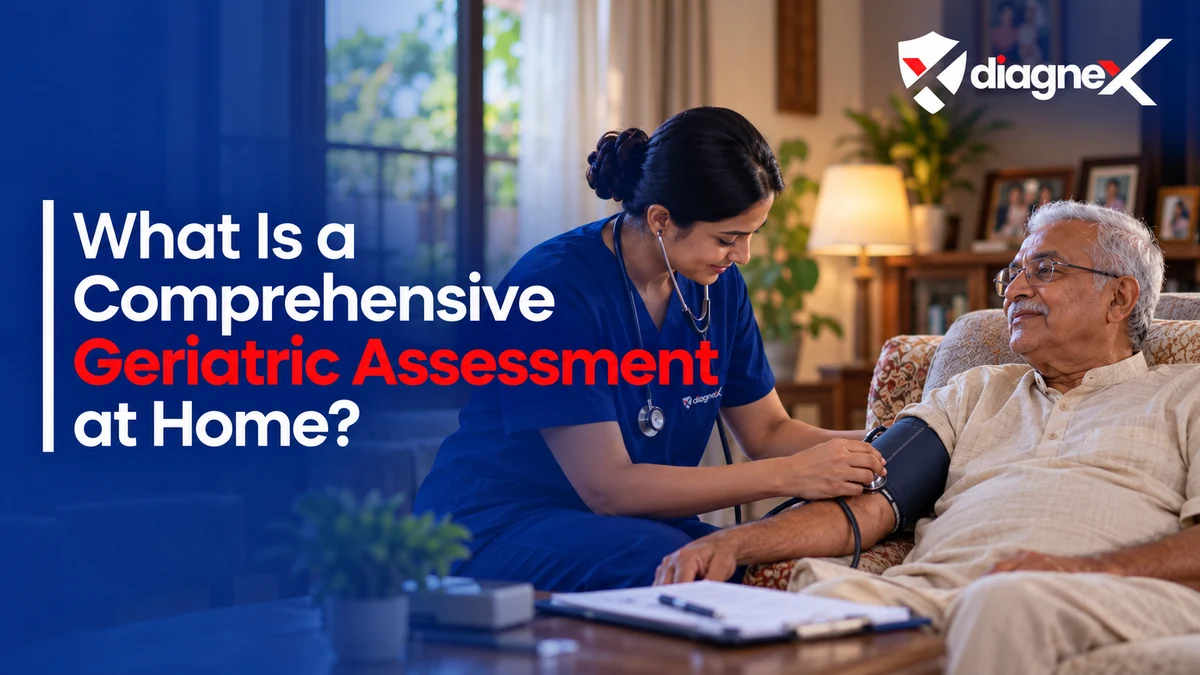
A comprehensive geriatric assessment at home is a structured review of an older adult’s medical, functional, cognitive, nutritional, emotional and social needs carried out in the person’s own home. Instead of looking at one symptom or diagnosis in isolation, it looks at how several age-related issues interact and affect everyday independence and safety. The purpose of a geriatric assessment is to identify risks, understand what the older person can still manage independently, clarify where support is needed and create a coordinated elder care plan.
- Medical conditions
- Current medicines
- Mobility and balance
- Ability to manage daily activities
- Memory and cognition
- Mood
- Nutrition and hydration
- Vision and hearing
- Continence
- Falls
- Home safety
- Family and caregiver support
Why Is a Geriatric Assessment Different From a Regular Doctor Visit?
A regular doctor visit may focus on a specific medical complaint, diagnosis or treatment decision. A comprehensive geriatric assessment takes a broader view. It asks how health conditions, medicines, mobility, memory, nutrition and daily function affect the older person’s ability to live safely and independently. The two approaches complement each other. Geriatric assessment does not replace routine medical care.
Why Perform the Assessment at Home?
- How the person gets out of bed or a chair
- How they walk through the home
- Whether the bathroom is easy to use
- Whether stairs or clutter create risk
- How medicines are stored
- How meals are managed
- Whether the person can move safely between important rooms
Who May Benefit From a Comprehensive Geriatric Assessment at Home?
- Repeated falls
- Increasing weakness
- Multiple chronic conditions
- Several prescribed medicines
- Memory changes
- Poor appetite or weight loss
- Repeated hospital admissions
- Difficulty bathing, dressing or toileting
- Increasing caregiver strain
- Uncertainty about whether the person can continue living safely at home
Who Carries Out a Geriatric Assessment?
The exact team depends on the older person’s needs and the care model. A geriatric doctor at home may assess medical complexity, medicines, function and broader age-related risks. Other professionals may contribute, including: Not every assessment requires every professional. The team should match the person’s needs.
- Nurses
- Physiotherapists
- Occupational therapists
- Dietitians or nutrition professionals
- Mental-health professionals
- Care coordinators
- Professional caregivers
What Does the Medical Review Include?
- Known diagnoses
- Recent symptoms
- Recent hospitalisations
- Pain
- Breathing problems
- Dizziness
- Sleep concerns
- Changes in appetite or weight
What Does the Medication Review Include?
- Whether all medicines are still required
- Possible duplication
- Potential side effects
- Whether the person can follow the schedule
- Whether doses are being missed
- Whether medicines may be contributing to dizziness or falls
How Is Daily Function Assessed?
- Bathing
- Dressing
- Toileting
- Eating
- Walking
- Transfers
- Using the phone
- Managing meals
- Managing medicines
- Handling appointments
How Are Mobility and Fall Risk Assessed?
- Recent falls
- Near-falls
- Use of walking aids
- Footwear
- Ability to stand from a chair
- Stair use
- Bathroom transfers
How Are Memory and Cognition Assessed?
- Repeated questions
- Getting lost
- Forgetting medicines
- Leaving appliances on
- Changes in behaviour
- Night-time confusion
How Is Mood Assessed?
- Persistent sadness
- Anxiety
- Loss of interest
- Sleep changes
- Social withdrawal
- Grief or loneliness
How Is Nutrition Assessed?
- Recent weight loss
- Poor appetite
- Difficulty shopping or cooking
- Feeding difficulty
- Swallowing problems
- Hydration
How Are Vision and Hearing Considered?
How Are Toileting and Continence Assessed?
How Is Home Safety Reviewed?
- Bathroom safety
- Lighting
- Loose rugs
- Stairs
- Handrails
- Electrical cables
- Bed and chair height
- Pathways between rooms
How Are Caregiver and Family Needs Assessed?
- Who currently provides care?
- How many hours of help are being provided?
- Is one person carrying most of the responsibility?
- Are family members living nearby or far away?
- Is caregiver strain increasing?
- What happens if the main caregiver becomes unavailable?
What Should Families Prepare Before the Assessment?
- Current medicine list
- Known diagnoses
- Recent hospital discharge summaries
- Recent test reports if relevant
- Details of falls
- Changes in memory or behaviour
- Recent weight or appetite changes
- Current caregiver schedule
- Questions from family members
What Happens During a Geriatric Doctor Home Visit?
- Medical history review
- Medication review
- Basic functional assessment
- Mobility review
- Cognitive or mood screening where appropriate
- Discussion of nutrition
- Review of recent falls or hospitalisations
- Home-care planning
How Long Does a Comprehensive Geriatric Assessment Take?
The duration can vary depending on the person’s complexity and how many areas need review. A comprehensive assessment generally takes longer than a routine symptom-focused consultation because several aspects of health and function are considered together. Families should focus more on completeness than on a fixed visit length.
What Happens After the Assessment?
- Medical follow-up
- Medication changes by the treating clinician
- Nursing
- Physiotherapy
- Caregiver support
- Nutrition input
- Home modifications
- Fall-prevention measures
- Further cognitive assessment
- Review dates or reassessment triggers
What Is an Elder Care Plan?
- Which daily activities require help
- How many caregiver hours are needed
- Whether nursing is required
- Whether rehabilitation is needed
- Which safety changes should be made at home
- Which medical issues need follow-up
- Who is responsible for each part of care
Can a Geriatric Assessment Help Decide Whether Home Care Is Enough?
Yes. One important purpose of comprehensive assessment is to judge whether the person’s needs can be safely supported at home. The assessment may identify whether the person needs: The decision should be based on function, safety and available support rather than age alone.
- Part-time caregiver support
- Full-time caregiver support
- Overnight supervision
- Nursing
- Rehabilitation
- A different residential care setting
Can a Geriatric Assessment Help Prevent Falls?
- Weakness
- Poor balance
- Unsafe home layout
- Vision problems
- Unsuitable footwear
- Medication-related dizziness
Can It Help With Medication Problems?
Yes. Medication review is often an important part of geriatric assessment, especially when the person takes several medicines or has dizziness, confusion or difficulty following the schedule. The assessment can identify issues that should be discussed with the prescribing clinician.
Can It Help With Memory Problems?
Yes. The assessment can help document cognitive changes and determine whether further evaluation is needed. It can also identify practical risks such as missed medicines, unsafe cooking or difficulty managing appointments.
How Often Should a Geriatric Assessment Be Repeated?
- A fall
- A hospital admission
- New confusion
- Weight loss
- A major medication change
- Increasing caregiver dependence
- Reduced mobility
- A change in living arrangement
What Are the Benefits of Doing the Assessment at Home?
- Unsafe transfers
- Difficult bathroom access
- Medication-organisation problems
- Meal-preparation difficulties
- Home hazards
- Gaps in caregiver coverage
What Are the Limits of a Home Geriatric Assessment?
A home assessment cannot replace emergency care, hospital investigations or specialist evaluation when those are required. Some concerns identified during the assessment may need blood tests, imaging, specialist consultation or hospital treatment. The home assessment should therefore be seen as part of a broader care pathway.
When Should Families Seek Urgent Medical Care Instead?
Questions Families Can Ask During a Geriatric Assessment
- What are the main risks affecting my parent’s independence?
- Which problems need medical follow-up?
- Is the medication routine manageable?
- Does my parent need a caregiver, nurse or physiotherapist?
- How many hours of support are likely to be needed?
- What changes should we make at home?
- What should trigger reassessment?
- Can my parent safely continue living alone?
The Bottom Line
So, what is a comprehensive geriatric assessment at home? It is a structured review of an older adult’s medical conditions, medicines, mobility, daily function, memory, mood, nutrition, home safety and support system carried out in the person’s own environment. The value of the assessment is not only in identifying problems. It is in connecting those findings into a practical elder care plan that clarifies what support is needed, who should provide it and what should be reviewed over time. For families dealing with several overlapping concerns, a comprehensive geriatric assessment can provide a clearer picture than addressing each problem separately.