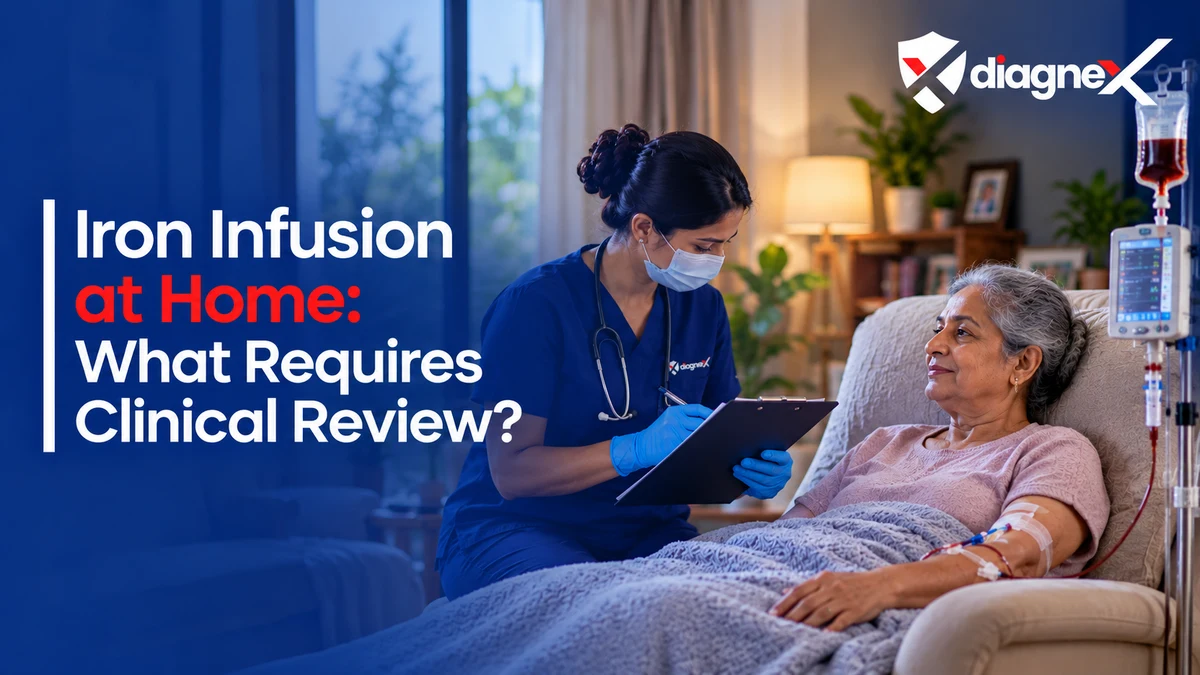
An iron infusion at home may be considered for selected patients with a confirmed need for intravenous iron, but it requires more clinical review than a routine saline drip or simple nurse IV visit. IV iron is a prescription treatment used to replace iron directly through a vein. It may be considered when oral iron is not tolerated, has not worked adequately, cannot be absorbed reliably, or when the treating team believes iron needs to be replaced more quickly.
The important distinction is that an iron infusion is not simply “iron in a drip.” Different IV iron products have different dosing limits, infusion times, repeat-dose schedules and adverse-effect profiles. Serious hypersensitivity reactions are uncommon but can occur. Some products also have specific risks that require laboratory follow-up.
International safety guidance states that IV iron should be administered where staff trained to recognise and manage serious hypersensitivity reactions are immediately available and where resuscitation facilities are available. Patients should be observed during treatment and for at least 30 minutes after administration. That makes home suitability a clinical and operational decision. A home visit is only appropriate if the patient, product, monitoring plan and provider capability meet the safety requirements of the prescribed treatment. This guide explains what needs clinical review before an iron infusion at home, which patients may need a clinic or hospital instead, what an infusion nurse monitors, and why the exact iron preparation matters.
The Short Answer: Can an Iron Infusion Be Given at Home?
- Iron deficiency has been confirmed
- A clinician has prescribed a specific IV iron product and dose
- The patient is clinically stable
The reason for iron deficiency has been assessed or is being managed. The infusion can be delivered according to product-specific instructions. Suitable IV access is available or can be established safely. The provider has trained staff who can recognise and manage infusion reactions.
Appropriate emergency medicines and resuscitation capability are immediately available. Required vital-sign and post-infusion monitoring can be provided. Any necessary laboratory follow-up can be arranged. There is a clear escalation pathway if the patient reacts or becomes unwell.
- The patient has had a serious previous reaction to IV iron
- The patient is medically unstable
- There is severe symptomatic anaemia requiring urgent assessment
- The cause of anaemia is unclear
There is active significant bleeding. The patient may need blood transfusion or urgent investigation. The home provider cannot meet reaction-management requirements. The iron product requires monitoring that cannot be provided reliably at home. The patient has other clinical factors that make a supervised facility preferable. The question is not only whether an infusion nurse is available. It is whether the full treatment and reaction-management pathway is available.
What Is an Iron Infusion?
An iron infusion is intravenous iron replacement delivered into a vein. The treatment is used to replenish iron stores and support the body’s production of haemoglobin and red blood cells when IV replacement is clinically appropriate. These products are not interchangeable simply because they all contain iron.
- Ferric carboxymaltose
- Ferric derisomaltose
- Iron sucrose
- Other product-specific formulations
- Maximum dose per administration
- Whether the dose is weight based
- Infusion duration
- Number of doses needed
- Minimum interval between doses
- Dilution instructions
- Adverse-effect profile
- Laboratory-monitoring requirements
- The prescribed product therefore matters
Why Might IV Iron Be Prescribed Instead of Iron Tablets?
- Oral iron causes unacceptable side effects
- Oral iron has not corrected the deficiency
- Iron absorption is poor
- The patient has a condition affecting absorption
Iron replacement is needed more quickly. There is ongoing iron loss that oral treatment cannot keep up with. The patient has a clinical condition in which IV iron is preferred under the treatment plan. The patient cannot reliably take oral iron. Guy’s and St Thomas’ NHS guidance notes that IV iron may be used for iron deficiency or iron-deficiency anaemia when iron levels need to be increased more quickly or when oral treatment is unsuitable. IV iron is not automatically “stronger” or better than oral iron. The route should match the patient’s diagnosis, urgency and treatment goals.
Iron Deficiency Must Be Confirmed Before the Infusion
Tiredness and low haemoglobin do not automatically mean the patient needs IV iron. Giving iron when iron deficiency has not been established can delay the correct diagnosis. The goal is to confirm both: Does the patient need iron? Why is the patient iron deficient?
- Iron deficiency
- Vitamin B12 deficiency
- Folate deficiency
- Chronic kidney disease
- Inflammation
- Blood loss
- Haemolysis
- Bone-marrow disorders
- Other medical conditions
- Haemoglobin
- Ferritin
- Transferrin saturation or other iron studies
- Red-cell indices
- Kidney function
- Other tests depending on the suspected cause
- The exact tests vary by patient
Why the Cause of Iron Deficiency Still Matters
An iron infusion can replace iron. It does not automatically fix the reason iron was lost. If the underlying cause is not addressed, iron deficiency may return. A home infusion should therefore fit into a wider treatment plan rather than becoming a stand-alone solution for low ferritin or fatigue.
- Heavy menstrual bleeding
- Gastrointestinal blood loss
- Recent surgery
- Pregnancy-related iron requirements
- Poor dietary intake
- Malabsorption
- Inflammatory bowel disease
- Chronic kidney disease
- Repeated blood loss
- Other medical conditions
What Requires Clinical Review Before an Iron Infusion at Home?
1. The Diagnosis
2. The Exact Iron Product
3. The Dose
- Iron deficit
- Haemoglobin
- Body weight
- Product instructions
- Clinical condition
- Previous doses
4. Previous IV Iron Reactions
- Breathing difficulty
- Wheezing
- Facial swelling
- Severe dizziness
- Low blood pressure
- Collapse
- Significant chest or back symptoms
- Another reaction during IV iron
5. Allergy and Atopy History
- Known allergies
- Severe asthma
- Eczema
- Atopic conditions
- Immune or inflammatory disorders
6. Pregnancy
Pregnancy requires specific medical review. The indication, timing, product and maternal-fetal considerations should be assessed by the treating obstetric or medical team. Pregnancy should not be treated as a routine nurse-only iron infusion booking.
7. Active Infection or Other Acute Illness
- Fever
- Suspected infection
- New breathlessness
- Chest pain
- Low blood pressure
- Active bleeding
- Another acute illness
8. Liver, Kidney or Other Relevant Medical Conditions
- Liver disease
- Kidney disease
- Inflammatory conditions
- Other causes of anaemia
- Other medicines
- Previous iron treatment
9. Laboratory Results
- Kidney function
- Liver tests
- Phosphate
- Other laboratory monitoring
10. The Setting Itself
- Trained clinical staff
- Reaction recognition
- Immediate access to appropriate emergency treatment
- Resuscitation capability
- Post-infusion observation
- Emergency transfer plan
Why an Iron Infusion Is Different From a Saline Drip
A saline infusion primarily delivers fluid and sodium chloride. An iron infusion delivers an active prescription medicine with product-specific dosing and reaction risks. A provider should not treat iron as simply another bag added to a standard IV drip visit. For the IV-fluid distinction, see Saline Drip at Home: When It May Be Prescribed.
- Pre-infusion clinical review
- Medicine verification
- Dose calculation
- Infusion rate
- Reaction preparedness
- Observation
- Laboratory follow-up
Why an Iron Infusion Is Different From a Routine IV Antibiotic
- Infection response
- Kidney or liver monitoring
- Allergy
- Line care
- Treatment duration
- Antimicrobial stewardship
- Confirmed iron deficiency
- Product-specific dose
- Hypersensitivity
- Infusion reaction
- Blood pressure changes
- Extravasation and skin staining
- Product-specific phosphate risk
- Follow-up iron studies
Why the Exact Iron Product Matters
- Iron infusion
- Ferinject
- Monofer
- Venofer
- Iron sucrose
- Ferric carboxymaltose
- Ferric derisomaltose
- Different doses
- Different infusion times
- Different repeat schedules
- Different maximum single doses
- Different monitoring
- Visit duration
- Supplies
- Observation
- Whether the treatment can be delivered safely in that setting
Ferric Carboxymaltose and Low Phosphate: Why Product Review Matters
Ferric carboxymaltose has a recognised risk of hypophosphataemia, meaning low phosphate levels in the blood. This risk can be clinically important in some patients, particularly with repeated courses or other risk factors. The FDA now requires a boxed warning for ferric carboxymaltose describing the risk of symptomatic hypophosphataemia and recommends phosphate monitoring in patients at risk and in certain repeat-treatment situations.
These symptoms can overlap with the symptoms that led the patient to seek iron treatment in the first place. That is why product-specific follow-up matters. This does not mean every IV iron preparation has the same phosphate risk. The treating professional should determine which product is appropriate and whether phosphate monitoring is needed.
- Persistent fatigue
- Muscle weakness
- Muscle or bone pain
- Confusion
- Other neurological symptoms
- Bone problems with prolonged severe deficiency
What Is a Hypersensitivity Reaction to IV Iron?
A hypersensitivity reaction is an abnormal immune or infusion-related response that can occur during or after IV iron administration. Most people do not develop a severe reaction. But serious reactions can be life-threatening and require immediate treatment. EMA guidance states that IV iron should only be given when staff trained to evaluate and manage anaphylactic or anaphylactoid reactions are immediately available and resuscitation facilities are accessible. That requirement is central to deciding whether a home setting is appropriate.
- Flushing
- Itching
- Rash
- Hives
- Chest or back discomfort
- Breathlessness
- Wheezing
- Dizziness
- Low blood pressure
- Facial or throat swelling
- Collapse
Does a Test Dose Make IV Iron Safe?
A test dose should not be treated as proof that the full infusion will be safe. EMA specifically concluded that a test dose is not a reliable way to predict how a patient will respond to the complete dose. A serious reaction can occur even when: A previous infusion was tolerated.
A small test amount caused no problem. The patient has received IV iron before. Every administration still requires appropriate monitoring and reaction preparedness.
What Is a Fishbane Reaction?
Some patients experience an acute infusion reaction sometimes described as a Fishbane reaction. These reactions are different from classic anaphylaxis but can initially look concerning. The infusion should be stopped or paused and the patient clinically assessed. The nurse should not assume that every chest or breathing symptom is harmless. The treating protocol should guide whether and how treatment is resumed.
- Flushing
- Chest tightness
- Back discomfort
- Muscle aches
- Shortness of breath
What Is Iron Extravasation?
Extravasation means the iron-containing fluid leaks out of the vein into surrounding tissue. NHS iron-infusion guidance advises patients to report pain, itching or discomfort at the cannula site promptly because this can help prevent or limit iron staining. This makes careful IV-site monitoring particularly important during iron infusion. A painful or swollen IV site should not be ignored because the infusion is still running.
- Pain
- Burning
- Swelling
- Skin discolouration
- Potential long-lasting brown staining
What Should the Infusion Nurse Check Before Starting?
- Patient identity
- Prescription
- Exact iron product
- Dose
- Dilution instructions where applicable
- Infusion duration or rate
- Relevant blood results
- Previous IV iron history
- Allergy history
- Pregnancy status where relevant
- Current illness or infection
- Current symptoms
- Blood pressure
- Pulse
- Temperature
- Other observations required by the protocol
- IV access
- Emergency and reaction-management readiness
What Happens During the Infusion?
The exact process depends on the product. Stop or pause treatment if a reaction is suspected. Document the infusion and patient response. The rate should never be increased simply to finish the visit faster. For the broader infusion process, see IV Infusion at Home vs IV Injection: What Is the Difference?
- Assess the IV cannula
- Confirm medicine and dose
- Begin the infusion at the authorised rate
- Monitor the patient
- Check the IV site
- Observe for flushing, itching, breathlessness, chest symptoms, dizziness or other changes
- Monitor vital signs according to protocol
How Long Does an Iron Infusion Take?
There is no one duration for every IV iron infusion. Some products can be given over a relatively short infusion. Others may require different administration times or repeated visits. The post-infusion observation period also needs to be included when planning the visit. A provider should not quote an “iron drip visit” duration before confirming the exact product and dose.
- Iron preparation
- Dose
- Product instructions
- Patient
- Reaction risk
- Provider protocol
Why Observation After the Infusion Matters
Serious hypersensitivity reactions are uncommon, but they can occur during or shortly after IV iron. EMA recommends close observation during administration and for at least 30 minutes after each IV iron administration. The observation period should not be shortened because the patient feels well immediately after the bag finishes.
- Breathing difficulty
- Swelling
- Dizziness
- Low blood pressure
- Collapse
- Other significant symptoms
What Monitoring May Be Needed After the Infusion?
- Why iron was given
- Whether another dose is planned
- The timing of repeat tests depends on the clinical plan
- Testing too soon can also be misleading because iron indices can change immediately after infusion
- The treating team should set the follow-up schedule
- Product
- Dose
- Severity of deficiency
- Other medical conditions
- Haemoglobin
- Ferritin
- Transferrin saturation
- Phosphate for selected patients or products
- Other laboratory tests
When Will the Patient Feel Better?
Improvement is not always immediate. Some patients notice better energy or reduced symptoms over days to weeks as iron is incorporated into new red blood cells. An iron infusion is not an instant energy treatment. Persistent symptoms should not automatically trigger another infusion without reassessment.
- Severity of anaemia
- Cause of deficiency
- Ongoing blood loss
- Other illnesses
- Starting haemoglobin
- Whether the symptoms were actually caused by iron deficiency
How Many Iron Infusions Are Needed?
- Iron product
- Total iron deficit
- Dose per infusion
- Patient weight
- Haemoglobin
- Clinical condition
- Previous response
Some treatment plans may use one larger infusion. Others may require several smaller infusions. The number should come from the treating team. The home provider should not sell a fixed “three-session iron package” without a prescription-supported plan.
Can an Iron Infusion Be Given the Same Day It Is Requested?
Sometimes, but same-day convenience should not bypass clinical review. Confirmation that reaction-management requirements can be met. An advanced infusion should not be treated like an on-demand hydration visit. If the clinical information is incomplete, deferring the infusion for review can be the safer decision.
- Prescription
- Recent blood results
- Exact product
- Dose
- Patient weight where relevant
- Previous reaction history
- Allergy history
- Pregnancy status where relevant
Does the First Iron Infusion Need to Be in a Hospital?
Not every first infusion automatically requires hospital admission. However, the first treatment deserves careful risk assessment because the patient's individual response is not yet known. A clinic or day unit may be preferable when: There is significant allergy history.
There is severe asthma or another higher-risk history. The patient has had a previous reaction to parenteral iron. The patient is medically complex. The provider cannot immediately manage serious hypersensitivity at home. The prescribing team specifically requests monitored facility administration. The setting should be chosen for safety capability, not simply whether the infusion is the first or fifth dose.
Can Iron Infusion Be Given During Pregnancy?
IV iron can be used in selected pregnant patients when the treating obstetric or medical team believes the benefits outweigh the risks. Need for fetal or maternal monitoring. Pregnancy is not a routine nurse-only infusion booking. The treating obstetric team should remain clinically responsible for the plan.
- Gestational stage
- Severity of iron deficiency
- Symptoms
- Oral iron tolerance
- Urgency
- Product
- Maternal conditions
Can Iron Infusion Be Given to Elderly Patients at Home?
Selected older adults may receive IV iron outside hospital when clinically appropriate. The diagnosis should be clear. Low haemoglobin in an older adult should not automatically be treated as iron deficiency without appropriate investigation. For elderly-specific home-care planning, see Clinical Procedures at Home for Elderly Patients.
- Multiple medicines
- Heart disease
- Kidney disease
- Frailty
- Difficult IV access
- Multiple causes of anaemia
- Higher risk from hypotension or acute reactions
Iron Infusion for Patients With Kidney Disease
- Anaemia may have multiple causes
- Kidney function affects overall management
- The patient may be receiving erythropoiesis-stimulating therapy
Dialysis status matters. Iron targets and monitoring can differ. These patients should follow the nephrology or treating-team plan. A home provider should not independently determine iron targets or dosing.
Iron Infusion for Patients With Ongoing Blood Loss
An infusion may replace iron that has already been lost. If blood loss continues, deficiency can return. The cause should be investigated and managed. If the patient has active significant bleeding, dizziness, chest pain, breathlessness, low blood pressure or other instability, a home iron infusion may be inappropriate.
- Heavy menstrual bleeding
- Gastrointestinal bleeding
- Post-operative blood loss
- Other chronic bleeding
Iron Infusion vs Blood Transfusion
- Provides red blood cells directly
- May be used in selected patients with severe symptomatic anaemia, acute blood loss or other indications
- A very low haemoglobin does not automatically mean iron infusion is enough
- This is one reason severe symptomatic anaemia requires medical review before home infusion
- Replaces iron
- Supports the body in producing new red blood cells
- Oral iron
- IV iron
- Blood transfusion
- Investigation
- Another treatment
When Should an Iron Infusion Be Done in a Facility Instead of at Home?
- The patient is unstable
- There is severe symptomatic anaemia
- Active significant bleeding is suspected
- The patient may need transfusion
There is significant previous IV iron hypersensitivity. The patient needs closer cardiac or respiratory monitoring. The home provider cannot meet anaphylaxis-response requirements. The patient needs urgent investigation. The product-specific monitoring cannot be provided reliably. The treating specialist prefers supervised day-unit administration. For the broader home-versus-hospital framework, see When Should a Procedure Be Done at Home vs in a Hospital?
What Should Happen if the Patient Reacts During the Infusion?
If a significant reaction is suspected, the infusion should be stopped and the patient assessed. The clinical team should follow the emergency-response protocol. In India, call 112 or go to the nearest appropriate emergency facility when emergency care is required. A home infusion service should have already defined how an emergency is managed before the infusion begins.
- Breathing difficulty
- Wheezing
- Facial or throat swelling
- Severe dizziness
- Collapse
- Very low blood pressure
- Severe chest symptoms
- Rapid deterioration
What Delayed Symptoms Should Be Reported?
Some patients may develop symptoms after the infusion. Delayed symptoms should be discussed with the treating team, particularly when: They are associated with breathing difficulty or other emergency symptoms. The patient should receive product-specific aftercare instructions.
- Muscle aches
- Joint aches
- Headache
- Fatigue
- Nausea
- Rash
- Persistent dizziness
- New or worsening weakness
- Bone or muscle pain
- Other unexpected symptoms
- They are severe
- They persist
- They worsen
- They occur after repeated ferric carboxymaltose
What About Oral Iron After an Infusion?
The treating team should advise whether and when oral iron should continue or restart. Different services and products may use different instructions. Patients should not automatically take additional high-dose iron immediately after an infusion because they assume more iron will produce faster improvement. The treatment plan should define total iron replacement.
Can an Iron Infusion Be Given Through a Short Nurse Visit?
It depends on the product and monitoring requirement. Because observation after IV iron is an important safety requirement, the visit cannot be planned only around how long the medicine runs. A short nurse booking may be inappropriate if it does not cover the required observation and emergency readiness. For nursing-duration decisions, see Short-Visit Nurse vs Full-Shift Nurse: Which One Is Needed?
- Pre-infusion checks
- IV cannulation
- Infusion
- Vital-sign monitoring
- Reaction monitoring
- Post-infusion observation
- Documentation
How Much Does an Iron Infusion at Home Cost?
- Iron product
- Dose
- Number of vials
- Infusion duration
- Nursing time
- Cannulation
- IV consumables
- Observation time
- Monitoring
- Location
- Urgency
- Required blood tests
- Repeat visits
What Should Families Ask Before Booking an Iron Infusion at Home?
Ask: Has iron deficiency been confirmed? Why is IV iron preferred over oral iron? Which exact iron product is prescribed? What dose is prescribed?
How was the dose determined? How long should the infusion take? How long is observation required afterwards? Has the patient reacted to IV iron before? Does the patient have significant allergies or asthma?
Does pregnancy need to be considered? Which blood results are needed before treatment? Does phosphate need to be checked? What IV access is required? What emergency medicines and resuscitation capability are available?
Who is clinically responsible if the patient reacts? What follow-up blood tests are planned? Will another infusion be needed? What symptoms should be reported after the nurse leaves? A provider offering advanced IV infusion should be able to answer the operational questions and identify which questions belong to the treating doctor.
How Diagnex Should Handle Iron Infusion Enquiries
An iron infusion enquiry should be triaged as an advanced IV treatment rather than a routine hydration visit. If those requirements cannot be met safely at home, a clinic or hospital infusion setting should be recommended. If the family is unsure which pathway fits, use Find the Right Care.
For infusion basics, read IV Infusion at Home vs IV Injection: What Is the Difference? For IV access, read IV Cannulation at Home: What the Nurse Does. For infusion pricing, read IV Drip at Home Cost: What Changes the Price? For home-procedure safety, read Home Clinical Procedure Safety Checklist for Families.
- Prescription
- Exact IV iron product
- Dose
- Recent relevant blood results
- Clinical indication
- Patient stability
- Previous IV iron exposure
- Reaction and allergy history
- Pregnancy status where relevant
- IV access requirement
- Infusion duration
- Post-infusion observation requirement
- Any product-specific laboratory monitoring
- Whether the home service can meet reaction-management and resuscitation requirements
- Local professional availability
- Emergency escalation plan
Frequently Asked Questions
Can an iron infusion be given at home?
Do I need blood tests before an iron infusion?
Is an iron infusion the same as a saline drip?
No. IV iron is a prescription medicine with product-specific dosing and reaction risks. Normal saline is an IV fluid.
How long does an iron infusion take?
Can an iron infusion cause an allergic reaction?
Do I need to be observed after an iron infusion?
Why might phosphate be checked after an iron infusion?
Can an iron infusion stain the skin?
Is an iron infusion an instant treatment for fatigue?
No. Iron replacement supports red-cell production over time. Fatigue also has many causes and should not be assumed to be due to iron deficiency.
When should an iron infusion be done in hospital or a clinic instead?
The Bottom Line
Iron infusion at home should be treated as an advanced IV treatment, not as a routine drip. Safe care begins before the nurse arrives. The diagnosis should be clear. The exact iron product and dose should be prescribed. Previous reactions, allergies and relevant medical conditions should be reviewed.
The provider should be able to recognise and treat serious hypersensitivity immediately. The patient should be monitored during the infusion and observed afterwards. Product-specific follow-up - such as phosphate monitoring for selected ferric carboxymaltose patients - may also be necessary. For the right patient and the right service model, IV iron may be delivered outside hospital. But if the home setting cannot provide the clinical review, emergency readiness and monitoring the product requires, the safer option is a properly equipped infusion facility.