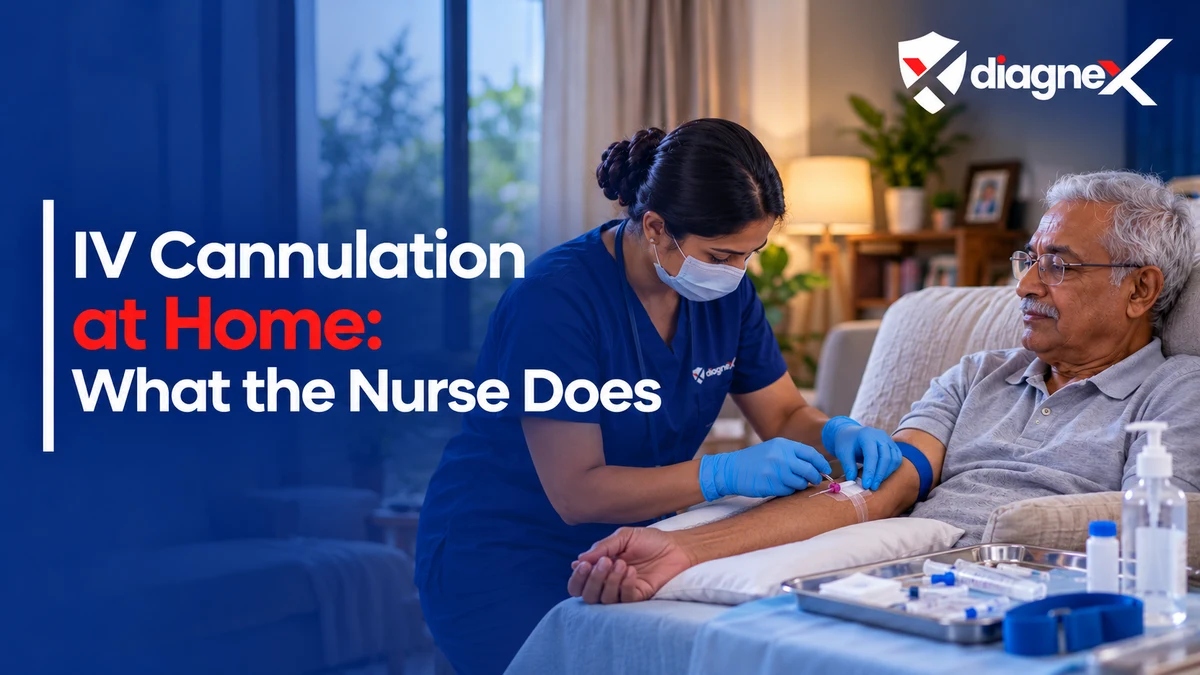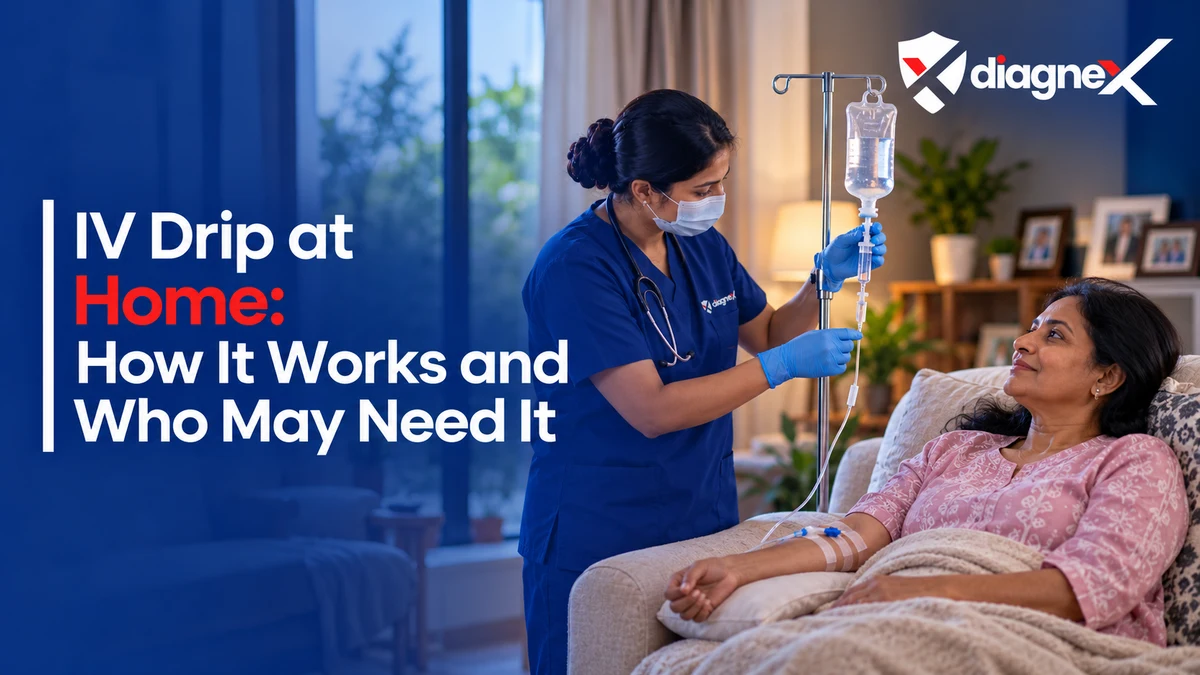
An IV infusion and an IV injection both deliver treatment through a vein, but they are not the same type of administration. An IV injection - sometimes called an IV push or bolus when given rapidly - usually delivers a relatively small amount of medication directly into an IV line over a shorter period. An IV infusion delivers medicine, fluid or another prescribed solution over a longer, controlled period. It may run from a bag, bottle, syringe pump or infusion pump through IV tubing into a peripheral cannula, PICC line, central line, port or another appropriate vascular-access device.
MedlinePlus describes home IV treatment as including both a fast bolus and a slower infusion. MSD Manual similarly explains that intravenous medication may be given as a single dose or as a continuous infusion, with infusion commonly delivered through tubing and a pump or gravity system. For patients arranging home IV therapy, the distinction matters because an infusion can require more time, more equipment, rate control, line monitoring and observation than a short IV injection. This guide explains the difference between an IV infusion at home and an IV injection at home, how “IV drip” fits into the picture, what changes in terms of equipment and monitoring, and when home IV therapy may or may not be appropriate.
The Short Answer: IV Infusion vs IV Injection
- Medicine is delivered directly into a vein through an IV line or vascular-access device
- Administration is usually relatively brief
- The volume is often smaller than an infusion
- The medicine may be given as a bolus or slow IV injection depending on the prescription
Rate still matters and should follow the treatment order. Observation may be required depending on the medicine and patient. IV infusion: Medicine or fluid is delivered into a vein over a longer controlled period. It commonly uses an IV bag, tubing and either gravity or an infusion pump.
The total volume may be larger. The rate may be prescribed in minutes, hours or continuously. The nurse may need to remain for more of the treatment depending on the care plan. Monitoring of the IV site, patient response and infusion rate may be more involved.
- IV injection = a dose delivered into the vein over a shorter period
- IV infusion = medicine or fluid delivered into the vein gradually over time
What Is an IV Injection?
An IV injection delivers a prescribed medicine directly into the bloodstream through a vein or existing vascular-access device. The term can include medication given relatively quickly as a bolus as well as medication deliberately injected more slowly over a defined short period. The exact rate is medicine-specific. A patient or family should not assume that “IV injection” means the medicine should be pushed as fast as possible.
- A peripheral IV cannula
- A PICC line
- A central venous catheter
- An implanted port
- Another approved vascular-access device
Why Are Some Medicines Given as an IV Injection?
- The medicine needs direct intravenous delivery
- A relatively small dose or volume is required
- The treatment protocol specifies IV injection rather than infusion
- The medication does not need prolonged administration
Rapid systemic availability is clinically appropriate. The patient already has suitable vascular access. The route and rate are part of the treatment plan. They should not be changed for convenience.
What Is an IV Infusion?
An IV infusion delivers prescribed medicine, fluid or another solution into the bloodstream over a controlled period. Home IV infusions can be intermittent - for example, one prescribed treatment given over a defined period - or continuous when a therapy is designed to run for many hours. MedlinePlus describes home IV treatment as a way to receive intravenous medication or fluids outside hospital when the treatment has been prescribed and the patient is suitable.
- An IV bag
- A bottle
- A syringe pump
- An infusion pump
- A gravity drip
- The term “IV drip” usually refers to an infusion rather than a brief IV injection
Why Are Some Treatments Given as an Infusion?
- The medicine must be administered slowly
- A larger fluid volume is needed
- A defined dose needs to be spread over time
- The treatment requires controlled delivery
A steady bloodstream concentration is intended. The medicine can irritate the vein if given too rapidly. The patient is receiving prescribed fluids. The treatment protocol specifies an infusion rather than injection. The reason depends on the medicine and clinical indication. The nurse should not convert an injection into an infusion or an infusion into a faster IV push without an authorised order.
Is an IV Drip the Same as an IV Infusion?
Usually, yes. “IV drip” is a common patient-facing term for an intravenous infusion. The word “drip” comes from gravity-based systems in which fluid passes through a drip chamber and tubing into the vein. So an IV drip is generally an infusion, but not every infusion literally depends on visible drops or gravity.
- Electronic infusion pumps
- Syringe pumps
- Elastomeric devices
- Other delivery systems
IV Infusion vs IV Injection: Quick Comparison
- Shorter administration time
- Usually smaller volume
May be bolus or slow injection. Often fewer infusion supplies. Still requires correct vascular access and medication verification. May fit a shorter nursing visit when clinically appropriate. IV infusion:
Longer administration time. May involve larger fluid volume. Rate is controlled over time. Often uses IV bag, tubing or pump. Requires continued observation of the IV site and infusion.
- Require a prescription or authorised treatment plan
- Require correct patient, medicine, dose, route and timing
- Require appropriate vascular access
Require aseptic technique. Can cause medicine-related reactions. Can cause IV-site complications. May be suitable at home only for selected patients.
Does an IV Infusion Work More Slowly Than an IV Injection?
The administration itself is usually slower because the treatment is intentionally delivered over a longer period. However, both methods place treatment directly into the bloodstream. The condition being treated. Patient physiology. A faster administration method is not automatically better. Some medicines should be given slowly specifically to reduce the risk of adverse effects or to match how the medicine is designed to be administered. The prescribed rate should be followed.
- The medicine
- Dose
- Infusion or injection rate
Does IV Infusion Mean a Larger Dose?
Not necessarily. But the drug dose itself can be small. The amount of fluid and the amount of medicine are separate concepts. Families should avoid judging treatment intensity based only on the size of the IV bag.
- A larger total fluid volume
- A medication diluted into IV fluid
- A medication delivered slowly through a pump
- A continuous dose spread across time
What Is Home IV Therapy?
- IV injections
- IV antibiotic doses
- Intermittent IV infusions
- Continuous infusions
- Prescribed IV fluids
- Parenteral nutrition in selected programmes
- Other doctor-directed intravenous treatments
MedlinePlus notes that patients may continue IV antibiotics, other medicines, nutrition or fluids at home through a peripheral IV, PICC, central catheter or port. Home IV therapy is therefore the overall care category. IV injection and IV infusion are two ways treatment within that category may be delivered.
What Types of Vascular Access Can Be Used?
- Peripheral IV cannula
- PICC line
- Central venous catheter
- Implanted port
- Other approved access devices
- Treatment duration
- Medicine characteristics
- Frequency
- Patient veins
Need for repeated therapy. Risk of irritation. Treating-team plan. A patient needing one short IV course may use a peripheral cannula. A patient receiving prolonged treatment may have another access device already in place. The home nurse should verify that the access device is appropriate and functioning before administration.
Does Every IV Infusion Need a New Cannula?
No. If the patient already has a suitable, functioning vascular-access device, the treatment may be administered through that line when the care plan allows it. If no access exists, a new peripheral cannula may need to be inserted. A nurse should assess the access rather than assuming it can be reused simply because it was present during a previous visit. For short peripheral cannulas, local protocols determine how long the device can remain and when it should be removed or replaced.
Can an IV Injection and Infusion Use the Same Line?
Sometimes, but only when the treatment plan and medication compatibility allow it. A line may be used for more than one therapy during a treatment course. However: Some medicines cannot be mixed. Some lines require flushing protocols.
Some access devices need specific handling. Some medicines may be incompatible with the fluid already running. Some treatments require a separate line. The nurse should follow medication-specific and line-specific instructions. Patients should not connect or add medicines to an existing IV line unless they have been formally trained for an approved home-infusion programme.
How Does the Equipment Differ?
- Appropriate IV access
- Medication
- Sterile syringe
- Needle or access connector
- Antiseptic supplies
- Sharps disposal
- Other medicine-specific items
- IV fluid bag or medicine bag
- Administration tubing
- Infusion set
- IV stand
- Infusion pump or syringe pump where prescribed
- Rate-control equipment
- Additional flushes or connectors where authorised
- Longer monitoring
How Long Does an IV Infusion Take?
There is no single standard duration. A provider should not promise that every “IV drip” takes the same amount of time. The nurse should follow the prescribed rate rather than speeding up the infusion simply to finish the visit earlier.
- A short defined period
- One or more hours
- Many hours
- Continuously
- Medicine
- Dose
- Dilution
- Prescribed rate
- Patient condition
- Vascular access
- Reaction risk
- Treatment protocol
How Long Does an IV Injection Take?
IV injection is usually shorter than an infusion, but it is not always instantaneous. Some medicines are given as a rapid bolus. Others are intentionally injected slowly over several minutes. The nurse should not assume that every IV injection can be pushed rapidly.
- Prescription
- Medication instructions
- Treating-team protocol
- Provider clinical policy
Why the Rate Matters
Intravenous medication reaches the bloodstream directly. Giving some medicines too rapidly can increase the risk of adverse effects. The rate is part of safe administration. Patients and families should never ask the nurse to “make the drip faster” simply because they want the visit to finish sooner.
- Bolus
- Slow IV injection
- Infusion over a defined time
- Continuous infusion
- Pump-controlled delivery
What Monitoring Is Needed During an IV Infusion?
- IV site
- Infusion rate
- Pain or swelling
- Leakage
- Redness
- Patient comfort
- Blood pressure
- Pulse
- Oxygen saturation
- Temperature
- Other medicine-specific parameters
- A longer infusion creates more time for line-related problems or medicine reactions to appear
What Monitoring Is Needed During an IV Injection?
A short IV injection may still require observation. A shorter administration time does not eliminate the need for clinical observation. Some reactions can occur quickly after IV medication reaches the bloodstream.
- The IV site
- Immediate reaction
- Blood pressure or pulse where relevant
- Symptoms such as dizziness, breathlessness or rash
- Other treatment-specific risks
What Can Go Wrong With IV Therapy?
- Infiltration
- Extravasation
- Phlebitis
- Bleeding
- Local infection
- Line blockage
- Loss of access
- Medicine reaction
- Incorrect dose
- Incorrect administration rate
- Fluid overload
- Device-related complications
- Type of access
- Medicine
- Infusion rate
- Patient condition
- Duration
- Technique
- Monitoring
What Is Infiltration?
Infiltration occurs when IV fluid or medication leaks out of the vein into surrounding tissue. Some medications can cause more serious tissue injury if they escape the vein. The nurse should stop and assess the IV according to the treatment plan if infiltration is suspected.
- Swelling
- Coolness
- Pain
- Tightness
- Slower or stopped flow
What Is Phlebitis?
Phlebitis is inflammation of the vein. The affected line may need to be removed or replaced. Persistent redness, spreading inflammation, fever or systemic symptoms may need medical review.
- Pain
- Redness
- Warmth
- Tenderness
- A firm or irritated vein
When Is an IV Infusion at Home Usually Appropriate?
- The treatment is clearly prescribed
- The patient is clinically stable
- The infusion rate is defined
- Appropriate vascular access is available
A trained professional is available. Required monitoring can be performed at home. The medicine is suitable for home administration. There is a plan for complications. Hospital-level monitoring is not required. Suitability depends on the exact treatment.
- Selected antibiotic courses
- Prescribed fluids
- Defined infusion therapies
- Treatment through an established PICC or other vascular-access device
When Is an IV Injection at Home Usually Appropriate?
- The medicine is clearly prescribed
- The route and dose are clear
- The patient is stable
- IV access is suitable
The professional is competent. The medicine does not require hospital-level observation. There is a clear response plan if the patient reacts. A short injection may fit a procedure visit more easily than a prolonged infusion. However, the medicine itself may still require close monitoring.
When Home IV Therapy May Not Be Appropriate
- The patient is unstable
- The medicine requires advanced monitoring
- The first dose needs facility-based observation
- There is a history of severe reaction
Vascular access is unreliable. The patient has rapidly changing clinical needs. Urgent diagnostics are required. Fluid balance is difficult to manage safely. Emergency intervention may be needed quickly. The home cannot support safe administration. For the broader setting decision, see When Should a Procedure Be Done at Home vs in a Hospital?
Does the First Dose Need to Be Given in Hospital?
Sometimes. A first dose can carry more uncertainty because the patient’s response is not yet known. Hospital or monitored-clinic administration may be preferred when: The medicine has meaningful anaphylaxis risk. The patient has previous serious drug allergies.
The treatment is high risk. The prescribing team requests monitored administration. The patient has significant comorbidity. Rapid emergency treatment may be needed. First-dose suitability should be decided by the treating team or provider protocol.
Can IV Fluids Be Given at Home?
Selected prescribed IV fluids may be administered at home for suitable patients. But “the patient is weak” is not a sufficient reason to start an IV drip. The treating professional should identify: Why fluid is needed. Which fluid is appropriate.
How much is required. How fast it should run. What monitoring is needed. When to stop. Whether heart, kidney or other conditions change the plan. Older adults and patients with heart or kidney disease may be more vulnerable to fluid overload. IV fluids are treatment, not a general wellness service.
IV Antibiotics at Home
- Antibiotic
- Dose
- Frequency
- Infusion or injection method
- Duration
- Vascular access
- Monitoring
- Blood tests where required
- What happens if a dose is missed
- What symptoms need review
IV Therapy After Hospital Discharge
- Medicine or fluid
- Dose
- Route
- Infusion time
- Frequency
- Duration
- Vascular access
- Monitoring
- Follow-up
- Required blood tests
- Escalation instructions
- For the full transition guide, see Clinical Procedures at Home After Hospital Discharge
IV Therapy for Elderly Patients
- Kidney function
- Heart function
- Fluid balance
- Fragile veins
- Multiple medicines
- Frailty
- Cognitive impairment
- Falls risk
- Previous reactions
IV Therapy for Bedridden Patients
A bedridden patient may receive IV therapy as one part of a wider care plan. If IV treatment is only one of multiple daily nursing tasks, repeated short visits may not be enough. For the broader care context, see Clinical Procedures at Home for Bedridden Patients.
- Wound care
- Catheter care
- Tube feeding
- Pressure-area prevention
- Monitoring
- Mobility support
- Several medicines
Short Visit vs Longer Nursing Visit for IV Therapy
The nursing model depends heavily on duration. A short IV injection may fit a procedure visit. A prolonged infusion may require: The nurse to remain for the full infusion. Several IV doses spread across the day may justify a longer nursing shift. For the care-model comparison, see Short-Visit Nurse vs Full-Shift Nurse: Which One Is Needed?
- Periodic site checks
- Vital-sign monitoring
- Pump management
- Post-infusion observation
Does an IV Infusion Cost More Than an IV Injection?
- Longer nursing time
- IV tubing
- Infusion set
- Pump use
- Larger number of consumables
- Longer monitoring
- Cannulation
- Repeated site checks
- Medicine
- Access device
- Visit duration
- Locality
- Urgency
- Consumables
- Observation
- Repeat visits
- For broader injection pricing logic, see Injection at Home Cost: What Affects the Visit Charge?
What Should Patients Ask Before Booking Home IV Therapy?
- Is this treatment an IV injection or infusion?
- How long should it take?
- Do I need a new cannula?
- Can an existing PICC, port or line be used?
Does the nurse stay for the whole infusion? Is a pump required? Which supplies are included? Who provides the medicine? Does the first dose need monitored administration?
What monitoring is required? What happens if the IV site swells or becomes painful? What happens if access cannot be obtained? What is the escalation plan if the patient reacts? These questions help the provider quote and staff the visit correctly.
How Diagnex Handles IV Injection and Infusion Enquiries
Diagnex’s current service directory includes IV cannulation and nursing procedures among its clinical-procedure enquiries. A service listing does not mean every IV medicine, infusion, patient or access device is automatically suitable for home administration or available in every locality. If the family is unsure which service fits, use Find the Right Care.
For the general injection booking guide, read Injection at Home: What Patients Should Know Before Booking. For injection-route differences, read IM vs Subcutaneous vs IV Injection: What's the Difference? For home injection safety, read Is It Safe to Take an Injection at Home?
- Prescription or treatment order
- Medicine or fluid
- Dose
- Administration method
- Infusion duration
- Vascular access
- Patient stability
- Allergy and reaction history
- Professional competency
- Monitoring needs
- Consumables
- Local availability
- Escalation plan
Frequently Asked Questions
What is the difference between IV infusion and IV injection?
Is an IV drip the same as an IV infusion?
Can an IV infusion be given at home?
Can an IV injection be given at home?
Does an IV infusion need a pump?
Is an IV infusion safer than an IV injection?
Why can't an IV infusion be given faster?
Can IV fluids be given at home for weakness?
Does IV infusion at home cost more than IV injection?
Who decides whether the treatment should be an IV injection or infusion?
The Bottom Line
IV injection and IV infusion both use intravenous access, but they are not interchangeable. An IV injection usually delivers medicine over a shorter period. An IV infusion delivers medicine or fluid gradually over a longer, controlled period. For patients, the most important rule is simple:
Do not choose the administration method based on convenience. The medicine, dose, rate and whether treatment is given as an injection or infusion should come from the treating professional. Home IV therapy is most appropriate when the patient is stable, vascular access is suitable, monitoring can be provided and there is a clear escalation pathway if something changes.
- Visit duration
- Equipment
- Rate control
- Monitoring
- Nursing time
- Cost
- Home-care complexity
Sources and Medical References
This article provides general health information and is not a substitute for patient-specific medical advice, diagnosis or treatment. It does not teach IV cannulation, IV injection or infusion technique. Home IV treatment should follow the plan of appropriately qualified treating professionals.