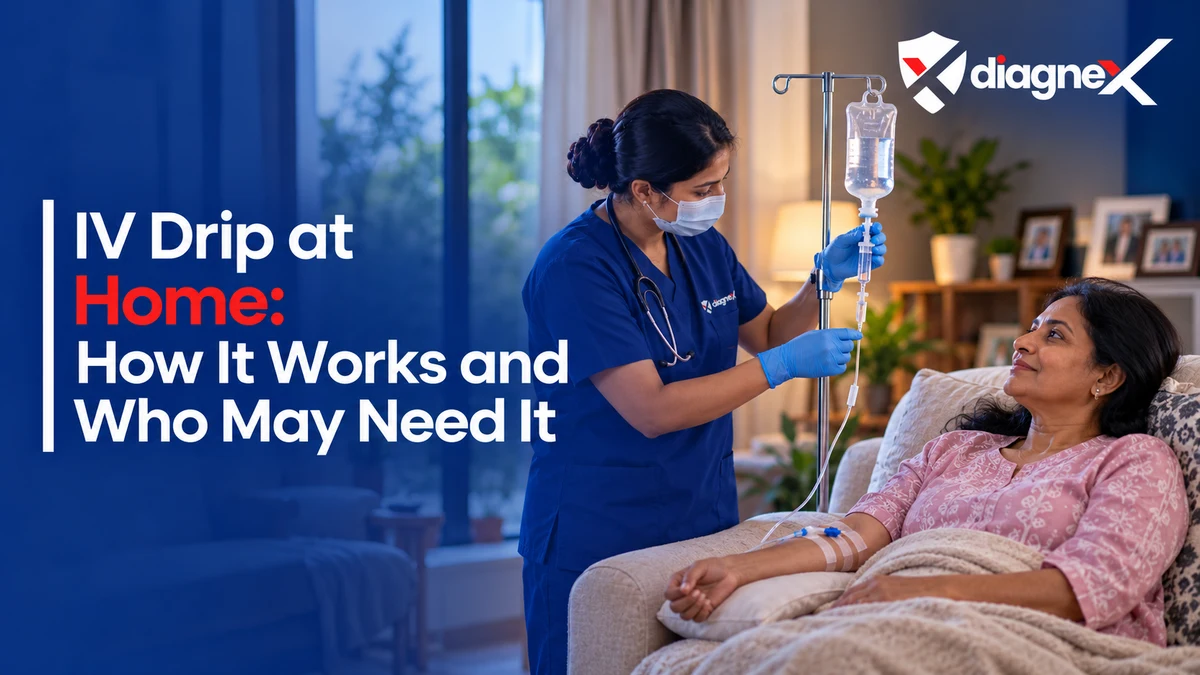
An IV drip at home may be appropriate when a patient has a clear clinical reason for intravenous fluids or medicine, is stable enough for treatment outside a hospital, and an appropriately qualified professional can insert or manage the IV, monitor the patient and respond if something changes. An IV drip is not automatically a “stronger” form of hydration or a general treatment for weakness, tiredness, fever or a hangover. Intravenous fluid therapy changes the body’s fluid and electrolyte balance directly, so the type of fluid, volume and rate should be chosen for a defined medical need rather than convenience alone.
NICE guidance on IV fluids emphasises that fluid and electrolyte needs should be assessed, that IV fluids should be prescribed and administered by competent professionals, and that patients receiving them require reassessment. MedlinePlus also describes home IV therapy as prescribed medicine or fluid delivered through a peripheral or longer-term vascular-access device outside hospital. This guide explains how an IV infusion at home works, who may need it, how IV fluids differ from IV medicines, what an IV nurse at home should check, what complications families should know about, and when hospital treatment is safer.
The Short Answer: When Can an IV Drip Be Given at Home?
- A treating professional has already identified the reason for IV therapy.
- The prescribed fluid or medicine, amount, route and rate are clear.
- The patient is clinically stable and does not need hospital-level monitoring.
- The IV access plan is clear - for example, a new peripheral cannula or an established PICC, port or central line.
- An appropriately qualified nurse or infusion professional is available.
- The home environment can support clean preparation, monitoring and equipment.
- There is a clear escalation plan if the patient develops a reaction, worsening symptoms or an IV-line problem.
What Is an IV Drip?
- fluid or medicine is delivered into a vein through a small catheter or a longer-term vascular-access device
- The treatment may run by gravity or through an infusion pump, depending on what is prescribed
- A home IV can be used for several different purposes
- These should not be mixed together as though they are one service
IV Fluids vs IV Medicines: What Is the Difference?
| Type | What it does | Examples of home use |
|---|---|---|
| IV fluids | Replace or maintain fluid and electrolytes when oral or enteral intake is not sufficient or appropriate. | Selected dehydration, replacement of ongoing losses, clinician-directed maintenance in defined situations. |
| IV medicines | Deliver a prescribed medicine directly through vascular access. | Selected antibiotics, anti-nausea medicines, pain medicines or other prescribed infusions. |
| IV nutrition | Provide nutrients intravenously when the digestive route cannot meet needs. | Specialist home parenteral nutrition programs; requires a structured clinical pathway. |
Who May Need IV Fluids at Home?
Selected patients may receive prescribed IV fluids at home when oral or enteral hydration is not adequate or appropriate and the patient does not need the monitoring or diagnostics of a hospital. Possible scenarios can include: These are examples, not automatic indications. The cause of dehydration or poor intake matters, and severe dehydration or major electrolyte disturbance may need hospital treatment.
- A patient continuing a defined fluid plan after hospital discharge.
- Selected dehydration where a clinician has assessed the cause and home treatment is considered appropriate.
- Ongoing losses from vomiting, diarrhoea or another condition when a clinician has determined that IV replacement is needed and the patient remains stable.
- A patient unable to take enough fluid orally for a defined clinical reason.
- Selected palliative or longer-term care plans where IV hydration is specifically prescribed.
Who May Need IV Medicines at Home?
Home infusion is also used for selected prescribed medicines. Common examples include continuation of IV antibiotics after hospital discharge, some anti-nausea therapies, selected pain or supportive medicines, and other treatments delivered through formal home-infusion programs. For antibiotic-specific prescription, monitoring and treatment-course issues, see Antibiotic Injection at Home: Prescription, Monitoring and Safety.
Is Saline at Home Appropriate for Weakness or Tiredness?
Not automatically. “Weakness” and “tiredness” are symptoms, not a fluid prescription. They can be caused by anaemia, infection, low blood pressure, poor nutrition, medication effects, heart problems, kidney problems, endocrine conditions, sleep deprivation and many other causes. Giving IV saline without understanding the cause can be unnecessary and, in some patients, harmful. If the patient can drink and has mild dehydration, oral fluids or an oral rehydration solution may be sufficient. MedlinePlus notes that severe dehydration may require IV fluids, but treatment depends on the cause and severity.
Why IV Fluids Need a Prescription or Clinical Order
IV fluids are medicines in the practical sense that the clinician must decide what fluid to give, how much to give and how quickly. NICE guidance says an IV-fluid prescription should specify the type of fluid, rate and volume, together with an assessment and monitoring plan. The home nurse should not independently decide to start normal saline, dextrose or another fluid because the patient appears tired, has not eaten well or asks for a “drip.” For the broader prescription boundary, see Do You Need a Doctor's Prescription for a Clinical Procedure at Home?.
How an IV Drip at Home Usually Works
1. The Treatment Order Is Reviewed
2. The Patient Is Reassessed
3. The Vascular Access Is Checked or Created
4. The Fluid or Medicine Is Verified
5. The Infusion Is Started and Monitored
6. The Patient Is Reassessed During the Drip
7. The Infusion Is Completed and Documented
Peripheral Cannula vs PICC vs Central Line vs Port
The access device affects how home IV therapy is organised. MedlinePlus lists these access types as possible routes for home IV treatment. The correct device depends on the treatment duration, medicine, vein quality, infection risk and treating-team plan.
- Peripheral IV cannula: a short catheter placed in a vein, commonly in the hand or arm, usually for shorter-term therapy.
- PICC: a peripherally inserted central catheter used for longer or repeated treatment in selected patients.
- Central venous catheter: a line whose tip lies in a large central vein and that requires specific line-care protocols.
- Implanted port: a device placed under the skin that can be accessed for selected repeated or long-term therapies.
What Is IV Cannulation?
IV cannulation is the placement of a small flexible catheter into a peripheral vein so prescribed fluid or medicine can be administered. The needle used for insertion is removed, leaving the soft catheter in the vein. Cannulation should be performed by someone whose professional scope and competence match the task. Difficulty obtaining access, repeated failed attempts or unusual swelling and pain may change the safest plan.
What If the Patient Already Has an IV Line?
An existing cannula, PICC, central line or port should not automatically be used just because it is present. The nurse should assess whether the device is the correct access for the treatment and whether there are signs of displacement, infection, blockage, leakage or other complications. A line that is painful, red, swollen, leaking or otherwise questionable may need clinical review before use.
How Long Does an IV Drip Take at Home?
There is no standard duration. An IV infusion may run over a relatively short period or for several hours, depending on the prescribed fluid or medicine, volume, rate and patient. Families should be cautious of a service that treats every “drip” as the same appointment length. Infusion time is part of the prescription and safety plan, not a convenience setting.
Does the Nurse Need to Stay for the Whole IV Drip?
That depends on the treatment and care model. Some infusions require a nurse to remain throughout. Structured home-infusion programs may use pumps or trained caregivers for selected therapies with defined monitoring and support. For an ordinary one-off IV drip request, the provider should make clear who is responsible for monitoring the patient and line while the infusion is running. A family should not be left to manage an unfamiliar IV therapy without an appropriate plan. If the infusion is only one part of a wider nursing need, compare care models in Short-Visit Nurse vs Full-Shift Nurse: Which One Is Needed?.
How Are IV Fluids Chosen?
Different IV fluids have different electrolyte and glucose compositions. The right fluid depends on why the patient needs IV therapy, their current fluid status, ongoing losses, laboratory results and medical conditions. Examples used in clinical care include crystalloid solutions such as 0.9% sodium chloride and balanced crystalloids. The correct product, amount and rate should come from a clinician rather than from the patient choosing “saline” from a menu.
Why the Amount and Rate Matter
Too little fluid may fail to correct the problem. Too much or too rapid fluid can cause harm. NICE specifically highlights the need to assess fluid status and monitor patients receiving IV fluids. Fluid mismanagement can contribute to pulmonary oedema, peripheral oedema and electrolyte disturbances. The prescription should therefore define not only what bag is used but how much is given and how quickly.
Who Needs Extra Caution With IV Fluids?
Some patients are more vulnerable to fluid overload or electrolyte complications. NICE recommends lower routine maintenance volumes for some older, frail, cardiac or renal patients and advises expert help for complex fluid and electrolyte problems. These principles reinforce why a home “hydration drip” should not be selected casually.
- Older or frail adults.
- People with heart failure or significant heart disease.
- People with chronic kidney disease or reduced kidney function.
- People with liver disease and fluid-retention problems.
- Patients who already have swelling or pulmonary oedema.
- Patients taking medicines that affect fluid or electrolyte balance.
- Patients with major sodium or potassium abnormalities.
- Patients with complex ongoing fluid losses or severe infection.
What Is Fluid Overload?
Fluid overload happens when the body receives or retains more fluid than it can manage. It can cause swelling and, in more serious cases, fluid in the lungs. Warning signs during or after an IV infusion can include: New breathlessness during an infusion deserves prompt clinical attention, particularly in a patient with heart or kidney disease.
- New or worsening breathlessness.
- Rapid swelling of the feet, legs or body.
- New cough or difficulty lying flat.
- Unexpected weight gain during ongoing therapy.
- Rising blood pressure or other clinically significant changes.
- Reduced urine output in a patient receiving ongoing fluids.
What Can Go Wrong With the IV Site?
Common access-related problems can include infiltration, extravasation, phlebitis, bleeding, bruising, blockage and infection. MedlinePlus advises patients receiving home IV therapy to watch for redness, swelling, pain, bleeding and fever. The nurse should also assess the line before and during treatment.
Infiltration vs Extravasation
Infiltration means IV fluid has leaked out of the vein into surrounding tissue. Extravasation refers to leakage of a medicine or solution that can cause more serious tissue injury. Possible signs include swelling, discomfort, coolness or tightness around the IV site, or an infusion that no longer runs normally. The nurse should stop and assess a suspected problem rather than forcing the infusion to continue.
What Is Phlebitis?
Phlebitis is inflammation of the vein. The area may become painful, red, warm or tender along the vein. It may require the IV to be removed and the site reviewed.
How Infection Control Works During an IV Infusion
- Hand hygiene.
- Appropriate skin antisepsis for cannulation.
- Clean medication or fluid preparation.
- Protection of critical IV connections from contamination.
- Appropriate dressing and line care.
- Single-use needles and syringes where applicable.
- Safe sharps disposal.
- Correct cleaning or reprocessing of reusable equipment.
Can IV Antibiotics Be Given at Home?
Selected patients can receive prescribed IV antibiotics at home through structured outpatient or home-infusion pathways. The plan may require serial blood tests, line care and follow-up because the medicine and infection both need monitoring. For the antibiotic-specific guide, see Antibiotic Injection at Home: Prescription, Monitoring and Safety.
Can IV Fluids Be Used for Vomiting or Diarrhoea at Home?
Sometimes, but the cause and severity matter. A patient who can drink and has mild dehydration may be managed with oral fluids or oral rehydration. Severe dehydration, persistent vomiting, significant electrolyte disturbance, very low blood pressure, reduced consciousness or another major deterioration may require hospital assessment. The decision should not be reduced to whether a nurse can insert a cannula.
Can IV Fluids Be Given for Fever?
Fever alone is not an indication for an IV drip. A patient with fever may need oral fluids, infection assessment, blood tests, medication or hospital treatment depending on the cause and severity. Giving saline does not diagnose or treat the cause of fever.
What About Vitamin or “Wellness” IV Drips?
The evidence and safety considerations are different from prescribed medical IV therapy. IV vitamins or compounded mixtures should not be assumed to be beneficial for general fatigue, immunity, detoxification or hangover recovery. Intravenous administration bypasses the normal gastrointestinal route and introduces line, sterility and dosing risks that oral supplements do not. Regulators such as the US FDA have warned that poor sterile compounding practices in IV hydration and mobile infusion businesses can lead to contamination and serious harm. For a Diagnex clinical service, the safer positioning is prescribed, clinically indicated IV therapy rather than generic wellness drips.
Can a Home IV Replace Drinking Fluids?
Not routinely. When the gastrointestinal route works, oral hydration is often simpler and safer. NICE advises using IV fluid therapy when fluid needs cannot be met by oral or enteral routes and stopping IV fluids as soon as possible. The correct route depends on the patient’s condition, losses, ability to drink and clinical assessment.
IV Drip at Home After Hospital Discharge
- Why IV treatment is continuing.
- Fluid or medicine name.
- Volume or dose.
- Rate and frequency.
- Duration of treatment.
- Vascular-access type.
- Line-care instructions.
- Monitoring and blood tests.
- Follow-up plan.
- What to do if the patient deteriorates.
IV Drip at Home for Elderly Patients
- Kidney and heart function.
- Frailty and body weight.
- Current swelling or breathlessness.
- Multiple medicines.
- Baseline blood pressure.
- Ability to report symptoms.
- Falls risk after the infusion.
- Caregiver support.
IV Drip at Home for Bedridden Patients
A bedridden patient may receive prescribed IV therapy at home, but the drip may be only one part of the overall nursing requirement. The patient may also need wound care, catheter or tube care, pressure-injury prevention, monitoring, respiratory support or longer nursing coverage. For the wider care plan, see Clinical Procedures at Home for Bedridden Patients.
When a Short IV Nurse Visit May Be Enough
When Longer Nursing Support May Be Needed
- The infusion runs for several hours.
- Several doses or infusions are scheduled across the day.
- Frequent vital-sign checks are required.
- The patient has multiple devices or procedures.
- The patient is frail or highly dependent.
- The IV treatment is part of a complex post-discharge or advanced-care plan.
Can an IV Drip Be Arranged the Same Day?
Sometimes. Same-day feasibility depends on the prescription, patient stability, route, IV access, nurse competency, infusion duration, required supplies and locality. A same-day request should not skip clinical suitability or prescription review. For urgent-but-stable coordination, see Same-Day Nursing Procedures at Home: What Can Usually Be Arranged?.
What Should You Share Before Booking an IV Nurse at Home?
- The prescribed fluid or medicine.
- Volume or dose.
- Infusion rate or expected duration.
- Required date and timing.
- Whether the patient already has IV access.
- Relevant allergies or previous infusion reactions.
- Important heart, kidney or fluid-balance problems.
- Whether the patient is currently stable.
- Any major new symptoms.
- The patient’s locality.
What Should Be Ready Before the Nurse Arrives?
- Current prescription or treatment order.
- The prescribed fluid or medicine in correct storage conditions.
- Relevant discharge instructions.
- Known allergy information.
- Current medicine list when relevant.
- A clean, well-lit working area.
- The supplies the provider has asked the family to arrange.
- A contact route to the treating team when needed.
What Should the Nurse Check Before Starting the IV?
- Patient identity.
- Prescription or clinical order.
- Fluid or medicine name.
- Volume or dose.
- Infusion rate.
- Allergy history.
- Current symptoms and stability.
- IV-access condition.
- Medicine or fluid integrity and storage.
- Monitoring requirements.
What Warning Signs Should Stop or Pause a Home IV Drip?
- New or worsening breathlessness.
- Chest pain.
- Marked dizziness or fainting.
- Severe allergic symptoms.
- Rapid swelling around the IV site.
- Severe pain or burning at the IV site.
- Significant bleeding.
- New confusion or reduced consciousness.
- A major change in blood pressure or oxygen level.
- A fluid or medicine that does not match the treatment order.
When Hospital Care Is Safer Than an IV Drip at Home
- Severe dehydration with shock or very low blood pressure.
- Severe or rapidly worsening breathing difficulty.
- Suspected sepsis or major systemic deterioration.
- Chest pain or another possible cardiovascular emergency.
- New neurological symptoms or loss of consciousness.
- Major electrolyte disturbance.
- Severe kidney or heart failure requiring close fluid management.
- A need for urgent blood tests, imaging or procedures.
- A high-risk infusion that requires advanced monitoring.
- A complication that cannot be managed safely at home.
Can a Family Member Manage an IV at Home?
Some structured home-infusion programs train selected patients or caregivers for specific therapies and devices. That does not mean IV therapy should be learned from an article or improvised by family members. Training needs to be patient-specific and should cover the actual access device, prescribed therapy, infection control, pump use where relevant, line problems and emergency escalation.
How Does an Infusion Pump Fit Into Home IV Therapy?
An infusion pump can deliver fluids or medicines at a controlled programmed rate. Pumps are used for selected therapies that require precise delivery or longer infusion periods. A home pump plan should include: The FDA notes that infusion-pump failures or programming problems can lead to over-infusion, under-infusion or delayed therapy, which is why pump use needs a defined support pathway.
- The prescribed rate and volume.
- Who programs the pump.
- What each alarm means.
- Battery or power planning.
- Who to call for a technical problem.
- What clinical symptoms require medical help.
What Should Be Documented After an IV Infusion?
- Fluid or medicine administered.
- Volume or dose.
- Rate or duration.
- Type of IV access.
- IV-site observations.
- Relevant vital signs.
- Patient response.
- Any adverse effect or complication.
- Any escalation.
- Next planned dose or review.
How Diagnex Handles IV Drip and IV-Related Enquiries
Diagnex’s current service directory includes IV cannulation among clinical procedures and routes broader nursing or selected procedure enquiries according to current capability. The presence of a service category does not mean every IV fluid, medicine or patient is automatically suitable for home treatment. An IV-related enquiry should be confirmed against:
Diagnex currently operates across Mumbai, Navi Mumbai, Kolkata and Howrah, but exact service availability varies by locality, care need, workforce, equipment and timing. If you are not sure which pathway fits, use Find the Right Care. For broader nursing support, see the Diagnex Home Nursing pathway. For advanced high-dependency care, see Home ICU Setup.
- The treating-professional order.
- Fluid or medicine.
- Volume or dose.
- Infusion rate and expected duration.
- Patient stability.
- Heart, kidney and fluid-balance considerations.
- Vascular access.
- Professional competency.
- Monitoring requirements.
- Locality and current availability.
- Escalation plan.
Frequently Asked Questions
Can an IV drip be given at home?
Do I need a prescription for IV fluids at home?
Can I get saline at home for dehydration?
How long does an IV drip at home take?
Can antibiotics be given through an IV at home?
Is an IV drip better than drinking water?
Not routinely. If the patient can drink and absorb fluids safely, oral hydration is often simpler. IV fluids are used when there is a clinical reason that oral or enteral intake is insufficient or unsuitable.
Can an elderly patient receive IV fluids at home?
What if the IV site becomes swollen or painful?
Can an IV drip cause fluid overload?
Yes. Excessive or overly rapid fluid can contribute to swelling or breathing problems, especially in patients with heart or kidney disease. This is why fluid type, volume and rate require clinical assessment.
When should IV therapy be done in a hospital instead of at home?
The Bottom Line
An IV drip at home can be useful when it continues a clear medical treatment plan for a stable patient. The key decision is not whether a nurse can insert an IV. It is whether the patient actually needs intravenous treatment, whether the prescribed fluid or medicine can be delivered safely at home, and whether the monitoring and escalation plan match the risk.
IV fluids should not be treated as a generic cure for weakness, fever, fatigue or dehydration without assessment. The fluid type, volume and rate matter. Heart and kidney conditions matter. Vascular access matters. Infection control matters. The patient’s response matters. The safest home IV service therefore connects the treating professional’s order, the right nurse, the right equipment, clean line care, appropriate monitoring and a clear route to hospital when home is no longer the right setting.