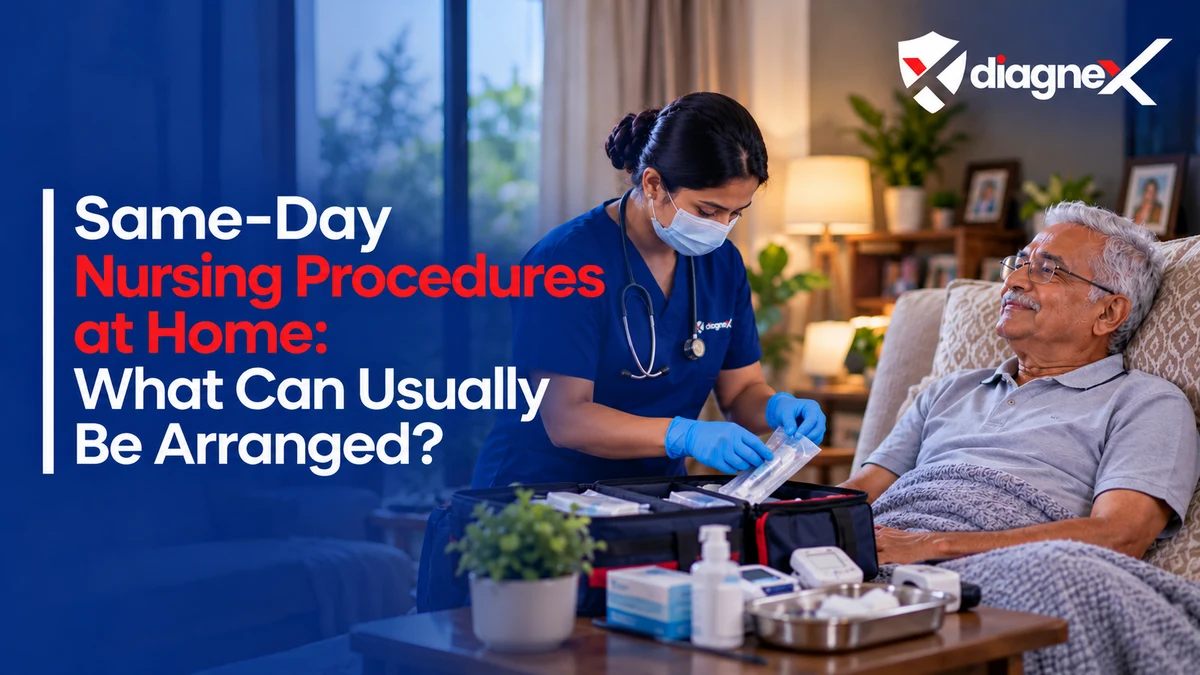
A same-day clinical procedure at home may be possible when the patient is stable, the required procedure is clear, the correct nurse or other professional is available, the necessary prescription or clinical instruction is already in place, and the required medicines, devices and consumables can be arranged. Procedures that are often operationally simpler to organise as short home visits include prescribed injections, routine wound dressing, blood sample collection, selected catheter care, selected IV-related care and basic monitoring. But “same day” is an availability description, not a clinical guarantee. The procedure must still be appropriate for the patient and the home setting.
A request can also be urgent without being an emergency. A family may need a wound redressed after discharge, a scheduled antibiotic injection, a catheter problem reviewed or a nurse to complete a prescribed treatment that day. Those situations are different from severe breathing difficulty, chest pain, loss of consciousness, uncontrolled bleeding or another medical emergency, which should not wait for a home nurse booking. This guide explains what can usually make same-day nursing possible, which procedures are commonly suited to short visits, what can delay or prevent a same-day booking, and how to prepare so the provider can make a safe decision quickly.
What Does “Same-Day Clinical Procedure at Home” Mean?
A same-day home procedure means the enquiry, clinical requirements and visit are all resolved within the same calendar day. That does not necessarily mean: A nurse is dispatched immediately. Every procedure can be performed. Every locality has the same coverage.
Every medicine or device is available. A hospital-level intervention can be moved home. The service is an emergency-response service. Same-day feasibility usually depends on several moving parts aligning at once. The provider needs to know what procedure is required. The patient needs to be suitable for home care. The right professional must be available. Required clinical instructions must be clear. Supplies or medicines must be accessible. Travel and locality must be workable. Any monitoring or follow-up requirements must also fit the care model. For that reason, “same day” is best understood as a coordination outcome rather than a clinical category.
Which Nursing Procedures Can Often Be Arranged as Short Home Visits?
Some nursing procedures are naturally more compatible with a single, task-focused visit than others. Simple device-site review where the nurse’s role is defined. These procedures are not automatically same-day services. They are simply the types of task-focused visits that can often be arranged more readily than complex care requiring multiple professionals, specialist equipment or prolonged observation. For a fuller procedure-by-procedure guide, see Which Medical Procedures Can Be Done Safely at Home?
- Prescribed intramuscular or subcutaneous injections
- Routine wound dressing and dressing changes
- Blood sample collection
- Basic vital-sign monitoring
- Selected urinary catheter care or a planned catheter change
- Selected Ryle’s or nasogastric tube care
- Selected IV cannulation or IV medication support under a clear treatment plan
- Post-discharge nursing checks
- Suture or clip removal when clinically appropriate and properly instructed
Same-Day Does Not Mean “No Assessment Needed”
One of the biggest risks with urgent home-care booking is treating speed as more important than suitability. Before a same-day visit is confirmed, the provider may need to establish: What procedure is actually required. Why the procedure is needed. Whether the patient is clinically stable.
Whether a prescription, discharge instruction or treatment plan is required. Which professional role is appropriate. What equipment or consumables are needed. Whether any post-procedure observation is required. What happens if the nurse cannot complete the procedure safely.
Whether the home setting is appropriate. A well-run service may sometimes need a few more questions before saying yes. That does not make the service slower. It prevents the family from receiving a fast visit that cannot safely achieve what was requested.
What Makes a Procedure “Same-Day Ready”?
1. The Procedure Is Clearly Defined
“Need a nurse today” is harder to coordinate than “doctor has prescribed one intramuscular injection today” or “post-operative wound dressing is due today.” The likely monitoring needs. If the family does not know the procedure name, sharing the treating doctor’s instruction or discharge plan can help the provider understand the requirement without the family having to interpret medical terminology.
- The right professional
- The right supplies
- The expected visit type
- The required clinical documentation
2. The Patient Is Stable Enough for Home Care
Same-day home nursing is designed for planned or urgent-but-stable situations. A stable patient with a defined treatment plan is very different from a patient with new severe symptoms. These situations may need hospital or emergency assessment rather than a faster home booking. For the wider setting decision, see When Should a Procedure Be Done at Home vs in a Hospital?
- Severe breathing difficulty
- Chest pain
- Loss of consciousness
- New stroke-like symptoms
- Uncontrolled bleeding
- A seizure
- A severe allergic reaction
- Rapidly worsening confusion
- Major deterioration in vital signs or overall condition
3. The Prescription or Clinical Instruction Is Ready
Medication-related procedures are much easier to coordinate when the treatment order is clear. A catheter, wound or tube procedure may instead depend on a discharge summary, procedure order or established care plan. If the clinical instruction is missing or unclear, the provider may need the family to contact the treating doctor before confirming the procedure. For the detailed distinction between prescriptions, clinical orders and care plans, see Do You Need a Doctor's Prescription for a Clinical Procedure at Home?
- Medicine name
- Dose
- Route
- Frequency
- Timing
- Duration or number of doses
- Relevant dilution or infusion instructions
- Treating-clinician direction
4. The Required Supplies Are Available
- The prescribed medicine
- Syringes and needles
- Dressing materials
- IV cannula and infusion set
- Catheter and drainage bag
- Ryle’s or nasogastric tube supplies
- Saline or other prescribed fluids
- Sterile or clean procedure kits
- Sharps-disposal supplies
- Other procedure-specific equipment
5. The Right Professional Is Available in the Locality
Not every nurse performs every procedure. Higher-acuity post-discharge needs. Same-day availability therefore depends on more than the number of nurses on a roster. It depends on whether a suitable professional can reach the patient’s locality at the required time with the correct scope and supplies.
- IV cannulation
- Complex wound care
- Catheter insertion
- Ryle’s tube procedures
- Tracheostomy-related care
Why Some Same-Day Requests Are Easier Than Others
Short visit nursing works best when the procedure is contained and predictable. A routine injection with a clear prescription may be relatively straightforward to coordinate. Assessment of whether the wound has deteriorated. A plan for what happens if IV access cannot be obtained. Two requests can both be described as “nurse visit today,” but the operational complexity can be completely different.
- A specific dressing product
- A wound-care instruction
- Longer visit time
- More extensive sterile supplies
- A clear prescription
- Cannula placement or existing IV access
- Medicine or fluid preparation
- Longer observation
- Monitoring for reactions
Prescribed Injections as a Same-Day Nurse Visit
- The prescription is clear
- The medicine is already available or can be obtained
- The route is specified
The patient has no new concerning symptoms. Relevant allergy or reaction history is known. The nurse with the appropriate competency is available. The nurse should not be expected to choose an injectable medicine or dose at the home. WHO injection-safety guidance supports safe single-use injection equipment and appropriate sharps disposal. Speed does not change those infection-control requirements.
Wound Dressing as a Same-Day Home Procedure
A routine dressing change may also fit a same-day visit, particularly after hospital discharge or when there is an established wound-care plan. It is easier to coordinate when: The wound has already been assessed. The dressing method is known. The required dressing materials are available.
The patient is otherwise stable. There is no major new bleeding or sudden deterioration. A request for “urgent dressing” needs more scrutiny if the wound has opened, bleeding is uncontrolled, pain has increased sharply, there is spreading redness or the patient has become systemically unwell. In those situations, the need may have shifted from a dressing visit to medical or surgical assessment.
Blood Sample Collection as a Same-Day Visit
- Which tests are required
- Whether fasting or timing matters
- Laboratory collection cut-offs
- Sample transport requirements
- The patient’s location
- Whether the test requires special handling
Urinary Catheter Care as a Same-Day Procedure
Selected catheter-related procedures can sometimes be arranged as short nursing visits, particularly when the patient already has an established catheter plan. The provider may need to know: Whether this is insertion, replacement, removal or troubleshooting. Why the catheter is required.
The catheter type and size where specified. Whether previous catheterisation has been difficult. Whether there is bleeding, blockage, leakage, fever or severe pain. Whether the patient has relevant urological history. Whether the required catheter and drainage supplies are available. A patient with major bleeding, severe pain, suspected obstruction that cannot be managed as expected or significant clinical deterioration may need facility-based review rather than a routine same-day catheter visit.
Selected IV Therapy as a Same-Day Home Procedure
IV-related care can be more complex to arrange quickly than a simple injection. MedlinePlus describes home IV therapy as treatment prescribed by a healthcare provider and delivered under a defined plan. A request to “start a drip today” without clear clinical direction is not the same thing as an established IV treatment order.
- The prescription or treatment order
- The medicine or fluid
- Dose and infusion rate
- Whether the patient already has IV access
- Whether cannulation is required
- The patient’s previous reaction history
- Monitoring requirements
- Expected infusion duration
- Whether the medicine needs special preparation or storage
- Whether the patient is clinically suitable for home treatment
Ryle’s or Nasogastric Tube Procedures
- The reason for the tube
- Whether the request is insertion, replacement or ongoing care
- The tube type and size where specified
- Relevant discharge documentation
- Previous insertion difficulties
- The feeding or medication plan
- Any new vomiting, coughing, breathing difficulty or other concerning symptoms
Post-Discharge Nursing Checks
- Reviewing vital signs
- Administering a scheduled prescribed medicine
- Performing a wound dressing
- Checking an IV site
- Reviewing catheter or tube care
- Reinforcing discharge instructions
- Documenting relevant observations for follow-up
What Usually Delays a Same-Day Nursing Procedure?
The Procedure Is Not Clear
- An injection
- A dressing
- An IV
- Catheter care
- Tube care
- Monitoring
- A full nursing shift
- A doctor review
- Emergency assessment
The Prescription or Order Is Missing
- Injectable medicines
- IV therapy
- Medication through existing IV access
- New catheter procedures
- Tube insertion or replacement
- Other invasive interventions
The Medicine or Device Is Not Available
Same-day timing can fail because the required item is not available. A device or consumable that must be sourced. A procedure kit not carried routinely. Availability should be confirmed rather than substituted without appropriate clinical approval.
- A specific antibiotic injection
- A particular catheter size
- A specialised dressing
- An IV medicine requiring controlled storage
The Patient Is Not Suitable for a Short Visit
- Continuous observation
- Repeated medication administration
- Ongoing oxygen or respiratory support
- Multiple clinical tasks across the day
- Advanced equipment
- Frequent reassessment
- Hospital-level diagnostics or monitoring
The Home Setting Is Not Suitable
Locality and Travel Capacity Are Limited
- Locality
- Time of enquiry
- Professional competency needed
- Traffic and travel time
- Length of the planned procedure
- Existing bookings
- Required equipment or stock
- For this reason, a responsible provider confirms availability rather than publishing a universal promise
What Should You Share First When Requesting a Same-Day Nurse Visit?
A concise, accurate first message can make coordination faster. Do not send large volumes of unrelated medical records through a general enquiry form. Share only the information needed through the provider’s appropriate clinical channel.
- The exact procedure required, if known
- The patient’s locality
- The preferred timing
- The relevant prescription or discharge instruction
- Whether the medicine, device or dressing supplies are already available
- Any important allergy or previous reaction
- Whether the patient is currently stable
- Any major change in symptoms
- Whether the patient has difficult IV access, difficult catheterisation or another relevant procedural history
- The treating doctor or hospital contact route where appropriate
What Should You Avoid Saying?
Some requests sound simple but do not contain enough clinical information. Examples include: “Send a nurse for weakness.” “Patient needs saline.” “Give any injection for pain.”
“Put a catheter because urine is less.” “Start antibiotics today.” “Change the IV medicine because this one is unavailable.” These are treatment decisions rather than clear procedure requests. A nurse visit should carry out an authorised care plan, not create a new one at the doorstep.
How a Same-Day Nurse Visit Usually Works
- 1
- The family shares the procedure requirement and relevant clinical instruction
- 2
- The provider checks suitability, professional scope, supplies and locality
3. The visit scope is confirmed. 4. The family prepares the patient, prescription and required items. 5. The nurse verifies the patient and procedure on arrival.
6. Relevant safety checks and infection-control steps are completed. 7. The procedure is performed. 8. The patient is observed as required.
9. The visit is documented. 10. Aftercare and escalation guidance are explained. For the detailed workflow, see How Does a Nurse Visit for a Home Procedure Work?
Short Visit Nursing vs Shift-Based Home Nursing
- One injection
- One wound dressing
- One catheter-related procedure
- One blood draw
- One defined IV-related task
- A focused post-discharge check
- Ongoing bedside observation
- Repeated medicines
- Multiple procedures
- Frequent vital-sign checks
- Assistance across many hours
- Continuous clinical support
Urgent Nursing Procedure at Home vs Medical Emergency
- A dressing that is due today
- A prescribed antibiotic injection that should not be missed
- Do not wait for a home nursing booking in a medical emergency
- In India, call 112 or go to the nearest appropriate emergency facility when emergency care is required
- A scheduled catheter change
- A same-day blood sample
- A nurse review after discharge
- A planned IV treatment under an existing order
- Severe breathing difficulty
- Chest pain
- Loss of consciousness
- New stroke-like symptoms
- Uncontrolled bleeding
- A seizure
- A severe allergic reaction
- Rapidly worsening confusion
- Another sudden major deterioration
Can You Arrange a Same-Day Procedure Without a Prescription?
That depends on the procedure. Medication-related procedures commonly require a valid prescription or authorised clinical order. If the required clinical instruction is missing, a provider may accept the enquiry but should not automatically proceed with the intervention. For the full explanation, see Do You Need a Doctor's Prescription for a Clinical Procedure at Home?
- A discharge summary
- A wound-care plan
- A catheter-care plan
- A procedure order
- An established nursing plan
- A laboratory test request
What Can Families Do to Improve the Chances of a Same-Day Visit?
The family cannot control professional availability, but it can reduce avoidable coordination delays. Confirm whether medicines or consumables are already available. Share the patient’s locality clearly. Mention important allergies or previous procedural problems.
Tell the provider if the patient’s condition has changed. Prepare a clean, accessible working area. Keep the treating team’s contact route available when relevant. Be flexible about timing when the exact preferred slot is not clinically necessary. These steps improve the quality of the request without replacing the provider’s suitability assessment.
- Contact the provider as early as practical
- State the exact procedure rather than only asking for “a nurse.”
- Keep the prescription or clinical order ready
Same-Day Home Procedure Safety Still Matters
- Patient identification
- Prescription or clinical-order review
- Hand hygiene
- Appropriate clean, aseptic or sterile technique
- Medicine verification
- Safe injection practice
- Sharps disposal
- Relevant patient observation
- Documentation
- Aftercare instructions
- Escalation planning
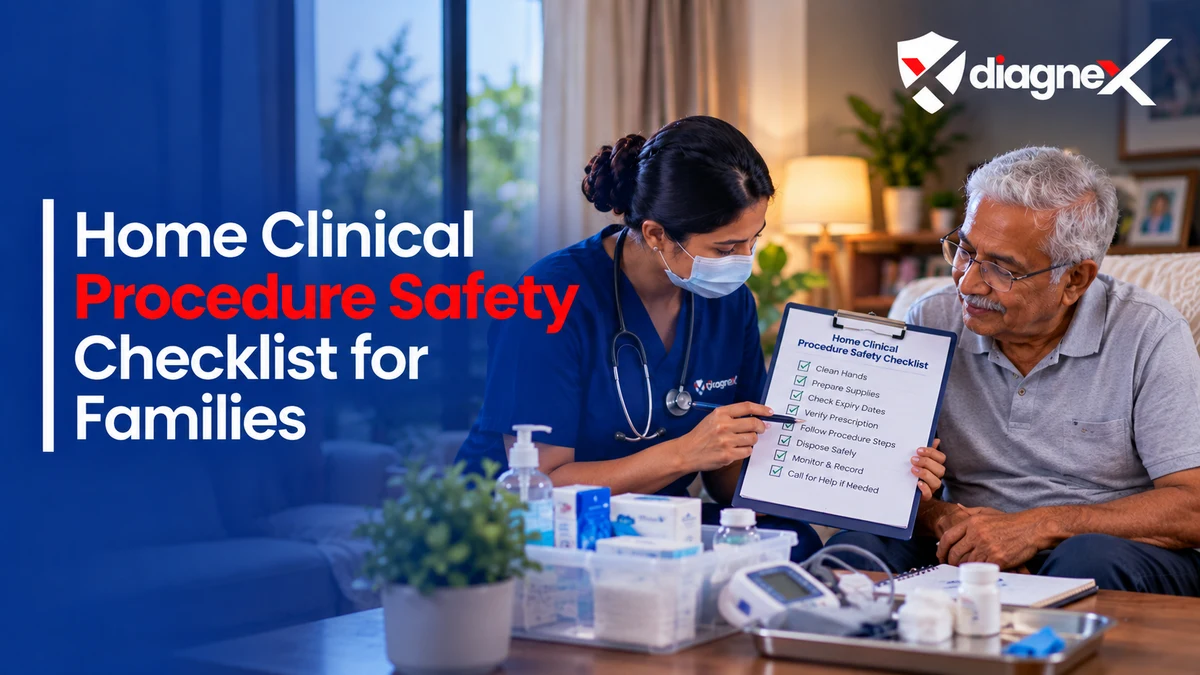
- For a family-facing checklist, see Home Clinical Procedure Safety Checklist for Families
What Diagnex Can and Cannot Promise About Same-Day Procedures
Diagnex’s current service directory includes procedure enquiries such as wound dressing at home, nursing injections, IV cannulation, catheterisation, Ryle’s tube insertion, blood sample collection and selected monitoring or diagnostic services. Same-day availability should not be assumed from the existence of a service listing. If the family is unsure which service fits, use Find the Right Care. If the need is broader than a short procedure visit, the Home Nursing pathway may be more appropriate.
- The specific procedure
- Clinical suitability
- Prescription or treatment-plan requirements
- Professional availability
- Locality
- Required equipment, medicine and consumables
- Timing and current capacity
- Diagnex therefore confirms the requirement rather than publishing a universal same-day response-time promise
Frequently Asked Questions
Can I get a nurse at home on the same day?
What procedures can usually be arranged as short nursing visits?
Can I arrange a same-day injection at home?
Can a nurse start IV fluids at home the same day?
Can a catheter be changed at home the same day?
Can wound dressing be arranged urgently at home?
Do I need a prescription before booking?
Is same-day home nursing the same as emergency care?
No. Same-day nursing is for urgent but stable, planned clinical needs. Medical emergencies require emergency assessment and should not wait for a home-service booking.
What if no nurse is available today?
How long does a short visit nursing appointment take?
The Bottom Line
Many short nursing procedures can sometimes be coordinated at home on the same day, especially when the task is clearly defined, the patient is stable, the prescription or care plan is ready, the required supplies are available and the right professional can reach the patient. The fastest safe pathway is not the one that skips questions. It is the one that gets the right clinical information early enough to determine whether the procedure can genuinely be delivered at home that day. Same-day home nursing is useful for urgent-but-stable needs. It should never be presented as a substitute for emergency medical care.
Sources and Medical References
This article provides general health information and is not a substitute for patient-specific medical advice, diagnosis or treatment. Same-day availability varies by provider, procedure, professional availability, locality and clinical suitability. Emergency symptoms require urgent medical assessment rather than a routine home nursing booking.