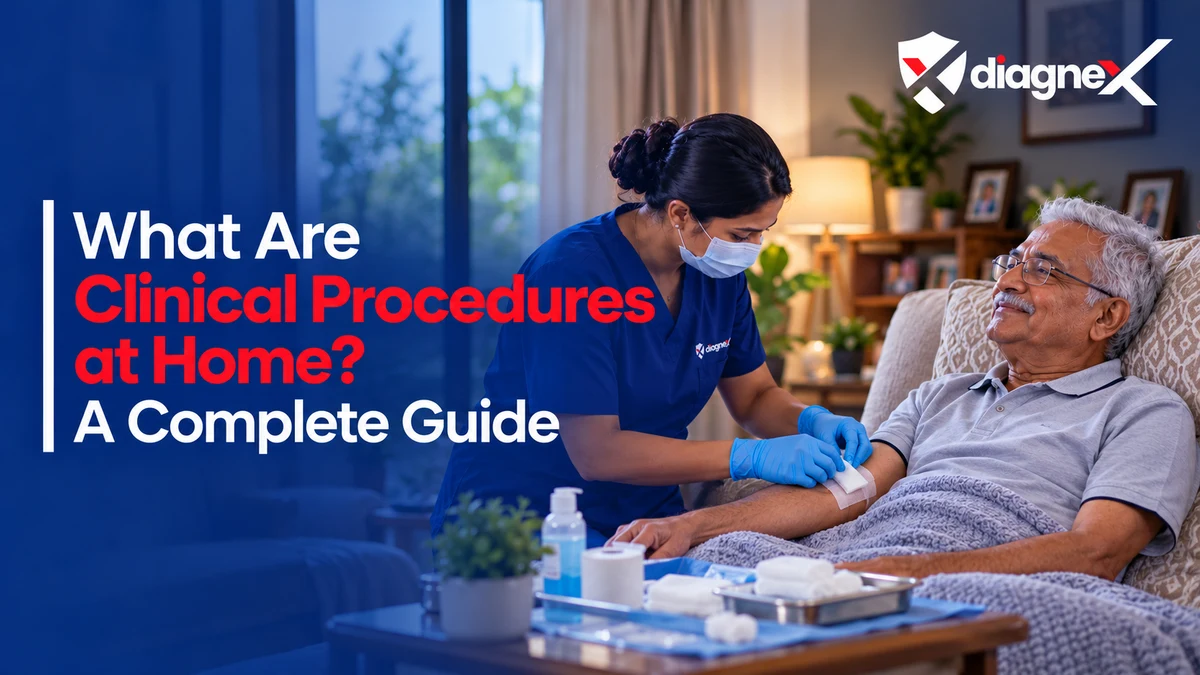
Many medical procedures can be done at home when the patient is clinically suitable, the procedure does not require hospital-only resources, the correct professional is available, and there is a clear plan for monitoring and escalation. Common examples include wound dressing, prescribed injections, blood sample collection, selected IV therapy, urinary catheter procedures, Ryle’s or nasogastric tube care, ECG and other monitoring, and some post-discharge nursing procedures. But the safest answer to “what medical procedures can be done at home?” is not simply a list. The same procedure that is reasonable for one stable patient may be inappropriate for another patient who is unstable, at higher risk of complications or needs continuous monitoring. Home care should be chosen because the clinical circumstances allow it - not only because travelling to a hospital is inconvenient. This guide explains which clinical procedures at home are commonly considered, what extra safeguards some procedures require, which interventions often need facility-based care, and how patients and families can judge whether a home procedure has been organised responsibly.
What Medical Procedures Can Be Done at Home?
The procedures most often considered for home delivery are planned, relatively contained interventions that can be performed by an appropriately qualified professional without relying on an operating theatre, intensive monitoring, immediate diagnostics or a full emergency-response team. They usually fall into six broad groups: wound and skin care, injections and medication administration, IV-related procedures, catheter and tube procedures, diagnostic sample collection and monitoring, and post-discharge nursing support. A useful starting point is to understand that home healthcare is a setting rather than one standard service. Different procedures require different professionals, equipment, prescriptions and levels of oversight. Diagnex’s guide to understanding home healthcare explains this distinction in more detail.
Procedures Commonly Suitable for Planned Home Care
Wound Dressing and Basic Wound Care
Wound dressing is one of the most common nursing procedures at home. It may be needed after surgery, for pressure injuries, chronic wounds or other wounds that require scheduled cleaning, dressing changes and observation. The professional should follow the treating team’s instructions or wound-care plan, use the appropriate clean or sterile technique, and observe for changes such as increasing pain, swelling, discharge, odour, fever or deterioration of the wound. A dressing visit should not become an isolated task if the wound is worsening.
Prescribed Injections
Selected prescribed injections can often be given at home by an appropriately qualified professional. This may include intramuscular or subcutaneous medicines, depending on the prescription, route, medication and patient-specific risks. Safe injection practice matters in any setting. The medicine, dose, route, timing, allergy history, storage conditions and need for observation should be clear before administration. New sterile equipment and appropriate sharps disposal are basic safety expectations.
Blood Sample Collection
Routine blood sample collection is frequently suitable for home delivery, especially for older adults, people with limited mobility and patients who need repeated tests. The quality of the service depends not only on drawing the sample correctly but also on patient identification, correct labelling, transport conditions and reliable delivery of results. Home collection is a diagnostic service, not a substitute for medical interpretation. Abnormal or urgent results still need to reach the treating clinician through the appropriate pathway.
Basic Clinical Monitoring
Blood pressure, pulse, temperature, oxygen saturation and blood glucose checks can often be done at home. Depending on the patient, monitoring may be a one-off check or part of a structured care plan. The value of a reading depends on what happens next. Families should know which ranges or symptoms require contacting the treating professional, and when a reading is only one part of a wider assessment.
Nebulisation and Some Respiratory Support Tasks
Nebulisation and selected respiratory-support tasks may be managed at home when the treatment has been prescribed and the patient is stable. Equipment should be used, cleaned and maintained according to appropriate instructions. New or severe breathing difficulty is different from routine respiratory care. A patient who is acutely short of breath, confused, cyanosed or rapidly deteriorating needs urgent clinical assessment rather than a routine home procedure.
Post-Discharge Nursing Procedures
After hospital discharge, patients may need a short course of wound care, injections, catheter support, monitoring, medication assistance or other defined tasks. These are often well suited to visit-based nursing when the discharge plan is clear and the patient does not need continuous bedside nursing. This is where families sometimes confuse a home nurse procedure visit with full-time home nursing. A visit is appropriate when a specific task needs to be completed; longer nursing cover is more appropriate when the patient needs sustained observation or repeated clinical support across the day.
Procedures That May Be Done at Home but Need More Clinical Screening
IV Cannulation and IV Infusion
IV cannulation and some prescribed IV treatments can be provided at home for suitable patients. The professional must consider the medicine or fluid being given, the type of IV access, the patient’s condition, previous reactions, vein access, infusion duration and observation requirements. MedlinePlus describes home IV treatment as an established option for some patients who need medicines or fluids after discharge, but it remains part of a prescribed clinical plan rather than a general convenience service. Some infusions require more monitoring than a home setting can safely provide. If a medicine carries a meaningful risk of an acute reaction or the patient is unstable, a hospital or monitored day-care facility may be more appropriate.
Urinary Catheter Insertion, Change and Care
Urinary catheter procedures may be performed at home in selected patients by a professional with the appropriate competence. Catheters carry infection and other risks, so they should be used only when clinically indicated and maintained correctly. CDC guidance emphasises appropriate indication, aseptic insertion with sterile equipment, maintenance and timely removal. At home, families should also receive clear instructions about drainage, hygiene and warning signs such as fever, new pain, blockage, leakage or blood in the urine.
Ryle’s or Nasogastric Tube Insertion and Tube Care
Ryle’s or nasogastric tube procedures may be arranged at home when the patient’s condition, clinical plan and professional competency make this appropriate. Tube insertion is more than a feeding task; correct placement, the reason for the tube and the patient’s aspiration risk all matter. Ongoing feeding or tube care may sometimes be taught to caregivers, but the responsibilities of the caregiver and the clinical professional should be clearly separated.
Tracheostomy Care and Suctioning
Selected tracheostomy care and suctioning can form part of a structured care-at-home plan for patients who are stable and have an established airway plan. This requires trained personnel, suitable equipment, infection-prevention practices and a clear escalation route. Tracheostomy insertion itself is a substantially different level of intervention from routine tracheostomy care. Families should not assume that because ongoing care can happen at home, every airway procedure belongs there.
ECG, Holter, ABPM and Other Home Monitoring
Selected diagnostic procedures such as ECG, Holter monitoring and ambulatory blood pressure monitoring can often be performed or initiated at home using portable equipment. These services may reduce travel for patients who need scheduled testing. The test result still requires appropriate interpretation and follow-up. A home ECG is not a replacement for emergency evaluation when a patient has active chest pain, severe breathlessness, fainting or another concerning symptom.
Procedures That Need Particularly Cautious Case-by-Case Decisions
Blood Transfusion
Blood transfusion requires correct blood matching, consent, baseline assessment, monitoring and readiness to recognise and manage a transfusion reaction. Many health systems ordinarily provide transfusions in hospitals or other monitored clinical settings. For example, NHS patient guidance describes blood transfusion as a hospital procedure with vital-sign monitoring before, during and after transfusion. A provider listing blood transfusion as a possible home service does not mean it is appropriate for every patient. If home transfusion is being considered, the treating team should explicitly determine that the model, monitoring, professional staffing, blood-handling process and emergency arrangements are appropriate.
Albumin and Other Higher-Risk Infusions
Albumin and other higher-risk infusions can require close observation and management of reactions or fluid-related complications. They should be considered case by case rather than grouped with simple hydration or routine injections. The question is not whether the infusion is technically possible at home; it is whether the patient can receive it safely with the monitoring and backup available in that specific home-care model.
ABG Sampling and Other Specialised Procedures
Procedures That Usually Belong in a Hospital or Clinical Facility
Home healthcare has clear limits. Procedures should generally remain in a hospital or appropriately equipped clinical facility when they require an operating theatre, anaesthesia, intensive monitoring, rapid imaging or laboratory support, multiple specialist teams or immediate resuscitation capability. Examples include: The safest care model is not the one that moves the greatest number of procedures into the home. It is the one that recognises where home care stops being appropriate.
- Emergency surgery or invasive procedures requiring an operating theatre.
- Procedures requiring deep sedation or general anaesthesia.
- Care for an unstable patient whose condition could deteriorate rapidly.
- Procedures that need continuous advanced monitoring or immediate specialist intervention.
- Emergency treatment for major bleeding, severe breathing difficulty, stroke-like symptoms, severe allergic reactions or loss of consciousness.
What Can a Home Nurse Do?
The phrase “home nurse procedures” is often searched by families who are trying to understand the difference between a nurse, an attendant and a doctor. A home nurse can perform a range of clinical tasks within the nurse’s professional scope, competence and the patient’s care plan. Depending on the situation, nursing procedures at home may include: A nurse should not independently diagnose a new condition, prescribe treatment or expand the patient’s medical plan beyond the nurse’s role. Where a doctor’s decision is required, the nursing service should stay connected to the treating professional.
- Wound assessment and dressing changes.
- Administration of prescribed injections and medicines within scope.
- Selected IV cannulation, infusion support and IV-site care.
- Urinary catheter care and selected catheter procedures.
- Ryle’s or nasogastric tube care and feeding support.
- Vital-sign monitoring and documentation.
- Post-operative and post-discharge nursing tasks.
- Patient and caregiver education related to an established care plan.
Home Nurse vs Attendant vs Doctor vs Technician
Home Nurse
Attendant or Caregiver
Doctor
Technician or Allied Health Professional
How to Decide Whether a Procedure Is Safe to Do at Home
1. Is the Patient Stable?
2. Does the Procedure Need Hospital-Only Resources?
3. Is the Right Professional Performing It?
4. Is There a Clear Prescription or Clinical Plan?
5. Is the Home Environment Suitable?
6. What Is the Escalation Plan?
Infection Prevention Matters at Home Too
Moving care into the home does not remove infection-prevention responsibilities. CDC core practices explicitly apply across healthcare settings, including care delivered in homes. Depending on the procedure, safe care may involve hand hygiene, appropriate personal protective equipment, clean or sterile supplies, disinfection of reusable equipment, safe handling of sharps and correct disposal of contaminated materials. WHO guidance on injection safety also emphasises preventing syringe reuse, using appropriate equipment and protecting both patients and healthcare workers from avoidable exposure. Families do not need to become infection-control experts, but they should expect the visiting professional to treat infection prevention as part of the procedure rather than an optional extra.
When Home Care Is Especially Useful
- Older adults or frail patients for whom repeated travel is physically difficult.
- Patients recovering after surgery or hospital discharge who have a clear follow-up plan.
- People with limited mobility who need repeated dressings, injections, sample collection or monitoring.
- Patients receiving a defined course of treatment that does not require facility-level monitoring.
- Families managing a wider home-care plan in which individual procedures need to be coordinated with nursing, diagnostics or doctor follow-up.
When a Home Procedure Should Be Reconsidered
- The patient is becoming more unwell or less stable.
- The procedure repeatedly fails or cannot be completed safely.
- The patient needs closer monitoring than the home model can provide.
- There is a suspected serious infection, significant bleeding or acute reaction.
- The professional recommends escalation after assessment.
- The equipment, supplies or clinical support required are not reliably available.
When Emergency Care Should Take Priority
Do not book a routine home nurse visit for a medical emergency. Seek urgent medical attention for severe breathing difficulty, chest pain, loss of consciousness, a new stroke-like symptom, uncontrolled bleeding, a seizure, a severe allergic reaction or another sudden major deterioration. In India, call 112 or go to the nearest appropriate emergency facility when emergency care is required. Home clinical procedure services are designed for planned care, not emergency response.
How to Prepare for a Medical Procedure at Home
- Keep the prescription, discharge instructions or procedure order available if one is required.
- Share relevant information through the provider’s appropriate secure clinical channel rather than a general website form.
- Confirm whether medicines, consumables or equipment are included or need to be arranged separately.
- Prepare a clean, well-lit area with enough space for the procedure.
- Have a current medicine and allergy list available when relevant.
- Ask what observation is needed after the procedure and which warning signs should trigger medical review.
Questions to Ask Before Booking Nursing Procedures at Home
Before choosing a provider, ask questions that test the quality of the care model rather than only the price or response time. A credible provider should be comfortable explaining the limits of home care. A claim that “everything can be done at home” is not a mark of clinical strength.
- Who exactly will perform the procedure and what is their qualification?
- Does this procedure require a prescription or clinician assessment?
- How do you decide whether this patient is suitable for home care?
- What equipment, medicines and consumables are required?
- What infection-prevention process will be followed?
- What monitoring is required during and after the procedure?
- How are findings documented and communicated to the treating team?
- What is the escalation plan if something goes wrong?
- What is included in the fee, and what may be charged separately?
Clinical Procedures at Home Through Diagnex
Diagnex’s current service directory lists clinical-procedure enquiries including IV cannulation, Ryle’s tube insertion, catheterisation, wound dressing at home, nursing injections, blood sample collection, ECG, Holter monitoring, ABPM, selected imaging and other tests. The directory also makes clear that suitability, prescription requirements, professional responsibility and local availability are confirmed before service delivery. A service appearing in the directory should not be read as a blanket promise that it is suitable for every patient or immediately available in every locality. Diagnex confirms the specific requirement rather than treating a website listing as clinical clearance.
If you are not sure which procedure or care pathway you need, use Find the Right Care to start from the patient’s situation rather than trying to choose a service label yourself. If the requirement is broader than one procedure - for example ongoing nursing, equipment, monitoring and doctor-directed advanced care - the Home ICU Setup pathway explains how a more structured care-at-home plan differs from a single procedure visit. For kidney patients, home hemodialysis is a separate specialist pathway under the treating nephrologist’s prescription rather than a generic nursing procedure. For the broader definition, professional roles and care-setting principles, see What Are Clinical Procedures at Home? A Complete Guide.
Frequently Asked Questions
What medical procedures can be done at home?
Which nursing procedures can be done at home?
Can IV fluids be given at home?
Can a catheter be inserted at home?
Can wound dressing be done at home?
Can blood transfusion be done at home?
Blood transfusion should not be assumed to be a routine home procedure. It requires blood matching, monitoring and the ability to manage transfusion reactions. Many health systems provide transfusion in hospitals. Any home model requires explicit specialist assessment and robust safety arrangements.
Can a home nurse give injections?
Are home medical procedures safe for elderly patients?
How do I know if a procedure should be done at home or in hospital?
The Bottom Line
A growing number of medical and nursing procedures can be delivered at home, but “can be done” and “should be done” are not the same question. Wound dressing, injections, sample collection, monitoring and selected catheter, tube and IV procedures are often compatible with home care. Higher-risk infusions, blood transfusion and specialised procedures need much stricter case-by-case assessment. The best home-care decision starts with the patient’s clinical needs, not the location. When the patient is stable, the procedure is appropriate, the professional is competent, the plan is clear and escalation is available, home care can remove unnecessary travel while keeping clinical responsibility intact.