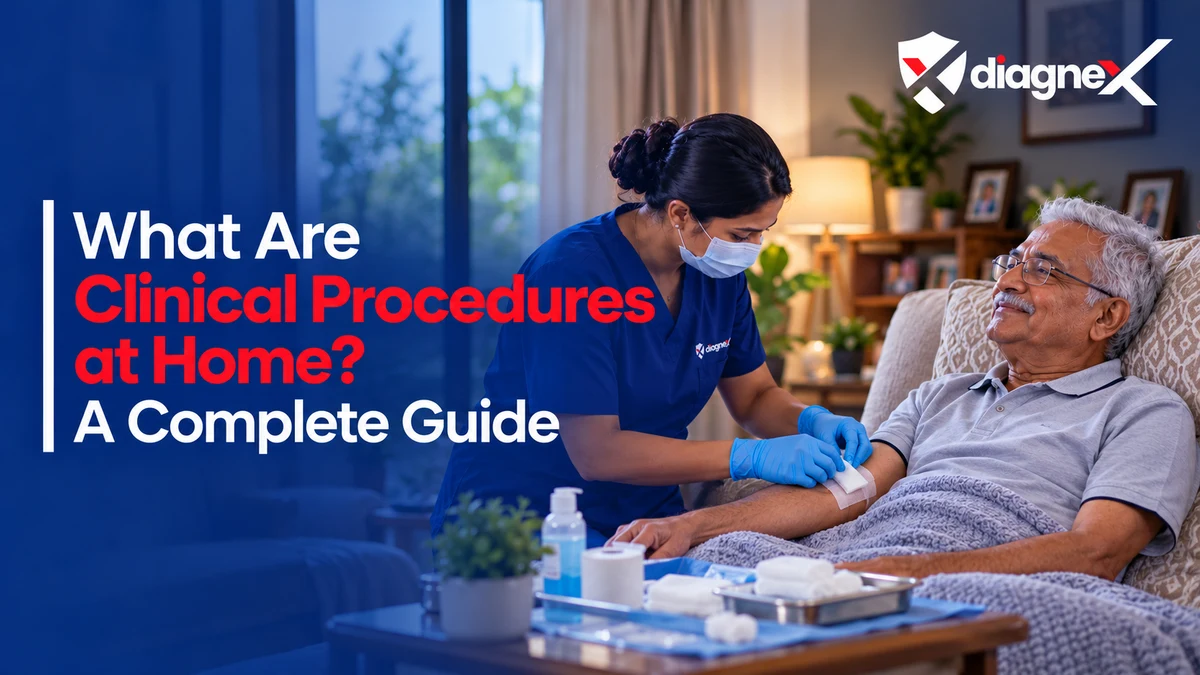
A nurse visit for a procedure at home usually follows a clear sequence: the requirement is confirmed before the visit, relevant clinical instructions are checked, the nurse verifies the patient and planned procedure, prepares a safe working area, performs the procedure within professional scope, observes the patient as required, documents what was done and explains any aftercare or escalation steps. The exact visit will look different for a wound dressing, prescribed injection, catheter procedure, IV-related treatment or post-discharge nursing task. A good home nursing procedure is not simply “a nurse arrives and does the task.” The safety of the visit depends on what happens before, during and after the procedure. If you are arranging a nurse visit at home for the first time, this guide explains what to expect, what information to keep ready, what the nurse may check, which responsibilities stay with the treating doctor, and when a planned home visit should give way to urgent hospital care.
What Is a Nurse Visit for a Home Procedure?
A nurse visit for a home procedure is a scheduled visit by an appropriately qualified nursing professional to perform a defined clinical task in the patient’s residence. It is usually shorter and more task-focused than shift-based home nursing, although the nurse may still need to assess relevant changes before carrying out the procedure. Typical reasons for a procedure-focused nurse visit may include wound dressing, a prescribed injection, selected IV therapy, urinary catheter care, Ryle’s or nasogastric tube-related care, vital-sign monitoring or another nursing procedure that is appropriate for the home setting.
The phrase “home nursing procedure” can be misleading if it makes the visit sound purely technical. Even a relatively routine task should sit inside a wider clinical context: the correct patient, the correct procedure, appropriate instructions, a competent professional, infection-prevention measures, and a plan for what happens if something is not as expected. For a broader explanation of which procedures may be suitable outside a hospital, see Which Medical Procedures Can Be Done Safely at Home?
How a Nurse Visit at Home Works: Step by Step
1. The Procedure Requirement Is Clarified Before the Visit
The process begins before the nurse reaches the home. The family or patient explains the broad requirement - for example, a wound dressing, injection, catheter-related procedure or post-discharge nursing task. The provider may need to confirm the procedure name, patient location, preferred timing, whether the patient has a current prescription or discharge instruction, and whether any special equipment or consumables are needed. The purpose is not to diagnose through a booking form. It is to understand what must be checked before the visit can be appropriately arranged. If you are unsure what service name fits the situation, start from the patient’s need rather than guessing a procedure. Diagnex’s Find the Right Care pathway is designed for that type of enquiry.
2. Suitability, Prescription and Dependencies Are Checked
Some nursing procedures can be arranged straightforwardly when there is a clear existing care plan. Others require a doctor’s prescription, discharge summary, procedure instruction, clinical assessment or confirmation that the patient is stable enough for home care. The requirement can also depend on factors such as medicine storage, IV access, sterile supplies, monitoring needs, the home environment and whether the patient has a history of relevant reactions or complications.
A home visit should not be confirmed merely because a procedure exists in a service catalogue. The patient and setting still matter. Diagnex’s current service directory explicitly notes that suitability, prescription requirements, professional responsibility and locality are confirmed for the specific requirement.
3. The Scope of the Visit Is Confirmed
- Is this a single procedure visit or a longer nursing shift?
- Will the nurse perform one defined task or also carry out relevant observations?
- Are medicines or consumables being supplied, or must they already be available?
- Is follow-up expected?
These details vary by provider, procedure and locality. They should be confirmed rather than assumed. A low quoted visit fee can become misleading if the family later discovers that medicines, dressing materials, catheter supplies or other items are separate.
4. The Family Prepares the Patient and the Home
- Keeping the prescription, discharge instruction or treatment plan accessible when relevant.
- Having a current list of medicines and known allergies available if they matter to the procedure.
- Preparing a clean, well-lit working area with enough space for the nurse and required equipment.
- Ensuring the patient is reasonably comfortable and accessible for the planned procedure.
- Confirming whether medicines, dressing materials, syringes, catheters or other supplies need to be present.
- Keeping one family contact available for questions or coordination where appropriate.
5. The Nurse Arrives and Confirms the Patient and Procedure
The nurse should not begin an invasive or medication-related procedure the moment they enter the room. The visit should first be anchored to the correct patient and the correct task. Depending on the procedure, this may involve confirming the patient’s identity, reviewing the relevant prescription or instruction, checking what has changed since the visit was booked and clarifying allergies or previous reactions. If there is an important mismatch - for example, the medicine is different from the prescription or the patient’s condition has significantly changed - the nurse may need to pause and seek clarification rather than continue automatically.
6. The Nurse Performs a Focused Clinical Check
A procedure visit does not necessarily require a full head-to-toe nursing assessment. The nurse should, however, consider the observations that are relevant to the planned procedure and the patient’s immediate safety. For some visits, this may include vital signs such as blood pressure, pulse, temperature or oxygen saturation. For wound care, it may include observing the wound and surrounding skin. For an IV-related visit, it may include checking the access site and whether the patient has symptoms that change the safety of proceeding. The purpose of this check is not for the nurse to independently redesign the treatment plan. It is to identify whether the planned procedure can be carried out as intended or whether something needs escalation.
7. Hand Hygiene, Equipment and the Working Area Are Prepared
Clinical care does not become informal because it is happening in a bedroom or living room. Infection-prevention practices remain part of safe care at home. The nurse may clean hands, prepare the required supplies, create a clean working area, use personal protective equipment where appropriate and handle sterile or clean items according to the procedure. Reusable clinical equipment should be managed according to appropriate cleaning and disinfection requirements. CDC infection-control guidance recognises home care as a healthcare setting and includes specific recommendations for infection prevention and reusable equipment in home environments.
8. The Nurse Explains the Procedure
Patients and families should know what is about to happen. For a simple procedure, the explanation may be brief: what the nurse is doing, where it will be done, what the patient may feel and what the nurse needs the patient to do. For more complex or unfamiliar procedures, the patient may have additional questions about positioning, discomfort, duration, observation or aftercare. The explanation should stay within the nurse’s role. Questions that require a change in diagnosis, prescription or treatment plan should be referred to the appropriate treating professional.
9. The Home Nursing Procedure Is Performed
Only after the necessary checks and preparation should the procedure itself begin. The exact process depends on what has been arranged. Examples of procedure-focused nursing visits include: WHO’s injection-safety guidance emphasises that injections should be delivered using safe technique and equipment that protects the patient, healthcare worker and community from avoidable risk.
- Wound cleaning and dressing according to the established wound-care plan.
- Administration of a prescribed injection within the nurse’s professional scope.
- Selected IV cannulation, infusion support or IV-site care for an appropriate patient.
- Urinary catheter care or selected catheter procedures.
- Ryle’s or nasogastric tube-related nursing care.
- Vital-sign checks or defined post-discharge observations.
10. The Patient Is Observed After the Procedure When Required
The nurse’s role does not always end at the instant the technical task is complete. Some procedures require immediate observation for pain, bleeding, dizziness, an allergic reaction, a change in vital signs or another early problem. The amount of observation depends on the procedure and patient. Families should not expect a fixed observation period for every visit, and they should be cautious of generic time promises that ignore the actual treatment being delivered. If the patient develops a concerning reaction or the nurse identifies a change that cannot be safely managed within the planned visit, escalation should take priority over completing the appointment as originally scheduled.
11. The Nurse Documents What Was Done
Good home nursing should leave a clear record. Documentation may include the procedure performed, relevant observations, medicine administered where applicable, wound findings, vital signs, patient response, supplies or devices involved, and any concern that needs follow-up. The exact record format depends on the provider and care model, but the principle is important: clinical information should not disappear simply because the procedure happened at home. Where the patient has an ongoing treating team, relevant findings may need to be communicated through the appropriate clinical pathway rather than relying on a family member to remember and relay everything.
12. Aftercare and Follow-Up Are Explained
Before leaving, the nurse should clarify what the patient or family needs to do next. This may include keeping a dressing dry, observing a catheter or IV site, continuing prescribed medicines, watching for a reaction, maintaining a particular position or preparing for the next scheduled visit. Families should also know what symptoms need a call to the treating team and which symptoms should trigger urgent medical attention. Aftercare advice should relate to the actual procedure, not be copied from a generic checklist.
What Does the Nurse Check Before a Home Procedure?
- Is this the correct patient and the correct planned procedure?
- Is there a prescription, discharge instruction or care plan when one is required?
- Has the patient’s condition changed since the procedure was arranged?
- Are there relevant allergies, previous reactions or precautions?
- Are the correct medicine, dose, route or procedure instructions available where applicable?
- Are the required supplies and equipment available and appropriate?
- Is the home environment suitable enough to perform the procedure?
- Is there anything that requires doctor review or a higher level of care before proceeding?
What Should the Family Keep Ready for a Nurse Visit?
Families can make the visit smoother by keeping a small set of relevant information and practical items ready. Not every item will apply to every procedure. Avoid sending detailed medical records through ordinary website forms unless the provider specifically directs you to an appropriate protected channel.
- The current prescription or procedure instruction, if required.
- Hospital discharge papers or recent instructions that directly relate to the procedure.
- A current medication list and known allergies.
- Any medicine the family has been told to procure in advance.
- Procedure-specific consumables if the provider has confirmed they are not included.
- Previous relevant readings or wound information if the nurse has been asked to review a trend.
- A list of questions the patient or family wants answered.
- The contact route for the treating clinician or hospital team when appropriate.
Does the Nurse Bring Medicines and Supplies?
There is no universal answer. Some home-care services include standard nursing supplies in the visit, some charge separately for consumables, and some require the family to procure the prescribed medicine or device in advance. This should be confirmed before the appointment. Families should ask specifically about the medicine, syringe or needle, dressing kit, sterile gloves, catheter or tube, IV set, cannula, saline or other procedure-specific materials that may be required. Do not assume that a nurse can substitute a different medicine, dose, catheter type or device simply because the planned item is unavailable. Changes that affect treatment should be clarified through the appropriate clinical pathway.
How Long Does a Nurse Procedure Visit Take?
The duration depends on the procedure, patient condition, preparation required and whether observation is needed afterwards. A simple scheduled injection can require much less time than a complex wound dressing or IV-related visit. For SEO pages, it is tempting to promise a standard number of minutes. Clinically, that can be misleading. A better provider confirms the task and allows enough time for the necessary safety checks, procedure, observation, documentation and aftercare rather than forcing every visit into the same duration.
Can a Family Member Stay During the Procedure?
Often yes, if the patient is comfortable with it and the family member does not interfere with the nurse’s working area. In some situations, privacy, space, infection-prevention needs or the nature of the procedure may make it better for others to step back temporarily. A family member can be particularly useful when the patient needs help communicating, has cognitive impairment or when aftercare instructions need to be understood by the person who will support the patient after the nurse leaves.
What a Procedure-Focused Nurse Visit Is Not
It Is Not the Same as a Nursing Shift
It Is Not an Attendant Visit
It Is Not a Doctor Consultation
It Is Not an Emergency Service
When Should the Nurse Pause or Escalate the Procedure?
A safe home procedure is sometimes one that is not completed. The nurse may need to pause and seek clinical review if: Proceeding despite a meaningful uncertainty is not a sign of confidence. Knowing when to stop is part of professional clinical practice.
- The prescription, medicine, dose, route or procedure instruction is unclear or inconsistent.
- The patient’s current condition is significantly different from what was expected.
- Vital signs or symptoms suggest the patient may need a higher level of assessment.
- The required equipment or sterile supplies are not available.
- The procedure cannot be performed safely in the home environment.
- The nurse identifies bleeding, infection, device problems, an adverse reaction or another complication that exceeds the planned visit.
When Hospital or Emergency Care Should Take Priority
A clinical procedure at home is intended for planned care. It is not a substitute for emergency medical assessment. Seek urgent medical attention for severe breathing difficulty, chest pain, loss of consciousness, a new stroke-like symptom, uncontrolled bleeding, a seizure, a severe allergic reaction, rapidly worsening confusion or another sudden major deterioration. In India, call 112 or go to the nearest appropriate emergency facility when emergency care is required. Do not wait for a scheduled nurse visit if the patient may be seriously unwell.
How to Judge the Quality of a Home Nursing Procedure
Patients and families often judge a visit by whether the nurse was polite and whether the procedure was completed. Those things matter, but the quality of a clinical visit should also be visible in the process. Look for signs such as: These process markers are more meaningful than vague promises of “hospital-like care” at home.
- The nurse understands what procedure has been arranged before starting.
- Relevant prescription or clinical instructions are checked when required.
- Patient identity and important safety information are confirmed.
- Hand hygiene and procedure-appropriate infection-prevention practices are followed.
- The procedure stays within the nurse’s professional role and competence.
- The patient is observed appropriately rather than rushed immediately after the task.
- The visit is documented.
- The family receives clear aftercare and escalation guidance.
- The nurse is willing to pause and escalate when something does not look right.
Nurse Visit at Home Through Diagnex
Diagnex separates home nursing from individual clinical-procedure enquiries. Its current service directory lists nursing alongside procedures such as wound dressing at home, nursing injections, IV cannulation, catheterisation, Ryle’s tube insertion and blood sample collection. Suitability, prescription requirements, professional responsibility and local availability are confirmed for the actual requirement rather than assumed from the website list.
For home nursing more broadly, the Diagnex Home Nursing pathway describes a process of initial enquiry, assessment where required, service confirmation, delivery and follow-up. A procedure visit is appropriate when the need is focused. If the patient needs sustained bedside nursing, equipment, monitoring and coordinated advanced support, a broader care-at-home pathway may be more suitable. The Home ICU Setup page explains that distinction and keeps the treating doctor’s plan central. For the wider definition of home procedures, professional roles and safety boundaries, read What Are Clinical Procedures at Home? A Complete Guide.
Frequently Asked Questions
What happens during a nurse visit for a procedure?
What procedures can a nurse do during a home visit?
Do I need a doctor’s prescription before a home nursing procedure?
Will the nurse check blood pressure and other vital signs?
Does a nurse bring all the supplies for the procedure?
Not necessarily. What is included varies by provider and procedure. Confirm in advance whether prescribed medicines, dressing materials, syringes, catheters, IV sets or other consumables are supplied or need to be arranged separately.
Can I book a nurse only for one procedure?
What if the nurse thinks the procedure is unsafe to do at home?
What should I do after the nurse leaves?
How is a procedure visit different from 12-hour or 24-hour home nursing?
The Bottom Line
A nurse visit for a home procedure should feel organised, not improvised. The procedure itself may take only part of the appointment. The quality of the visit also depends on confirming the requirement, checking relevant clinical information, preparing safely, recognising when not to proceed, observing the patient, documenting the care and making the next step clear. For families, the most useful expectation is simple: a professional home nursing procedure should bring the discipline of clinical care into the home without pretending that the home is a hospital or that the nurse replaces the treating doctor.