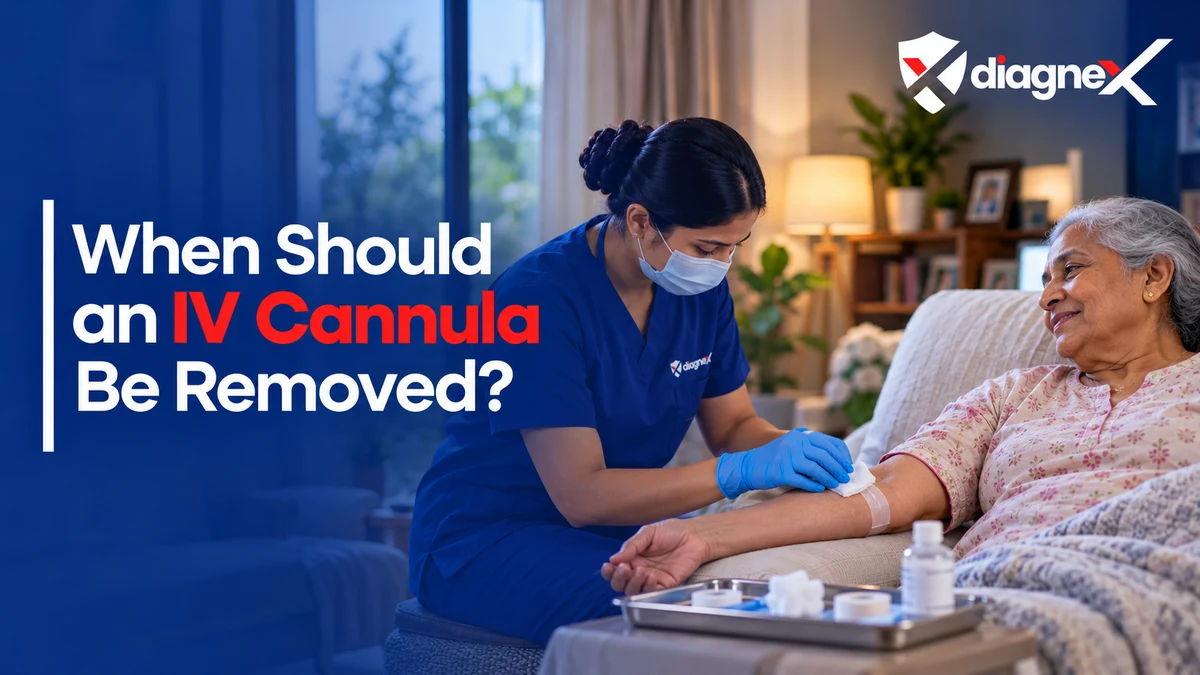
IV line care at home begins after the cannula has been inserted. A peripheral IV cannula may remain in place between prescribed treatments so the patient does not need a new needle insertion for every dose. During that time, the site still needs to be watched for pain, swelling, redness, leakage, dressing problems, blockage, displacement and signs of infection.
The most important principle is simple: A cannula should stay only while it is clinically needed, functioning properly and free from signs of complication. CDC guidance recommends checking peripheral catheter sites regularly and removing the catheter if there are signs of phlebitis, infection or malfunction. It also recommends replacing a catheter dressing if it becomes damp, loose or visibly soiled. WHO guidance similarly covers ongoing peripheral-catheter maintenance and removal across healthcare settings. For families, that means an IV line should not be ignored simply because the next nurse visit is several hours away. This guide explains what to watch for after cannulation, what a healthy IV site should usually look like, when to call the nurse, when the cannula may need removal, and which problems require urgent medical review.
What Does “IV Line Care at Home” Mean?
In this article, IV line care mainly refers to care of a short peripheral IV cannula placed into a vein in the hand or arm for prescribed treatment. Making sure the line has not become displaced. Reporting difficulty with infusion flow. Keeping the site dry. Knowing when the line is no longer needed.
Arranging professional removal when appropriate. The patient or caregiver does not need to perform technical line maintenance unless they have been specifically trained for an approved home-infusion programme. Observation is different from manipulation. Families can watch the IV site closely without disconnecting tubing, changing connectors or forcing a blocked line.
- Keeping the dressing clean and secure
- Avoiding unnecessary touching or pulling
- Checking the site for pain, swelling or redness
- Watching for leakage
What Should a Healthy Peripheral IV Site Look Like?
- Comfortable or only mildly tender immediately after insertion
- Free from increasing redness
- Free from swelling
- Free from leaking fluid or blood
- Covered by a secure dressing
- Not unusually warm
- Not increasingly painful
- Functioning normally for the prescribed treatment
The cannula itself should remain secure. The site should be visible enough for the nurse to assess where the dressing type allows it. A line does not need to look completely “invisible” to be safe. The concern is a new change from the patient’s baseline.
What Should Families Check Between Nurse Visits?
- New pain
- Increasing tenderness
- Redness
- Swelling
- Warmth
- Coolness around the site during infusion
- Leakage
- Bleeding
- Wet dressing
- Loose dressing
- Cannula movement
- Tubing pulling on the line
- New difficulty during infusion
- New fever or chills
- The infusion slowing unexpectedly
- The pump alarming
- Fluid collecting under the dressing
- The arm or hand swelling
- New burning or stinging
- Report concerning changes rather than waiting for the next scheduled dose
Pain at the IV Site: What Does It Mean?
A brief needle-related discomfort at insertion is common. Pain that increases later is different. CDC guidance lists tenderness as one of the signs that should trigger closer site assessment. Persistent or worsening IV-site pain should not be considered normal simply because the line is still working. If the patient reports new pain, contact the nurse or home-care team before the line is used again.
- Phlebitis
- Infiltration
- Catheter movement
- Extravasation
- Local irritation
- Infection
- Pressure from the dressing
- Another line complication
What Does Redness Around the IV Mean?
Redness can have several causes. Mild local irritation may occur near a recently inserted cannula. A nurse should assess progressive redness before continued IV use.
- Phlebitis
- Local infection
- Skin irritation from adhesive
- Early inflammation
- Extravasation-related tissue irritation
- Redness spreading away from the site
- Increasing warmth
- Increasing pain
- Swelling
- Drainage
- Fever
- Red streaking along the vein
What Does Swelling Around an IV Cannula Mean?
Swelling can suggest that fluid is no longer staying inside the vein. One common cause is infiltration. If swelling develops during an IV infusion, the line should not simply continue until the bag is empty. The nurse should assess the site.
- Puffiness around the cannula
- Cool skin
- Tightness
- Pain or discomfort
- Fluid leaking
- Infusion slowing
What Is IV Infiltration?
Infiltration occurs when IV fluid or a non-vesicant medicine leaks from the vein into surrounding tissue. A feeling that the skin is becoming stretched. The appropriate response depends on the fluid or medicine being given. The affected IV may need to be stopped and removed. The family should not massage the area or force the infusion to continue unless specifically directed by a clinician.
- Swelling
- Coolness
- Tightness
- Pain
- Slower flow
- Leakage
What Is Extravasation?
Extravasation is leakage of an IV medicine that can injure surrounding tissue. This is more serious than routine infiltration. The required treatment depends on the medicine involved. Because some IV medicines can cause significant tissue injury if they leak outside the vein, new pain or swelling during an infusion should be reported promptly.
- Burning
- Pain
- Swelling
- Blistering
- Skin colour change
- Tightness
- Unexpected resistance
- Poor flow
What Is Phlebitis?
- Pain
- Tenderness
- Redness
- Warmth
- Swelling
- A firm or cord-like vein
- CDC guidance recommends removing peripheral venous catheters when phlebitis develops
What Is Thrombophlebitis?
Thrombophlebitis refers to vein inflammation associated with a clot. A patient with significant swelling, worsening pain or other concerning symptoms may need medical assessment. The home-care nurse should not diagnose the severity from appearance alone if there is concern about a clot or extension beyond the local cannula site.
- Pain
- Tenderness
- Swelling
- Warmth
- Redness along the vein
What Are Signs of IV Site Infection?
- Increasing redness
- Increasing warmth
- Pain
- Swelling
- Drainage
- Pus
- Tenderness
- Fever
- Chills
- Red streaking
- MedlinePlus advises contacting the healthcare provider for IV-site redness, swelling, bruising, pain, bleeding or fever
What if the Dressing Becomes Wet?
A wet dressing should not be ignored. Moisture can reduce dressing integrity and increase contamination risk. CDC guidance recommends replacing catheter-site dressings if they become damp, loose or visibly soiled. Do not simply leave a wet dressing in place until the next scheduled infusion.
- Keep the site protected
- Avoid manipulating the cannula
- Contact the nurse or provider for appropriate dressing care
What if the Dressing Becomes Loose?
- Cannula movement
- Pulling
- Contamination
- Partial dislodgement
- The edges are lifting significantly
- The catheter is no longer well secured
- The cannula appears to have moved
- The site is exposed
- Do not push the cannula back into the vein
- Do not reinforce a clearly contaminated dressing indefinitely with extra tape
What if the Dressing Looks Dirty?
A visibly soiled dressing needs professional attention. CDC recommends replacement when the dressing is visibly soiled. The appropriate dressing change should use clean or aseptic technique according to the line type and provider protocol.
- Blood
- Sweat
- Water
- Body fluids
- Dust or dirt
- Handling
Can the IV Cannula Get Wet in the Shower?
The catheter site should not be submerged in water. CDC guidance permits showering when the catheter and connecting device can be protected from water with an impermeable cover. Practical home rules include: Do not soak the IV in a bath. Do not submerge the hand or arm in water.
Protect the site during showering if the care team permits showering. Check the dressing afterwards. If the dressing becomes wet despite protection, contact the nurse.
Should the Patient Keep Touching the IV to Check It?
No. Families should inspect the site visually and report symptoms. Technical manipulation should be limited to trained professionals or formally trained patients/caregivers within an approved home-infusion programme.
- Contaminate the site
- Loosen the dressing
- Move the catheter
- Disconnect tubing
Can the Patient Move the Arm Normally?
Usually, some normal movement is possible. Movement advice can depend on where the cannula is placed. A cannula near a joint may be more likely to kink or become uncomfortable with repeated bending.
- Pulling on the tubing
- Repeated extreme bending at the cannula site
- Sleeping directly on the line
- Activities likely to dislodge the cannula
- Heavy lifting that stresses the site
What if the Patient Accidentally Pulls on the Line?
Check: Is the dressing still secure? Has the catheter moved? Is there bleeding? Is there new pain?
Is the line leaking? Is the IV still functioning normally? If the cannula appears partially displaced, do not push it back in. Contact the nurse before further use.
What if the IV Cannula Comes Out Completely?
- Do not attempt to reinsert it
- Apply clean pressure over the site if there is bleeding
- Keep pressure until bleeding stops
- Contact the nurse or provider if ongoing IV access is still required
- MedlinePlus similarly advises applying pressure if an IV comes out and contacting the healthcare provider
- The old cannula should not be reused
What if the IV Line Starts Bleeding?
- Apply clean pressure
- If it is still in place but bleeding around the site: Do not keep using it without assessment
- Patients taking anticoagulants or with bleeding disorders may require longer pressure after removal and closer review if bleeding continues
What if the Cannula Looks Blocked?
- Kinking
- Catheter position
- Clotting
- Infiltration
- Mechanical obstruction
- Device malfunction
- The site
- The tubing
- The device
- Whether the cannula should be replaced
What if the IV Infusion Stops Flowing?
- Line kink
- Arm position
- Pump alarm
- Occlusion
- Empty bag
- Cannula movement
- Infiltration
- Blocked access
- Increase the rate
- Apply force
- Reconnect exposed tubing
- Flush the line unless specifically trained and authorised
What if the Pump Alarms but the IV Site Looks Fine?
- Occlusion
- Low battery
- Empty bag
- Tubing problem
- Device error
- Rate problem
The correct action depends on the pump. For a long-duration infusion, follow the device-specific plan and contact the infusion team where required. For extended pump-based therapy, see Long-Duration IV Infusions at Home: What Families Should Plan.
When Should an IV Cannula Be Removed?
- It is no longer clinically needed
- The treatment course is complete
- The site becomes painful
- Phlebitis develops
Infiltration or extravasation is suspected. The cannula stops functioning. Infection is suspected. The line is dislodged. The dressing or site can no longer be safely maintained.
The treatment plan changes. CDC recommends prompt removal of any intravascular catheter that is no longer essential. Keeping an IV line “just in case” creates risk without clear benefit when no further IV treatment is planned.
Who Should Remove the IV Cannula?
- A nurse
- Another appropriately trained clinical professional
A patient or caregiver only if they have been specifically trained and authorised within a formal home-care programme. Checking that the catheter is intact. Applying pressure. Covering the site if needed. Documenting removal. The patient should not pull out a cannula casually because it feels uncomfortable without informing the care team, unless urgent circumstances make immediate removal necessary and the patient has been instructed what to do.
- Stopping IV use
- Removing the dressing
- Withdrawing the catheter safely
What Should the Site Look Like After IV Removal?
- Stop bleeding with appropriate pressure
- Remain free of increasing swelling
- Remain free of spreading redness
Not develop drainage. Not become progressively more painful. A small bruise can occur.
- Persistent bleeding
- Increasing redness
- Increasing pain
- Swelling
- Warmth
- Drainage
- Fever
- Another concerning change
Can the Same IV Cannula Be Reused for the Next Dose?
- The line is still clinically needed
- The site is healthy
- The dressing is intact
- The cannula is functioning
- The site is painful
- The line is swollen
- Redness is increasing
The dressing is contaminated. The catheter has moved. The line is blocked. Infection is suspected. The treatment course is complete. The decision should be based on the site and care plan, not only on convenience.
How Long Can a Peripheral IV Cannula Stay In?
There is no one patient-facing duration that applies universally to every adult and every care setting. Historically, routine scheduled replacement was common. Current guidance allows clinically indicated replacement in appropriate settings, meaning the cannula is assessed and removed when no longer needed or when a complication develops.
WHO's current peripheral-catheter guidance supports clinically indicated removal as one accepted approach, while local policies may still use scheduled replacement intervals depending on setting and resources. Families should therefore follow the provider's current protocol rather than counting days themselves. The key rule remains: The line must still be needed, functioning and free from complication.
What Does “Clinically Indicated Removal” Mean?
It means the cannula is removed because there is a clinical reason. No further IV need. It does not mean the line stays indefinitely. Ongoing review is required.
- Treatment complete
- Pain
- Phlebitis
- Infiltration
- Infection concern
- Malfunction
- Dislodgement
Can a Cannula Stay In Overnight?
Yes, in selected patients when ongoing IV access is still clinically needed. The patient should avoid sleeping directly on the cannula if that causes pressure or kinking. If the site becomes painful, swollen, wet or displaced overnight, contact the care team.
- Site condition
- Dressing security
- Next dose timing
- Patient cognition
- Risk of pulling the line
- Bleeding risk
- Ability to report pain or swelling
- Home support
Can a Cannula Stay In Between Daily Antibiotic Doses?
Sometimes. Other patients may require a new cannula or a different vascular-access strategy. For structured home antibiotic treatment, see Can IV Antibiotics Be Given at Home?
- Clinically necessary
- Patent
- Comfortable
- Secure
- Free from infection or phlebitis
- Appropriate for the medicine
Should the Cannula Be Removed After a One-Time IV Drip?
Usually, if no further IV treatment is planned, the cannula no longer has a clinical purpose. A patient should not routinely keep peripheral IV access after a one-time infusion simply in case another drip is wanted later. Removal after the treatment is complete reduces unnecessary catheter exposure.
Does the Cannula Need Flushing Between Treatments?
Some IV lines require flushing as part of their authorised maintenance protocol. Patients or caregivers should not flush a peripheral IV or central line unless they have been specifically trained and authorised. If the provider plans to leave the cannula in place, ask who is responsible for maintaining patency.
- Device type
- Treatment
- Local policy
- Vascular access
- Contamination
- Air entry
- Line damage
- Medication error
- Other complications
Can the Dressing Be Changed at Home?
Yes, by an appropriately trained professional. The change should use the appropriate infection-control technique. A caregiver should not remove a central-line dressing or rebuild a peripheral IV dressing unless the care programme has specifically taught and authorised that task.
- Wet
- Loose
- Visibly soiled
- No longer secure
What if Adhesive Irritates the Skin?
- Redness
- Itching
- Blistering
- Skin stripping
- Sensitivity to adhesive
This can look similar to early inflammation. Tell the nurse if the skin under or around the dressing becomes irritated. Further assessment of whether redness is allergic/irritant or catheter-related. Do not apply creams, oils or powders under the IV dressing unless specifically instructed.
- Alternative dressing materials
- Different fixation
Can the Patient Exercise With an IV Cannula?
- Site
- Treatment
- Patient condition
- Line security
- Heavy lifting
- Contact activity
- Repetitive movement that stresses the line
- Activities likely to wet or contaminate the dressing
- Anything that pulls the tubing
What About Children or Confused Patients?
- Pull the cannula
- Remove the dressing
- Disconnect tubing
- Fail to report pain or swelling
- Closer supervision
- More frequent site checks
- Different fixation
- A different care setting
- A more appropriate vascular-access plan
IV Line Care for Elderly Patients
- Fragile skin
- Fragile veins
- Bruising
- Anticoagulant use
- Reduced sensation
- Cognitive impairment
- Higher infection vulnerability
- Multiple IV treatments
- Dressing-related skin injury
- Bleeding after removal
- Subtle swelling
- Pain reporting
- Repeated cannulation
- For elderly-specific care planning, see Clinical Procedures at Home for Elderly Patients
IV Line Care for Bedridden Patients
- Reduced mobility
- Pressure-risk areas
- Multiple devices
- Limited ability to inspect the line independently
- Frequent repositioning
The IV should be positioned and monitored so that: It is not compressed during turning. Tubing is not trapped under the patient. The dressing remains visible. The line does not interfere with pressure-area care. For the broader care context, see Clinical Procedures at Home for Bedridden Patients.
Peripheral IV Cannula vs PICC or Central Line Care
This article mainly addresses short peripheral IV cannulas. PICC lines, central venous catheters and implanted ports are different devices. Do not apply peripheral-cannula removal or dressing advice directly to a PICC or central line. If the patient has a PICC, central line or port, follow the device-specific home-care instructions from the treating or infusion team.
- Specific dressing protocols
- Different access technique
- Flush and locking protocols
- Different infection-prevention measures
- Special connector management
- Line-position assessment
- Device-specific complication pathways
When Fever or Chills Need More Urgent Review
- The underlying infection
- A medicine reaction
- A line-related infection
- Another illness
- Low blood pressure
- Breathing difficulty
- Confusion
- Severe weakness
- Rapid heart rate
- Line-site pus or spreading redness
- Shaking chills during an infusion
- Clinical deterioration
When Should the Patient Go to Hospital?
- Severe allergic reaction
- Difficulty breathing
- Collapse
- Major swelling of the limb
- Severe or rapidly spreading redness
- High fever with clinical deterioration
- Suspected bloodstream infection
- Severe pain or tissue injury after extravasation
- Uncontrolled bleeding
- Another acute change
A Simple IV Line Check for Families
- Is the site more painful than before?
- Is there new redness?
- Is there swelling?
- Is the dressing dry?
Is the dressing secure? Is there leakage or bleeding? Has the cannula moved? Is the patient feverish or unwell? Did the last infusion flow normally? Has the nurse said the line is still needed? If the answer to any of the first eight raises concern, contact the care team before the next IV use.
What Should Families Avoid Doing?
- Push a partially displaced cannula back in
- Force a blocked line
- Reconnect exposed tubing without training
- Change pump settings without authorisation
- Submerge the IV site in water
- Ignore pain because the infusion still runs
- Keep an unnecessary line purely for convenience
- Apply creams or powders under the dressing
- Self-administer IV medicines without an approved programme
What Should You Ask Before the Nurse Leaves After Cannulation?
Ask: Why is the cannula staying in? When is the next dose? Who checks the line between doses? Can the patient shower?
What symptoms should we report? Who do we call at night? What if the cannula comes out? What if the dressing gets wet? What if the infusion stops flowing?
When will the cannula be removed? Who will remove it? What happens if the next nurse cannot use the line? These questions prevent uncertainty after the visit ends.
How IV Line Care Affects Home IV Treatment Cost
- Repeat nurse checks
- Dressing replacement
- Cannula replacement
- Additional consumables
- A more experienced IV nurse
- A different access device
- Longer monitoring
How Diagnex Should Handle IV Line Care Enquiries
- A short peripheral IV cannula
- PICC
- Central line
- Port
- Another vascular-access device
- Why the line is still needed
- What treatment is continuing
- When the next dose is due
- How the site looks
Whether there is pain. Whether there is redness or swelling. Whether the dressing is wet or loose. Whether the line is functioning. Whether the patient has fever.
Who inserted the line. When it was last assessed. Whether removal or replacement may be needed. If there is concern for infection, infiltration, extravasation, phlebitis, severe pain or another complication, the visit should be triaged as a clinical assessment rather than a routine dressing request.
If the family is unsure which service fits, use Find the Right Care. For cannula insertion, read IV Cannulation at Home: What the Nurse Does. For IV infusion care, read IV Infusion at Home vs IV Injection: What Is the Difference? For long pump-based therapy, read Long-Duration IV Infusions at Home: What Families Should Plan. For infection-control principles, read How Infection Control Works During a Clinical Procedure at Home.
Frequently Asked Questions
How should I care for an IV cannula at home?
Is pain around an IV cannula normal?
What should I do if the IV site swells?
What should I do if the IV dressing gets wet?
Can an IV cannula stay in overnight?
How long can an IV cannula stay in?
When should an IV cannula be removed?
Can I push the cannula back in if it comes out slightly?
No. A displaced cannula should not be pushed back into the vein. Contact the nurse before further use.
Can I force a blocked IV line open?
What are signs of IV site infection?
The Bottom Line
- Protect the line
- Watch the site
Remove or replace the cannula when it is no longer safe or needed. A healthy peripheral IV should not become progressively painful, red, swollen, wet or difficult to use. A dressing that becomes damp, loose or dirty needs attention. A cannula that develops phlebitis, suspected infection, infiltration, malfunction or displacement should not be kept simply for convenience. Families do not need to become IV technicians. They need to know what normal looks like, what changes matter and who to call before the next dose is given.
Sources and Medical References
This article provides general health information and is not a substitute for patient-specific medical advice, diagnosis or treatment. It does not replace device-specific instructions for PICCs, central venous catheters or implanted ports. IV-line maintenance and removal should follow the plan of appropriately trained professionals.