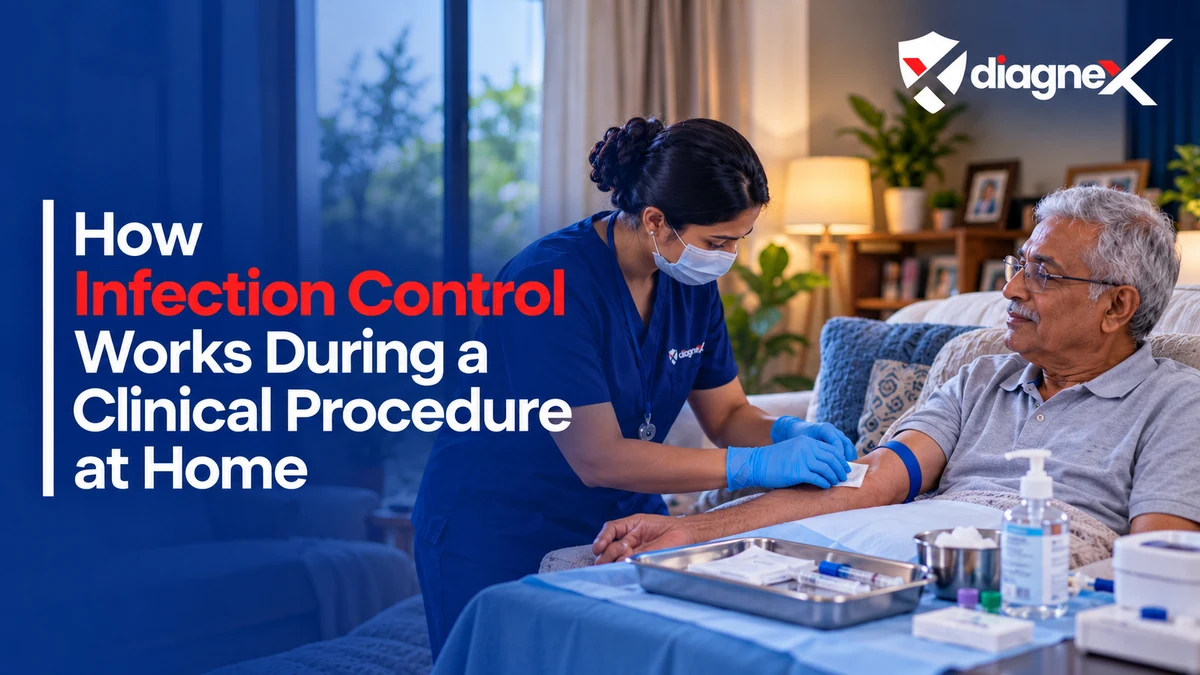
Infection control during a clinical procedure at home follows the same core principle as infection control in a hospital: reduce the chance that germs move from hands, surfaces, equipment, medicines, waste or one body site to another during care. The home environment is different from a hospital, but the basic responsibilities do not disappear when care moves into a bedroom or living room. Hand hygiene, clean preparation, appropriate aseptic or sterile technique, safe medication handling, personal protective equipment, equipment cleaning and safe disposal of sharps all remain relevant.
CDC describes Standard Precautions as basic practices that apply to all patient care and to all settings where healthcare is delivered. Those practices include hand hygiene, environmental cleaning, injection and medication safety, appropriate personal protective equipment and reprocessing of reusable equipment. For families, the goal is not to supervise the clinician’s technique step by step. The useful goal is to understand what infection control is trying to achieve, recognise whether the care process is organised, and know which visible practices are reasonable to expect.
What Does Infection Control Mean in a Home Procedure?
Infection control is the collection of practices used to reduce the risk of transmitting microorganisms during healthcare. A safe process therefore creates barriers between clean items and contaminated items, between one patient and another, and between the healthcare environment and vulnerable body sites. Not every procedure has the same infection risk. A blood-pressure check does not require the same technique as urinary catheter insertion. A simple dressing may use a different approach from care of a central venous catheter. Infection control should match the procedure rather than being reduced to a single rule such as “everything must be sterile.”
- Hands
- Used dressings or contaminated gloves
- Needles, syringes or medication containers
- Catheters, IV lines or other invasive devices
- Reusable clinical equipment
- Household surfaces
- Blood or body fluids
- Improperly handled clinical waste
Why Infection Control at Home Is Different From Infection Control in a Hospital
Hospitals are designed around clinical workflows. They have dedicated treatment areas, hand-hygiene stations, regulated waste systems, controlled storage and defined equipment-reprocessing processes. Homes are designed for living. Water sources that are not intended as clinical preparation areas.
None of this means a home is automatically unsafe for care. It means the clinician has to create a controlled procedure zone within an ordinary environment. CDC guidance on reusable healthcare equipment specifically addresses home-care settings and recognises that equipment used in the home still requires appropriate cleaning, disinfection and safe storage.
- Pets
- Children
- Food and cooking areas
- Shared bathrooms
- Dust and soft furnishings
- Limited counter space
- Household waste bins
- Visitors
- Reusable household items
The Principle Behind Home Infection Control: Create a Controlled Micro-Environment
A clinical procedure at home does not require turning the entire house into a sterile room. Instead, the professional creates a small controlled environment around the task. Cleaning reusable equipment before it is used for another patient. The exact setup depends on the procedure.
- Choosing a clean, dry and well-lit working area
- Removing unnecessary household items
- Keeping food, pets and unrelated activity away from the immediate procedure zone
- Cleaning or protecting the work surface as appropriate
- Separating fresh supplies from used items
- Opening sterile supplies only when needed
- Keeping contaminated waste away from the clean preparation area
- Performing hand hygiene at the correct moments
- Using procedure-appropriate personal protective equipment
Clean, Aseptic and Sterile Are Not the Same Thing
Clean Technique
- Hand hygiene
- Clean gloves
- A clean work surface
- Clean supplies
- Avoiding obvious contamination
- Appropriate cleaning of equipment
Aseptic Technique
Aseptic technique aims to prevent harmful microorganisms from reaching key parts of a procedure. The professional identifies critical items or sites that must not be contaminated - for example, a catheter tip, an IV connection, a wound-contact surface or a sterile needle. Aseptic technique is more than “wearing gloves.” It includes how items are prepared, handled, opened, connected and protected from contact.
Sterile Technique
Sterile technique is used when a procedure requires sterile supplies and a field that is protected from contamination. MedlinePlus describes sterile technique for care of certain wounds and catheters and emphasises hand hygiene, a clean dry work surface and careful handling of sterile supplies. Families sometimes assume that every clinical procedure at home must be fully sterile. That is not correct. The appropriate technique depends on the intervention. The professional - not the family - should decide whether the procedure requires clean, aseptic or sterile technique.
Hand Hygiene: The Foundation of Infection Control
Hand hygiene is one of the most important infection-prevention measures in any care setting. When hands are visibly soiled, soap and water are required. In many other clinical situations, alcohol-based hand rub is appropriate. For a family, a reasonable expectation is simple: hand hygiene should be visible at the appropriate points in the procedure.
- Immediately before touching a patient when clinically indicated
- Before performing an aseptic task
- Before handling an invasive device
- After contact with blood, body fluids or contaminated surfaces
- After touching the patient or the patient’s immediate environment when appropriate
- Immediately after glove removal
Gloves Do Not Replace Hand Hygiene
A common misunderstanding is that gloves make hand hygiene unnecessary. They do not. Gloves can become contaminated just as hands can. Gloves may also have small defects or become contaminated while being removed. CDC includes hand hygiene after glove removal among its core recommendations. Safe care therefore treats gloves and hand hygiene as different layers of protection.
What Should the Procedure Area Look Like?
The immediate working area should be suitable for the specific task. The professional may use a clean barrier, sterile drape or procedure kit depending on what is being done. Families do not need to disinfect the entire room. A controlled work area is more important than trying to make the whole home “hospital sterile.”
- A stable, dry surface
- Enough space to separate clean supplies from waste
- Good lighting
- Minimal clutter
- No food or drinks in the immediate preparation area
- No pets moving through the procedure zone
- Enough room for the clinician to work without brushing against household items
How Medicines and Injections Are Protected From Contamination
Medication preparation is another major infection-control step. CDC’s core practices state that medications should be prepared in a designated clean area separated from potential sources of contamination and that aseptic technique should be used during preparation and administration. WHO similarly encourages patients to expect injections to be given using a needle and syringe opened from new packaging.
- Using needles and syringes for one patient only
- Using a new needle and syringe when entering a medication container
- Using single-dose or single-use vials, ampoules, bags or bottles for one patient only
- Using IV administration sets for one patient only
What Families Can Reasonably Observe During an Injection
- The patient and prescribed medicine are confirmed
- The needle and syringe are new and single use
- Medication preparation happens in a clean area
The injection is not drawn up beside used dressings or contaminated waste. The used sharp is placed into an appropriate sharps container. The clinician performs relevant hand hygiene. These are observable safety signals, not instructions for performing the injection.
Why Reusing Needles or Syringes Is Never Acceptable
Single-use means single-use. A needle or syringe should not be reused for another patient. A syringe should not be reused to enter medication containers even if the needle is changed. Unsafe injection practices can transmit blood-borne infections. WHO’s injection-safety resources emphasise new sterile injection equipment and safe disposal immediately after use.
How Infection Control Works During Wound Care at Home
Wound care is one of the most common settings in which families notice infection-control technique. The nurse may need to use clean, aseptic or sterile technique depending on the wound-care plan. The dressing itself is only one part of the process.
- A recent surgical wound
- A chronic wound
- A pressure injury
- A wound with drainage
- A wound using a specialised dressing
- A wound involving a device or drain
- Keeping clean or sterile dressing materials protected
- Avoiding transfer of organisms from hands or used dressings to the wound
- Using appropriate gloves and hand hygiene
- Separating fresh supplies from contaminated waste
- Using wound-cleaning materials according to the care plan
- Disposing of used dressings safely
- Cleaning reusable equipment when relevant
What Families Should Notice During Wound Dressing
- Hand hygiene before the relevant task
- A clean area for fresh dressing supplies
- Used dressings kept separate from clean supplies
Sterile items protected from unnecessary touching when sterile technique is required. The wound being observed before it is covered. The patient being asked about pain or changes where relevant. Waste being contained appropriately. Families should not decide which antiseptic, dressing product or sterile field is clinically correct. Those choices depend on the wound and treatment plan.
How Infection Control Works During Catheter Care at Home
Urinary catheter care has a specific infection-control risk because the catheter provides a route into the urinary tract. CDC recommends inserting indwelling urinary catheters only for appropriate indications and using aseptic technique and sterile equipment for insertion. For ongoing catheter care, infection prevention focuses on keeping the system functioning properly, reducing unnecessary manipulation and maintaining appropriate hygiene.
- Ensuring the catheter remains clinically indicated
- Using trained personnel for insertion and maintenance
- Keeping the drainage system closed when possible
- Avoiding unnecessary disconnection
Keeping the drainage bag positioned so urine can drain properly. Avoiding contamination of catheter connections. Performing hand hygiene before and after catheter-related care. Escalating concerns such as blockage, leakage, pain, fever or blood in the urine. Families should not disconnect, replace or manipulate a catheter unless they have been specifically trained and the care plan permits it.
Why a Closed Catheter System Matters
Every unnecessary opening of the catheter system creates another opportunity for contamination. The aim is therefore to keep the system closed and functioning unless there is a clear clinical reason to intervene. If a catheter needs replacement, the professional should follow the appropriate insertion process rather than improvising around a contaminated or damaged system.
How Infection Control Works During IV Care at Home
IV therapy creates direct access to the bloodstream, so infection-control standards are especially important. The clinical process should minimise unnecessary touching or disconnection of key parts. Families should not flush, reconnect or inject medication into an IV device unless they have been specifically trained and authorised within the patient’s care plan.
- The IV insertion site
- The cannula or line connection
- Medication preparation areas
- Syringe and needle sterility
- Infusion tubing and administration sets
What Families Can Notice During IV Care
- Hand hygiene before relevant line care
- A clean medication-preparation area
- New single-use syringes and needles where required
The IV site being checked for redness, pain, swelling or leakage. Connections being handled carefully. Used sharps being disposed of safely. Clear instructions about what to do if the IV site becomes painful, swollen, wet or disconnected.
What About Reusable Equipment?
Not every item used in home healthcare is disposable. CDC notes that reusable patient-care equipment must be cleaned and reprocessed appropriately before use on another patient. The exact method depends on the equipment and manufacturer instructions. For families, the practical expectation is that visibly contaminated reusable equipment should not move directly from one patient to another without an appropriate cleaning or disinfection process.
- Stethoscopes
- Blood-pressure cuffs
- Pulse oximeters
- Thermometers
- Portable monitoring equipment
- Some procedure trays or devices designed for reprocessing
How Personal Protective Equipment Fits Into Home Infection Control
- Gloves
- Masks
- Eye protection
- Face shields
- Gowns or aprons
PPE is selected based on the expected exposure risk. A wound dressing with a risk of contact with drainage may require gloves and possibly additional protection. A simple blood-pressure reading may not. CDC recommends selecting PPE based on the nature of the patient interaction and the likelihood of exposure to blood, body fluids or infectious material. More PPE is not automatically better. Correct PPE for the actual risk is what matters.
Why Masks Are Not Required for Every Home Procedure
Families sometimes expect masks during every clinical interaction. Masks are important when the procedure or infection risk calls for respiratory protection or protection from splashes and sprays. But a mask is not a substitute for hand hygiene, medication safety, clean equipment or aseptic technique. The infection-control plan should match the procedure and the patient’s risk rather than using visible PPE as a symbol of quality.
How Sharps Should Be Handled at Home
Needles, lancets and other sharps can injure patients, family members, cleaners and waste handlers if they are left loose or discarded carelessly. Used sharps should be placed promptly into an appropriate puncture-resistant sharps container. Handed from person to person without need. Stored where children or pets can reach them. The provider should have a clear process for sharps generated during professional home visits.
- Left on a bedside table
- Placed loose in a household waste bag
- Recapped unnecessarily after use
What Happens to Clinical Waste After a Home Procedure?
- Used dressings
- Gloves
- Gauze
- Blood-contaminated materials
- Medication packaging
- Syringes
- Needles
- Catheters or tubing
Different waste types may need different handling. Sharps require puncture-resistant containment. Blood- or body-fluid-contaminated waste should be contained appropriately. Local rules and provider processes determine final disposal. Families should ask how procedure-related clinical waste will be managed rather than assuming everything goes into the ordinary household bin.
How Infection Control Changes for a Patient With an Infection
If the patient has a known or suspected transmissible infection, additional precautions may be required. The exact approach depends on how the infection spreads. The family should follow the treating team’s and provider’s instructions rather than trying to design isolation precautions from internet advice.
- Additional PPE
- Respiratory precautions
- Enhanced surface cleaning
- Dedicated equipment
- Specific waste handling
- Changes to visitor access or room ventilation
What About Antibiotic-Resistant Organisms?
Some patients may have a history of organisms such as MRSA or other resistant bacteria. The presence of a resistant organism does not automatically mean the patient cannot receive care at home. It does mean that the professional should understand the relevant infection-control precautions and the care plan. Families should share known infection or colonisation information when it is relevant to the procedure.
Common Infection-Control Mistakes That Should Not Be Normalised
Some errors are more important than minor stylistic differences in how clinicians set up their work. Continuing a procedure after sterile or critical parts are clearly contaminated without correction. Ignoring major new signs of infection or clinical deterioration. If something looks unsafe, it is reasonable to ask the clinician to explain or pause before proceeding.
- No hand hygiene before an aseptic or invasive task
- Reusing a needle or syringe
- Preparing medication beside contaminated waste
- Using visibly damaged sterile packaging without explanation
- Allowing clean supplies to mix with used dressings
- Reusing single-use equipment
- Using visibly dirty reusable equipment
- Leaving used sharps loose in the home
- Repeatedly disconnecting catheter or IV systems without clinical reason
- Using gloves as a substitute for hand hygiene
What Families Should Not Try to Police
- Every procedure requires a sterile field
- Every clinician must wear gloves for every patient interaction
- Every wound requires the same antiseptic
Every catheter procedure uses the same equipment. Every surface in the room must be disinfected. A mask must be worn throughout every visit. A procedure is unsafe simply because the setup looks different from a hospital. The better question is whether the professional’s approach matches the procedure and protects critical parts from contamination.
How Families Can Ask About Infection Control Without Confrontation
Useful questions include: “Where would you like us to clear a clean working area?” “Do you need soap and water or will you use hand rub?” “Should we keep the pets out of the room?” “Are these supplies for this patient only?”
“What should we do with the used dressings and sharps?” “What should we watch for after the procedure?” “If this dressing or catheter becomes contaminated, what should we do?” “What signs of infection should prompt us to call?” These questions support the process without directing the clinician’s technique.
Signs of Possible Infection After a Home Procedure
- Increasing redness, warmth or swelling around a wound or device site
- New or worsening pain
- Pus or unusual drainage
- Fever or chills
- A wound opening or deteriorating
- Redness, pain, swelling or discharge at an IV site
- Cloudy urine, fever, new pain or other catheter-related symptoms
- New respiratory symptoms after a procedure involving airway or feeding devices
- Rapid clinical deterioration
When Infection-Control Concerns Need Urgent Medical Attention
- Severe breathing difficulty
- A severe allergic reaction
- Loss of consciousness
- Rapidly worsening confusion
- Signs of sepsis or severe systemic illness
- Uncontrolled bleeding
- A rapidly spreading or severe infection with significant deterioration
- Another major acute change
How Infection Control Fits Into a Nurse Visit at Home
- The clinician reviews the planned task and relevant clinical instructions
- The working area is prepared
- Hand hygiene is performed
- Critical items are protected from contamination
- PPE is used when indicated
- Safe injection or device-handling practices are followed
- The patient and procedure site are checked
- Sharps and waste are contained safely
- Reusable equipment is cleaned or prepared for reprocessing
Hand hygiene is performed again when indicated. Aftercare and infection-warning signs are explained. For the full visit workflow, see How Does a Nurse Visit for a Home Procedure Work?
How Diagnex Approaches Infection-Control Expectations for Home Procedures
Diagnex’s current service directory includes clinical-procedure enquiries such as wound dressing at home, nursing injections, IV cannulation, catheterisation, Ryle’s tube insertion, blood sample collection and selected monitoring or diagnostic services. A procedure appearing in the service directory does not mean it is automatically appropriate for every patient or available in every locality. Suitability, prescription requirements, professional responsibility and local availability are confirmed for the specific requirement.
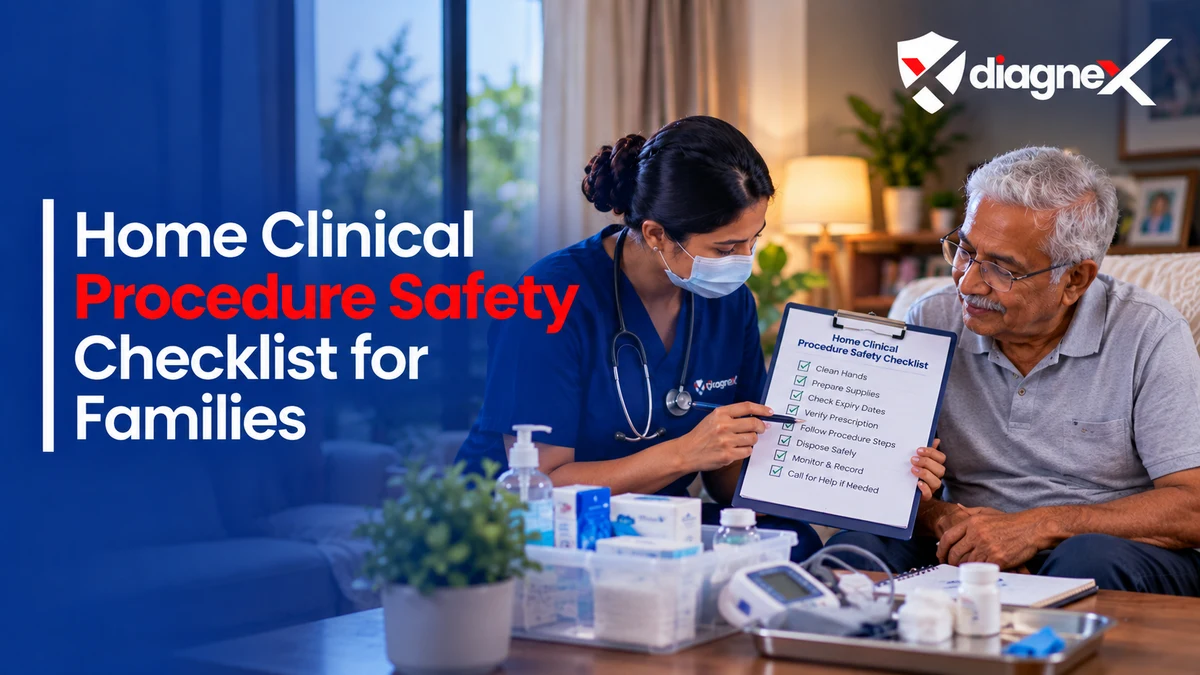
Families can use the Home Clinical Procedure Safety Checklist for Families as a practical preparation guide before a procedure visit. For prescription and clinical-authorisation requirements, see Do You Need a Doctor's Prescription for a Clinical Procedure at Home? For deciding whether a procedure belongs at home rather than in a facility, see When Should a Procedure Be Done at Home vs in a Hospital?
Frequently Asked Questions
What is infection control for a home procedure?
Does a home procedure need to be sterile?
Not every home procedure requires sterile technique. Some tasks use clean technique, others use aseptic technique, and some require sterile supplies and a protected sterile field. The correct method depends on the procedure.
What is the difference between aseptic and sterile technique?
Should a nurse wash hands before wound care?
Can gloves replace hand hygiene?
Should a new needle and syringe be used for every home injection?
Yes. Single-use needles and syringes should not be reused. Safe injection guidance also requires appropriate handling of medication containers and sharps.
How is infection prevented during catheter care at home?
How should used needles be disposed of after a home procedure?
Can family members perform wound or catheter care themselves?
What should I do if I think infection-control steps are being skipped?
The Bottom Line
Infection control during a clinical procedure at home is not about making the entire house sterile. It is about creating a controlled working area, performing hand hygiene at the right times, protecting critical procedure parts from contamination, using safe injection and device practices, handling equipment correctly, separating clean from contaminated materials and managing sharps and waste responsibly. For families, the most useful role is to prepare the environment, share relevant clinical information, observe obvious safety signals and understand what to watch for afterwards. The technical responsibility for clean, aseptic or sterile technique remains with the appropriately qualified professional performing the procedure.
Sources and Medical References
This article provides general health information and is not a substitute for patient-specific medical advice, diagnosis or treatment. It does not teach families how to perform invasive or sterile procedures. Clinical technique and treatment decisions should remain with appropriately qualified professionals.