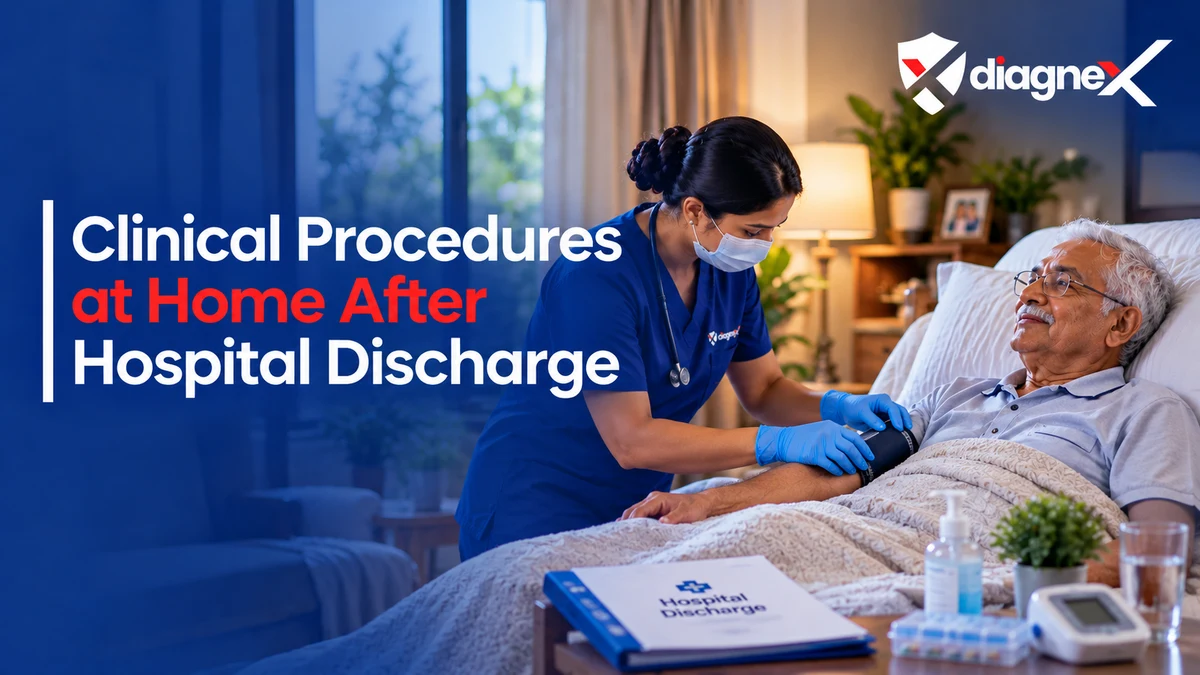
A clinical procedure at home after hospital discharge can help continue a treatment plan without requiring the patient to return to a hospital for every dressing, injection, blood test, catheter procedure or selected IV treatment. But the move from hospital to home is not simply a change of address. Responsibility becomes more distributed. The hospital team may remain responsible for follow-up, a nurse may perform defined procedures at home, a laboratory may handle tests, a physiotherapist may support recovery, and family members may suddenly be coordinating medicines, appointments, equipment and warning signs.
That transition is where problems can occur if the plan is unclear. AHRQ describes the move from hospital to home as a transition of care and notes that poor communication, medication discrepancies, unclear instructions and weak follow-up can increase the risk of adverse events after discharge. The safest post-discharge home care therefore starts before the patient leaves hospital, with a clear plan for what needs to happen next and who is responsible for each part. This guide explains which procedures may commonly continue at home, what documents and supplies to bring from hospital, how post discharge nursing fits into the wider recovery plan, and which changes should prompt medical or hospital review.
What Is Post-Discharge Clinical Care at Home?
Post-discharge clinical care is the continuation of medically necessary care after the patient leaves a hospital, day-care unit or procedure centre. The exact combination depends on why the patient was admitted, what treatment was given, what remains incomplete at discharge, the patient’s condition and the treating team’s plan. A patient may need only one dressing visit. Another may need several services over days or weeks. That is why post-discharge care should be thought of as a transition plan rather than a single product.
- Wound dressing
- Prescribed injections
- Selected IV therapy
- Urinary catheter care
- Ryle’s or nasogastric tube care
- Vital-sign monitoring
- Blood sample collection
- Medication support within professional scope
- Post-operative nursing observations
- Device-site care
- Rehabilitation and mobility support
- Follow-up coordination
Why Hospital-to-Home Transitions Need Extra Attention
Inside hospital, many parts of care happen within one system. Doctors, nurses, pharmacists, diagnostics, records, medicines, equipment and escalation are physically connected. After discharge, those functions can separate. AHRQ notes that discharge planning works best when patients and caregivers understand the post-discharge plan and when communication continues between hospital teams and community or home-care providers. The practical goal is continuity: the patient should not leave hospital with a set of disconnected tasks and no clear owner for the next step.
- Which medicines have changed
- Which medicines have stopped
- Which procedures continue at home
- Which doctor owns follow-up
- When tests are due
- When dressings should be changed
- Who manages a catheter or tube
- Whether an IV course continues
- Which symptoms are expected
- Which symptoms need a call
- Which symptoms require hospital review
- Which follow-up appointments are already booked
The Discharge Summary Is the Starting Point
One of the most useful documents after discharge is the discharge summary. Families should not rely only on memory from verbal instructions. If the discharge summary is unclear about a procedure that needs to happen at home, the safest next step is to clarify it with the treating team before the home professional is expected to act.
- Primary diagnosis
- Important procedures performed
- Current condition at discharge
- Medicine list
- Medicines stopped or changed
- Wound instructions
- Catheter or tube instructions
- Diet or activity advice
- Follow-up appointments
- Pending investigations
- Warning signs
- Treating-doctor details
- Special nursing requirements
Medication Reconciliation Matters After Discharge
Hospital admission often changes medicines. Medication confusion is one of the most common risks during care transitions. Before home nursing begins, the family should ideally have one current medicine list that reflects the discharge plan rather than combining old prescriptions, hospital charts and memory. If two documents give different instructions, the discrepancy should be clarified rather than asking the visiting nurse to choose between them.
- A new medicine
- A stopped medicine
- A changed dose
- A changed timing
- A temporary antibiotic course
- An injectable medicine
- A short course of anticoagulation
- An IV treatment plan
- Instructions to restart a medicine later
Which Procedures Commonly Continue at Home After Discharge?
Wound Dressing After Surgery or Hospital Treatment
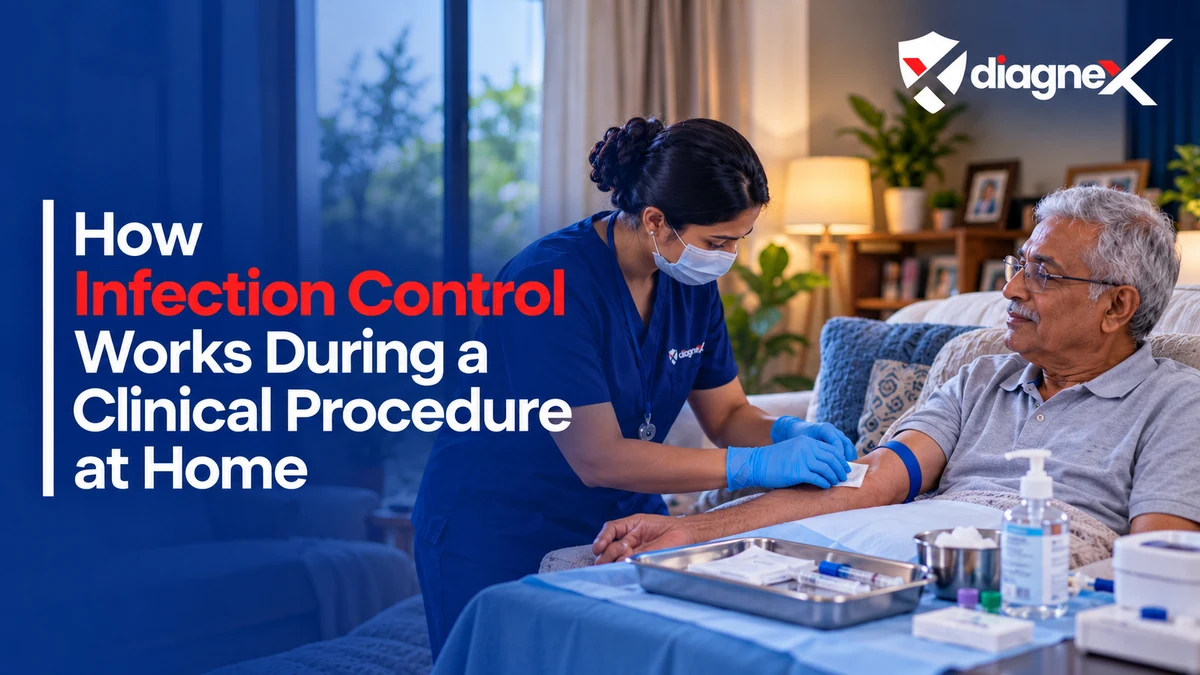
Wound dressing is one of the most common reasons for post discharge nursing. A wound that needs repeated dressing changes. A dressing that must remain in place until a defined review. The visit should not be reduced to “change the bandage.” The nurse may also need to observe the wound for changes in pain, redness, swelling, drainage, bleeding, odour, wound opening or other findings that should be communicated to the treating team. For infection-control principles during home wound care, see How Infection Control Works During a Clinical Procedure at Home.
- A surgical incision
- A drain site
- A pressure injury
- A chronic wound
- The type of wound
- The dressing plan
- How often the dressing should be changed
- Which dressing materials have been advised
- Whether stitches, clips or drains are present
- Whether any topical medicine is prescribed
- What changes should be escalated
Prescribed Injections After Discharge
Some patients leave hospital with a short course of prescribed injections. The nurse needs a clear prescription or discharge instruction showing the medicine, dose, route, frequency and duration. The patient’s allergy history and previous reactions should also be known. A home injection should continue the hospital treatment plan rather than become an opportunity to change medicine, dose or route without treating-clinician approval.
- Antibiotics
- Anticoagulant injections
- Pain-related medicines
- Other prescribed injectable treatments
Selected IV Therapy at Home
Some patients continue IV treatment after leaving hospital. MedlinePlus describes home IV therapy as a way for patients to receive prescribed medicines or fluids outside hospital and notes that treatment may continue after discharge, including courses of IV antibiotics. A request such as “continue saline at home” is not enough unless the treatment is actually part of the discharge plan.
- An existing peripheral IV
- A PICC line
- A central venous catheter
- A port
- A newly inserted peripheral cannula
- A defined course of prescribed medicine or fluid
- The medicine or fluid
- Dose
- Route
- Infusion rate or duration
- Frequency
- Length of treatment
- Type of IV access
- Whether the line is already in place
- Monitoring requirements
- Relevant reaction history
- What to do if access fails or a reaction occurs
Urinary Catheter Care After Discharge
Patients may leave hospital with a urinary catheter for several reasons. CDC recommends using urinary catheters only for appropriate indications and maintaining them correctly to reduce infection risk. The family should know: Why the catheter is still needed. Whether and when it should be changed.
Whether removal is planned. What type and size is being used when relevant. Which symptoms require review. New fever, severe pain, blockage, blood in the urine, poor drainage or significant leakage should not simply be treated as routine maintenance.
- Routine catheter care
- Drainage-bag management
- A planned catheter change
- Review of leakage or blockage
- Monitoring output where instructed
- Caregiver education
Ryle’s or Nasogastric Tube Care After Discharge
- Why the tube is being used
- Whether it is temporary
- Who is responsible for feeding or medication administration
Which feed or regimen is prescribed. What position the patient should use. What the family should do if the tube becomes displaced. When the tube needs review or replacement. Caregivers may be trained for selected routine tasks, but insertion or replacement should not be improvised from general internet instructions. The home professional should follow the treating team’s plan.
Blood Sample Collection and Monitoring
Patients often need repeat blood tests after discharge. Home sample collection can reduce travel when the patient is recovering or has limited mobility. The clinical value of the test still depends on: The correct test being ordered. The sample collection itself is only one part of the follow-up pathway.
- Blood counts
- Kidney function
- Electrolytes
- Blood glucose
- Coagulation tests
- Drug-related monitoring
- Inflammatory markers
- Other condition-specific tests
- The right timing
- Proper sample handling
- Results reaching the treating team
- A plan for acting on abnormal results
Vital-Sign Monitoring and Post-Discharge Nursing Checks
Some patients need structured monitoring after discharge. Not every patient needs all of these checks. Monitoring should be linked to the patient’s condition and discharge plan, with clear guidance about what readings or symptoms require escalation.
- Blood pressure
- Pulse
- Temperature
- Oxygen saturation
- Blood glucose
- Weight
- Fluid balance
- Pain
- Other procedure-specific observations
Post-Discharge Nursing vs a Single Procedure Visit
These are related but not identical services. A single procedure visit is usually task-focused. Post-discharge nursing is broader. The patient should receive the level of support that matches the actual discharge plan rather than automatically being placed into either a short visit or a long nursing shift. For a step-by-step explanation of procedure-focused visits, see How Does a Nurse Visit for a Home Procedure Work?
- One wound dressing
- One injection
- One catheter change
- One blood sample
- One defined IV-related task
- Several procedures
- Repeated monitoring
- Medication support
- Device care
- Bedside nursing
- Observation over a shift
- Communication with the treating team
- Caregiver education
- Ongoing documentation
What Should Be Clarified Before Leaving the Hospital?
- What procedures need to continue at home?
- When is the first procedure due?
- How often should each procedure happen?
- Which medicines continue, stop or change?
- Which prescriptions are needed?
- Which devices remain in place?
- What supplies need to be purchased?
- Which follow-up appointments are required?
- Which tests are pending?
- What symptoms should prompt a call to the treating team?
- What symptoms require hospital review?
- Who should the home nurse contact if instructions are unclear?
What Should Be Ready at Home Before the First Visit?
The first home visit is easier when the family has the essentials ready. The medicines, devices or consumables the provider has asked the family to arrange. A clean, well-lit working area. Do not assume the visiting nurse will automatically bring every medicine, dressing, catheter, tube or IV supply. Confirm what is included before the visit.
- The discharge summary
- Current prescriptions
- A current medicine list
- Known allergies
- Wound-care instructions
- Catheter or tube instructions
- Relevant recent reports
- The treating doctor or hospital contact route
How the First Post-Discharge Nurse Visit Usually Works
The first visit often has more coordination than a later routine procedure. Check what has changed since discharge. Document what was done. Explain aftercare and warning signs. Clarify when the next visit is due.
Escalate anything that does not match the expected recovery plan. The nurse should not be expected to independently rewrite the discharge plan if instructions are unclear. Where medical clarification is needed, the treating team should remain part of the pathway.
- Confirm the patient’s identity
- Review the discharge instructions relevant to the visit
- Confirm allergies and current medicines
- Perform relevant vital-sign or focused observations
- Inspect the wound, device or access site
- Verify the medicine, dose, route or procedure plan
- Prepare the working area and equipment
- Perform the planned procedure
- Observe the patient afterwards when required
The First 24–72 Hours at Home Can Be Coordination-Heavy
- A medicine is unavailable
- The prescribed dressing material is difficult to source
- A catheter bag is leaking
The family is unsure which medicine was stopped. The first follow-up test date is unclear. A wound dressing is due sooner than expected. The patient is weaker at home than in hospital. The home environment is not yet ready for equipment.
Different family members have different versions of the discharge instructions. This does not always mean something is medically wrong. It does mean someone needs to reconcile the plan quickly so small coordination problems do not become larger clinical problems. Preparing for Care at Home can help families organise the environment, instructions and practical requirements before home care begins.
Medication Changes After Discharge: What the Home Nurse Should Not Guess
A visiting nurse may encounter more than one medication document. The discharge plan should normally be the current reference unless the treating team has issued a later update. If there is conflict, the nurse should seek clarification rather than choosing which instruction “looks right.” For detailed prescription and clinical-order guidance, see Do You Need a Doctor's Prescription for a Clinical Procedure at Home?
- An old outpatient prescription
- An inpatient medication chart
- A discharge prescription
- A specialist prescription
- A family-written medicine list
- Antibiotics
- Anticoagulants
- Insulin
- Diuretics
- Pain medicines
- IV treatment
- Steroids
- Medicines affected by kidney or liver function
What If the Discharge Plan Is Incomplete?
Sometimes the patient reaches home and the family realises that key instructions are missing. A home-care provider can help identify the gap, but it should not invent the missing treatment plan. The safest next step is to contact the treating hospital, doctor or appropriate clinical team and obtain the missing instruction. Clinical coordination should close the gap; guesswork should not.
- No clear wound dressing frequency
- No catheter-change schedule
- No IV infusion rate
- No instructions for an existing PICC line
- No date for suture removal
- No guidance about restarting a medicine
- No follow-up appointment
- No clear contact point for a pending test
When Should the Treating Team Be Contacted?
- The discharge instruction is unclear
- The wound plan is incomplete
- A medicine is unavailable and a substitution is being considered
- The prescribed dose or route conflicts across documents
The catheter or tube plan is unclear. The patient is not tolerating the planned treatment. A test result needs interpretation. The nurse identifies a new issue that needs medical review. The patient is recovering more slowly than expected. A follow-up appointment needs to be brought forward. The nurse can document and escalate observations, but the treating professional remains responsible for diagnosis, prescribing and treatment changes.
When Hospital Review May Be Needed After Discharge
The fact that the patient has been discharged does not mean every new problem should be managed at home. A blocked or problematic device that cannot be managed safely at home. A major change in vital signs or overall condition. Another significant acute deterioration. In India, call 112 or go to the nearest appropriate emergency facility when emergency care is required. A home nurse visit should not delay emergency assessment.
- Severe or rapidly worsening breathing difficulty
- Chest pain
- Loss of consciousness
- New stroke-like symptoms
- Uncontrolled bleeding
- A severe allergic reaction
- A seizure
- Rapidly worsening confusion
- Major wound bleeding or wound breakdown
- Suspected serious infection with systemic deterioration
Preventing Gaps Between the Hospital and Home Team
The strongest post-discharge care reduces information loss between settings. Families can help by keeping one organised set of current documents. Avoid mixing outdated prescriptions into the active plan without clearly marking that they are historical. If a new doctor changes the treatment, make sure the home-care team receives the updated instruction.
- Discharge summary
- Current prescriptions
- Current medicine list
- Procedure instructions
- Recent investigation reports
- Follow-up appointments
- Device details
- Wound-care plan
- Allergy information
- Treating-doctor contact route
- Home-care visit notes
Who Should Keep Track of the Care Plan?
In simple cases, the patient or family may manage the schedule directly. In more complex cases, coordination becomes a significant task. The person coordinating does not replace the clinicians. The value is making sure each clinical task happens at the correct time and the right information reaches the right professional. Diagnex’s guide to what a Care Manager does explains how care coordination differs from direct clinical delivery.
- Nursing visits
- Doctor follow-up
- Blood tests
- Wound reviews
- Medicine schedules
- Equipment
- Physiotherapy
- Diet instructions
- Catheter or tube changes
- Pending reports
- Escalations
How Infection Control Changes After the Patient Comes Home
The hospital environment is replaced by the patient’s living environment. The entire home does not need to become sterile. Instead, the visiting professional creates a suitable working area and applies the clean, aseptic or sterile technique required for the specific procedure. Families can help by keeping the procedure area clean, reducing unnecessary traffic, keeping pets away and ensuring supplies remain stored appropriately. For a detailed explanation, see How Infection Control Works During a Clinical Procedure at Home.
- Wound dressing
- IV access
- Catheter care
- Tube care
- Injections
- Sharps disposal
- Reusable clinical equipment
What If the Patient Needs More Than Procedure Visits?
Some patients leave hospital with needs that exceed a few short nursing visits. In these cases, a broader home-care plan may be more appropriate than booking each procedure separately. The Home Nursing pathway explains the broader nursing model. For selected patients whose care needs are more complex, Home ICU Setup is a separate structured pathway. It should not be interpreted as automatic equivalence to a hospital ICU, and the treating doctor’s plan remains central.
- 12-hour or 24-hour nursing
- Frequent clinical observations
- Oxygen or respiratory support
- Multiple medicines across the day
- Equipment management
- Repeated procedures
- Rehabilitation
- Doctor-directed advanced care at home
How Long Does Post-Discharge Home Nursing Continue?
There is no standard duration. The endpoint should follow the clinical plan. Home care may reduce as the patient improves, or it may need to increase if the patient becomes more dependent. Regular review prevents a temporary post-discharge service from continuing indefinitely without reassessment.
- One visit
- A few days of procedures
- Several weeks of wound care
- A defined IV antibiotic course
- Temporary catheter or tube support
- Ongoing nursing for a longer recovery period
How to Know When a Procedure Can Stop
A procedure should stop or change when the treating plan says it should - not simply when the family feels the patient looks better. Removing a catheter when the treating clinician determines it is no longer needed. Reducing wound dressing frequency when the wound-care plan changes.
Stopping monitoring when follow-up confirms it is no longer required. Removing a feeding tube only under the appropriate clinical plan. Unnecessary continuation of devices and procedures can create risk. The home team should remain aligned with follow-up instructions.
- Completing the prescribed injection course
- Finishing the IV treatment course
How Diagnex Approaches Post-Discharge Clinical Procedures
Diagnex’s current service directory includes enquiries for home nursing and clinical procedures such as wound dressing at home, nursing injections, IV cannulation, catheterisation, Ryle’s tube insertion, blood sample collection and selected monitoring or diagnostic services. A service listing does not automatically mean the procedure is suitable for every recently discharged patient or available in every locality. If the family is unsure which service is needed, use Find the Right Care to start from the patient’s situation rather than guessing a service label.
For procedures that may be suitable at home more generally, read Which Medical Procedures Can Be Done Safely at Home? For procedure-visit workflow, read How Does a Nurse Visit for a Home Procedure Work? For same-day urgent-but-stable requirements, read Same-Day Nursing Procedures at Home: What Can Usually Be Arranged? For deciding whether home remains the right setting, read When Should a Procedure Be Done at Home vs in a Hospital?
- The discharge or treatment plan
- Prescription requirements
- Patient stability
- Professional responsibility
- Procedure complexity
- Equipment and consumables
- Local availability
Frequently Asked Questions
What clinical procedures can be done at home after hospital discharge?
What should I bring home from hospital for post-discharge nursing?
Can wound dressing be done at home after surgery?
Can IV antibiotics continue at home after discharge?
Can a urinary catheter be managed at home after discharge?
Do I need a new prescription for every home procedure after discharge?
Not always. Medication-related procedures commonly need a prescription or treatment order. Other tasks may be covered by the discharge summary, wound plan, catheter plan or another treating-clinician instruction.
What if the discharge instructions are unclear?
How soon should home nursing start after discharge?
What if the patient becomes worse after coming home?
Is post-discharge nursing the same as 24-hour nursing?
No. Post-discharge nursing can range from one procedure visit to longer shift-based nursing. The appropriate model depends on how much ongoing clinical support the patient needs.
The Bottom Line
Clinical procedures at home after hospital discharge can make recovery more manageable by bringing defined parts of the treatment plan into the patient’s home. The key is continuity. The discharge summary, medicine list, procedure instructions, equipment plan, home nurse, follow-up doctor and family should all be working from the same current plan.
Wound dressing, catheter care, selected IV therapy, prescribed injections, monitoring and other procedures can often continue at home when the patient is stable and the care model is appropriate. But home care should not become a substitute for hospital review when the patient deteriorates or the treatment plan becomes unclear. The safest transition is one where every important next step has an owner, a schedule and a clear escalation route.
Sources and Medical References
This article provides general health information and is not a substitute for patient-specific medical advice, diagnosis or treatment. Discharge instructions and treating-professional decisions take priority over general information. Clinical suitability and treatment decisions should be made by appropriately qualified treating professionals.