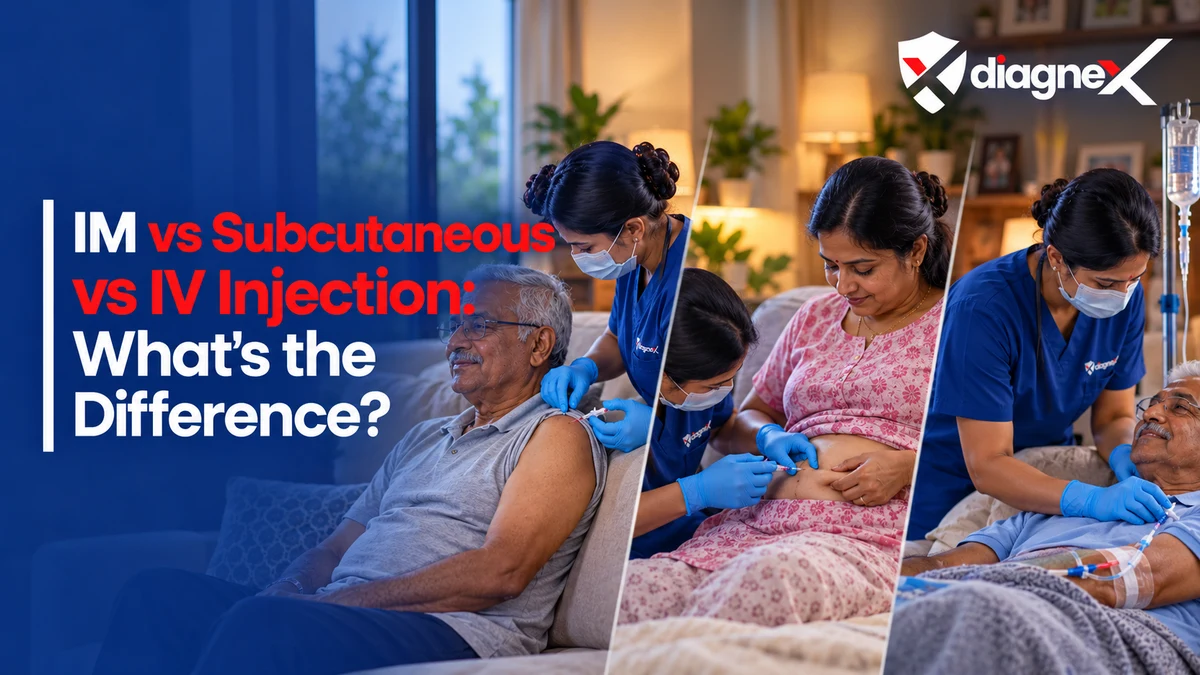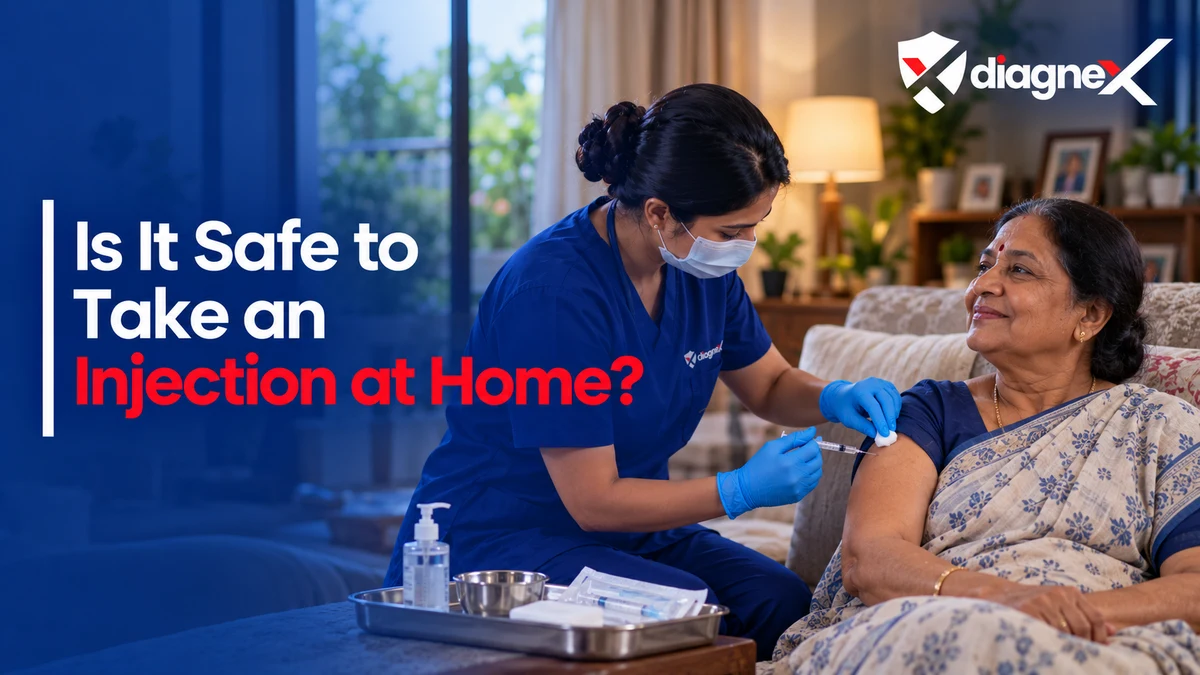
Yes, many prescribed injections can be given safely at home when the patient is clinically suitable, the medicine and route are clearly prescribed, an appropriately qualified professional performs the injection, safe injection practices are followed and there is a plan for observation and escalation if a reaction occurs. But “injection at home” is not automatically safe simply because a nurse is available. Safety depends on five things working together: the right patient, the right prescribed medicine, the right route and dose, the right professional, and the right environment and follow-up plan.
CDC describes safe injection practices as measures that protect patients and healthcare workers from avoidable harm. Its guidance says needles and syringes should not be reused and that aseptic technique should be used when preparing and administering injections. WHO similarly advises patients to expect injections to be given using a needle and syringe opened from new packaging. This guide explains when injections are generally suitable at home, what makes a home injection unsafe, what patients should expect from an injection nurse at home, how sterile and aseptic practice fit into the visit, and when a clinic or hospital is the safer setting.
The Short Answer: When Are Injections Safe at Home?
- The injection has already been prescribed
- The medicine, dose, route and timing are clear
- The patient is clinically stable
- The medicine is suitable for home administration
The nurse or other professional is qualified and competent for the route. The medicine has been stored correctly. The required equipment is available. Safe injection and infection-control practices can be followed. The patient does not need hospital-level monitoring.
- The patient is unstable
- The medicine or route is unclear
- The dose cannot be verified
The patient has a serious unresolved allergy concern. The first dose requires monitored administration. The medicine requires continuous or advanced monitoring. The medicine has been stored incorrectly. The home environment cannot support safe administration. Emergency treatment may be needed immediately if a complication occurs. The safest decision is therefore not based on convenience alone.
Is the Injection Prescribed?
For prescription medicines, the injection should be linked to a valid prescription or authorised treatment instruction. A nurse arriving at the home should not be expected to choose which prescription injection to give because the patient reports weakness, pain, fever or another symptom. That would require medical assessment and prescribing rather than procedure delivery. For the detailed distinction between prescriptions, treatment orders and care plans, see Do You Need a Doctor's Prescription for a Clinical Procedure at Home?
- Medicine name
- Dose
- Route
- Frequency
- Timing
- Duration or number of doses
- Relevant dilution or administration instructions where applicable
Why the Route Matters for Home Injection Safety
An injection route is part of the treatment. These are not interchangeable. For a detailed comparison, see IM vs Subcutaneous vs IV Injection: What's the Difference?
- Intramuscular, or IM
- Subcutaneous
- Intravenous, or IV
- An IM injection delivers medicine into muscle
- A subcutaneous injection delivers medicine into fatty tissue beneath the skin
- IV administration delivers medicine directly into a vein or vascular-access device
- The route affects absorption, administration, equipment, professional skill and monitoring
Can the Nurse Change the Route at Home?
- How quickly the medicine is absorbed
- How much medicine reaches the bloodstream
- The dose required
- The risk of tissue injury
- The monitoring requirements
- The medicine's safety profile
Who Should Give an Injection at Home?
The injection should be administered by a person whose professional role, training and competence match the medicine and route. For many routine prescribed IM or subcutaneous injections, an appropriately qualified nurse may be suitable. IV medication may require additional competency because it can involve vascular access, infusion rates, line care and closer monitoring.
A non-clinical attendant should not be assumed to be qualified to administer prescription injections simply because they are already caring for the patient. Some patients and caregivers are trained to self-administer specific medicines, particularly selected subcutaneous therapies. That training should come from the treating team and apply to that exact medicine and device. This article does not teach self-injection technique.
What Should an Injection Nurse at Home Check Before Giving the Medicine?
- Patient identity
- Medicine name
- Dose
- Route
- Timing
- Prescription or treatment order
- Allergies
- Previous reactions
- Medicine packaging and integrity
- Expiry where relevant
- Storage conditions where relevant
- Whether the patient has received the medicine before
- Whether the patient's condition has changed
- Whether observation is required after administration
- The exact process varies by medicine and provider protocol
What Does a Safe or “Sterile” Injection at Home Mean?
Patients often search for a “sterile injection at home,” but safe injection practice involves more than opening a sterile needle. CDC guidance says providers should use aseptic technique when preparing and administering injections and should use a new sterile needle and syringe for each patient. WHO also advises patients to expect a needle and syringe opened from new packaging. The entire room does not need to be sterile. The professional needs to create a controlled, clean procedure area and protect the medicine and critical injection equipment from contamination.
- Hand hygiene
- A clean medication-preparation area
- Aseptic technique
- New sterile single-use needles and syringes
- Correct medicine handling
- Avoiding contamination of medication containers
- Procedure-appropriate personal protective equipment
- Safe disposal of sharps
One Needle, One Syringe, One Time
One of the clearest patient-facing safety principles is that a used needle or syringe should not be reused between patients. CDC summarises this as: one needle, one syringe, only one time. Changing only the needle does not make a used syringe safe for another patient.
A used syringe also should not be re-entered into a medicine container that may later be used for someone else. Unsafe injection practices can transmit blood-borne and other infections. For a deeper explanation of infection prevention during home procedures, see How Infection Control Works During a Clinical Procedure at Home.
Should the Nurse Wash or Sanitise Hands Before the Injection?
Hand hygiene is a core infection-control practice. The nurse should perform hand hygiene at the appropriate point before preparing or administering the injection. Gloves do not replace hand hygiene. Gloves may or may not be required depending on the procedure and expected exposure to blood or body fluids. Patients should focus on whether appropriate hand hygiene and aseptic handling are visible rather than expecting gloves for every injection.
What Should the Medicine Look Like Before Administration?
- The label is missing
- The label is unreadable
- The vial or ampoule is damaged
The medicine is discoloured unexpectedly. There are unexpected particles. The seal appears compromised. The expiry cannot be verified where required. Storage conditions are uncertain. The product does not match the prescription. A damaged or questionable medicine should not be used simply because the nurse has already arrived.
Does Medicine Storage Affect Injection Safety?
Yes. Some injectable medicines need refrigeration or other specific storage conditions. If the medicine has been stored outside the recommended range, its integrity may be uncertain. Patients should follow pharmacy or manufacturer storage instructions and tell the nurse if:
The medicine was accidentally frozen. It was left in heat. It was transported without required temperature control. The refrigerator failed. The packaging was damaged. There is uncertainty about how long it was outside proper storage. The correct response may be to verify the medicine before administration rather than taking a chance.
Is a First Dose Safe at Home?
Sometimes, but not always. A first dose may need closer observation depending on the medicine and the risk of a serious reaction. The provider or prescribing clinician may prefer a clinic or hospital when: The medicine has a meaningful risk of severe allergic reaction.
The patient has a history of serious drug allergies. The treatment is intravenous and requires closer monitoring. The patient is unstable. The prescribing team specifically requests monitored administration. A first dose should not automatically be treated the same as a medicine the patient has received safely many times. Home convenience should not override the monitoring requirement.
What If the Patient Has a History of Drug Allergy?
Tell the provider before the visit. The nurse should not ignore a significant allergy history simply because the medicine appears on a prescription. If there is a serious unresolved concern, clarification may be needed before the injection is given.
- Which medicine caused the reaction
- What symptoms occurred
- Whether breathing or circulation was affected
- Whether emergency treatment was required
- Whether the patient has subsequently tolerated related medicines
- Whether the prescriber is aware of the allergy history
What Reactions Can Happen After an Injection?
Some reactions are local and relatively mild. Other symptoms may require medical review. There is no single number of minutes that applies to every home injection.
- Temporary pain
- Tenderness
- Minor redness
- Small swelling
- A small bruise
- Increasing swelling
- Severe pain
- Spreading redness
- Persistent bleeding
- Fever
- A widespread rash
- Marked dizziness
- Repeated vomiting
- A significant change in consciousness
- Another unexpected reaction
- The expected observation period varies by medicine and patient
What Is Anaphylaxis?
Anaphylaxis is a severe allergic reaction that can develop rapidly and affect breathing, circulation and consciousness. A severe reaction requires urgent medical care. In India, call 112 or go to the nearest appropriate emergency facility when emergency care is required. A home injection service is not a substitute for emergency response.
- Difficulty breathing
- Wheezing
- Swelling of the lips, tongue or throat
- A widespread rash with systemic symptoms
- Dizziness or collapse
- Loss of consciousness
- Rapid deterioration
Are IM Injections Safe at Home?
- The patient is stable
- The medicine and route are clearly prescribed
- The nurse is appropriately trained
- The patient does not require hospital-level monitoring
The medicine has been stored correctly. There is no major unresolved allergy concern. Some patients may need additional review because of anticoagulant use, bleeding disorders, very low muscle mass or other clinical factors. The route itself should never be changed without appropriate clinical authorisation.
Are Subcutaneous Injections Safe at Home?
- Insulin
- Some anticoagulants
- Selected fertility medicines
- Some biologic therapies
- Other medicines designed for subcutaneous administration
- Some patients self-administer after appropriate training
- Poor vision
- Arthritis or tremor
- Cognitive impairment
- A new medicine
- Difficulty using the device
- Anxiety
- Recent hospital discharge
Are IV Injections Safe at Home?
Selected IV medicines can be given at home, but IV treatment usually requires more planning than a routine IM or subcutaneous injection. IV administration places medicine directly into the bloodstream and can create line-related as well as medicine-related complications. For route-specific differences, see IM vs Subcutaneous vs IV Injection: What's the Difference?
- Peripheral IV access
- A PICC line
- A central venous catheter
- An implanted port
- An IV infusion
- A slow IV medicine
- A prescribed fluid
- The medicine
- Dose and rate
- Vascular access
- Patient stability
- Monitoring needs
- Reaction risk
- Professional competency
- Equipment
- Escalation arrangements
When Should an Injection Be Given in a Clinic or Hospital Instead?
- The patient is clinically unstable
- The injection requires advanced monitoring
- The first dose needs monitored administration
- The patient has a history of severe medicine reactions
The medicine has a higher risk of rapid complications. The route or dose is unclear. IV access is difficult or unreliable. The patient needs immediate diagnostic support. Emergency treatment may be needed if a reaction occurs. The home environment is unsuitable. For the broader decision framework, see When Should a Procedure Be Done at Home vs in a Hospital?
Injection Safety for Elderly Patients
Older adults may receive prescribed injections safely at home, but additional factors can affect risk. A nurse should work from the current treatment plan rather than relying on an old prescription. For elderly-specific planning, see Clinical Procedures at Home for Elderly Patients.
- Multiple medicines
- Anticoagulant use
- Kidney or liver disease
- Frailty
- Low body weight
- Falls risk
- Cognitive impairment
- Poor hydration or nutrition
- Difficulty reporting symptoms
- Previous medicine reactions
Injection Safety for Bedridden Patients
A bedridden patient may also receive a prescribed injection at home. If injections are only one part of a high-dependency care plan, a single short visit may not be enough. For the wider context, see Clinical Procedures at Home for Bedridden Patients.
- Wound care
- Pressure-injury prevention
- Catheter care
- Tube feeding
- Monitoring
- Mobility support
- Several medicines
- Longer nursing coverage
Injection Safety After Hospital Discharge
- Antibiotic injections
- Anticoagulant injections
- Insulin
- Pain-related medicines
- Other prescribed therapies
- Medicine
- Dose
- Route
- Frequency
- Duration
- Timing
- Monitoring
- Follow-up
- What to do if a dose is missed
- For the broader transition plan, see Clinical Procedures at Home After Hospital Discharge
How Long Should a Home Injection Visit Take?
There is no universal duration. Observation needs. Documentation. Any reaction or concern. A routine injection may be relatively brief. A higher-risk medicine or IV treatment may require substantially more time. Families should be cautious of providers that promise the same fixed duration for every injection regardless of medicine or patient.
- The medicine
- Route
- Whether it is a first dose
- Patient condition
- Preparation required
What Should Be Documented After the Injection?
- Medicine name
- Dose
- Route
- Time
- Injection site where relevant
- Relevant observations
- Patient response
- Any reaction
- Any escalation
- Next scheduled dose where applicable
What Should Patients Do After the Nurse Leaves?
- Know which mild local effects may occur
- Know which symptoms require a call to the treating team
- Know which symptoms require emergency care
Keep the administration record. Do not change the next dose or timing without appropriate advice. Protect the injection site as instructed. Continue the wider treatment plan. If the patient develops a severe reaction after the nurse leaves, seek urgent medical attention rather than waiting for the provider to return.
Can a Family Member Give the Injection Instead?
Some patients and caregivers are formally trained to administer selected medicines at home, especially certain subcutaneous injections. That does not mean every injection is suitable for family administration. IM and IV injections should not be assumed to be suitable for untrained family administration.
- Whether self- or caregiver administration is appropriate
- Which medicine and device are involved
- What training is required
- What dose and schedule to follow
- How sharps should be disposed of
- What reactions require help
Can You Reuse Injection Equipment at Home?
Single-use needles and syringes should not be reused. WHO and CDC injection-safety guidance emphasises sterile single-use equipment. Used sharps should be disposed of through an appropriate puncture-resistant sharps container rather than left loose in household waste. A lower-cost service should never achieve savings by compromising single-use equipment.
What Questions Should You Ask Before Booking?
- Do you need the prescription before confirming the visit?
- Who will administer the injection?
- Does the professional have competency for this route?
- Do I need to arrange the medicine?
Are the syringe and other consumables included? Does the medicine need refrigeration? Is this medicine suitable for home administration? Does the first dose need closer monitoring? How long should the patient be observed?
What happens if there is a reaction? How are sharps disposed of? What is documented after the visit? A credible provider should be able to explain the process without treating the injection as a simple delivery transaction.
Home Injection Safety Checklist
- Confirm the prescription
- Confirm the medicine, dose and route
- Tell the provider about allergies
Tell the provider if this is the first dose. Confirm medicine storage. Share major new symptoms. Confirm who provides the medicine and supplies. When the nurse arrives:
The patient and treatment should be verified. Relevant allergy history should be checked. The medicine should match the prescription. Hand hygiene and clean preparation should be visible. A new sterile needle and syringe should be used.
The route should match the prescription. Know when emergency care is required. For a broader procedure checklist, see Home Clinical Procedure Safety Checklist for Families.
- Ask what symptoms to watch for
- Confirm the next dose if relevant
- Keep the administration record
- Know who to contact with a routine concern
How Diagnex Handles Home Injection Enquiries
Diagnex's current service directory includes nursing injections among its clinical-procedure enquiries. A service listing does not mean every medicine, route or patient is automatically suitable for home administration or available in every locality. Escalation needs.
If you are unsure which service fits, use Find the Right Care. For the general booking guide, read Injection at Home: What Patients Should Know Before Booking. For same-day urgent-but-stable needs, see Same-Day Nursing Procedures at Home: What Can Usually Be Arranged? For broader nursing support, see the Diagnex Home Nursing pathway.
- The prescription or treatment order
- Medicine and dose
- Route
- Patient stability
- Allergy and reaction history
- First-dose status where relevant
- Professional competency
- Monitoring requirements
- Medicine integrity and storage
- Local availability
Frequently Asked Questions
Are injections safe at home?
Do I need a nurse for an injection at home?
Do I need a prescription for a home injection?
Is a home injection sterile?
Can the first dose of an injection be given at home?
Are IV injections safe at home?
What should I do if I develop a rash after an injection?
Can an injection nurse change the dose or route?
Can needles be reused for home injections?
When is a hospital safer than a home injection?
The Bottom Line
Injections can be safe at home when the clinical and practical conditions are right. Safety depends on more than the person holding the syringe. The prescription must be clear. The medicine, dose and route must be verified. The patient must be suitable for home care. The professional must have the correct competency. The medicine must have been stored properly. Sterile single-use equipment and aseptic technique must be used. And there must be a clear plan for observation and escalation. Home injection is most appropriate when it continues an established treatment plan. It should not be used as a shortcut around medical assessment when the medicine, route or patient's condition is uncertain.
Sources and Medical References
This article provides general health information and is not a substitute for patient-specific medical advice, diagnosis or treatment. It does not provide technical instructions for performing injections. The medicine, dose, route and suitability for home administration should be determined by appropriately qualified treating professionals.