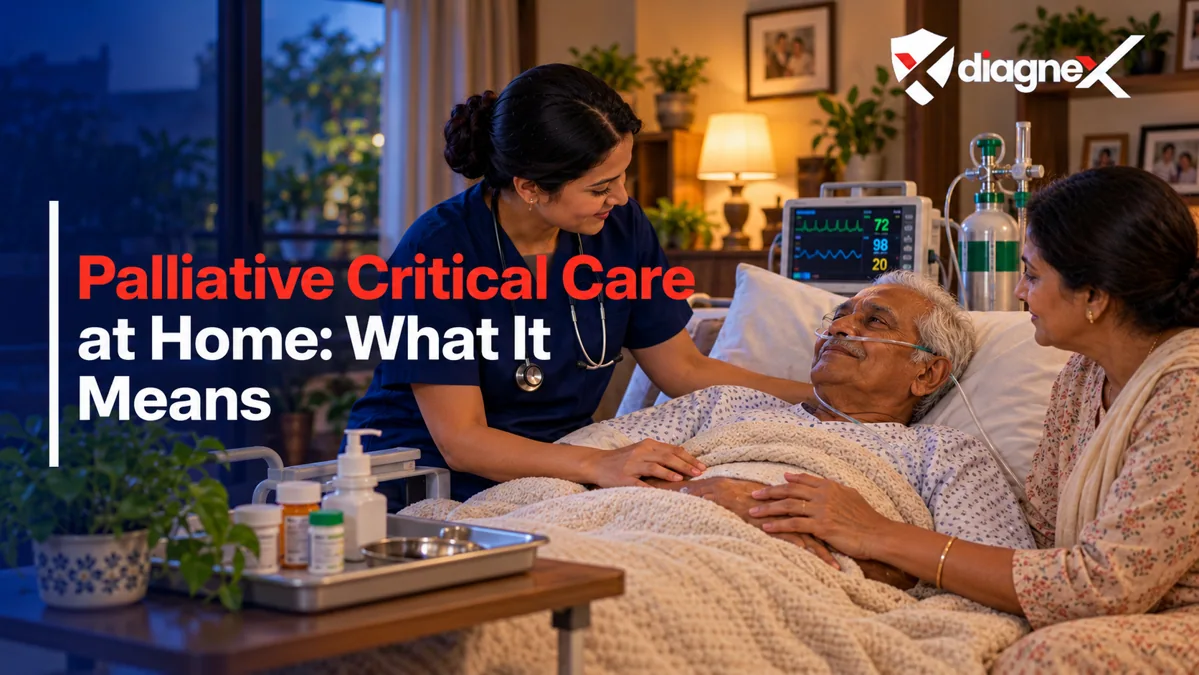
Palliative critical care at home is a care approach for people with serious or life-limiting illness who still have complex medical needs but whose care plan gives strong priority to comfort, dignity, symptom relief and the person's own goals.
For related context, read Neuro Critical Care at Home: What It Can Involve and Critical Care at Home for COPD Patients.
For related context, read Neuro Critical Care at Home: What It Can Involve and Critical Care at Home for COPD Patients.
It does not automatically mean that all active treatment stops. The World Health Organization describes palliative care as an approach that can be introduced early in serious illness and used alongside treatments intended to prolong life. Depending on the person's goals, home care may still include oxygen, non-invasive ventilation, feeding support, wound care, medicines, catheter care, monitoring and skilled nursing.
The difference is that every intervention should have a clear purpose that matches the person's priorities. For one patient, that may mean continuing selected life-prolonging treatment while avoiding repeated hospital admissions. For another, it may mean focusing almost entirely on comfort at home and planning in advance not to escalate to invasive hospital treatment.
Palliative Care Is Not Only for the Last Days of Life
Palliative care can begin well before a person is actively dying.
WHO states that palliative care addresses physical, psychological, social and spiritual suffering and is most effective when considered early in the course of serious illness. It can be used in cancer, advanced heart or lung disease, kidney failure, neurological disease, dementia and many other conditions.
This means a person can receive palliative care while still taking disease-directed medicines, using respiratory support or attending specialist follow-up.
What Makes Palliative Critical Care Different From Standard Home ICU?
Standard Home ICU care often focuses on supporting recovery, maintaining physiological stability and escalating treatment when deterioration occurs.
Palliative critical care can use some of the same equipment and nursing skills, but the goals may be different. Monitoring is useful only when the result will change care in a way that benefits the patient. Hospital transfer may be appropriate in some situations and intentionally avoided in others if that matches the agreed care plan.
The Home ICU pathway can therefore support selected palliative patients when advanced nursing or equipment is still required at home. Is ICU at Home Safe? What Needs to Be in Place explains the broader safety systems families should review when complex equipment and nursing are brought into the home.
Goals of Care Should Be Discussed Before the Home Setup
The most important planning question is not which monitor or oxygen machine to rent. It is what the patient wants the care to achieve.
The treating doctor and palliative team should discuss priorities such as comfort, alertness, mobility, time with family, remaining at home, symptom control, life-prolonging treatment and acceptable burdens of treatment.
These decisions should be documented clearly enough that nurses, family caregivers and emergency clinicians can understand the intended direction of care.
Palliative Care Can Coexist With Life-Prolonging Treatment
Palliative care does not require an all-or-nothing choice between treatment and comfort.
A person may continue antibiotics, diuretics, oxygen, dialysis, feeding support, NIV or other treatment when those interventions still match the person's goals and provide meaningful benefit.
WHO explicitly describes palliative care as something that can be integrated with treatments intended to prolong life.
End-of-Life Care Is a More Specific Situation
End-of-life care usually refers to care when a person is approaching death, although the exact time frame can be uncertain.
NICE guidance emphasises that clinicians should assess the person's condition, wishes and signs of deterioration while recognising that some people may temporarily stabilise or improve.
Families should therefore avoid assuming that every change means death is immediate, while also preparing for predictable changes when the clinical team believes the person may be entering the last days of life.
The Preferred Place of Care Should Be Documented
Some people strongly prefer to remain at home if symptoms can be controlled safely.
NHS guidance notes that end-of-life and hospice care can often be provided at home with support from community and specialist palliative-care teams. NICE also recommends an individualised care plan that records the person's preferred care setting and anticipated needs.
The plan should also explain what happens if symptoms become difficult to control at home.
A Named Clinical Lead Helps Prevent Conflicting Decisions
When multiple doctors, nurses and family members are involved, conflicting instructions can create distress.
NICE recommends identifying a named lead healthcare professional in end-of-life planning so that decisions, changes and contact routes are clear.
At home, the family should know who is responsible for reviewing symptoms, medicines, equipment and escalation decisions. For more on the practical service arrangements, review home nursing before deciding what information the care team needs.
Advance Care Planning Should Be Practical, Not Abstract
A useful advance plan should translate values into specific instructions.
It may address whether the person would want hospital transfer for a potentially reversible problem, whether invasive ventilation would be acceptable, what level of monitoring is useful, whether resuscitation has been discussed, who should speak for the person if they lose decision-making capacity and which symptoms should trigger an urgent palliative review.
Legal forms and documentation requirements differ by jurisdiction, so the treating clinicians should guide the family on the applicable process.
Hospital Transfer Decisions Should Follow the Goals of Care
In ordinary critical care, major deterioration usually triggers emergency transfer.
In palliative critical care, the response may depend on what has been agreed. A patient who still wants active hospital treatment for reversible complications may need immediate transfer. A patient whose documented plan is comfort-focused at home may instead need urgent contact with the palliative clinician and symptom-control plan.
The goal is not to ignore deterioration. It is to respond in the way that best matches the patient's informed preferences.
Symptom Relief Is an Active Form of Medical Care
Palliative critical care involves frequent assessment and treatment, not passive observation.
Pain, breathlessness, nausea, anxiety, agitation, secretions, constipation, urinary retention, dry mouth and pressure discomfort may all require active management.
NICE recommends individualised symptom treatment and regular reassessment in the last days of life.
Pain Management Should Be Individualised
Pain can come from the underlying disease, wounds, immobility, fractures, procedures, pressure injuries or other causes.
The home team should identify the likely cause and follow the prescribed analgesic plan. Some patients need regular medicines plus additional treatment for breakthrough pain.
Families should not alter opioid doses or combine sedating medicines without clinical instruction.
Breathlessness Needs Both Comfort Measures and Clinical Assessment
Breathlessness is common in advanced heart, lung and neurological disease.
Simple measures such as upright positioning, airflow from a fan, a calm environment and pacing may reduce distress. Clinicians may also prescribe medicines for breathlessness when appropriate.
NICE advises treating reversible causes when consistent with the care plan and does not recommend routine oxygen solely for breathlessness unless symptomatic hypoxaemia is known or clinically suspected.
Oxygen Should Have a Clear Purpose
Some palliative patients benefit from oxygen because they are hypoxaemic. Others may feel breathless even when oxygen levels are not low.
Oxygen equipment should therefore be used according to the clinician's plan rather than automatically whenever the person feels short of breath.
Respiratory Care at Home may be relevant when oxygen, suction, NIV or other prescribed respiratory support is part of the palliative plan.
NIV or Ventilator Support Can Sometimes Continue
A person who already uses non-invasive ventilation or mechanical ventilation may choose to continue it if it improves comfort or aligns with life-prolonging goals.
The role of the device should be discussed clearly. A treatment used primarily for comfort may be managed differently from one intended to prolong life or bridge recovery.
Any decision to start, continue, reduce or stop ventilatory support should be made with the treating team and should never be improvised by family caregivers.
Respiratory Secretions Can Become Distressing
Weak cough and reduced swallowing can allow saliva or airway secretions to accumulate.
Positioning, mouth care, suction in selected patients, humidification or prescribed medicines may be used depending on the cause and the person's comfort goals.
Noisy respiratory secretions near the end of life can be distressing to families even when the person does not appear distressed, so the care team should explain what the sounds mean and what can reasonably be treated.
Nutrition Goals May Change as Illness Progresses
Earlier in serious illness, nutrition may support strength, treatment tolerance and rehabilitation.
As a person approaches the last days of life, appetite and ability to eat commonly decline. Forcing food can create discomfort, choking or aspiration.
The care plan should focus on what the person wants and can tolerate safely rather than on achieving a fixed calorie target at all stages of illness.
Hydration Decisions Should Be Individualised
NICE advises an individualised approach to clinically assisted hydration in the last days of life.
Fluids may help some symptoms in selected patients but can also contribute to fluid overload or other problems. It is uncertain whether clinically assisted hydration prolongs life or the dying process.
Mouth and lip care, small sips when safe and treatment of dry mouth can remain important even when fluid intake falls.
Swallowing Safety Still Matters in Palliative Care
Comfort-focused care does not mean ignoring aspiration risk.
If swallowing becomes difficult, the team should discuss whether texture modification, assisted feeding, tube feeding or comfort feeding best matches the patient's goals.
A person who wants to continue eating despite known risk should have that decision discussed and documented with the clinical team rather than left as an informal family decision.
Medicines Should Be Reviewed for Current Benefit
As goals change, medicines that were useful for long-term prevention may become less important than medicines that relieve current symptoms.
NICE recommends reviewing medicines in the last days of life and stopping those that do not provide symptomatic benefit or may cause harm, after appropriate discussion.
This process should be clinician-led because stopping some medicines abruptly can create problems.
Anticipatory Medicines Can Reduce Crisis at Home
Palliative teams may prescribe medicines in advance for symptoms that are reasonably expected, such as pain, breathlessness, nausea, agitation or respiratory secretions.
The purpose is to avoid waiting for a new prescription during a crisis. The family and nurses should know which medicine is for which symptom, who is authorised to administer it and when the palliative clinician should be contacted.
No dose changes should be made outside the written plan.
When Swallowing Fails, the Medicine Route May Need to Change
A person who can no longer swallow safely may need medicines by another route.
NICE recommends choosing the route according to the person's condition, ability to swallow and preferences. Continuous subcutaneous medicine delivery may be considered by clinicians when repeated symptom-control doses are needed. If the family is considering support at home, the Diagnex guide to bedridden patient care at home explains the service pathway and its limits.
The equipment and prescription should be managed by trained professionals.
Delirium and Agitation Need Careful Assessment
Confusion or agitation can arise from pain, urinary retention, constipation, infection, medicines, low oxygen or metabolic changes as well as the dying process itself.
The team should decide which reversible causes are worth treating based on the person's goals and likely benefit.
A calm environment, familiar voices and reduced overstimulation can support comfort alongside prescribed treatment.
Urinary Retention and Catheter Problems Can Cause Significant Distress
Urinary retention can cause pain and agitation even when a person cannot describe the discomfort clearly.
Some patients benefit from a urinary catheter for comfort, skin protection or easier care. Catheter blockage, bleeding, leakage or infection symptoms should still be assessed.
Home Nursing may be relevant when catheter care and other skilled clinical tasks are part of the palliative plan.
Constipation Should Not Be Overlooked
Reduced mobility, lower fluid intake and opioid medicines can all contribute to constipation.
A bowel plan may improve comfort and reduce abdominal pain, nausea or agitation. The approach should match the person's stage of illness and ability to tolerate oral medicines or procedures.
Severe abdominal distension, repeated vomiting or uncontrolled pain needs clinical review.
Pressure Care Remains Important
A bedbound person may still experience substantial discomfort from pressure injuries.
A pressure-relieving mattress, gentle repositioning, skin care and moisture management can improve comfort. In the last days of life, the frequency of turning may need to balance pressure prevention with the distress caused by movement.
Bedridden Patient Care at Home may be relevant when extensive positioning, hygiene and pressure-area support are required.
Wound Care Goals May Shift Toward Comfort
Not every wound can or should be managed with healing as the only goal in advanced illness.
Palliative wound care may focus on pain, odour, leakage, bleeding, infection symptoms and protecting surrounding skin.
Dressings should be selected by clinicians according to the wound and comfort goals rather than changed frequently without a clear benefit.
Monitoring Should Be Used Only When It Helps Decision-Making
Continuous monitoring can sometimes reassure families but can also create alarms, sleep disruption and repeated interventions that do not improve comfort.
Blood pressure, oxygen saturation, glucose or other measurements should be continued when the result is expected to guide treatment that the patient still wants.
When care is fully comfort-focused, fewer measurements may sometimes be more appropriate, but that decision belongs in the clinical plan.
A Hospital Bed and Pressure-Relief Equipment May Improve Comfort
Equipment at home may include an adjustable hospital bed, pressure-relieving mattress, bedside commode, wheelchair, hoist or positioning supports.
The equipment should reduce effort, improve comfort and make caregiving safer.
Patient Care at Home may be relevant when the person needs ongoing assistance with personal care, mobility and daily activities in addition to skilled nursing.
Suction, Oxygen and Other Devices Need Backup Planning
Even when treatment goals are palliative, essential equipment can fail.
If oxygen, suction, NIV, a feeding pump or another device is important for comfort or life support, the family should know what backup is available and whom to call.
The degree of backup required depends on whether the device is comfort-enhancing or essential to maintain breathing.
Home Nursing Is Often Central to Palliative Critical Care
Nurses may assess symptoms, administer prescribed medicines, manage catheters and wounds, support oxygen or respiratory equipment, provide mouth and skin care, teach family caregivers and communicate changes to the medical team.
NHS guidance on end-of-life care at home notes that community and specialist palliative nurses can provide hands-on care, advice on symptom control and practical and emotional support.
The nursing model may range from scheduled visits to continuous bedside support depending on the person's needs.
A Doctor Still Needs to Remain Involved
Home palliative care requires medical oversight for symptom prescriptions, treatment decisions, changes in condition and care planning.
Doctor at Home may be relevant when a home medical review is clinically appropriate and available, although emergency and specialist needs may still require hospital or clinic assessment.
The family should know which clinician to contact during routine hours and which service covers urgent out-of-hours problems.
Family Caregivers Need Support as Well
Palliative home care can place substantial physical and emotional demands on family members.
WHO includes family support as a core part of palliative care, and NICE recommends helping carers understand their role and access additional home support.
A care plan should not assume that one relative can provide complex 24-hour care indefinitely without relief.
Night Care Can Be the Hardest Part of Home Palliative Care
Symptoms, toileting, repositioning and anxiety often continue overnight.
If the patient cannot call for help, is using respiratory equipment or needs frequent medicines, the family should decide in advance who will respond at night.
Continuous professional nursing may be appropriate when the clinical burden is too high for family caregivers alone.
Psychological, Social and Spiritual Needs Are Part of Care
Palliative care is broader than physical symptom treatment.
Patients may want help with fear, unfinished conversations, family relationships, spiritual concerns, practical planning or loss of independence. Different people want different levels of discussion.
WHO defines palliative care as addressing physical, psychological, social and spiritual suffering, so these needs should be treated as legitimate parts of the plan.
Care After Death Should Also Be Discussed
If the plan is for the person to remain at home through the end of life, the family should know whom to contact when death occurs and what documentation or procedures are required locally. For care planning beyond this article, compare medical equipment on rent with the instructions already given by the treating professional.
These steps vary by jurisdiction and clinical circumstances, so families should obtain instructions from the treating team rather than relying on general internet advice.
Planning this in advance can reduce confusion during an emotionally difficult time.
Palliative Care Does Not Mean Withdrawing Attention
A decision not to pursue invasive ICU treatment does not mean that medical care stops.
The focus changes to treatments that offer meaningful comfort or benefit while avoiding interventions that the person considers too burdensome.
Good palliative critical care can involve frequent nursing observation, active symptom treatment, medical review and rapid response to distress.
When Should Emergency Help Still Be Sought?
Urgent clinical help is needed when: • the patient has severe distress that is not controlled by the written palliative plan; • essential oxygen, ventilator or suction equipment fails and safe support cannot be maintained; • there is major uncontrolled bleeding; • the patient has severe choking or airway obstruction; • pain, breathlessness or agitation remains severe despite prescribed rescue treatment; • caregivers cannot safely manage the situation at home; • the change falls outside what the clinical team said to expect.
Whether this leads to hospital transfer should follow the patient's documented goals, clinical circumstances and local emergency plan.
When Staying at Home May Be the Intended Plan
If a person is known to be approaching the end of life and has chosen comfort-focused care at home, some changes that would normally trigger ICU transfer may instead be managed by the palliative team.
Examples can include progressive weakness, reduced appetite, increasing sleep, changes in breathing pattern and declining interaction when these have been assessed as part of the expected dying process.
NICE recommends continued assessment because a person's condition can sometimes stabilise or improve, and uncertainty should be discussed openly.
A Practical Palliative Critical-Care-at-Home Checklist
Families can confirm: • The patient's goals and preferred place of care are documented. • The medical team has explained which treatments are being continued and why. • Hospital-transfer and resuscitation decisions have been discussed and documented appropriately. • A named clinical lead and out-of-hours contact route are available. • Pain and breathlessness plans are written down. • Anticipatory medicines are available when prescribed. • The family knows what to do if swallowing becomes difficult. • Oxygen, NIV, suction or other respiratory equipment has a clear purpose and backup plan. • Catheter, bowel, wound and pressure-care needs are defined. • Nursing hours match the actual level of dependency. • Family caregivers understand their role and have access to relief or additional support. • Psychological, social, cultural and spiritual preferences have been discussed when the patient wants this. • The family knows whom to contact if death occurs at home. • Emergency and non-transfer scenarios are both clear enough that caregivers do not have to make major decisions alone during a crisis.
How to Arrange Palliative Critical Care at Home With Diagnex
To plan palliative critical care at home, share the treating doctor's care plan, diagnoses, current symptoms, oxygen or ventilatory needs, medicines, feeding and swallowing status, mobility, catheter or wound needs, nursing requirements, equipment, preferred place of care, escalation preferences and locality.
Diagnex can review whether the requirement fits Home ICU, Home Nursing, Patient Care at Home, Bedridden Patient Care at Home, Doctor at Home or another appropriate pathway based on the treating team's plan and the person's current needs. Exact staffing, equipment and service availability are confirmed for the specific locality and care requirement.
For service coordination, use the Diagnex Contact page.
Frequently asked questions
What is palliative critical care at home?
It is high-support home care for a person with serious or life-limiting illness in which symptom relief, dignity and the patient's goals guide decisions about nursing, equipment, medicines and escalation.
Does palliative care mean all treatment stops?
No. Palliative care can be provided alongside disease-directed and life-prolonging treatment. Treatments are reviewed according to whether they continue to provide benefit that matches the person's goals.
Can oxygen or BiPAP continue during palliative care?
Yes, when they provide meaningful benefit or comfort and are part of the agreed care plan. Their role should be reviewed as the person's condition and goals change.
Can someone receive end-of-life care at home?
Yes, selected patients can receive end-of-life and hospice-style care at home when appropriate nursing, symptom-control medicines, medical oversight, equipment and caregiver support are available.
Does every deterioration require hospital transfer?
No. The response should follow the person's documented goals and clinical plan. Some reversible problems may still warrant hospital treatment, while expected deterioration near the end of life may be managed at home when comfort-focused care is the agreed goal.
What support do family caregivers need?
Caregivers need clear instructions, symptom and emergency plans, practical training, contact with the clinical team, overnight planning and access to additional help when the care burden becomes too high.
When should the palliative team be contacted urgently?
Uncontrolled pain, breathlessness, agitation, major bleeding, choking, failure of essential equipment, new severe distress or a situation the family cannot safely manage should prompt urgent contact with the treating or palliative team, with emergency services used according to the patient's plan and clinical circumstances.
References and further reading
This article provides general education and does not replace an individual palliative-care plan, treating doctor or local legal and emergency guidance. Clinical points were cross-checked against current World Health Organization palliative-care guidance, NICE guidance on care of dying adults and end-of-life service delivery, NHS guidance on end-of-life care at home, and Indian Association of Palliative Care resources on home-based palliative care.
Related Diagnex services and guides
Explore the Home ICU service pathway and the Home ICU article library for more information.
Diagnex publishes general healthcare information to support care planning. Individual decisions about diagnosis, prescriptions and treatment remain with the treating professional. Read our medical content policy and editorial standards.