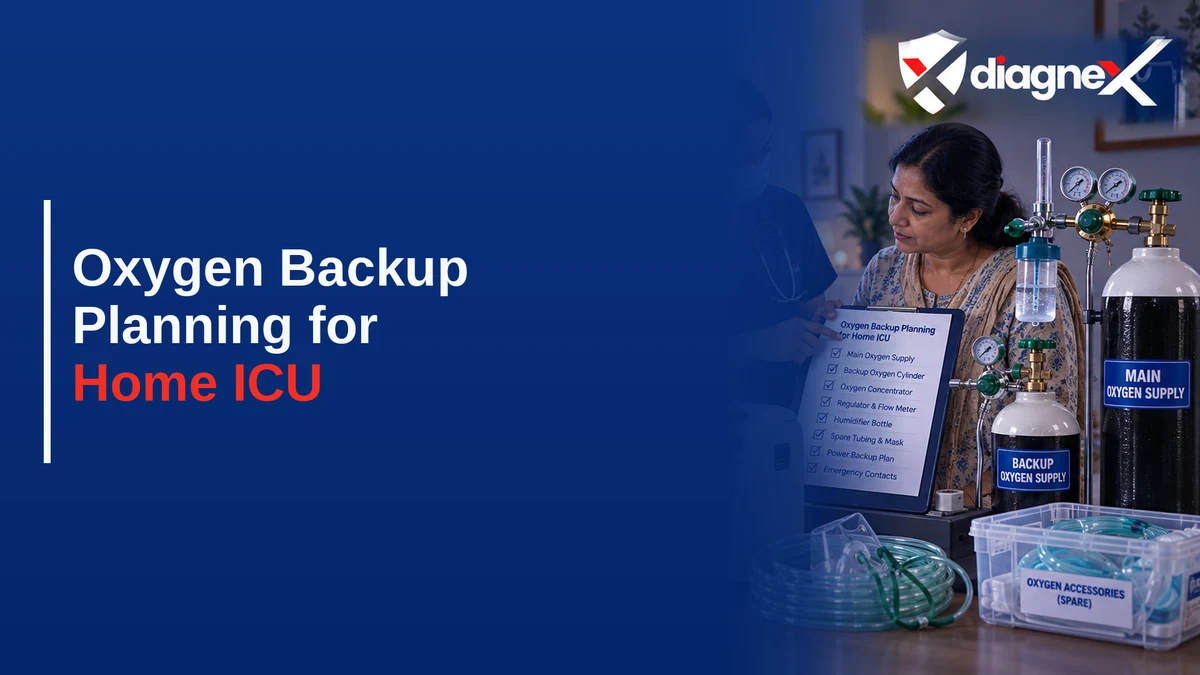
For a patient who has been prescribed oxygen at home, backup planning is an important part of a home ICU or advanced-care setup. An oxygen concentrator may depend on electricity, a cylinder may eventually run out, and equipment can occasionally need servicing or replacement. The purpose of oxygen backup planning is to make sure the patient does not unexpectedly lose prescribed oxygen support if the primary system becomes unavailable.
The right backup arrangement depends on the patient's prescribed oxygen therapy, the primary oxygen source, the expected duration of a possible interruption, the patient's clinical dependency and the time needed to restore the main system or arrange hospital transfer. Families should not choose oxygen flow settings, cylinder quantities or backup duration from a generic online chart. These decisions should be based on the patient's prescription and the specific equipment being used.
Why Oxygen Backup Is Important in a Home ICU
Oxygen support at home may be delivered through different systems. Some patients use oxygen intermittently, while others may depend on it for prolonged periods. A backup plan helps address situations such as: The backup plan should be part of the overall clinical and emergency plan rather than treated as a separate household purchase.
- Power failure affecting an oxygen concentrator
- Oxygen concentrator malfunction
- Unexpected servicing or replacement delays
- A cylinder becoming depleted
- Patient transport outside the home
- A change in the patient's condition requiring urgent escalation
1. Start With the Oxygen Prescription
- The prescribed delivery method
- The prescribed flow or device setting
- Whether oxygen is continuous or intermittent
- Whether oxygen is required during sleep
- Whether oxygen is required during transport
- The patient's monitoring requirements
- What changes should trigger medical review
2. Identify the Primary Oxygen Source
- Each option has different failure points
- A concentrator depends on electricity and equipment function
- A cylinder does not depend on household electricity, but its available oxygen is finite
- An oxygen concentrator
- Medical oxygen cylinders
- Another clinically prescribed oxygen-delivery system
3. Understand Why a Concentrator Needs a Backup Plan
An oxygen concentrator produces concentrated oxygen from surrounding air and normally requires electricity to operate. If mains electricity fails, the concentrator can continue only if it is connected to a suitable backup power source or has a battery system designed for that device. Families using a concentrator should therefore confirm:
- What happens when mains power fails
- Whether the device has any internal battery
- Whether it is connected to a suitable UPS or inverter
- What non-electric backup oxygen is available where prescribed
- Who should switch the patient to the backup source
4. Use a Non-Electric Backup Where Clinically Required
Where a patient depends on a powered oxygen concentrator, the clinical team may recommend a non-electric oxygen backup, commonly a medical oxygen cylinder. The purpose of this backup is to maintain prescribed oxygen support while the power supply is restored, the concentrator is repaired or replaced, or the patient is transferred if necessary. The type and quantity of backup oxygen should be planned for the actual patient rather than selected as a standard package.
5. Do Not Guess How Long an Oxygen Cylinder Will Last
Cylinder duration depends on several factors, including the cylinder's usable oxygen content, the prescribed flow or delivery method and the specific regulator or equipment being used. For this reason, families should obtain the expected usable duration from the oxygen supplier or clinical team for the exact cylinder and prescribed setup. They should know: A generic duration estimate may be misleading if it assumes a different cylinder size or oxygen setting.
- How to tell whether the cylinder is full or becoming depleted
- The expected duration at the prescribed setting
- When a replacement cylinder should be arranged
- How much reserve should remain for an emergency
6. Plan More Than One Failure Scenario
- A brief electricity interruption
- An extended power outage
- Concentrator failure despite normal electricity
- Backup cylinder running low
- Supplier delay
- Need for urgent patient transport
7. Keep Backup Oxygen Accessible
- Known to the nurse and key family members
- Accessible without moving heavy household items
- Protected from obvious heat and ignition hazards
- Managed according to the supplier's storage instructions
8. Learn the Changeover Process Before It Is Needed
- Who is expected to perform the changeover
- Which accessories are required
- How the prescribed oxygen delivery is maintained
- How the backup source is checked before use
- When professional help should be called
9. Keep the Prescribed Oxygen Setting Clear
Oxygen is a medical therapy. The flow or device setting should follow the treating team's instructions. A power cut or equipment failure is not, by itself, a reason to increase the oxygen setting. If the patient's condition changes, the family or nurse should follow the clinical escalation plan rather than independently changing therapy beyond the instructions they have been given.
10. Include Oxygen in the Home ICU Power Plan
- Whether the concentrator is on backup power
- How long that electrical backup can support it
- Which other critical devices share the same backup system
- When the patient should move to the non-electric oxygen backup
- When hospital transfer should begin if power cannot be restored
11. Plan Oxygen for Patient Transport
- Movement from the bed to a stretcher or wheelchair
- Travel through corridors or lifts
- Ambulance transfer
- Waiting during admission or handover
12. Check Lift and Building Access During an Outage
- Whether the lift has building backup power
- Whether a stretcher can use the available lift
- What alternative route exists if the lift is unavailable
- How oxygen support would be maintained during that transfer
13. Keep Oxygen Equipment Away From Ignition Sources
- Keep smoking away from the oxygen-use area
- Avoid open flames near oxygen equipment
- Keep equipment away from obvious heat or spark hazards
- Follow the oxygen supplier's storage and handling instructions
- Avoid modifying regulators, connectors or fittings
14. Store Cylinders According to Supplier Instructions
- Where cylinders should be kept
- How they should be secured
- How full and empty cylinders are identified
- How replacement cylinders are ordered
- Who to contact if a regulator or valve appears damaged
15. Track Backup Stock Before It Becomes Urgent
- Available backup cylinders
- Cylinder status
- Required tubing and accessories
- Supplier contact details
- Expected replacement or refill arrangements
16. Know the Signs That Require Clinical Escalation
Backup oxygen is intended to maintain prescribed therapy during a disruption, not to replace medical review when the patient is deteriorating. The clinical team should explain which changes require urgent medical attention or hospital transfer. Families should rely on the patient's personalised escalation plan rather than using a single oxygen-saturation number as the only decision point.
17. Do Not Rely Only on a Pulse Oximeter
A pulse oximeter can be useful for monitoring when included in the care plan, but it does not replace clinical assessment. Readings can be affected by multiple factors and should be interpreted alongside the patient's symptoms, prescribed targets and instructions from the treating team. If the patient appears clinically unwell, families should follow the escalation plan even if one reading appears reassuring.
18. Plan for Equipment Failure Even When Power Is Available
- What backup oxygen source is immediately available
- Who to call for equipment support
- How quickly replacement equipment can be arranged
- When the patient should be transferred instead of waiting for repair
19. Include Oxygen Accessories in the Backup Plan
The oxygen source is only one part of the system. Delivery can also depend on tubing, masks, nasal interfaces, connectors or other prescribed accessories. Families should keep appropriate spare consumables where the care team or supplier recommends them. Replacement accessories should be compatible with the patient's prescribed equipment.
20. Review the Backup Plan When the Prescription Changes
- Prescribed oxygen therapy
- Primary oxygen equipment
- Power-backup arrangement
- Patient mobility or transfer needs
- Clinical dependency
Oxygen Concentrator Backup Planning
- Suitable electrical backup where required
- A clinically appropriate non-electric oxygen backup where prescribed
- Equipment-support contacts for concentrator failure
- A hospital-transfer plan if oxygen support cannot be maintained
How Much Backup Oxygen Is Needed?
- The prescribed oxygen delivery
- The patient's level of dependency
- The usable capacity of the specific backup system
- Expected power-restoration or equipment-replacement time
- Distance and time to an appropriate hospital
- Whether oxygen is also required during transport
Emergency Oxygen Backup Plan for a Home ICU
- What the primary oxygen source is
- Where the backup source is stored
- Who can activate or change over to the backup
- The prescribed oxygen setting
- How backup availability is checked
- Who to call for oxygen-equipment support
- Who to call for clinical help
- When hospital transfer should begin
- How oxygen will be maintained during transfer
Home ICU Oxygen Backup Checklist
- The oxygen prescription is clearly documented
- The primary oxygen source is identified
- Power backup for the concentrator has been reviewed where applicable
- A non-electric oxygen backup has been arranged where prescribed
- Expected backup duration has been confirmed for the actual setup
- The nurse and key family members understand the changeover process
- Backup oxygen is accessible
- Storage and fire-safety instructions are understood
- Required tubing and accessories are available
- Transport oxygen has been planned where necessary
- Supplier and clinical contact details are accessible
- The hospital-transfer plan is documented
- The plan will be reviewed if the oxygen prescription changes
Oxygen Backup Should Be Part of the Overall Care Plan
The safest oxygen backup plan is one designed around the individual patient's prescribed therapy and clinical dependency. The goal is not simply to keep extra cylinders in the home. It is to make sure the primary oxygen source, electrical backup, reserve oxygen, accessories, monitoring, supplier support and emergency transfer plan work together. Families exploring Home ICU / Advanced Care at Home can speak with Diagnex to understand the assessment and care-planning process and discuss appropriate next steps, subject to clinical suitability and service availability.
Frequently Asked Questions
Does a home ICU need backup oxygen?
What is used as backup for an oxygen concentrator?
How many oxygen cylinders should be kept at home?
There is no universal number. The required reserve depends on the cylinder type, prescribed oxygen delivery, expected contingency period, patient dependency and transfer plan. The clinical team and oxygen supplier should determine the appropriate reserve.
How long does an oxygen cylinder last?
Does an oxygen concentrator work during a power cut?
Can families change the oxygen flow during an emergency?
Is a pulse oximeter enough to manage oxygen at home?
No. A pulse oximeter can support monitoring, but readings should be interpreted in the context of the patient's symptoms, prescribed targets and clinical plan. It does not replace medical assessment.