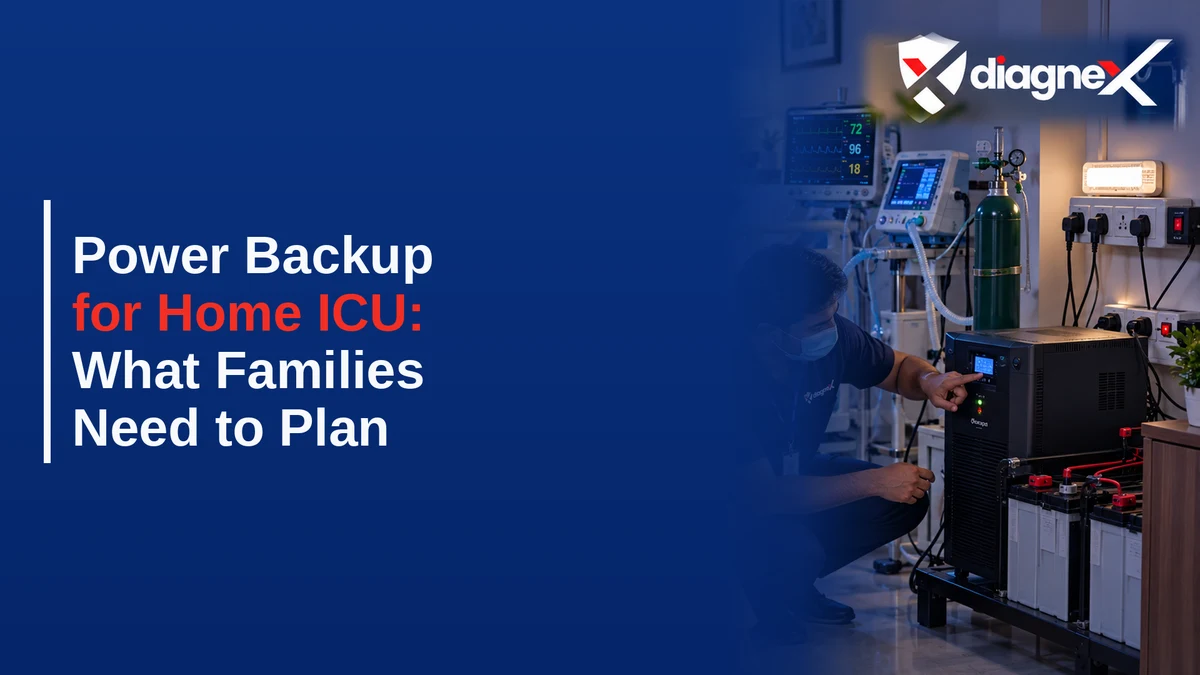
When a patient depends on electrically powered medical equipment at home, a power cut can become more than an inconvenience. Ventilators, oxygen concentrators, monitors, suction machines, infusion pumps and other devices may all rely on continuous or regular electricity. For this reason, power backup for a home ICU should be planned before the patient is transferred home. The right arrangement depends on the patient's clinical needs, the equipment being used, the power consumption of each device and how long essential support must continue if mains electricity fails. Families should avoid choosing a UPS, inverter or generator based only on a generic recommendation. The backup system should be planned around the actual medical equipment and checked with the care team, equipment provider and an appropriately qualified electrical professional.
Why Power Backup Matters in a Home ICU
A home ICU may contain devices that are important for breathing, monitoring, medication delivery or airway care. If power is interrupted, some equipment may continue on an internal battery, while other devices may stop immediately unless an external backup supply is available. The first step is therefore to identify which devices are: The backup plan should prioritise essential devices rather than simply trying to power the entire household.
- Essential for immediate patient support
- Required continuously
- Used intermittently but may be needed urgently
- Equipped with an internal battery
- Dependent entirely on mains electricity
1. Make a Complete List of Electrically Powered Medical Equipment
- Ventilator
- Oxygen concentrator
- Multiparameter monitor
- Suction machine
- Nebuliser
- Infusion pump
- Syringe pump
- Electric medical bed
- Feeding equipment or other prescribed devices
2. Separate Critical Devices From Non-Critical Loads
Not every electrical item in the room has the same priority during a power cut. For example, a life-support or respiratory device may need uninterrupted power, while a room light or adjustable bed may be less urgent for a short period. Families should ask the clinical and equipment teams to identify: This prioritisation helps prevent the backup system from being overloaded with unnecessary household appliances.
- Which devices must not stop
- Which devices can operate temporarily on battery
- Which devices can be switched off during an outage
- Which devices may need a separate backup source
3. Check the Power Requirement of Every Device
The power requirement of a home ICU should be calculated from the equipment actually being used. Families should obtain the rated electrical requirements from device labels, manuals or the equipment provider rather than estimating them. Important information may include: The electrical professional designing the backup arrangement should consider the combined load of the devices that may need to run at the same time.
- Normal operating power requirement
- Any higher starting or peak load
- Battery charging requirement
- Whether the device has an internal battery
- Expected battery runtime under the patient's actual mode of use
- Compatibility requirements for external backup power
4. Understand the Role of a UPS
A UPS, or uninterruptible power supply, is designed to provide power immediately when the mains supply fails. In a home ICU, this can be useful where even a short interruption could cause a device to restart or stop operating. However, a UPS should not be selected only by looking at its headline capacity. Families should confirm: A UPS may be used as a bridge to a longer-duration backup system, but the exact arrangement should be designed around the patient's equipment.
- Whether the UPS is compatible with the medical device
- Whether it can support the required load
- How long it can provide power at that load
- Whether the output is suitable for the equipment
- What happens when the UPS battery is nearly depleted
5. Understand the Role of an Inverter
A household or dedicated inverter can provide backup power from batteries when mains electricity is unavailable. Depending on its design and capacity, it may support selected medical devices for longer than a small UPS. An inverter for a home ventilator or other critical equipment should never be chosen purely on the basis of household use. The equipment team and electrical professional should confirm: Where a device is critical, the backup arrangement should also account for what happens if the inverter itself fails.
- Load capacity
- Battery capacity
- Transfer behaviour when mains power fails
- Output compatibility with the medical devices
- Charging time and battery condition
- Which non-medical household loads should remain excluded
6. UPS and Inverter Are Not the Same Thing
Families sometimes use the terms UPS and inverter interchangeably, but they may serve different roles in a backup plan. A UPS is commonly used where immediate continuity is important, while an inverter may form part of a longer-duration battery backup system. The actual performance depends on the specific device, battery, load and installation. For some home ICU setups, the safest plan may involve more than one layer of backup rather than relying on a single device.
7. Check the Ventilator's Internal Battery
Many portable or home-use ventilators may include an internal battery, but the available runtime varies by device, battery condition, settings and usage. Families should not assume that the internal battery will cover an extended outage. Before discharge, confirm: The ventilator provider and treating team should explain the specific contingency plan for that device.
- The device's expected battery runtime in the prescribed mode
- How the battery status is displayed
- Which alarms indicate low battery or power failure
- How the ventilator is connected to external backup power
- What the escalation plan is if all electrical backup is at risk of being exhausted
8. Plan for the Oxygen Concentrator Separately
An oxygen concentrator requires electricity to produce concentrated oxygen. If mains power and electrical backup both fail, the concentrator cannot continue operating normally. Where continuous oxygen has been prescribed, the care team should determine whether a non-electric backup oxygen source is also required. If oxygen cylinders form part of the backup plan, families should understand: Oxygen settings should not be changed independently unless the treating team has specifically instructed the family or trained caregiver to do so.
- How the backup oxygen is accessed
- Who may switch the patient to the backup source
- The prescribed oxygen delivery settings
- How much backup supply is required for the planned contingency
- Safe cylinder storage and handling requirements
9. Do Not Forget Suction, Monitoring and Infusion Devices
- Suction equipment for airway or secretion management
- Monitoring equipment
- Infusion pumps delivering prescribed medicines
- Syringe pumps
- Other patient-specific devices
10. Calculate Backup Runtime for the Actual Load
A battery system does not provide the same runtime under every load. Adding more devices generally reduces how long the backup can operate. For that reason, runtime should be calculated for the combination of critical devices that may need to run simultaneously. Families should ask for a practical answer to questions such as: The answer should be based on tested equipment and battery capacity, not a theoretical estimate alone.
- How long can the critical equipment run if mains power fails?
- What happens if the outage lasts longer than expected?
- Which devices should be disconnected to preserve backup for essential equipment?
- When should the family begin arranging hospital transfer rather than waiting for the backup to run down?
11. Keep Non-Essential Household Loads Off the Medical Backup
A backup system intended for critical medical equipment can lose runtime quickly if it also powers unnecessary household appliances. Where possible, the installation should clearly separate or prioritise essential medical loads. High-load household appliances should not be added to the medical backup circuit unless the system has been specifically designed for them.
12. Consider a Generator for Longer Outages Where Appropriate
In some settings, a generator may form part of a longer-duration power contingency plan, particularly where outages can extend beyond the practical battery-backup period. Generator installation and operation require careful electrical and safety planning. Important considerations include: Fuel-powered generators should never be operated inside the home or in an enclosed area because exhaust gases can create a serious carbon-monoxide hazard.
- Safe connection to the home electrical system
- Fuel availability and storage
- Routine testing and maintenance
- Noise and building restrictions
- Adequate outdoor placement and ventilation
13. Have More Than One Layer of Contingency for Critical Support
- The device's internal battery
- UPS support
- A properly sized inverter or battery system
- Generator or building backup where appropriate
- Non-electric backup oxygen where prescribed
- A hospital-transfer plan if electrical support cannot be maintained
14. Test the Backup System Before the Patient Comes Home
A backup system should not be considered ready simply because it has been installed. Before discharge, the relevant teams should verify how the setup behaves when mains electricity is interrupted. The check should confirm: Any live test involving patient-connected equipment should be carried out under appropriate professional supervision.
- Critical equipment remains powered as intended
- UPS or inverter transfer occurs as expected
- Alarms are audible and understood
- Battery indicators are working
- The family and nurse know which devices are on backup
- The escalation plan is clear if backup power begins to run low
15. Maintain Batteries Rather Than Assuming They Will Work
- How battery condition is checked
- Recommended testing or servicing intervals
- How replacement is arranged
- Which warning signs indicate reduced battery performance
- Who to contact if a backup device is not functioning correctly
16. Plan for Power Cuts at Night
Power interruptions may occur when family members are asleep or when fewer people are immediately available to help. The nighttime plan should make it easy to recognise a power failure and respond quickly. Families should know: Critical instructions and contact details should be easy to find rather than stored only on one person's phone.
- Which alarms will sound
- Where emergency lighting is kept
- How to check the backup system
- Who needs to be contacted
- When the patient should be transferred to hospital
17. Include the Building's Power Situation in the Plan
Families living in apartment buildings should understand whether lifts, common-area power and building generators remain available during an outage. This matters because an extended power cut can affect not only medical equipment but also the patient's ability to be transferred out of the building. The family should know whether the lift operates on backup power and what alternative transfer plan exists if it does not.
18. Know When a Power Problem Becomes a Transfer Problem
Backup power is intended to protect continuity of care, but it should not create false reassurance. If essential support cannot be maintained reliably, the patient may need transfer to a facility with stable power and appropriate clinical capability. The care plan should define who makes this decision and when transfer should begin, especially if battery reserves or backup oxygen are becoming limited.
UPS for a Home Ventilator: What Families Should Confirm
- Compatibility with the specific ventilator
- Ability to support the ventilator's required electrical load
- Expected runtime under the prescribed ventilator use
- Transfer behaviour if mains power fails
- Low-battery alarms
- How it works with the ventilator's internal battery
- What the next backup layer is if the UPS battery is depleted
Inverter for a Home Ventilator: What Families Should Confirm
- That the inverter is appropriately sized for the critical load
- That the output is suitable for the ventilator and other medical devices
- That the battery bank provides the required contingency period
- That essential medical devices are prioritised over non-essential loads
- That the installation has been checked by an appropriately qualified professional
Emergency Backup Plan for a Home ICU
- Which devices must stay powered
- How long each battery-backed device can operate
- Which backup source activates first
- How backup oxygen is accessed where prescribed
- Who to call if the electrical system fails
- Who to call if a medical device develops a fault
- Which hospital the patient should be transferred to if required
- How the patient will be moved from the home
Home ICU Power Backup Checklist
- All electrically powered medical devices have been listed
- Critical and non-critical loads have been separated
- Power requirements have been confirmed from device information
- Internal battery runtime has been checked for essential equipment
- UPS compatibility has been confirmed where used
- Inverter capacity and battery backup have been assessed where used
- A longer-duration backup option has been considered where necessary
- Backup oxygen has been planned where prescribed
- Essential medical loads are protected from unnecessary household loads
- The system has been tested before discharge
- Battery maintenance and replacement responsibilities are clear
- Power-failure alarms are understood
- Nighttime response has been planned
- Lift and building backup have been checked where relevant
- Hospital-transfer criteria and contacts are documented
Power Backup Should Follow the Patient's Clinical Dependency
There is no single UPS, inverter capacity or battery size that is appropriate for every home ICU. The right system depends on which devices the patient needs, how critical they are, their electrical requirements and the expected contingency period. The safest approach is to design power backup as part of the overall care plan, with input from the clinical team, equipment provider and electrical professional. Backup power should support continuity while a clear escalation and hospital-transfer plan remains available if the home setup can no longer safely maintain the patient's required support. Families exploring Home ICU / Advanced Care at Home can speak with Diagnex to understand the assessment and care-planning process and discuss appropriate next steps, subject to clinical suitability and service availability.
Frequently Asked Questions
Does a home ICU need power backup?
Can a UPS be used for a home ventilator?
Can an inverter run a home ventilator?
How long should home ICU backup power last?
Does a ventilator have its own battery?
Does an oxygen concentrator work during a power cut?
An oxygen concentrator requires electricity. It can continue only if it is connected to a suitable electrical backup system. Where continuous oxygen is prescribed, the clinical team may also recommend an appropriate non-electric backup oxygen source.
Should a generator be used for a home ICU?
What happens if all backup power is running low?
Should the power backup system be tested before discharge?
Yes. The care and equipment teams should verify that the planned backup system supports the required devices and that the family and nurse understand alarms, battery status and the escalation plan. Patient-connected testing should be professionally supervised.
SEO Details
SEO Title: Power Backup for Home ICU: UPS, Inverter & Emergency Planning Meta Description: Plan power backup for a home ICU safely. Learn what to check for a home ventilator UPS, inverter, oxygen backup, battery runtime and emergency power planning. Primary Keyword: power backup for home ICU Secondary Keywords: UPS for home ventilator, inverter for home ventilator, emergency backup for home ICU Suggested URL: /blog/power-backup-for-home-icu-what-families-need-to-plan