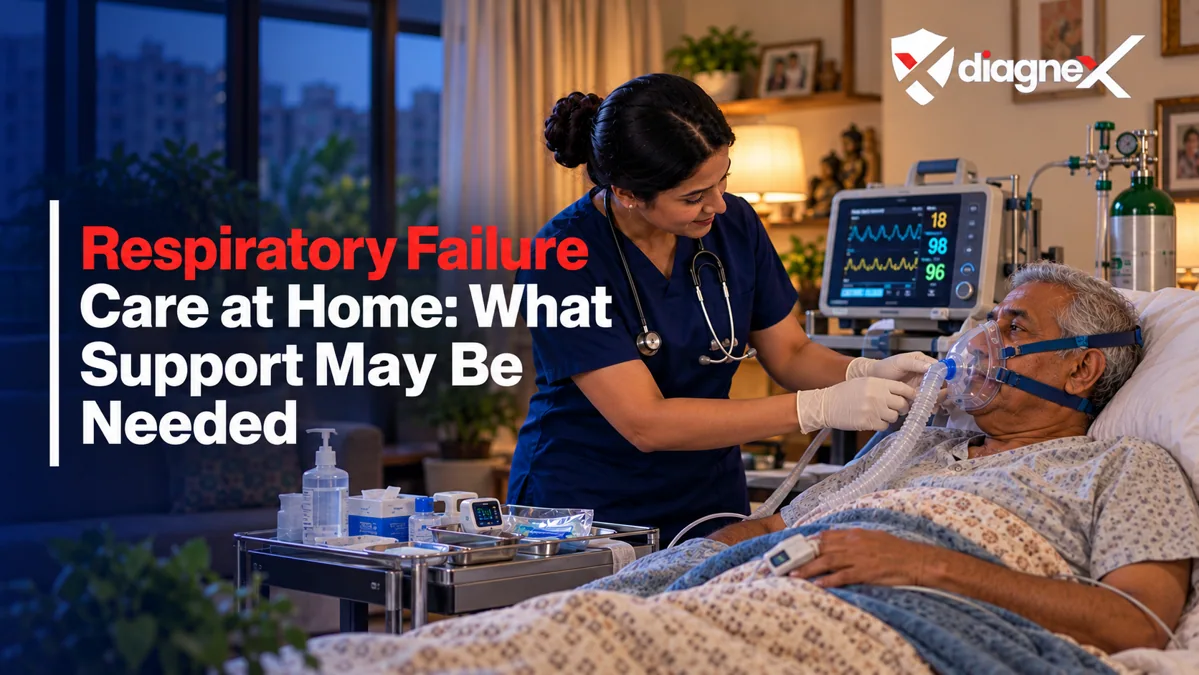
Respiratory failure care at home can be considered only for selected patients whose condition is stable enough for treatment outside hospital and whose respiratory support plan has already been defined by the treating team.
For related context, read Palliative Critical Care at Home: What It Means and Neuro Critical Care at Home: What It Can Involve.
For related context, read Palliative Critical Care at Home: What It Means and Neuro Critical Care at Home: What It Can Involve.
Respiratory failure is not one single condition. Some patients mainly have low oxygen levels, while others also retain carbon dioxide because ventilation is inadequate. The cause may be chronic lung disease, neuromuscular weakness, chest-wall disease, obesity-related hypoventilation, recovery after severe pneumonia or another prolonged critical illness.
A patient with new or worsening respiratory failure, severe breathlessness, rapidly rising oxygen needs, new drowsiness or confusion, cyanosis, collapse or inability to maintain safe breathing still requires urgent hospital assessment. Home care is more appropriate as a step-down or long-term support pathway after the acute phase has stabilised.
What Is Respiratory Failure?
Respiratory failure means the lungs and breathing system are not maintaining adequate gas exchange.
In hypoxemic respiratory failure, oxygen levels are too low. In hypercapnic respiratory failure, carbon dioxide rises because ventilation is insufficient. Some patients have features of both.
The difference matters because oxygen therapy alone may be appropriate for one patient while another needs ventilatory support such as BiPAP or another form of non-invasive ventilation.
Acute Respiratory Failure Still Belongs in Hospital
New respiratory failure can deteriorate quickly and may require blood gases, chest imaging, airway management, non-invasive respiratory support, intubation or treatment of the underlying cause.
NICE guidance for acute respiratory illness emphasises that non-invasive respiratory support should be delivered in a setting that reflects the risk of failure and the possible need for invasive mechanical ventilation.
A home setup should never delay hospital transfer when breathing is becoming unstable.
Who May Be Considered for Respiratory Support at Home?
Home care may be considered when the treating team has established that the patient's respiratory condition is stable or predictably chronic and the required support can be delivered safely.
This may include a person on long-term oxygen, a patient with established nocturnal BiPAP or NIV, someone using home mechanical ventilation for chronic ventilatory failure, or a patient recovering after ICU who still needs oxygen and close nursing.
Who Is Suitable for ICU Care at Home? explains why stability, predictable support needs and a realistic emergency plan are more important than the diagnosis label alone.
Which Conditions Can Lead to Long-Term Home Ventilatory Support?
The British Thoracic Society's 2024 model of care for complex home mechanical ventilation describes community ventilatory support for people with conditions including COPD, obesity-related respiratory failure, motor neurone disease, muscular dystrophy and other causes of ventilatory failure.
Other patients may need temporary respiratory support while recovering from pneumonia, surgery, neurological illness or prolonged ICU care.
The underlying disease determines whether oxygen, non-invasive ventilation or invasive ventilation is the main form of support.
Home Respiratory Care Is Not the Same as Hospital ICU Care
A hospital ICU can provide emergency intubation, invasive monitoring, rapid blood gases, imaging, procedures, vasopressors and immediate specialist intervention.
A home system can provide selected respiratory and nursing support for a stable patient, but it cannot reproduce the full hospital environment.
Is ICU at Home Safe? What Needs to Be in Place explains why staffing, backup equipment, monitoring, transport and escalation planning all matter.
Oxygen Therapy at Home Must Be Prescribed
Home oxygen should be based on documented need and a clinical prescription.
The American Thoracic Society home-oxygen guideline supports long-term oxygen therapy for selected adults with severe chronic hypoxaemia and emphasises patient and caregiver education.
The prescription should state the device, flow or setting, when oxygen should be used, and the target range or other monitoring instructions that apply to that patient.
Oxygen Is Not a Treatment for Every Kind of Breathlessness
A patient can feel very breathless without having a level of hypoxaemia that benefits from long-term oxygen therapy. For more on the practical service arrangements, review home nursing before deciding what information the care team needs.
The British Thoracic Society home-oxygen guideline distinguishes between oxygen prescribed for documented hypoxaemia and oxygen used for other clinical situations.
Families should not start or increase long-term oxygen simply because the patient feels short of breath.
Pulse Oximetry Does Not Measure Carbon Dioxide
A pulse oximeter estimates oxygen saturation but does not show carbon dioxide levels or blood pH.
This matters particularly in hypercapnic respiratory failure. A patient may have an oxygen saturation that appears acceptable while carbon dioxide rises.
New drowsiness, confusion, headache, reduced alertness or worsening work of breathing should therefore be assessed even when the pulse-oximeter number is not dramatically low.
Oxygen Targets Should Be Individualised
There is no single safe oxygen-saturation target for every patient with respiratory failure.
People at risk of carbon dioxide retention may have different target ranges from patients with isolated hypoxaemia. The target should be written in the discharge or respiratory plan.
The safest approach at home is to follow the prescribed range rather than trying to keep the oxygen saturation as high as possible.
A Rising Oxygen Requirement Is a Warning Sign
If the patient needs progressively more oxygen to stay within the prescribed range, the reason should be assessed.
Possible causes include worsening infection, fluid overload, pulmonary embolism, mucus plugging, pneumothorax or progression of the underlying disease.
Repeatedly increasing oxygen without addressing the cause can delay necessary hospital treatment.
What Is BiPAP or NIV Support at Home?
BiPAP is one common form of non-invasive ventilation, or NIV.
NIV supports ventilation through a mask rather than an artificial airway. It can be used long term in selected people with chronic hypercapnic respiratory failure.
The British Thoracic Society model of care supports home NIV for selected patients with chronic ventilatory failure, including some people with COPD, obesity hypoventilation, neuromuscular disorders and chest-wall disease.
Home NIV Is Different From Starting NIV During an Emergency
A patient who already uses prescribed home NIV may continue it according to the plan, but new acute hypercapnic respiratory failure requires clinical assessment.
NIV settings used for chronic support are not a substitute for hospital evaluation when the patient develops severe respiratory distress, worsening acidosis or altered consciousness.
Caregivers should know when the home device is part of routine treatment and when the patient's condition has exceeded the home plan.
BiPAP Settings Should Not Be Changed Casually
Inspiratory pressure, expiratory pressure, backup rate and oxygen connection are treatment settings.
They should be prescribed and adjusted by the respiratory team. If the patient becomes very drowsy, cannot tolerate the mask, develops severe breathlessness or the machine alarms repeatedly, the problem needs assessment.
The family should know which controls they are expected to use and which settings should remain unchanged.
Mask Fit and Skin Protection Matter
A poorly fitting NIV mask can cause major leak, eye irritation or pressure injury over the bridge of the nose and face.
The mask should be fitted according to the ventilation plan, and the skin should be checked regularly.
Persistent redness, blistering, significant leak or worsening ventilation should be reviewed.
Home Ventilator Care May Be Non-Invasive or Invasive
Some patients receive ventilation through a mask, while others need invasive ventilation through a tracheostomy.
The type of support depends on the underlying disease, severity of ventilatory failure, airway protection, secretion burden and long-term respiratory plan.
Complex home ventilation requires specialist oversight, trained caregivers or nurses, equipment maintenance, alarms, power backup and an emergency pathway.
Tracheostomy Ventilation Requires Skilled Care
A patient with a tracheostomy may need suction, humidification, stoma care, tube security, secretion management and emergency replacement procedures defined by the treating team.
The assigned nurse or caregiver should be trained for the specific airway and ventilator setup.
Suspected tube displacement, inability to clear the airway, cyanosis or severe breathing difficulty requires urgent escalation.
Ventilator Dependence Requires a Failure Plan
A patient who cannot safely breathe without ventilatory support needs backup arrangements before discharge.
These may include battery backup, inverter or generator support, spare circuits, masks or tubing, emergency oxygen where prescribed and access to technical support.
The British Thoracic Society model of care for complex home ventilation emphasises the need for service infrastructure and patient pathways around long-term ventilatory support.
Home High-Flow Oxygen Should Not Be Assumed to Be Appropriate
High-flow nasal oxygen is increasingly used in hospitals for selected patients with respiratory failure.
NICE's pneumonia guidance recommends considering high-flow nasal oxygen in hospital when standard oxygen does not meet target saturations, based on clinical trajectory and the risk of treatment failure.
Because high-flow therapy can signal significant respiratory support needs, families should not assume that hospital high-flow oxygen can simply be recreated at home without a specialist plan.
Secretion Clearance May Need Structured Support
Weak cough, neuromuscular weakness, tracheostomy or prolonged critical illness can make it difficult to clear secretions.
The plan may include positioning, assisted cough techniques, physiotherapy, suction or mechanical cough-assist in selected conditions. If the family is considering support at home, the Diagnex guide to medical equipment on rent explains the service pathway and its limits.
Only trained staff should perform invasive airway procedures.
Suction Is for Specific Indications
Suction is not automatically needed for every patient with respiratory failure.
It is more relevant when secretions cannot be cleared effectively, particularly with an artificial airway or significant neuromuscular weakness.
Deep suction can cause trauma, desaturation and distress if it is performed incorrectly.
Respiratory Medicines Must Continue Alongside Devices
Oxygen, BiPAP or ventilation does not replace treatment of the underlying disease.
Depending on the diagnosis, the patient may still need inhalers, nebulised medicines, antibiotics, diuretics, steroids or other prescribed therapy.
The home team should work from one current medication chart and know which medicines are scheduled, which are rescue treatments and what changes require medical review.
COPD Requires Special Attention to Hypercapnia
Some people with COPD develop chronic carbon dioxide retention and may need long-term NIV as well as oxygen.
Critical Care at Home for COPD Patients explains why pulse oximetry alone is not enough to assess ventilation and why oxygen and BiPAP plans should be individualised.
New confusion, drowsiness or worsening breathlessness in a COPD patient can require blood-gas assessment even when oxygen saturation appears reasonable.
Severe Pneumonia Recovery Can Leave Temporary Respiratory Support Needs
Patients recovering from severe pneumonia may leave hospital with temporary oxygen, marked weakness or residual respiratory symptoms.
Home ICU After Severe Pneumonia: What Families Should Discuss explains why rising oxygen needs, recurrent fever, aspiration risk and post-ICU deconditioning need close attention after discharge.
Temporary support should be reassessed as lung function and activity tolerance improve.
Nutrition and Swallowing May Affect Respiratory Recovery
Poor nutrition can worsen muscle weakness, including weakness of the muscles used for breathing.
Some patients also have swallowing difficulty after intubation, neurological illness or prolonged ICU care. Coughing during meals, repeated choking or a wet voice after swallowing should prompt review.
Nutrition and feeding plans should be individualised around the underlying disease and aspiration risk.
Post-ICU Weakness Can Increase Breathing Difficulty
A patient may recover enough to leave ICU but still be profoundly deconditioned.
Weakness can make sitting, standing, walking and even eating more exhausting, which increases the sensation of breathlessness.
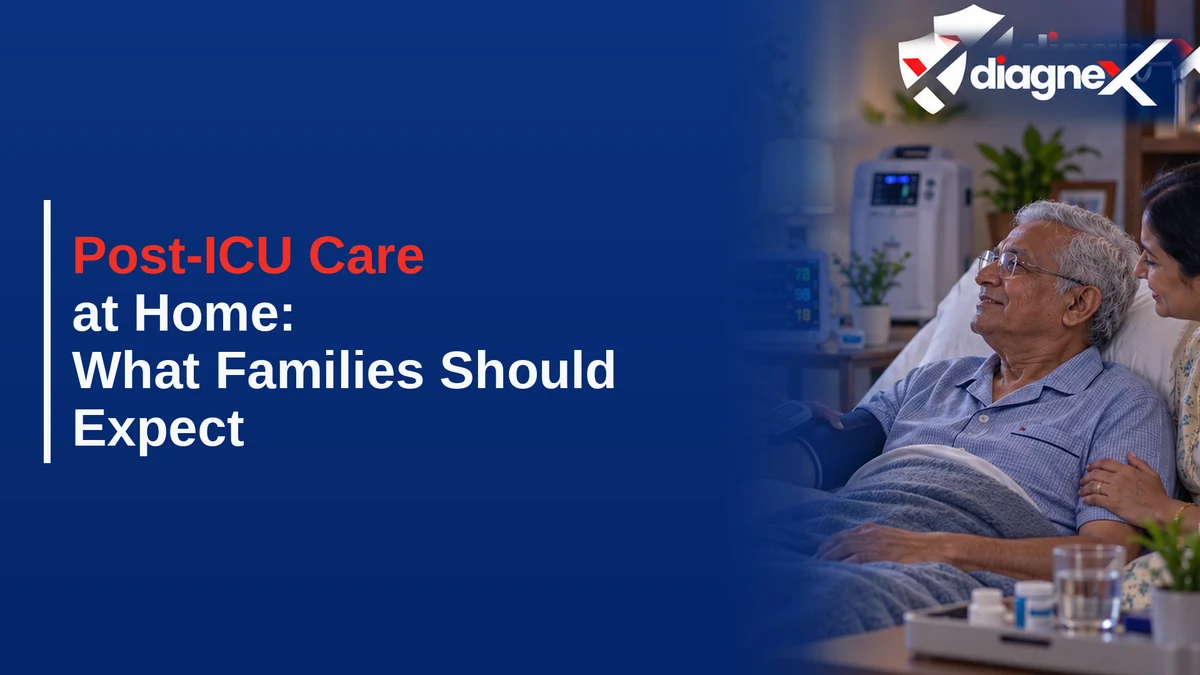
Post-ICU Care at Home: What Families Should Expect explains why physical, cognitive and emotional recovery may continue well after hospital discharge.
Rehabilitation Should Match Respiratory Reserve
Rehabilitation may include bed mobility, transfers, walking, breathing exercises, strengthening and pacing.
The intensity should reflect oxygen requirements, ventilator use, heart rate, blood pressure and symptoms.
A patient who becomes severely breathless, dizzy or unstable during exercise should stop and follow the escalation plan rather than being pushed through the session.
Home Nursing May Be Needed
Skilled nursing may be required for oxygen, NIV, ventilator care, tracheostomy care, suction, feeding tubes, medicines, glucose checks, catheters or other clinical tasks.
Home Nursing may be relevant when these needs continue after discharge.
The number of nursing hours should match the patient's respiratory dependency and device burden.
Not Every Patient Needs 24-Hour Nursing
A patient using stable nocturnal NIV may need less nursing than someone dependent on a ventilator throughout the day.
Another patient may need scheduled nursing visits plus trained family support.
Staffing should be reassessed as the patient's respiratory condition, mobility and independence change.
Home Equipment Should Match the Respiratory Prescription
Possible equipment may include an oxygen concentrator, backup cylinder, pulse oximeter, NIV device, ventilator, suction machine, nebuliser, hospital bed, feeding pump, wheelchair or commode.
Not every patient needs all of these devices.
The equipment list should come from the clinical plan rather than from a generic home ICU package.
Power Backup Is Part of Respiratory Safety
Ventilators, oxygen concentrators, suction machines and feeding pumps may depend on electricity.
The home plan should identify which devices are essential, their battery duration and what happens if power fails.
A ventilator-dependent patient should not be discharged to a setting without a realistic backup-power and emergency-transfer plan.
Oxygen Equipment Requires Fire Safety
Smoking and open flames are dangerous around oxygen equipment.
The household should follow the oxygen supplier's safety instructions, keep equipment away from ignition sources and make sure all regular caregivers understand the risk.
Oxygen safety is part of home respiratory care, not a separate household issue.
Monitoring Should Include the Patient, Not Just the Numbers
Families may focus heavily on oxygen saturation, but symptoms and behaviour are equally important.
Respiratory rate, work of breathing, ability to speak, alertness, colour, secretion burden and tolerance of usual activity can all provide useful information.
A patient who looks clinically worse should be assessed even when a monitor reading has not changed dramatically.
Specialist Follow-Up Should Reassess Oxygen and Ventilation
Respiratory support needs can change after an acute illness or during progression of chronic disease.
The treating respiratory team should decide when oxygen, NIV or ventilator requirements are reassessed. Depending on the condition, this may involve pulse oximetry, blood gases, device downloads, sleep studies or other respiratory tests. For care planning beyond this article, compare bedridden patient care at home with the instructions already given by the treating professional.
Families should not discontinue established support or continue temporary support indefinitely without review.
Every Home Respiratory Plan Needs an Escalation Pathway
The family and care team should know which hospital will receive the patient, how transport will be arranged and which symptoms require emergency action.
The pathway should cover worsening breathlessness, rising oxygen needs, altered consciousness, NIV or ventilator failure, airway problems and device malfunction.
Respiratory Care at Home is most useful when respiratory support is integrated with a clear clinical escalation plan.
When Should a Patient Return to Hospital?
Urgent hospital assessment is needed for: • severe or rapidly worsening breathlessness; • inability to speak normally because of breathlessness; • bluish lips or skin; • rapidly falling oxygen saturation or a rising oxygen requirement despite the prescribed plan; • new marked drowsiness, confusion or inability to wake normally; • chest pain, collapse or fainting; • severe wheezing, stridor or very quiet breath sounds with worsening distress; • repeated NIV or ventilator alarms with clinical deterioration; • suspected tracheostomy displacement or inability to clear the airway; • coughing blood; • failure of essential oxygen or ventilator equipment when safe support cannot be maintained; • any other major deterioration identified in the discharge or respiratory plan.
The patient's own emergency instructions should always take priority.
When Home Respiratory Care May No Longer Be Appropriate
Home care may no longer be safe if the patient develops acute respiratory acidosis, escalating ventilatory failure, repeated emergency deterioration, unstable circulation, severe infection or a need for hospital investigations and interventions that cannot be delivered at home.
It may also become unsafe if trained staff, backup oxygen, ventilator support, power or emergency transport cannot be maintained.
Returning to hospital when the patient's support needs exceed the home system is a safety decision, not a failure of care.
A Practical Respiratory Failure Care at Home Checklist
Before discharge, families can confirm: • The treating respiratory team agrees that home care is appropriate. • The cause and type of respiratory failure are documented. • The oxygen prescription and target range are written down. • The family understands that pulse oximetry does not measure carbon dioxide. • NIV or ventilator settings and hours of use are prescribed when relevant. • Tracheostomy, suction or secretion-clearance needs are clearly defined. • Respiratory medicines and rescue treatments are documented. • Nutrition and swallowing needs have been assessed. • Nursing competencies and shift coverage are confirmed. • Rehabilitation goals are coordinated with respiratory support. • Required equipment has been installed and tested. • Backup oxygen, power and ventilator supplies are available when essential. • Specialist follow-up is scheduled. • Emergency contacts and hospital-transfer arrangements are written down. • Family caregivers know which changes require immediate escalation.
How to Arrange Respiratory Failure Care at Home With Diagnex
To plan respiratory failure care at home, share the hospital discharge plan, underlying diagnosis, oxygen prescription, prescribed saturation target, recent blood-gas or carbon-dioxide history if available, NIV or ventilator prescription, tracheostomy status, secretion needs, medicines, feeding and swallowing status, mobility, nursing requirements, equipment needs, follow-up plan and locality.
Diagnex can review whether the requirement fits Home ICU, Respiratory Care at Home, Home Nursing or another appropriate care pathway based on the treating team's plan and the patient's current stability. Exact staffing, equipment and service availability are confirmed for the specific locality and clinical requirement.
For service coordination, use the Diagnex Contact page.
Frequently asked questions
Can respiratory failure be managed at home?
Selected stable patients can receive long-term or step-down respiratory support at home when the treating team has defined the oxygen, ventilation, monitoring, nursing, equipment and emergency plan. New or worsening respiratory failure still requires urgent hospital assessment.
What is the difference between oxygen and BiPAP?
Oxygen increases the amount of oxygen delivered to the patient. BiPAP or other NIV provides pressure support to improve ventilation and can help remove carbon dioxide in selected patients.
Can BiPAP be used at home?
Yes. Long-term home NIV is used in selected patients with chronic ventilatory failure, including some people with COPD, obesity hypoventilation, neuromuscular disorders and chest-wall disease. It should be specialist prescribed.
Does a normal oxygen saturation mean carbon dioxide is normal?
No. Pulse oximetry does not measure carbon dioxide or blood pH. Drowsiness, confusion, headache or worsening breathing may need clinical assessment and blood-gas testing.
Can a ventilator-dependent patient live at home?
Selected stable patients can live at home with long-term mechanical ventilation when specialist oversight, trained caregivers or nurses, reliable equipment, power backup and an emergency plan are in place.
When is a nurse needed for respiratory failure care at home?
Nursing may be needed for oxygen, NIV or ventilator care, tracheostomy care, suction, medicines, feeding tubes, catheters, clinical monitoring or other defined skilled tasks.
When should a patient receiving respiratory support at home return to hospital?
Severe worsening breathlessness, bluish lips or skin, rising oxygen needs, marked drowsiness or confusion, chest pain, collapse, airway problems or ventilator failure with clinical deterioration should trigger urgent hospital escalation.
References and further reading
This article provides general education and does not replace a pulmonologist, respiratory physician, intensivist or hospital discharge plan. Clinical points were cross-checked against the British Thoracic Society 2024 Model of Care for Complex Home Mechanical Ventilation, current BTS home-oxygen guidance and quality standards, the American Thoracic Society home-oxygen guideline and current NICE guidance on non-invasive respiratory support in acute respiratory failure.
Related Diagnex services and guides
Explore the Home ICU service pathway and the Home ICU article library for more information.
Diagnex publishes general healthcare information to support care planning. Individual decisions about diagnosis, prescriptions and treatment remain with the treating professional. Read our medical content policy and editorial standards.