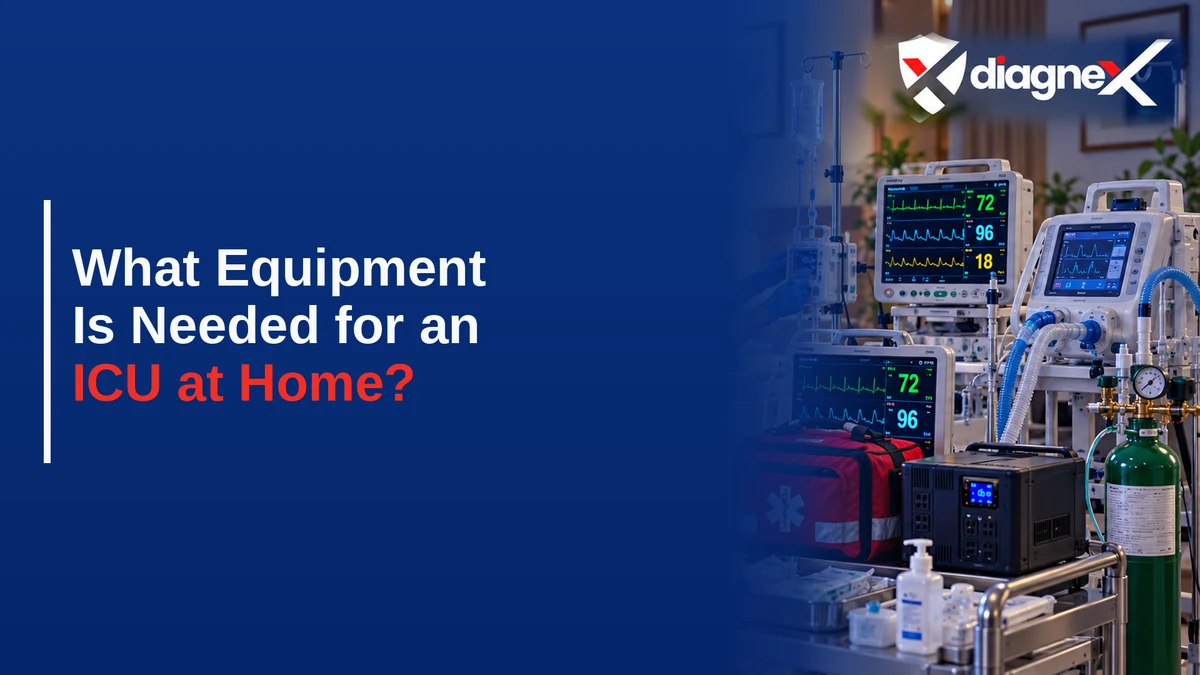
Setting up an ICU at home may involve equipment for monitoring, oxygen support, respiratory care, medication delivery, patient positioning and other clinical needs. However, there is no single home ICU equipment list that every patient requires. The equipment needed should be decided after assessing the patient's medical condition, level of dependency, prescribed treatment, monitoring requirements and the support that will be available at home. A patient who requires oxygen and regular vital-sign monitoring, for example, may need a very different setup from someone who requires ventilatory support or multiple intravenous medicines. For families preparing for advanced care at home, understanding the main categories of ICU equipment at home can make discussions with the treating doctor and care team easier.
Is There a Standard Home ICU Equipment List?
No. A home ICU should be built around the patient rather than around a fixed package of equipment. The required setup may depend on factors such as: Some patients may need only a limited number of medical devices. Others may require a more extensive critical-care setup. The treating doctor and clinical team should therefore determine which equipment is clinically necessary before the patient is transferred home.
- The patient's diagnosis and current condition
- Whether the patient can breathe independently
- Oxygen requirements
- Level of consciousness
- Ability to eat or swallow safely
- Need for intravenous medicines
- Mobility and positioning requirements
- Frequency of clinical monitoring
- Nursing requirements
- Risk of sudden deterioration
Common Equipment Used in an ICU at Home
1. Hospital or ICU Bed
A medical bed is often one of the most important parts of a home ICU. Unlike a normal household bed, an adjustable medical bed can help healthcare professionals change the patient's position for comfort, nursing care, feeding and respiratory management. Depending on the patient's needs, a medical bed may allow adjustment of: Some beds may also include side rails or other safety features. For patients with limited mobility or those requiring prolonged bed rest, positioning requirements should be discussed with the clinical team.
- Head position
- Leg position
- Bed height
- Overall patient positioning
2. Patient Monitoring Equipment
Monitoring equipment allows healthcare professionals to observe important physiological parameters and identify changes that may require clinical attention. Depending on the patient's condition, monitoring equipment may include a multiparameter monitor capable of displaying parameters such as: The exact parameters that need to be monitored should be determined by the treating team. Continuous monitoring is not necessary for every patient receiving advanced care at home.
- Heart rate
- Blood pressure
- Oxygen saturation
- Respiratory rate
- Other clinically required measurements
3. Pulse Oximeter
A pulse oximeter measures oxygen saturation in the blood and usually displays the patient's pulse rate as well. It is commonly used when oxygen levels require observation, particularly in patients with respiratory or cardiac conditions. However, families should avoid making treatment decisions based only on an isolated pulse-oximeter reading. Measurements should be interpreted in the context of the patient's condition and the clinical instructions provided by the healthcare team.
4. Oxygen Concentrator
An oxygen concentrator may be used when a patient has been prescribed supplemental oxygen. The machine takes in surrounding air and provides concentrated oxygen through an appropriate delivery system. The required oxygen flow and delivery method should be prescribed by the treating doctor. Families should not independently increase or decrease oxygen settings unless they have been specifically instructed to do so by the clinical team.
5. Oxygen Cylinders
- Electricity failure
- Equipment malfunction
- Patient transport
- Increased oxygen requirements during a clinically directed situation
6. Ventilator
Some patients who cannot maintain adequate breathing independently may require mechanical ventilatory support. A ventilator assists or supports breathing according to prescribed settings. Home ventilation is a complex form of care and requires careful patient selection, appropriate equipment, trained professionals and a clear emergency escalation plan. A ventilator should never be included simply because a family is creating an ICU-like room. It is required only when clinically indicated.
7. Non-Invasive Ventilation Equipment
Some patients may require non-invasive respiratory support instead of invasive mechanical ventilation. Depending on the condition and prescription, this can include devices used to provide positive airway pressure through a mask or similar interface. The specific device, settings and monitoring requirements should be determined by a qualified treating team. These devices should not be started or adjusted without appropriate clinical guidance.
8. Suction Machine
A suction machine may be required for patients who have difficulty clearing secretions independently. Depending on the patient's condition, suction may be needed for oral secretions, airway care or other clinically indicated purposes. The healthcare team should establish: Airway suctioning should be carried out by appropriately trained people.
- When suction should be performed
- Appropriate technique
- Required consumables
- Infection-prevention precautions
- When changes in secretions require medical attention
9. Nebuliser
A nebuliser converts prescribed liquid medication into a mist that can be inhaled. It may be included in a home ICU setup when nebulised medicines form part of the patient's treatment plan. The medicine, dose and frequency should follow the treating doctor's prescription. A nebuliser is not required simply because a patient is receiving oxygen or respiratory monitoring.
10. Infusion Pump
An infusion pump delivers fluids or medicines at a controlled rate. It may be required when treatment needs to be administered continuously or with precise control. Infusion pumps may be used for certain: The type of infusion pump and its programming should be determined by qualified healthcare professionals.
- Intravenous medicines
- Fluids
- Other prescribed therapies
11. Syringe Pump
A syringe pump is designed to administer relatively small quantities of medication in a controlled manner. It may be required when medicines need precise dosing over a specific period. Because incorrect programming can lead to significant medication errors, syringe pumps should be operated according to the prescribed treatment plan by trained healthcare professionals.
12. Feeding Equipment
Some critically ill or dependent patients may be unable to eat normally. Depending on the patient's condition, nutritional support may involve feeding through a prescribed feeding route. Required equipment and consumables can vary considerably and may include items associated with: The patient's nutrition plan should be determined by the treating healthcare professionals.
- Enteral feeding
- Feeding tubes
- Syringes
- Feeding containers or sets
13. Pressure-Relieving Mattress
Patients who spend long periods in bed may be at risk of pressure-related skin injury. A pressure-relieving or specialised mattress may sometimes form part of the care plan for patients with restricted mobility. Mattresses alone do not eliminate this risk. Appropriate repositioning, skin assessment, nutrition and nursing care may also be required. The right mattress should be selected according to the patient's mobility and clinical risk.
14. Patient Transfer and Mobility Equipment
- Wheelchair
- Walker
- Transfer aids
- Commode
- Appropriate patient-support devices
15. Medical Consumables
- Gloves
- Syringes
- Dressings
- Gauze
- Masks
- Feeding supplies
- Suction consumables
- Catheter-related supplies
- Tubing
- Cleaning materials
- Other procedure-specific items
16. Medication Storage and Organisation
- Prescribed medicines
- Dose
- Route of administration
- Timing
- Storage requirements
17. Backup Power
Medical equipment may depend on continuous electricity. Before a patient moves home, the care team should identify which devices cannot safely stop operating during a power interruption. Backup arrangements may include an appropriate combination of: The appropriate solution depends on the devices being used and the patient's dependence on them. Power backup is particularly important when essential respiratory or monitoring equipment requires uninterrupted electricity.
- Device battery backup
- Inverter
- UPS
- Generator or building backup power
Home ICU Equipment List by Purpose
Patient Positioning
- Adjustable medical bed
- Appropriate mattress
- Positioning aids
Monitoring
- Multiparameter monitor
- Pulse oximeter
- Other prescribed monitoring devices
Oxygen and Respiratory Support
- Oxygen concentrator
- Oxygen cylinders
- Oxygen delivery accessories
- Ventilator where clinically indicated
- Non-invasive ventilation equipment where prescribed
- Nebuliser
- Suction machine
Medicine and Fluid Delivery
- Infusion pump
- Syringe pump
- IV-related supplies
Nutrition and Daily Care
- Feeding equipment
- Mobility or transfer aids
- Hygiene supplies
- Other patient-specific consumables
Does Every Home ICU Need a Ventilator?
No. One of the most common misconceptions is that a home ICU must contain a ventilator. Home ICU or advanced care at home can involve different levels of medical support. Some patients may require oxygen therapy, nursing care and regular monitoring without requiring invasive ventilation. Others may require considerably more complex respiratory support. Whether ventilation is necessary is a clinical decision based on the patient's respiratory condition and treatment requirements.
Should Families Buy ICU Equipment Before Discharge?
Usually, equipment planning should begin only after the patient's home-care requirements have been assessed. Purchasing equipment too early can result in families arranging devices that are unnecessary, unsuitable or incompatible with the patient's actual care plan. Before arranging equipment, families should ideally confirm: The objective should be to create the right clinical setup rather than the largest possible setup.
- Which devices are required
- Required specifications
- Whether continuous or intermittent use is expected
- Electricity requirements
- Backup requirements
- Consumables required for each device
- Who will operate the equipment
- Maintenance and servicing arrangements
- What should happen if equipment fails
Is Medical Equipment Enough to Create an ICU at Home?
No. Equipment is only one part of home-based critical or advanced care. Depending on the patient's needs, safe care may also require: A room filled with ICU equipment does not by itself provide appropriate critical care. The equipment, professionals and clinical plan must work together.
- Clinical assessment
- Treating-doctor involvement
- Skilled nursing
- Medication management
- Monitoring protocols
- Documentation
- Infection-prevention practices
- Equipment support
- Backup power
- Emergency escalation arrangements
- Hospital-transfer planning
Questions to Ask Before Finalising Home ICU Equipment
- Which equipment is essential for this patient?
- Which equipment is optional rather than clinically necessary?
- What parameters need to be monitored?
- Does the patient require continuous oxygen?
- Is respiratory support required?
- Which equipment must remain operational during a power failure?
- What backup equipment is required?
- Which devices require trained professional operation?
- What consumables should always remain in stock?
- Who should be contacted if equipment develops a problem?
- What change in the patient's condition should trigger hospital transfer?
Choosing the Right Home ICU Setup
The best home ICU equipment list is not necessarily the longest one. A well-planned setup contains the equipment that is clinically appropriate for the patient's current needs, supported by professionals who understand how to use it and by clear arrangements for monitoring and escalation. The patient's requirements may also change over time. Equipment needs should therefore be reviewed when the clinical condition or treatment plan changes. Families considering home-based advanced care can contact Diagnex to understand the assessment and care-planning process and discuss appropriate next steps, subject to the patient's clinical suitability and service availability.
Frequently Asked Questions
What equipment is required for an ICU at home?
The equipment required depends on the patient's condition. A setup may include a medical bed, monitoring equipment, oxygen support, suction equipment, infusion devices, feeding equipment or respiratory-support devices. The final list should be determined by the treating clinical team.
What is the most important equipment in a home ICU?
There is no single piece of equipment that is most important for every patient. Equipment should correspond to the patient's clinical needs. For one patient, oxygen and monitoring may be central; for another, ventilation or infusion therapy may be required.
Is an oxygen concentrator necessary for every home ICU?
Is a ventilator required for an ICU at home?
No. Ventilators are required only for patients who clinically need ventilatory support. Many patients receiving advanced care at home do not require mechanical ventilation.
What monitoring equipment is used in a home ICU?
Do home ICU devices require backup power?
Can families operate ICU equipment themselves?
Some simple devices may be used by family members after appropriate instruction. More complex equipment and procedures should be managed by trained healthcare professionals. Families should clearly understand what they are expected to do and what requires professional support.
Can ICU equipment be arranged in a normal bedroom?
SEO Details
SEO Title: Home ICU Equipment List: What Equipment Is Needed at Home? Meta Description: What equipment is needed for an ICU at home? Understand the home ICU equipment list, including medical beds, monitors, oxygen, ventilators, suction and infusion equipment. Primary Keyword: home ICU equipment list Secondary Keywords: ICU setup equipment list, ICU equipment at home, home ICU setup Suggested URL: /blog/what-equipment-is-needed-for-an-icu-at-home