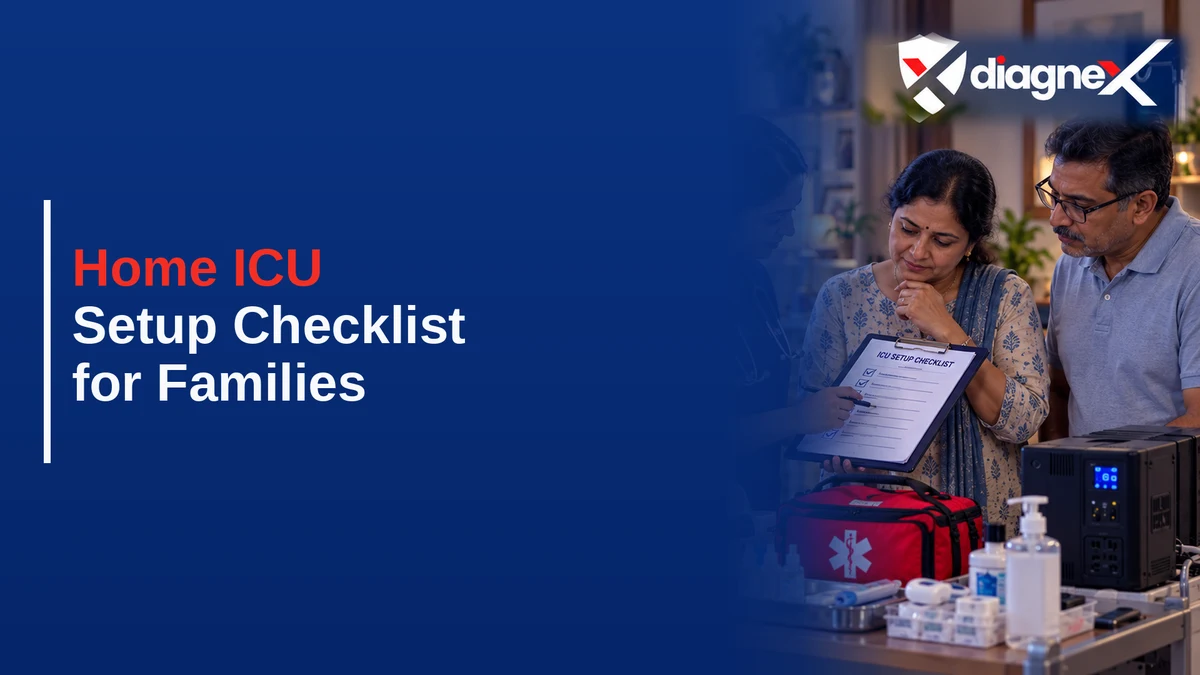
Setting up an ICU at home involves much more than bringing medical equipment into a bedroom. The home environment must be assessed for safety, space, power supply, infection control, accessibility and the level of monitoring the patient requires. The exact setup should always be planned around the patient's clinical condition and the treating doctor's recommendations. For families considering advanced care at home, a structured home ICU safety checklist can make the preparation process easier and help identify practical issues before the patient is transferred from the hospital. This guide explains the main areas families should review when preparing for a home ICU.
What Is Required to Set Up an ICU at Home?
A home ICU generally combines an appropriate room, medically required equipment, trained healthcare professionals, monitoring systems and a clear care plan. The exact requirements vary significantly between patients. Someone who requires oxygen and regular monitoring may need a very different setup from a patient requiring ventilatory support, continuous monitoring or complex nursing care.
- The patient's current medical condition
- Level of respiratory or monitoring support required
- Nursing requirements
- Mobility and positioning needs
- Medication and nutrition requirements
- Home environment and accessibility
- Electrical and backup power requirements
- Emergency escalation plan
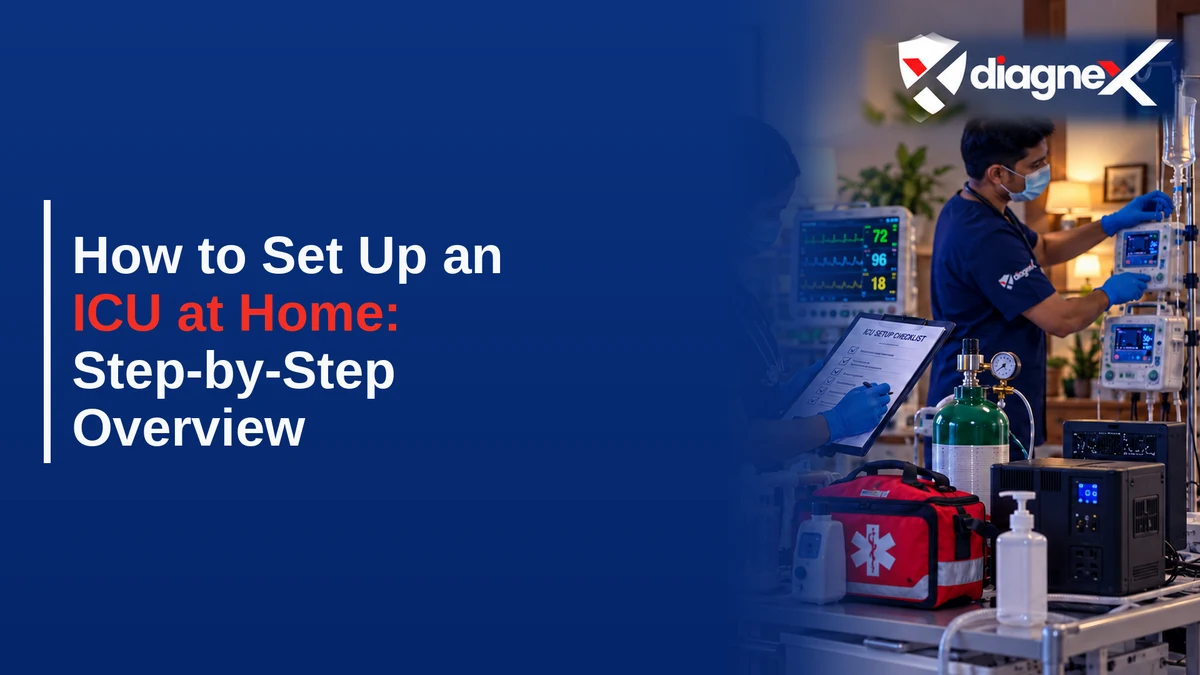
Home ICU Setup Checklist
1. Clinical Assessment Before Discharge
The first step is determining whether care at home is appropriate for the patient's condition. A treating doctor or qualified clinical team should evaluate whether the patient's medical requirements can be managed safely outside the hospital. Important questions include: The decision to move from hospital ICU care to a home ICU should be clinically led rather than based only on convenience or cost.
- Is the patient's condition sufficiently stable for home-based care?
- What level of nursing supervision is required?
- What monitoring parameters need to be tracked?
- Which medical devices will be required?
- What complications should the family watch for?
- What situations require immediate hospital transfer?
2. Choose the Right Room
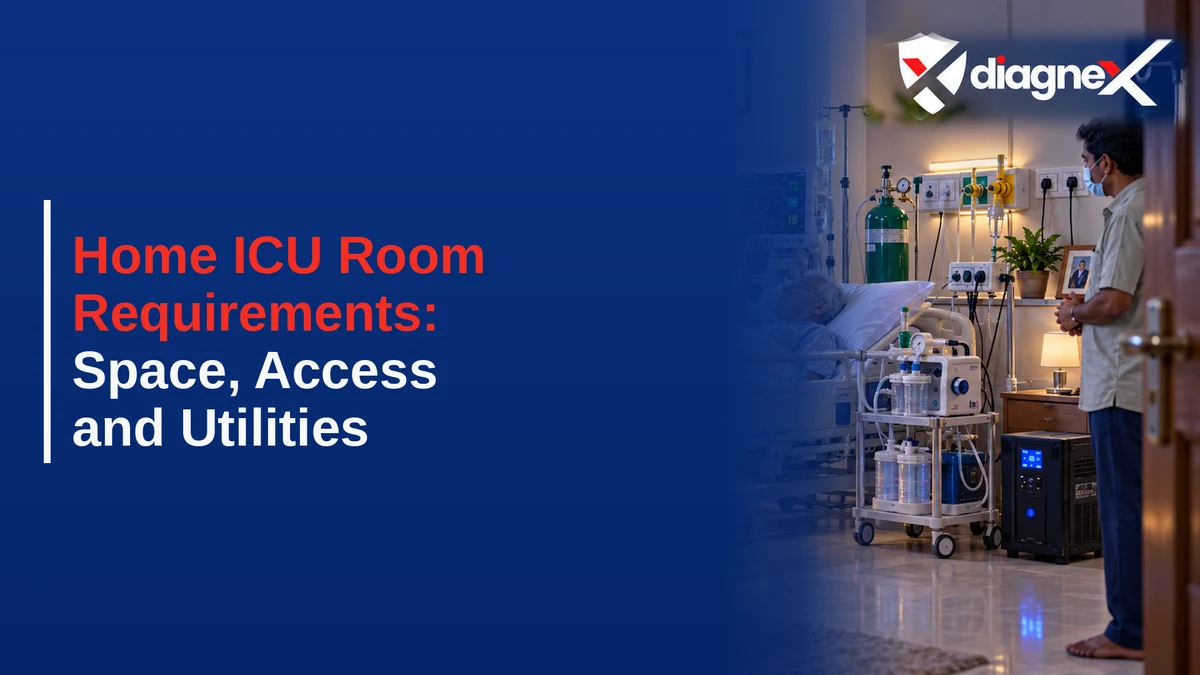
The room becomes the centre of the patient's care environment, so adequate space and accessibility matter. Ideally, the room should allow enough space around the patient's bed for nurses and other healthcare professionals to work safely. The room should also accommodate necessary medical equipment without creating unnecessary clutter. Important home ICU room requirements may include: If possible, the room should be located where transferring the patient to an ambulance can be managed without major obstacles.
- Adequate space around the patient's bed
- Good ventilation
- Appropriate lighting
- Easy access to electrical sockets
- Space for medical equipment
- Cleanable surfaces
- Easy access for caregivers and healthcare professionals
- Sufficient doorway width for equipment or patient movement where required
3. Arrange the Appropriate Medical Bed
Many home ICU patients require a medical or hospital-style bed rather than a standard household bed. Depending on the patient's condition, the bed may need to support adjustments in: Side rails or other safety features may also be appropriate in some cases. Correct positioning can be important for comfort, nursing care and prevention of complications, particularly for patients with limited mobility. The appropriate bed should be selected based on the patient's clinical and mobility needs.
- Head elevation
- Leg position
- Overall height
- Patient positioning
4. Identify the Required ICU Equipment
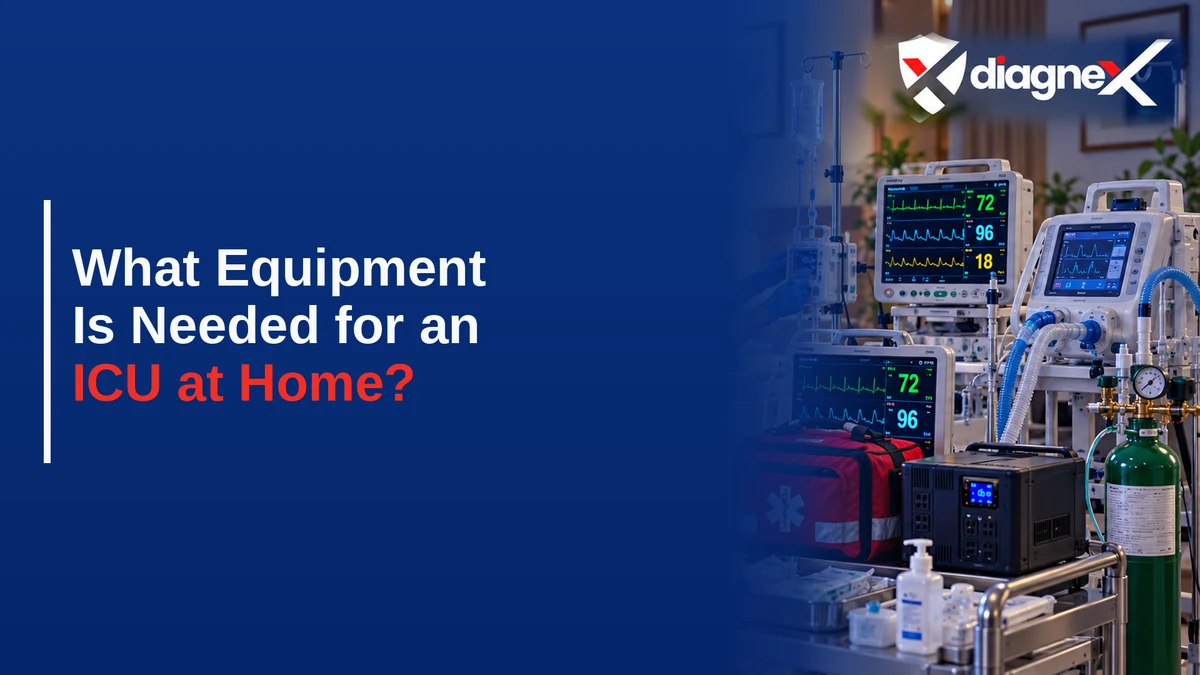
There is no single standard ICU equipment list that applies to every patient. The patient's doctor and clinical team should determine what equipment is necessary. Depending on the condition, equipment used in home-based critical or advanced care may include: Some patients may require more advanced respiratory or medical support. Equipment such as ventilators or other critical-care devices should only be arranged when clinically indicated and should be operated or supervised by appropriately trained professionals.
- Oxygen delivery equipment
- Oxygen concentrator or cylinders where prescribed
- Multiparameter patient monitor
- Pulse oximeter
- Suction equipment
- Nebulisation equipment
- Infusion or syringe pumps
- Feeding equipment
- Mobility or positioning aids
5. Check Electrical Capacity and Backup Power
Medical equipment may depend on continuous electricity. Before the patient is transferred home, the power requirements of the planned equipment should therefore be assessed. Families should confirm: The healthcare and equipment teams should explain how long individual devices can operate during a power interruption and what backup arrangements are necessary. For patients dependent on powered life-support equipment, contingency planning becomes especially important.
- Whether sufficient electrical sockets are available
- Whether the electrical load is appropriate
- Whether extension cables can be avoided
- Which devices require uninterrupted electricity
- What backup power arrangement is required
6. Plan Oxygen Supply Carefully
If oxygen therapy has been prescribed, the oxygen requirement should be planned according to the patient's clinical needs. The care team should determine: Oxygen equipment should be stored and used according to appropriate safety instructions. Families should also understand that oxygen is a prescribed medical therapy. Flow settings or delivery methods should not be altered independently unless the treating team has specifically instructed them to do so.
- Prescribed oxygen delivery method
- Required flow
- Primary oxygen source
- Backup oxygen availability
- Monitoring requirements
7. Prepare for Infection Prevention
A home does not need to resemble a hospital, but the immediate patient environment should be kept organised and hygienic. Useful practices may include: The exact infection-control precautions depend on the patient's condition and the devices being used. Families should receive clear instructions from the clinical team rather than attempting to create an excessively sterile household environment.
- Regular hand hygiene
- Keeping the care area clean
- Proper disposal of medical waste
- Cleaning equipment according to instructions
- Limiting unnecessary handling of medical devices
- Following wound, catheter or line-care protocols provided by healthcare professionals
8. Ensure Adequate Nursing and Clinical Support
Medical equipment alone does not create an ICU. Many patients requiring advanced care at home need trained nursing professionals who can provide clinical observation, administer prescribed treatment and identify changes in the patient's condition. Depending on the care plan, responsibilities may include: The required level and duration of nursing supervision should be determined by the patient's clinical needs.
- Monitoring vital signs
- Medication administration
- Positioning and personal care
- Feeding support
- Oxygen or respiratory support
- Catheter or tube care
- Documentation of clinical observations
- Communication with the treating doctor
9. Organise Medicines and Consumables
Home ICU care can involve multiple medicines and medical consumables. Before discharge, families should understand which supplies need to remain available. These may include prescribed medicines as well as items such as: Stock levels should be reviewed regularly so that essential supplies do not unexpectedly run out. Medication schedules should remain clearly documented and should follow the treating doctor's prescription.
- Syringes
- Gloves
- Dressings
- Feeding supplies
- Suction consumables
- Catheter-related supplies
- Masks or respiratory accessories
- Cleaning and hygiene materials
10. Create an Emergency Escalation Plan
Every home ICU setup should have a clear plan for situations that cannot be safely managed at home. Families should know: Important medical documents should also remain accessible. These may include the discharge summary, medication list, investigation reports, treatment plans and relevant medical history.
- Which clinical changes require immediate attention
- Who should be contacted first
- When the treating doctor should be informed
- When emergency medical services should be called
- Which hospital the patient should be transferred to if required
- How the patient would physically be moved from the home
11. Check Ambulance and Building Access
- Lift dimensions
- Staircase access
- Building entrance
- Stretcher accessibility
- Ambulance parking or approach
- Distance between the patient's room and building exit
12. Reduce Clutter Around the Patient
An ICU room can quickly become crowded when equipment, medicines and supplies are added. Families should keep unnecessary furniture and household items away from the immediate care area. The objective is to create enough working space for healthcare professionals while ensuring that essential equipment remains accessible. Cables, oxygen tubing and other equipment should also be positioned carefully to reduce the risk of accidental disconnection or falls.
13. Keep Clinical Records Organised
A simple documentation system can make communication between nurses, doctors and family members easier. Depending on the patient's care plan, records may include: Families should follow the documentation method recommended by the care team. Clear records can help clinicians understand how the patient's condition is changing over time.
- Vital signs
- Medication administration
- Fluid intake and output
- Feeding
- Symptoms
- Oxygen requirements
- Nursing observations
- Doctor instructions
14. Understand the Family's Role
- Who is responsible for each part of the care plan
- What the nurse will manage
- What family members may safely assist with
- What changes should be reported
- Whom to contact with questions
- What should never be adjusted without clinical advice
Final Home ICU Safety Checklist
- Clinical suitability for home care has been assessed
- Treating doctor's instructions are documented
- Suitable room has been prepared
- Required medical bed is available
- Prescribed medical equipment has been installed
- Oxygen requirements have been arranged where applicable
- Electrical requirements have been checked
- Backup power has been planned where necessary
- Nursing support has been arranged
- Medicines and consumables are available
- Infection-prevention instructions are understood
- Emergency contacts are accessible
- Hospital transfer plan is established
- Ambulance and building access have been reviewed
- Family responsibilities are clearly understood
A Home ICU Should Be Planned Around the Patient
The most important principle when preparing a home ICU is that the setup should follow the patient's clinical requirements. A long equipment list does not necessarily mean better care. What matters is having the appropriate equipment, trained professionals, monitoring, clinical supervision and escalation pathways for that particular patient. Diagnex provides Home ICU / Advanced Care at Home as part of its broader coordinated healthcare model. Families exploring home-based advanced care can speak with the Diagnex team to understand the assessment and care-planning process and determine the appropriate next steps.
Frequently Asked Questions
What equipment is needed for an ICU at home?
The equipment required depends on the patient's condition and prescribed care plan. It may include a medical bed, oxygen equipment, patient monitoring devices, suction equipment, infusion pumps or other clinically required devices. A healthcare professional should determine the final equipment list.
What are the basic home ICU room requirements?
Does every home ICU require a ventilator?
No. Home ICU or advanced care at home covers patients with different levels of medical need. A ventilator is required only when clinically indicated and prescribed as part of the patient's treatment plan.
Is a normal bedroom suitable for an ICU at home?
Is nursing support required for a home ICU?
Who decides whether a patient can receive ICU care at home?
SEO Details
SEO Title: Home ICU Setup Checklist for Families: Room, Equipment & Safety Meta Description: Planning an ICU at home? Use this home ICU safety checklist to understand room requirements, equipment, power backup, nursing support and emergency planning. Primary Keyword: home ICU safety checklist Secondary Keywords: home ICU setup, ICU equipment list, home ICU room requirements Suggested URL: /blog/home-icu-setup-checklist-for-families