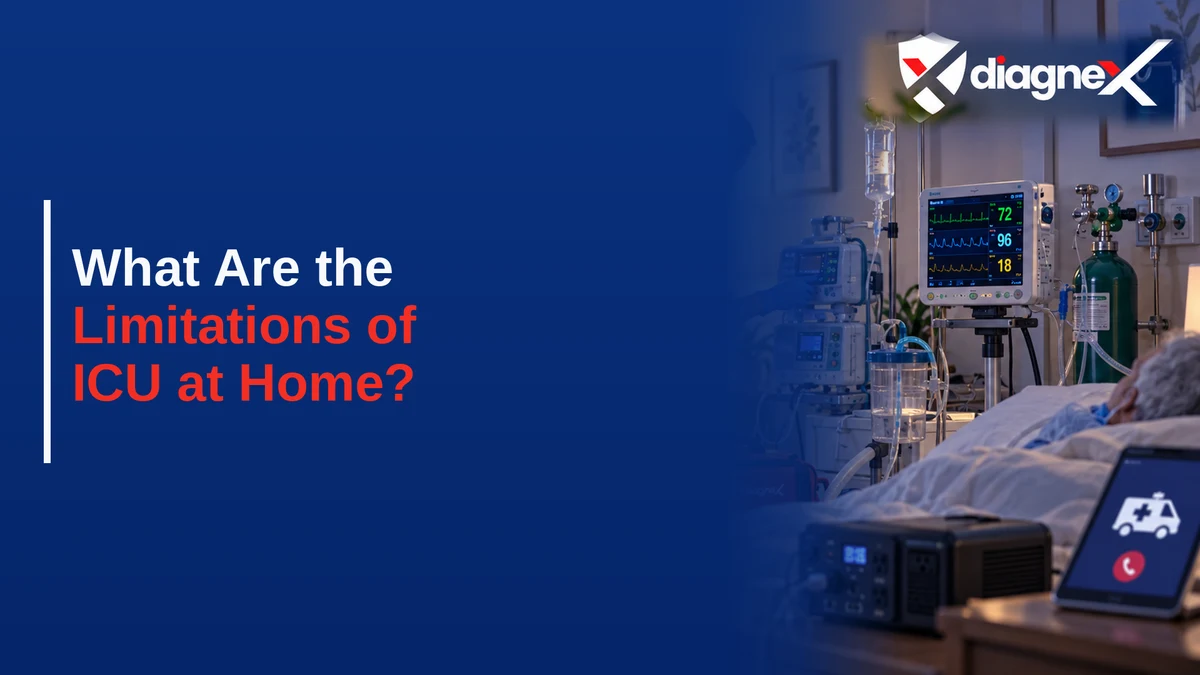
The main limitation of ICU at home is that a home cannot automatically reproduce the full hospital system around an intensive-care bed. A Home ICU can bring selected bedside capabilities into the patient’s residence - such as trained nursing, oxygen, stable ventilatory support, suction, monitoring, infusion equipment, wound or catheter care and repeated clinical procedures. For selected patients, this can be a practical and clinically appropriate way to continue advanced care outside hospital.
But home has real limits. Emergency response is slower. Imaging and laboratory testing are less immediately available. Specialist teams are not physically present around the clock. Equipment depends on domestic power and technical support. Staffing can be harder to sustain. Families may carry a significant coordination burden. And if the patient deteriorates, transfer back to hospital takes time.
Those limitations do not mean ICU at home is a poor option. They mean the benefits of home care only make sense when the patient is stable enough that these limitations are acceptable and a strong backup plan is in place. This guide explains the main disadvantages of ICU at home, which risks can be reduced through planning, which limitations should be treated as hard safety boundaries, and how families can compare the pros and cons before deciding.
Home ICU Pros and Cons: The Most Important Trade-Off
The right question is not: “Is Home ICU good or bad?” It is: “Which capabilities could this patient realistically need next, and can the home-care system provide them quickly enough?” For the direct comparison, see Home ICU vs Hospital ICU: What Families Should Compare.
1. Home ICU Cannot Reproduce the Full Hospital System
A hospital ICU is not only a bed, monitor and ventilator. NHS guidance describes ICU as a specialist hospital ward with specially trained staff and sophisticated monitoring and treatment equipment for patients who are very ill and need intensive treatment and close observation. Home ICU can reproduce selected bedside functions. It cannot automatically reproduce all of these surrounding capabilities. That difference becomes most important when the patient deteriorates unexpectedly.
- Emergency airway management
- Rapid laboratory testing
- CT, MRI and other imaging
- Blood bank access
- Operating theatres
- Specialist consultations
- Renal replacement therapy
- Advanced cardiovascular support
- Resuscitation teams
- Immediate escalation to another department
What This Limitation Means in Practice
A stable patient receiving long-term ventilatory support may do well at home under an established plan. A patient whose ventilation needs are changing rapidly may need immediate medical reassessment and diagnostics. A stable patient with an established tracheostomy may receive structured home care.
A patient with acute airway obstruction or severe bleeding may need emergency hospital intervention. The limitation is not the presence or absence of a particular device. It is the speed and depth of response available when something changes.
2. Emergency Response Is Slower at Home
In hospital ICU, a sudden deterioration happens inside a system already designed to respond. That delay may be acceptable for a stable patient with low likelihood of sudden deterioration. It may be unacceptable when: The airway is unstable. The patient has severe respiratory failure.
Blood pressure is unstable. Major bleeding is possible. The patient is having recurrent seizures. Emergency surgery may be needed. The patient may need immediate resuscitation or specialist intervention. For this reason, Home ICU should never be described as an emergency service. In India, call 112 or go to the nearest appropriate emergency facility when emergency care is required.
- The nurse recognising the change
- Calling the treating doctor or escalation contact
- Calling emergency services where needed
- Preparing the patient for transfer
- Waiting for transport
- Travelling to the receiving hospital
- Handover and reassessment after arrival
3. Urgent Diagnostics Are More Limited
Some tests can be arranged at home. A patient whose treatment changes depend on fast diagnostic results may not be a good candidate for Home ICU. A sample can sometimes be collected at home, but the logistics of transport, processing, result reporting and clinical action may still be slower than in hospital. The limitation is therefore not simply “tests are unavailable.” It is that turnaround and integration into treatment can be slower.
- Blood sample collection
- ECG
- Selected portable monitoring
- Some portable imaging
- Blood gases
- Electrolytes
- Complete blood counts
- Coagulation tests
- Cardiac biomarkers
- Cultures
- CT
- MRI
- Ultrasound
- Chest imaging
- Other urgent investigations
4. Specialist Availability Is Different
- Intensivists
- Physicians
- Anaesthetists
- Cardiologists
- Neurologists
- Nephrologists
- Surgeons
- Respiratory teams
- Other specialists
- The treating doctor
- Scheduled home visits
- Teleconsultation
- Phone review
- Specialist appointments
- Review of nursing updates
- Repeated specialist reassessment
- Rapid procedural decisions
- Immediate bedside specialist intervention
- Several specialties coordinating minute-to-minute treatment
5. Advanced Organ Support May Not Be Available at Home
- Oxygen therapy
- Non-invasive ventilation
- Mechanical ventilation
- Infusion therapy
- Monitoring
- Suction
- Airway care
But hospital ICU may provide additional organ support that is difficult or impractical to reproduce safely at home. A patient requiring rapidly escalating or multiple forms of organ support generally needs hospital ICU rather than a home setup. The availability of one ventilator at home should not be interpreted as proof that all critical-care needs can be managed there.
- Escalating vasopressor support
- Renal replacement therapy
- Advanced invasive haemodynamic monitoring
- Emergency pacing
- Complex blood-product support
- Multiple organ-support systems
- Rapid invasive procedures
6. Home Equipment Depends on Domestic Infrastructure
- Household electricity
- UPS
- Inverter
- Generator
- Device batteries
- Backup oxygen
- Internet or mobile connectivity for some remote-monitoring systems
- Local technical support
NHS England guidance on medical equipment for Hospital at Home and virtual wards emphasises the need to consider device reliability, battery life, power continuity, technical support, consumable supply and backup arrangements before home deployment. This is a major operational difference from a hospital, where central engineering and backup systems are built into the institution. The solution is not simply buying more equipment. The care plan needs a defined response to failure.
- Power failure
- Battery failure
- Oxygen concentrator failure
- Ventilator malfunction
- Suction-machine failure
- Monitor malfunction
- Infusion-pump failure
- Loss of connectivity
- Delayed technical support
7. Power Failure Can Become a Clinical Risk
For many households, a power cut is an inconvenience. it can become a clinical problem. MedlinePlus specifically advises home oxygen users to maintain backup oxygen because concentrators require electricity. A transfer plan if power cannot be restored. If the patient’s safety depends on electrical equipment and the home cannot provide reliable backup, Home ICU may be unsafe.
- Ventilator
- BiPAP
- Oxygen concentrator
- Suction machine
- Infusion pump
- Monitoring equipment
- Battery backup
- UPS or inverter
- Generator
- Backup oxygen cylinders
- Backup suction
- Known battery runtime
- Technical support contacts
8. Equipment Requires Maintenance and Technical Support
Home equipment does not remain safe indefinitely without maintenance. NHS England guidance for home-based acute care emphasises technical risk assessment, equipment support, user training, servicing, incident management and supply resilience. Is technical support available at night?
Which device needs backup? Who tracks servicing dates? Who supplies replacement consumables? A machine that works today can still become tomorrow’s weak point if the support system is unclear.
- Preventive servicing
- Calibration
- Filter replacement
- Battery checks
- Ventilator circuit changes
- Oxygen equipment servicing
- Sensor replacement
- Alarm checks
- Infusion-pump maintenance
- Cleaning and disinfection
- Who services the equipment?
- How quickly can a failed device be replaced?
9. Consumables Can Become a Hidden Operational Risk
- Suction catheters
- Ventilator circuits
- Filters
- Syringes
- IV tubing
- Cannulas
- Dressings
- Gloves
- Catheter supplies
- Feeding sets
- Oxygen accessories
- Monitoring probes
- Stock tracking
- Reordering
- Emergency backup
- Storage
- Expiry control
- Cold-chain items where relevant
- Public holidays
- Night-time emergencies
- Supply shortages
- Location-specific availability problems
- The home setting transfers more of this logistics burden away from a hospital supply system
10. Staffing Can Be Harder to Sustain
A Home ICU is only as reliable as the professionals actually available. A hospital ICU usually has a larger staffing pool within the same institution. At home, staffing resilience has to be created deliberately. Families should ask not only who the assigned nurse is, but also: What happens if that person is unavailable?
- 12-hour nursing
- 24-hour nursing cover
- Critical-care experienced nurses
- Respiratory support expertise
- Physiotherapy
- Doctor review
- Equipment technicians
- Last-minute nurse absence
- Difficulty finding replacements
- Variable experience between nurses
- Night-shift availability
- Travel delays
- Locality limitations
- High dependence on one or two key professionals
11. Nursing Skill May Vary Between Providers
“Home ICU nurse” is not one standardised level of experience across all providers. may need a different nursing competency from a patient who needs stable oxygen, wound care and medication administration. The provider should match staff experience to the patient’s actual needs. The limitation is not that home nurses are inherently less capable. It is that the hospital environment more routinely concentrates specialised critical-care teams, whereas home care depends on the provider’s ability to recruit and schedule appropriate professionals.
- Ventilator
- Tracheostomy
- Central line
- Multiple infusion pumps
- Complex neurological monitoring
- Frequent suction
12. Shift Handover Can Become a Weak Point
Twenty-four-hour home nursing usually involves multiple shifts. Every shift change creates a risk that information is lost. A Home ICU provider should have a clear handover and documentation system rather than relying on verbal memory.
- Current oxygen or ventilator support
- Latest vital signs
- Medicines given
- IV infusions
- Fluid balance
- Urine output
- Airway or secretion changes
- Wound findings
- Device issues
- Doctor instructions
- Pending tests
- Recent deterioration
- Duplicate medicines
- Missed medicines
- Delayed escalation
- Conflicting instructions
- Repeated questions to the family
- Loss of important clinical trends
13. Family Burden Can Be Significant
One of the most important disadvantages of ICU at home is that care moves into the family’s living space. Research on home mechanical ventilation has repeatedly identified substantial caregiver burden, including complex responsibilities, emotional strain, financial pressure and difficulty navigating support systems. A systematic review found that caregiver burden among families supporting home mechanical ventilation was generally high, although the evidence base was heterogeneous.
A 2026 qualitative meta-synthesis similarly found recurring challenges around technology adaptation, expanded caregiving responsibilities, unclear boundaries between professional and family roles, and gaps in support. Home may feel more personal. It can also make the family feel as though the hospital has moved into the house.
- Nursing shifts
- Doctor reviews
- Medicines
- Equipment
- Consumables
- Physiotherapy
- Laboratory visits
- Bills
- Emergency contacts
- Transport
- Night-time disruptions
14. The Home Can Lose Its Sense of Normality
- Hospital bed
- Monitor
- Ventilator
- Oxygen cylinders
- Suction equipment
- Infusion pumps
- Clinical waste
- Medicine storage
- Nursing staff
- Frequent professional visits
For long-term patients, this can change how the home feels. Children or pets needing to be kept away from equipment. A constant sense of medical vigilance. This trade-off is rarely captured in equipment brochures. Families should picture the daily reality of the setup, not only the discharge day.
- Loss of privacy
- Reduced use of a bedroom or living area
- Noise from alarms
- Interrupted sleep
- Frequent visitors
- Reduced space for other family members
15. Home ICU Can Be Expensive
Home ICU is often presented as a cheaper alternative to hospital ICU, but the real cost depends on the care package. For a stable long-term patient, the total may still be lower than prolonged hospital ICU care. But that is not guaranteed. A patient needing high-skill nursing, several devices, frequent doctor reviews and repeated hospital transfers may still have substantial monthly costs. Families should compare total care cost rather than one advertised equipment package. For the direct cost comparison, see Home ICU vs Hospital ICU: What Families Should Compare.
- 24-hour nursing
- Ventilator rental
- Oxygen
- Suction equipment
- Multiparameter monitor
- Infusion pumps
- Hospital bed
- Pressure-relieving mattress
- Doctor visits
- Physiotherapy
- Laboratory tests
- Medicines
- Consumables
- Equipment maintenance
- Backup oxygen
- Power backup
- Ambulance transport
- Care coordination
16. Costs Can Be Difficult to Predict
- Nursing hours increase
- Night coverage becomes necessary
- Oxygen use rises
- A ventilator is added
More consumables are required. A wound develops. New IV treatment starts. The patient needs more physiotherapy. Hospital transfers occur.
Equipment fails. Additional doctor reviews are needed. A quote based on the initial setup may therefore underestimate the cost of several weeks or months of care. The most useful budget is one that includes plausible changes, not only the best-case baseline.
- Fixed charges
- Variable charges
- Recurring monthly charges
- Deposits
- Equipment replacement costs
- Consumable estimates
- Night or emergency staffing charges
- Transport costs
- What happens when the clinical plan changes
17. Home ICU Does Not Eliminate Hospital Readmission
A patient can still need hospital care after a successful Home ICU discharge. Need for urgent diagnostics. Need for surgery. Need for more advanced organ support. The possibility of readmission is not evidence that Home ICU failed. It reflects the fact that a patient’s condition can change. The limitation is that families need to remain prepared for hospital transfer rather than assuming the move home is permanent.
- New infection
- Respiratory deterioration
- Airway complication
- Bleeding
- Seizure
- New stroke-like symptoms
- Device failure
18. Transfer Back to Hospital Takes Time
- Waiting for an ambulance
- Navigating traffic
- Building access
- Lift availability
- Moving a ventilated patient safely
- Finding the correct receiving facility
- Handover on arrival
- A receiving hospital identified
- An appropriate transport plan
- Emergency numbers available
- A clear decision threshold for transfer
- Required oxygen or ventilatory support for transport
19. Infection Control Is Harder to Standardise
Home may reduce exposure to a busy hospital environment, but infection-control systems are less standardised than in a hospital. CDC core infection-prevention guidance applies across healthcare settings, including the need for hand hygiene, safe injection practice, environmental cleaning and correct handling of reusable equipment. A poor home infection-control system can remove much of the theoretical advantage of leaving the hospital environment.
- Hand hygiene
- Medication preparation
- IV lines
- Urinary catheters
- Tracheostomy
- Ventilator circuits
- Wounds
- Suction equipment
- Reusable devices
- Sharps
- Clinical waste
- Nurse practice
- Caregiver understanding
- Supply quality
- Clean storage
- Equipment maintenance
- Waste disposal
20. The Family May See More but Understand Less
Home monitoring can make families more involved, but it can also create anxiety. Without clinical context, normal fluctuations can be alarming. More data is not automatically more safety.
- Oxygen saturation
- Heart rate
- Blood pressure
- Ventilator alarms
- Infusion-pump alarms
- Urine output
- Temperature
- Other readings
- Repeated calls
- Unnecessary changes
- Over-monitoring
- Poor sleep
- Constant vigilance
- Pressure on the nurse to react to every number
- Which readings matter
- What range is expected
- What trend requires a call
- What requires urgent transfer
21. Privacy Can Become More Difficult
Home ICU brings professional care into personal space. The home setting may feel more personal for the patient but less private for the household overall. Families should consider this before committing to a long-term setup.
- Day and night nurses
- Doctor visits
- Physiotherapists
- Equipment technicians
- Laboratory staff
- Delivery teams
- Care coordinators
- Privacy
- Sleep
- Household routines
- Use of rooms
- Visitors
- Children
- Pets
- Family relationships
22. Night-Time Care Can Be Harder Operationally
- Medication administration
- Ventilator monitoring
- Suction
- Oxygen checks
- Repositioning
- Catheter or feeding-tube care
- Alarm response
- Clinical observation
- Nurse cancellations
- Travel delays
- Lower staffing availability
- Greater caregiver dependency
- Family fatigue
23. Long-Term Home ICU Can Create Dependency on a Complex Care System
- One provider
- One nursing team
- Specific equipment
- One oxygen supplier
- One equipment vendor
- One care coordinator
- The provider changes staffing
- A nurse leaves
- The vendor stops servicing a device
- Prices change
- The family relocates
- Local availability changes
- Clear documentation
- Backup vendors where practical
- Defined equipment ownership
- Portable care records
- Alternative staffing pathways
24. Quality Can Vary Between Providers
- Nurse competency
- Doctor oversight
- Respiratory support
- Equipment quality
- Backup systems
- Emergency protocols
- Documentation
- Infection control
- Training
- Care coordination
- Local staffing reliability
- Who clinically owns the case?
- What nurse competencies are required?
- How are emergencies escalated?
- What backup equipment is included?
- What happens if a nurse is absent?
- How is equipment serviced?
- How are medicines and consumables managed?
- What hospital-transfer process exists?
25. Home ICU Can Blur the Boundary Between Clinical and Non-Clinical Care
- Clinical nursing
- Non-clinical assistance
- Bathing
- Toileting
- Feeding assistance
- Repositioning
- Companionship
- Routine mobility support
- Medication administration
- IV therapy
- Wound care
- Catheter procedures
- Tracheostomy-related care
- Clinical monitoring
- Assessment and escalation
- Pay for full-time nursing when an attendant plus short nursing visits would be enough
- Expect an attendant to perform invasive clinical tasks
- Assume every care need requires a critical-care nurse
- A clear division of roles makes Home ICU more sustainable
26. Rehabilitation Can Be Under-Prioritised
The presence of monitors, oxygen and ventilators can make families focus entirely on medical stability. Home ICU should not become a permanent “bed and machines” model when the patient is medically ready for rehabilitation. The care plan should include recovery goals, not only monitoring goals.
- Physiotherapy
- Mobility work
- Communication practice
- Swallowing rehabilitation
- Occupational therapy
- Pressure-area prevention
- Strength recovery
27. Over-Monitoring Can Continue After the Patient Improves
- Continuous multiparameter monitoring
- 24-hour nursing
- Several infusion pumps
- High oxygen support
- Some backup devices
- Cost
- Caregiver burden
- Patient dependence
- Alarm fatigue
- Complexity
28. The Home May Not Be Physically Suitable
- Very small room
- No lift
- Narrow staircase
- Poor ambulance access
- Unreliable electricity
- Insufficient ventilation
- Unsafe oxygen storage
- No clean clinical workspace
- Too little space around the bed
- No bathroom access
- Excessive clutter
29. Remote or Difficult-to-Reach Locations Can Increase Risk
Distance matters. may be harder to support safely. The same patient may be suitable in one location and unsuitable in another because the backup system is different. Locality should therefore be part of Home ICU assessment.
- Appropriate hospital
- Ambulance services
- Equipment technicians
- Qualified nurses
- Oxygen suppliers
- Laboratory support
30. Caregiver Burnout Can Change the Safety of the Setup
A Home ICU plan may begin with motivated family members. Caregiver burden is not merely a quality-of-life issue. It can affect patient safety. The care plan should be reassessed when family capacity changes.
- Sleep deprived
- Emotionally exhausted
- Financially stressed
- Less able to coordinate care
- Less confident handling equipment
- More likely to miss changes
31. Home ICU Can Create False Reassurance
- Ventilator
- Monitor
- Nurse
- Oxygen
- Infusion pump
The presence of this equipment can make a family feel that every emergency can be handled at home. That is dangerous. Home ICU should still have clear red flags for hospital transfer, and equipment should not delay escalation when urgent surgery or imaging may be needed.
- Severe breathing difficulty
- New major oxygen escalation
- Airway obstruction
- Loss of consciousness
- New stroke-like symptoms
- Uncontrolled bleeding
- A seizure
- Severe infection with deterioration
- Haemodynamic instability
32. Some Limitations Can Be Reduced With Good Planning
Power Risk
- UPS
- Inverter
- Generator
- Battery backup
- Backup oxygen
Staffing Risk
- A larger nursing pool
- Defined backup staff
- Competency matching
- Structured handover
Equipment Risk
- Maintenance
- Technical support
- Backup devices
- Stock planning
Caregiver Burden
- Attendant support
- Care coordination
- Respite
- Clear role boundaries
- Training
Transfer Risk
- Receiving hospital identified
- Appropriate ambulance pathway
- Defined red flags
- Transport support plan
33. Some Limitations Should Be Treated as Hard Safety Boundaries
- Is haemodynamically unstable
- Has rapidly worsening respiratory failure
- Needs emergency airway intervention
Needs escalating vasopressors or organ support. Has active major bleeding. Needs urgent surgery. Has uncontrolled seizures. Has new stroke-like symptoms.
Needs repeated urgent hospital diagnostics. Requires blood products or rapid invasive procedures. Has an unstable airway. Is deteriorating faster than home transfer can safely manage. For the detailed exclusion framework, see Who May Not Be Suitable for Home ICU Care?
34. Home ICU Is Not Always the Right Long-Term Model
A patient may initially need Home ICU after discharge. Or the patient may deteriorate and need hospital readmission. The care model should move with the patient. Home ICU should be a level of care, not an identity attached permanently to the patient.
- Ordinary home nursing
- Short procedure visits
- Physiotherapy
- Attendant care
- Palliative support
- Outpatient follow-up
A Practical Home ICU Pros and Cons Checklist
Before choosing Home ICU, families can compare the following. Clinical Is the patient stable? Are oxygen or ventilator needs predictable? Are major treatment changes still happening?
Is urgent hospital diagnostics still needed? Emergency How quickly can emergency care be reached? Which hospital will receive the patient? How will a ventilated or oxygen-dependent patient be transported?
Staffing How many nursing hours are required? Are nurses experienced with the devices? What happens if a nurse is absent? Who is the treating doctor?
Equipment Which devices are required? Which need backup? Who services them? What happens during power failure?
How are consumables replaced? Home Is there enough space? Is electricity reliable? Can oxygen be stored safely?
Can emergency transport access the home? Family Who coordinates the care? Can the family sustain the workload? Will night-time needs be manageable?
Is attendant support needed? Cost What is the monthly estimate? Which costs are variable? What is excluded?
What happens if nursing or equipment needs increase? Step-Down When will the care plan be reviewed? Which equipment can be removed first? When can nursing hours reduce? The answers should make the trade-offs visible before discharge.
How Diagnex Approaches the Limitations of ICU at Home
Diagnex treats Home ICU as a patient-specific advanced-care pathway rather than a replacement for hospital ICU. Respiratory and airway needs. Diagnex does not position Home ICU as automatically equivalent to hospital ICU, automatically cheaper or an emergency service.
If the family is unsure whether Home ICU is the right level of care, use Find the Right Care. For the broader definition, read What Is Home ICU Care? A Complete Guide for Families. For the direct benefits page, read What Are the Benefits of ICU at Home? For the hospital comparison, read Home ICU vs Hospital ICU: What Families Should Compare. For safety exclusions, read Who May Not Be Suitable for Home ICU Care?
- Treating-professional input
- Clinical stability
- Monitoring
- Nursing dependency
- Procedures and devices
- Equipment and backup
- Power readiness
- Oxygen safety
- Home access
- Caregiver capacity
- Coordination
- Emergency transfer
Frequently Asked Questions
What are the main disadvantages of ICU at home?
Is Home ICU less safe than hospital ICU?
What happens during a power failure?
What if the Home ICU nurse does not arrive?
Can Home ICU handle an emergency?
Can all ICU equipment be used at home?
Does Home ICU reduce infection risk?
Is Home ICU cheaper despite these limitations?
Can caregiver burden make Home ICU unsafe?
When should Home ICU be stopped?
The Bottom Line
ICU at home has important advantages for selected patients, but its limitations are real. The biggest difference is not the machines. It is the surrounding system. At home, emergency response, diagnostics, specialist access, staffing resilience, equipment backup and hospital transfer all require deliberate planning.
Families may also take on substantial coordination, privacy and emotional burdens. Others are hard safety boundaries. A patient who still needs rapid hospital diagnostics, escalating organ support, emergency procedures or immediate specialist intervention is generally better served in hospital ICU. The safest Home ICU plan is one that is clear about what home can do - and equally clear about what it cannot.
- Better backup power
- Reliable staffing
- Good equipment maintenance
- Structured handover
- Care coordination
- Clear emergency planning