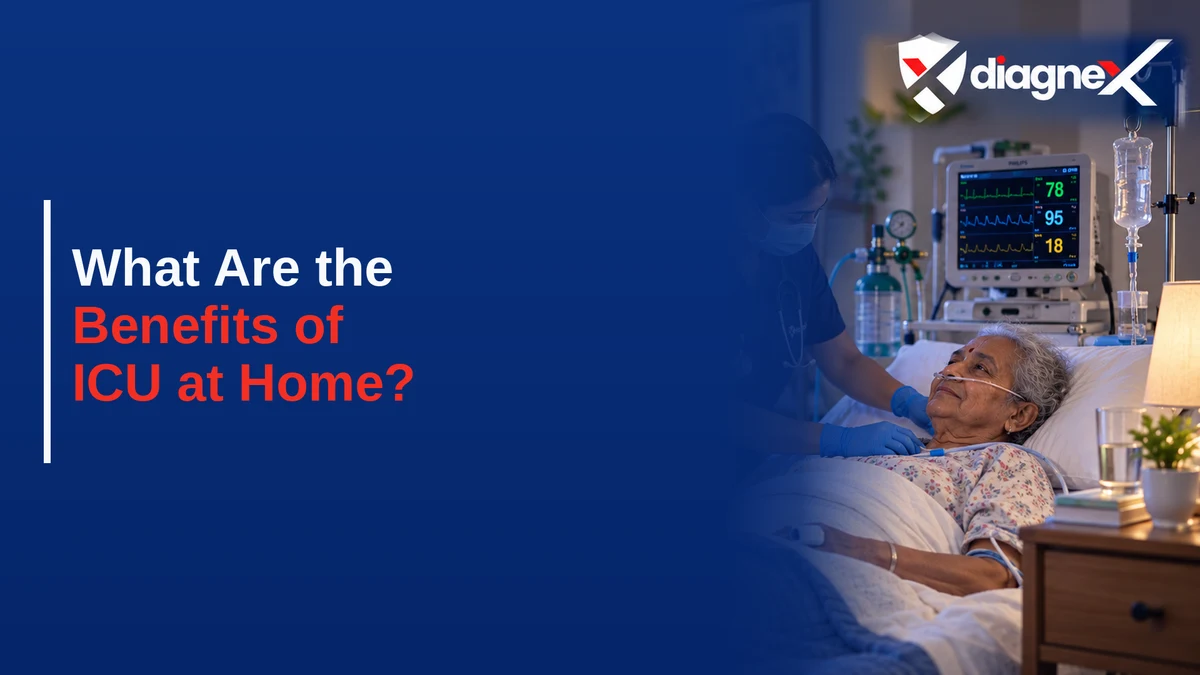
The main benefit of ICU at home is not that it turns a house into a hospital ICU. It is that, for selected patients who are stable enough to leave the hospital but still need substantial nursing, monitoring, respiratory support or repeated clinical procedures, advanced care can sometimes continue in a familiar environment without repeated travel or a prolonged inpatient stay. Potential advantages can include greater family presence, continuity of care, easier long-term rehabilitation, less disruption to daily life, more personalised staffing and equipment, and a different cost structure from hospital care.
But these benefits are conditional. They depend on the patient being suitable for home care, the treatment plan being clear, the necessary nurses and equipment being available, the home being ready, and a hospital escalation pathway being in place. Evidence from structured Hospital at Home programmes is encouraging in appropriately selected patients. AHRQ summarises studies showing lower costs, fewer readmissions or complications in some programmes, and higher patient and family satisfaction. However, Hospital at Home is a formal acute-care model and is not identical to every service marketed as “Home ICU.” Those findings should therefore be treated as supporting evidence for carefully designed home-based acute care - not as proof that every Home ICU arrangement produces the same outcomes. The practical question is not simply, “Is Home ICU better?” It is, “What benefits can this patient realistically gain from moving advanced care home, and can those benefits be achieved without losing access to care the patient still needs?”
What Counts as a Benefit of Home ICU Care?
A meaningful benefit should improve the patient’s or family’s care experience without weakening clinical safety. Avoiding an unnecessarily prolonged hospital stay when hospital-only capabilities are no longer required. A benefit is not meaningful if it is achieved by removing clinically necessary monitoring, staffing, diagnostics or emergency access. For the overall definition and boundaries, see What Is Home ICU Care? A Complete Guide for Families.
- Reducing unnecessary travel
- Allowing more family presence
- Making long-term nursing easier to organise
- Supporting rehabilitation in the patient’s real living environment
- Tailoring equipment and staffing to the patient
- Improving continuity across daily care
- Potentially reducing total cost for selected stable patients
- Allowing the care plan to scale down as the patient improves
1. More Time With Family
One of the most visible advantages of ICU at home is family presence. Hospital ICUs often restrict or structure visiting because of infection control, procedures, privacy and unit workflow. At home, selected patients may be able to spend substantially more time with family members. Research on family involvement in critical care suggests that structured family participation can improve aspects of communication, satisfaction and family well-being, although the evidence varies by intervention and setting. Home care can make family involvement more natural because the patient is already within the family environment.
- Emotional reassurance
- Communication
- Orientation
- Motivation during rehabilitation
- Understanding the patient’s usual behaviour
- Shared decision-making
- Maintaining normal family relationships
Family Presence Does Not Mean Family Becomes the ICU Team
- Comfort
- Communication
- Basic daily support
- Coordinating supplies and appointments
- Reporting changes from the patient’s usual behaviour
- Supporting rehabilitation exercises after training
- Helping with feeding or routine care when appropriate
- Ventilator adjustments
- IV cannulation
- High-risk infusion changes
- Tracheostomy emergency management
- Complex suction without training
- Medication changes
- Clinical assessment beyond their role
2. A Familiar Environment
For many patients, home is less disorienting than a hospital. Systematic reviews of Hospital at Home experiences have found that patients and caregivers often value comfort, familiarity, normal daily rhythm and family engagement. Patients who become confused in unfamiliar surroundings.
Long-term ventilator or tracheostomy patients. People receiving palliative or long-term supportive care. This does not mean every patient will recover faster simply because they are at home. The home environment becomes an advantage only when the required clinical support can also be maintained safely.
- Known surroundings
- Familiar voices
- Personal belongings
- More control over light and noise
- A more normal sleep-wake routine
- A sense of privacy
- Less disruption from unrelated hospital activity
- Older adults
- Patients recovering after a long admission
- Patients with cognitive impairment
3. Reduced Travel for High-Dependency Patients
Transporting a high-dependency patient can be difficult. Home ICU can reduce some of that travel when appropriate services are brought to the patient. Home-based rehabilitation literature also identifies reduced travel burden as a practical advantage, particularly for people with mobility limitations. For patients who still need frequent hospital-only diagnostics or procedures, this benefit becomes smaller because repeated hospital visits may still be necessary.
- Ambulance coordination
- Oxygen
- A wheelchair or stretcher
- Several family members
- Clinical supervision
- Transfer between bed and vehicle
- Long waiting periods at a facility
- Repeated movement of lines, catheters or feeding tubes
- Nursing
- Blood sample collection
- Physiotherapy
- Doctor visits where available
- Wound care
- Catheter care
- Tube-related care
- Selected IV therapy
- Monitoring
4. Easier Step-Down After Hospital or ICU Discharge
Some patients are medically stable enough to leave hospital but not yet ready for ordinary home care. Home ICU can provide a structured step between inpatient care and lower-intensity home nursing. Removal of equipment as it is no longer required. Rehabilitation to continue at home. The treating team should decide when this transition is safe. For the full transition workflow, see How Does an ICU at Home Work?
- Oxygen
- BiPAP
- Ventilator support
- Tracheostomy care
- Frequent nursing
- Monitoring
- IV treatment
- Tube feeding
- Catheter care
- Wound care
- Pressure-area care
- Physiotherapy
- Earlier transition out of hospital when clinically appropriate
- Continuation of the discharge plan
- More gradual reduction of nursing intensity
5. More Patient-Specific Care
Hospital ICUs are designed to manage many critically ill patients within one institutional system. Home ICU is usually built around one patient. Diagnex’s Home ICU Setup pathway follows this patient-specific model: the setup is planned against the treating doctor’s advice and the actual home rather than selling one fixed equipment bundle. The advantage is not “more equipment.” It is potentially less irrelevant equipment and a clearer focus on what this specific patient needs.
- The exact respiratory support required
- The number of nursing hours
- The patient’s mobility
- The wound or device plan
- Rehabilitation goals
- Feeding requirements
- Family support
- Room layout
- Preferred daily routine where clinically possible
6. Nursing Can Be Matched to the Actual Dependency Level
Home ICU care can use different staffing models. A patient who needs continuous airway or ventilator support may require much more nursing than a patient who mainly needs daytime monitoring and procedures. Matching the staffing level can prevent two common problems:
Under-supporting a complex patient. Paying for continuous skilled nursing when the patient mainly needs non-clinical assistance plus scheduled nursing procedures. For that decision, see Short-Visit Nurse vs Full-Shift Nurse: Which One Is Needed?
- 12-hour nursing
- 24-hour nursing cover
- Critical-care experienced nursing
- Procedure visits
- An attendant for non-clinical support
- Physiotherapy
- Doctor home visits where available
7. Better Fit for Long-Term Respiratory Support
Some patients need respiratory support for weeks, months or longer. For selected stable patients, managing that support at home can reduce the need for prolonged institutional stay. NHS home-ventilation services and MedlinePlus both recognise that selected patients can receive long-term ventilatory support outside hospital when appropriate specialist support, equipment and emergency planning are in place.
- Ventilator settings are stable
- The airway is established
- The patient has trained support
- Backup power is reliable
Suction and consumables are available. The treating team remains involved. Hospital escalation is realistic. An unstable airway or rapidly changing respiratory failure is different and usually favours hospital care.
- Oxygen
- BiPAP
- CPAP for selected indications
- Mechanical ventilation
- Suction
- Humidification
- Tracheostomy-related care
8. Rehabilitation Happens in the Patient’s Real Environment
Home rehabilitation has a practical advantage: therapists can work with the environment the patient actually needs to function in. A systematic review of home-based rehabilitation found that familiar surroundings can allow clinicians to address contextual factors that may not be visible in a facility and can reduce travel barriers. For ICU survivors, home-based recovery may also allow rehabilitation to be integrated into normal routines. The evidence on post-ICU home-based interventions is still developing, so rehabilitation at home should be presented as a practical opportunity rather than a guaranteed superior outcome.
- Bed mobility
- Sitting
- Standing
- Transfers
- Walking
- Bathroom access
- Stair practice where appropriate
- Pressure-area prevention
- Range of motion
- Breathing exercises
- Caregiver training
9. Potentially Better Continuity for Long-Term Care
Long admissions often involve multiple shift changes, unit changes and handovers. Home care can sometimes create a smaller, more consistent team. Continuity can improve the team’s familiarity with the patient’s baseline. Continuity is not automatic. Families should ask how nurse rotation, handover and care documentation are managed.
- The same nurses returning across shifts
- A single current medicine list
- One home care plan
- More consistent caregiver involvement
- A dedicated care coordinator
- Repeat physiotherapy with the same therapist
- Equipment remaining in one environment
- New confusion
- Changes in secretions
- A change in mobility
- New pressure-area redness
- Different feeding tolerance
- Changes in oxygen requirement
- A change in urine output
10. More Flexible Daily Routine
Hospital routines are built around ward operations. Clinical tasks still need to happen at the correct time. The advantage is that non-clinical parts of the day may be easier to personalise once the patient is medically stable. For long-term patients, that can make advanced care feel less institutional.
- The patient’s sleep pattern
- Family schedules
- Physiotherapy
- Feeding times
- Bathing
- Doctor reviews
- Rest periods
- Religious or personal routines
11. Potential Cost Efficiency for Selected Patients
Cost can be an advantage of ICU at home for some patients, but it should not be described as automatic. Structured Hospital at Home studies have reported lower total costs in selected populations, largely because home care can reduce hospital overhead and use a different mix of staffing and services. However, Home ICU costs can still be substantial.
For a stable long-term patient, the total monthly cost may compare favourably with prolonged hospital ICU care. For a patient needing intensive staffing, complex respiratory support and frequent hospital transfers, the savings may be smaller or disappear. Families should compare the full care package rather than only hospital bed charges versus equipment rental. For the detailed comparison, see Home ICU vs Hospital ICU: What Families Should Compare.
- 24-hour nursing
- Ventilator rental
- Oxygen
- Multiparameter monitoring
- Suction equipment
- Infusion pumps
- Physiotherapy
- Doctor reviews
- Laboratory testing
- Consumables
- Equipment maintenance
- Backup power
- Emergency transport
12. Less Exposure to a Busy Hospital Environment
A prolonged hospital stay exposes patients to a high-contact healthcare environment. This can be a practical benefit. But it should not be simplified into “Home ICU prevents hospital-acquired infection.” These devices carry infection risks wherever they are managed. Good home care still requires disciplined hand hygiene, aseptic practice, device care and equipment cleaning. For a detailed guide, see How Infection Control Works During a Clinical Procedure at Home.
- Large numbers of staff
- Shared hospital spaces
- Repeated movement through departments
- Other hospital patients
- Hospital environmental organisms
- Tracheostomy
- Ventilator circuits
- IV lines
- Urinary catheters
- Feeding tubes
- Wounds
- Suction equipment
13. Greater Visibility for Family Members
At home, families often have a clearer view of the day-to-day care process. This visibility can make it easier for families to ask informed questions and notice changes from the patient’s usual baseline. It can also improve accountability when several services are involved.
The family should still avoid interpreting every monitor reading or changing treatment independently. Visibility supports communication. It does not replace clinical judgement.
- When medicines are given
- How nursing shifts are handed over
- Whether physiotherapy happens
- How feeding is tolerated
- How often the patient is repositioned
- Whether equipment alarms repeatedly
- How much oxygen is being used
- How wound or device care is progressing
14. Care Can Be Organised Around Long-Term Goals
Hospital ICU priorities are dominated by immediate survival and stabilisation. Once the acute crisis has passed, the patient’s goals may broaden. This can be particularly valuable for patients recovering slowly after a long critical illness. The care model can evolve as the patient improves rather than remaining fixed at “ICU intensity” indefinitely.
- Rehabilitation
- Communication
- Nutrition
- Mobility
- Sleep
- Skin integrity
- Reducing device dependence where clinically appropriate
- Caregiver training
- Comfort
- Returning to parts of normal daily life
15. Easier Step-Down to Lower-Intensity Care
One important advantage of Home ICU is that support can sometimes be reduced gradually. This can make recovery feel less abrupt than moving directly from hospital ICU to ordinary home care. The treating team should guide every reduction in clinical support. Home ICU should not become a permanent package simply because it was once needed.
- 24-hour nursing to 12-hour nursing
- 12-hour nursing to procedure visits
- Continuous monitoring to intermittent checks
- High oxygen support to lower support where clinically appropriate
- Several pieces of equipment to fewer devices
- High-dependency care toward rehabilitation and routine home nursing
16. Home Can Support Palliative and Goal-Concordant Care
For some patients with advanced illness, the goal of care may shift toward comfort, family presence and avoiding repeated hospital transfers. This can be a meaningful benefit when it aligns with the patient’s preferences and treating-team plan. But palliative home care should not be confused with hospital critical care being reproduced outside the hospital. The goals, escalation limits and expected treatments should be discussed clearly.
- Symptom monitoring
- Oxygen
- Nursing
- Feeding or catheter care
- Wound care
- Comfort measures
- Family presence
- A quieter environment
17. Caregiver Training Can Become More Practical
When a patient will remain dependent for weeks or months, caregivers often need to learn selected routine tasks. At home, training can happen in the actual environment where care will continue. The advantage is contextual learning. The caregiver practises in the same room, with the same bed and equipment that will be used every day. Training should remain limited to appropriate tasks. Families should not be expected to take over high-risk professional procedures.
- Safe repositioning
- Feeding support
- Pressure-area prevention
- Basic equipment checks
- Recognising important alarms
- Knowing emergency contacts
- Routine hygiene
- Approved device support
- Recording basic observations
18. The Home Environment Can Be Adapted Over Time
Hospital rooms are fixed clinical spaces. At home, the care environment can be adjusted as the patient’s needs change. These adjustments can make long-term care more sustainable. The home should be reassessed whenever the patient’s dependency level changes significantly.
- Changing bed position
- Removing unnecessary equipment
- Adding transfer aids
- Installing better power backup
- Improving oxygen storage
- Adding pressure-relieving equipment
- Creating more room for physiotherapy
- Changing caregiver access
- Reorganising supplies
19. Care Coordination Can Be Centralised
- Nurses
- Doctors
- Physiotherapists
- Respiratory professionals
- Phlebotomists
- Equipment technicians
- Dietitians
- Caregivers
A coordinated Home ICU model can bring these activities into one care plan. The benefit depends on someone actively owning coordination. A collection of separate vendors is not automatically an integrated care system. A Care Manager or similar coordination role can be useful when several services need to stay aligned.
- Conflicting instructions
- Duplicate visits
- Missed procedures
- Medication confusion
- Equipment gaps
- Unclear follow-up
20. Home ICU Can Reduce Repeated Hospital Transfers for Routine Care
- Blood collection
- Wound review
- Minor procedures
- Routine monitoring
- Physiotherapy
- Selected doctor review
- Device-related care
- When those services can safely come home, the patient can avoid repeated journeys
- Physical strain
- Transfer risk
- Caregiver time
- Ambulance coordination
- Waiting-room exposure
- Disruption to the patient’s day
21. The Patient’s Baseline May Be Easier to Recognise
Long-term home nurses and caregivers often learn what is normal for the patient. A consistent care team can sometimes detect change earlier because it knows the patient’s baseline. This depends on continuity, documentation and communication. It should not be presented as a substitute for diagnostic testing when the patient needs hospital evaluation.
- More sleepiness
- Less interaction
- Different secretions
- A change in appetite
- New swelling
- Reduced urine output
- Different breathing pattern
- New discomfort
- Less tolerance of physiotherapy
22. Home ICU Can Support Dignity and Personal Preferences
- Privacy
- Preferred clothing
- Familiar food when medically appropriate
- Cultural or religious routines
- Closer contact with family
- Personal possessions
- A more familiar daily rhythm
These factors can matter greatly during long recovery or long-term dependence. Clinical needs still take priority when a preference conflicts with safety. The benefit is greater room for personalisation - not freedom from the treatment plan.
What Benefits Are Supported by Stronger Evidence?
The strongest evidence for advanced acute care at home comes from formal Hospital at Home programmes rather than the full range of commercial Home ICU services. They should not be generalised to every patient or every provider. The evidence supports the concept that well-designed home-based acute care can produce meaningful benefits for selected patients. It does not support the claim that every patient does better at home.
- Lower total healthcare cost in some populations
- Fewer hospital readmissions in some models
- High patient and caregiver satisfaction
- Lower use of some hospital resources
- More patient activity and less sedentary time in some trials
- Reduced institutional exposure
- Care delivered in a familiar environment
- These results depend on careful patient selection, medical oversight and a structured care model
What Benefits Should Not Be Promised?
- Faster recovery
- Zero infection risk
- No readmissions
- Better survival
- No emergencies
- Permanent avoidance of hospital care
- A fixed percentage cost saving
- Equivalent capability to hospital ICU
- Diagnosis
- Severity
- Patient selection
- Quality of staffing
- Medical oversight
- Home infrastructure
- Family support
- Disease progression
- Unexpected complications
When the Benefits of Home ICU Are Most Likely to Matter
- The acute crisis has stabilised
- The patient still needs substantial support
- The care plan is predictable
- Travel is difficult
The family values being together. Long-term rehabilitation is needed. The home can safely support equipment. The required nursing can be arranged. The treating team supports home care. Emergency transfer remains realistic. In these situations, home can provide advanced support without retaining the patient inside a hospital purely because of ongoing nursing or equipment needs.
When the Benefits Do Not Outweigh the Risks
- Is unstable
- Has rapidly worsening respiratory failure
- Needs escalating organ support
May need emergency intubation. Requires urgent surgery. Has major active bleeding. Has uncontrolled seizures. Needs repeated urgent imaging or laboratory testing.
Has an unstable airway. Requires rapid specialist intervention. Cannot be transferred back to hospital safely. For the detailed exclusion framework, see Who May Not Be Suitable for Home ICU Care?
How to Decide Whether the Benefits Apply to Your Family
1. Is the Patient Clinically Suitable?
2. Can the Required Care Be Reproduced Reliably at Home?
3. Is the Home Ready?
4. Can the Family Sustain the Model?
5. Is There a Clear Route Back to Hospital?
Which symptoms trigger transfer? Which hospital will receive the patient? How will transport happen? If these questions have good answers, the benefits of Home ICU become much more meaningful.
How Diagnex Approaches the Benefits of Home ICU
Diagnex treats Home ICU as a patient-specific advanced-care pathway rather than a standard equipment package. Diagnex does not position Home ICU as automatically equivalent to hospital ICU, automatically cheaper or an emergency service. If the family is unsure whether advanced home care is appropriate, use Find the Right Care.
For the full definition, read What Is Home ICU Care? A Complete Guide for Families. For the setup process, read How Does an ICU at Home Work? For eligibility, read Who Is Suitable for ICU Care at Home? For the direct hospital comparison, read Home ICU vs Hospital ICU: What Families Should Compare.
- Treating-professional approval
- Patient stability
- Nursing requirements
- Respiratory support
- Monitoring
- Procedures and devices
- Home readiness
- Power and oxygen backup
- Caregiver support
- Coordination
- Emergency transfer
Frequently Asked Questions
What are the main benefits of ICU at home?
Is Home ICU better than hospital ICU?
Can Home ICU reduce hospital stay?
Is Home ICU cheaper?
Does Home ICU reduce infection risk?
Can ventilator patients benefit from ICU at home?
Is Home ICU good for elderly patients?
Can Home ICU improve rehabilitation?
Does Home ICU give families more involvement?
When should the benefits of Home ICU not influence the decision?
The Bottom Line
The benefits of ICU at home are real for selected patients, but they come from the care model - not from moving machines into a house. Home ICU can provide more family presence, less travel, a familiar environment, more personalised routines, easier rehabilitation, continuity for long-term care and potential cost efficiency. Those advantages are most meaningful after the patient is stable enough that the hospital’s full emergency and diagnostic infrastructure is no longer required continuously.
The strongest Home ICU plan combines the comfort and flexibility of home with disciplined nursing, equipment reliability, medical oversight, infection control and a clear hospital escalation route. The goal is not to keep the patient home at any cost. It is to use home when home genuinely adds value without removing care the patient still needs.
Sources and Medical References
This article provides general health information and is not a substitute for patient-specific medical advice, diagnosis or treatment. Benefits vary by patient and care model. Home ICU suitability should be determined by appropriately qualified treating professionals together with the capabilities of the home-care service.