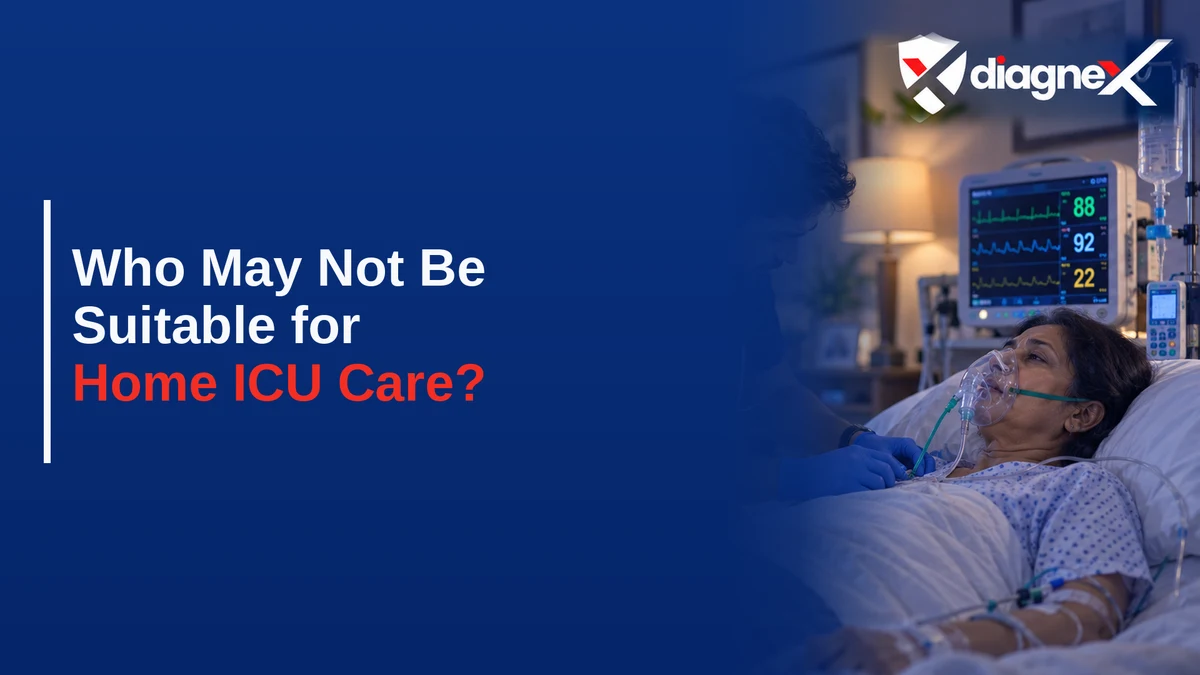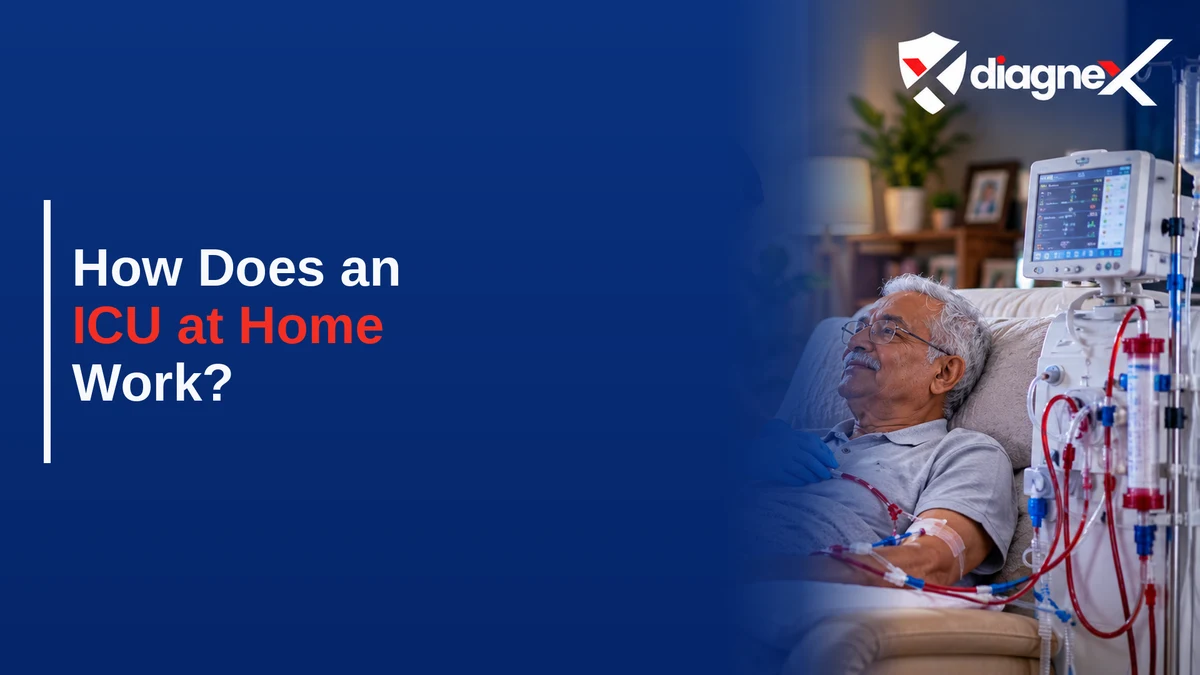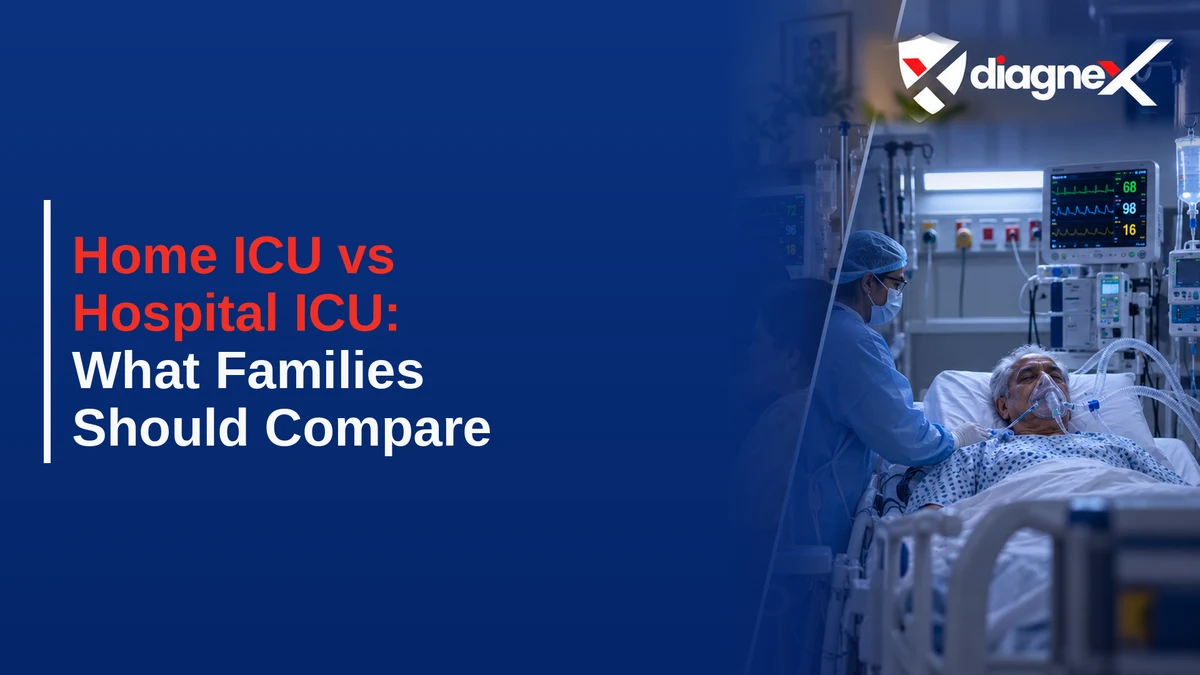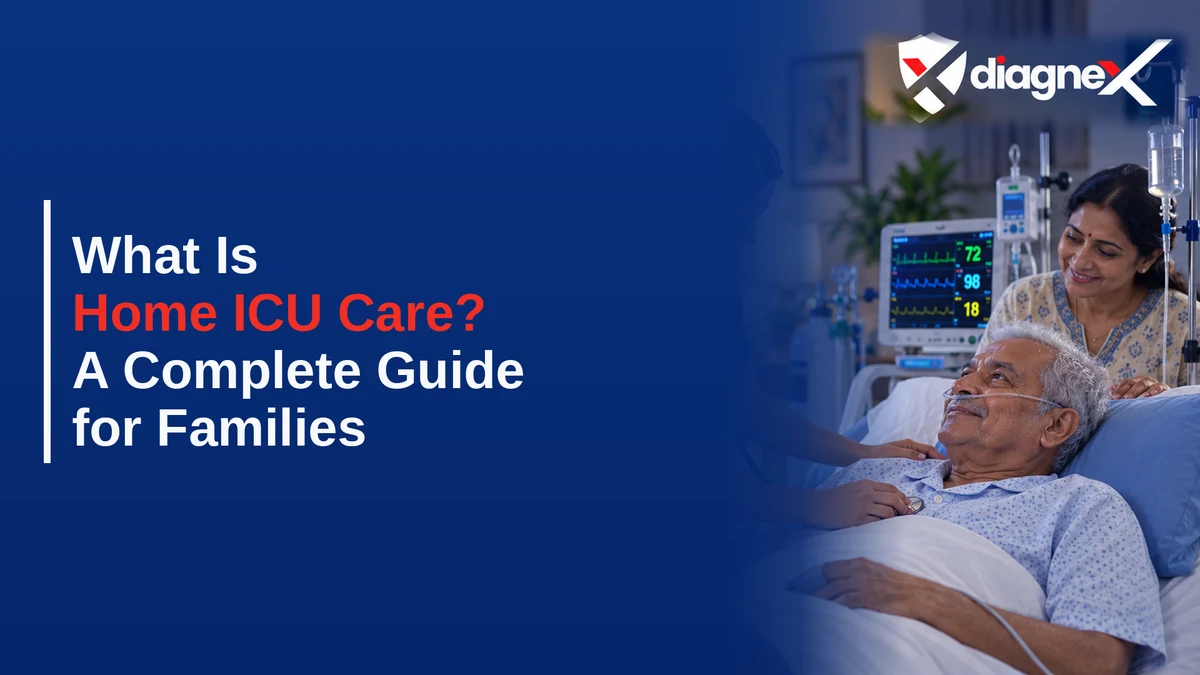
ICU care at home may be suitable for selected patients who still need advanced nursing, monitoring, respiratory support, medical equipment or repeated clinical procedures but are stable enough that their required care can be delivered safely outside a hospital ICU. The most important word is selected. A patient does not become suitable for Home ICU simply because the family wants to leave hospital, because ICU costs are high, or because the necessary equipment can be rented. The patient's condition has to be sufficiently predictable, the treatment plan has to be clear, the home has to support the required equipment and staff, and there must be a realistic escalation plan if the patient deteriorates.
For some patients, Home ICU works as structured step-down care after a hospital stay. For others, it supports long-term respiratory or neurological dependency. In selected palliative situations, advanced care at home may also align with the patient's goals of care. For unstable patients who need immediate hospital diagnostics, rapid specialist intervention, escalating organ support or emergency procedures, a hospital ICU remains the safer setting. This guide explains who may be suitable for ICU care at home, how a home ICU assessment works, what factors families should consider, and which warning signs usually point toward continued hospital care.
The Short Answer: Who Is Usually Suitable for ICU at Home?
- The patient's condition is sufficiently stable and predictable
- The treating doctor agrees that home is an appropriate setting
- The patient does not need continuous access to hospital-only diagnostics or emergency procedures
Required oxygen, ventilation, monitoring, medicines and procedures can be supported at home. The right nurses and other professionals are available. The home has enough space, power, oxygen safety and access for the planned equipment. The family understands the care model and can support coordination.
There is a clear route back to hospital if the patient's condition worsens. These are examples, not automatic eligibility categories. Two patients with the same diagnosis may have very different Home ICU suitability.
- Step-down care after an ICU or hospital stay
- Stable patients needing oxygen or non-invasive ventilation
- Selected patients with an established tracheostomy
- Selected long-term ventilator-dependent patients after specialist assessment
- Neurological or bedbound patients with high nursing dependency
- Patients needing complex post-discharge monitoring and procedures
- Selected long-term or palliative care situations where home aligns with the treating plan
Home ICU Eligibility Is About Stability, Not the Diagnosis Alone
Families often ask whether a particular diagnosis qualifies. “Can a stroke patient go to Home ICU?” “Can a COPD patient be managed at home?” “Can someone on a ventilator go home?” “Can a cancer patient receive critical care at home?”
The diagnosis matters, but it does not answer the full question. A stroke patient who is medically stable but needs tube feeding, catheter care, pressure-injury prevention and rehabilitation may be manageable at home. Another stroke patient with rapidly changing neurological status, uncontrolled seizures or a need for urgent imaging may need hospital care.
A patient with chronic respiratory failure on a stable home ventilation plan may be appropriate for structured respiratory support at home. Another patient with rapidly escalating oxygen needs and acute respiratory deterioration may require a hospital ICU. The more useful question is: Can this patient's current clinical needs be supported safely, reliably and predictably at home? AHRQ's Hospital at Home models also begin with formal patient eligibility assessment rather than treating home acute care as appropriate for every hospitalised patient.
What Does “Stable Enough for Home ICU” Mean?
“Stable” does not mean “fully recovered.” A patient may still require substantial clinical support. In practical terms, stability may mean: Blood pressure and circulation are reasonably predictable. Respiratory support is not rapidly escalating.
The patient's airway plan is established. Medication requirements are reasonably defined. There is no immediate need for emergency surgery or invasive hospital procedures. Monitoring requirements can be met using the home care model. The patient can be transferred safely.
The team knows what deterioration would look like. There is enough time to transfer back to hospital if the condition changes. The treating team should decide whether the patient's condition has reached that point. A family should not interpret one “good day” in ICU as proof that home is now safe. The pattern over time, current support needs and foreseeable complications all matter.
A Practical Home ICU Eligibility Assessment
1. Clinical Stability
- Are vital signs reasonably stable?
- Are oxygen requirements stable or predictable?
- Is the patient having repeated acute deterioration?
Does the patient require emergency interventions? Are medicines being changed frequently? Is the neurological status stable? Are there active complications that still need hospital treatment? The more rapidly the patient's condition is changing, the less suitable a home setting may be.
2. Respiratory and Airway Needs
Respiratory support is one of the biggest factors in Home ICU eligibility. The assessment may consider: Does the patient need oxygen? Is the patient on BiPAP or CPAP? Is mechanical ventilation required?
Is there a tracheostomy? How often is suction needed? Are secretions manageable? Is the airway stable? Are ventilator settings stable?
Is backup respiratory equipment required? What happens if the airway or machine fails? Home ventilation is a real care pathway for selected patients. NHS home-ventilation services assess patients specifically for suitability, and MedlinePlus notes that some people who need long-term ventilator support can live at home but require substantial support from family or healthcare professionals. The existence of a ventilator does not automatically make home safe or unsafe. The stability of the respiratory plan is what matters.
3. Monitoring Requirements
The team should define what needs to be monitored and how often. A patient who requires repeated hospital-only diagnostics or very rapid laboratory turnaround may not be suitable for Home ICU. A patient whose monitoring needs can be safely handled with home equipment, nursing assessment and planned follow-up may be more suitable. The key question is not whether a monitor can be installed. It is whether the care team knows what readings matter and what action follows an abnormal change.
- Oxygen saturation
- Heart rate
- Blood pressure
- Respiratory rate
- Temperature
- Blood glucose
- Neurological status
- Urine output
- Fluid balance
- Ventilator parameters
- Wound or device findings
4. Procedures and Device Complexity
The assessment should list every ongoing clinical procedure and device. The patient may still be suitable for home even with several devices, but the staffing, infection-control and escalation requirements become more demanding. For broader procedure guidance, see Which Medical Procedures Can Be Done Safely at Home?
- Peripheral IV
- PICC line
- Central venous catheter
- Urinary catheter
- Ryle's or nasogastric tube
- Gastrostomy tube
- Tracheostomy
- Ventilator
- Drain
- Wound dressing
- Infusion pump
- Suction
- Repeated injections
- Blood sample collection
5. Nursing Dependency
- One or two scheduled procedure visits
- 12-hour nursing
- Night nursing
- 24-hour nursing cover
- Critical-care experienced nursing
- Frequency of medicines
- Monitoring
- Airway needs
- Device care
- Mobility dependence
- Frequency of procedures
- Risk of deterioration between visits
- Ability of caregivers to manage non-clinical care
6. Home Environment and Infrastructure
A clinically eligible patient may still have an unsuitable home environment. A ventilator-dependent patient with unreliable electricity and no backup plan may not have a safe home setup even if the medical condition is otherwise stable. MedlinePlus specifically advises home oxygen users to have backup oxygen because oxygen concentrators depend on electricity.
- Space around the bed
- Electrical supply
- Power backup
- Oxygen storage and safety
- Ventilation
- Lift or staircase access
- Ambulance access
- Room for equipment
- Safe storage of medicines and supplies
- Clean procedure space
- Bathroom and transfer access
- Ability to keep tubing and cables secure
7. Escalation and Hospital-Transfer Plan
- Which symptoms require urgent escalation
- Who the nurse calls
- Who the treating doctor is
- Which hospital the patient should go to
- How transport will be arranged
- What equipment supports the patient during transfer
- What the family should do if the nurse is not present
- When emergency services should be used
Who May Be Good Candidates for Home ICU?
Post-ICU Step-Down Patients
This is one of the clearest use cases. Home ICU can sometimes bridge the gap between hospital ICU and ordinary home care. The discharge should be planned rather than rushed. For the hospital-to-home process, see How Does an ICU at Home Work?
- Immediate ICU procedures
- Rapid diagnostic access
- Constant intensivist presence
- Escalating organ support
- Oxygen
- Monitoring
- IV treatment
- Frequent nursing
- Wound care
- Tube feeding
- Catheter care
- Physiotherapy
- Pressure-injury prevention
Patients on Stable Oxygen Support
- The oxygen requirement is stable
- The treating team has defined the flow or target
- The patient does not have rapidly worsening respiratory failure
The home has safe oxygen equipment and backup. The family knows what deterioration looks like. Appropriate clinical follow-up is available. Patients should not independently increase oxygen because the saturation reading changes. The oxygen plan should come from the treating professional.
Patients on Stable BiPAP or Non-Invasive Ventilation
Some patients use BiPAP or other non-invasive ventilation at home. Home NIV services commonly support selected patients with chronic respiratory failure, neuromuscular disease, chest-wall disorders and other conditions after specialist assessment. NIV being available at home does not mean an acutely deteriorating patient should stay there.
- Stable settings
- Tolerance of the mask
- Ability to manage secretions
- Caregiver or nursing support
- Monitoring
- Backup power
- Specialist follow-up
- A plan for deterioration
Patients With an Established Tracheostomy
- The airway is stable
- The required suction plan is clear
- Secretions can be managed
- Trained support is available
Backup tracheostomy supplies are present. Respiratory equipment is available where required. Emergency instructions are clear. The treating team agrees. Tracheostomy care can become high risk quickly when the tube is blocked or displaced. An unstable airway belongs in a setting where emergency airway management can occur immediately.
Selected Long-Term Ventilator-Dependent Patients
Some patients require long-term mechanical ventilation and can be supported at home after specialist assessment. MedlinePlus notes that some people with a tracheostomy and long-term ventilator needs may be able to live at home but require substantial support. The ventilator should be viewed as one component of a much larger care system.
- Stable ventilator settings
- A stable airway
- Trained nursing or caregivers
- Suction
- Oxygen where prescribed
- Backup power
- Backup ventilation plan
- Equipment support
- Specialist review
- Emergency transfer pathway
Patients With Neurological or Severe Mobility Dependency
Patients after stroke, spinal injury, neurological disease or prolonged critical illness may be medically stable but highly dependent. For patients whose main issue is immobility rather than high-acuity monitoring, a broader bedridden-care or home-nursing plan may be enough. For more detail, see Clinical Procedures at Home for Bedridden Patients.
The treating team supports the plan. Symptoms can be managed at home. Required equipment and nursing are available. The family understands what home care can and cannot provide. An escalation or non-escalation plan has been discussed.
Palliative Home ICU should not be described as “the same ICU at home.” The purpose may be comfort-focused rather than aggressive critical care. The care model should reflect the patient's goals. Who Is Usually Not Suitable for ICU Care at Home? Some patients should remain in a hospital or other facility because their needs are too unstable, complex or time-sensitive for home.
- Are haemodynamically unstable
- Need escalating vasopressor support
- Have rapidly worsening respiratory failure
- Need immediate intubation or advanced airway management
Require frequent urgent blood tests or imaging. Need emergency surgery. Have uncontrolled bleeding. Have an unstable new neurological event. Have recurrent uncontrolled seizures.
Need rapid specialist procedures. Need immediate blood-bank access. Require ICU-level organ support that cannot be safely reproduced at home. Cannot be transferred safely if the condition worsens. A family should not interpret this list as an absolute medical rule.
The treating team should decide whether the patient's current condition requires hospital critical care. Why an “ICU Diagnosis” Does Not Automatically Mean Home ICU A patient may have recently been in ICU but no longer require ICU-level care. Another patient may never have been in an ICU but may still need advanced home support.
- Does the patient still need immediate hospital intervention?
- Is the treatment plan stable?
- Are the required devices manageable at home?
Can deterioration be detected early? Is there enough clinical support between doctor reviews? Can the family safely manage non-clinical care? Can the patient be transported back to hospital if needed? The diagnosis is only one part of the assessment.
Can a Ventilator Patient Be Suitable for Home ICU? Yes, selected patients on long-term mechanical ventilation may be suitable for home after specialist assessment. A patient with rapidly escalating ventilator requirements or unstable respiratory failure is different and may need hospital care.
Can a Tracheostomy Patient Be Suitable for Home ICU? Yes, selected patients with an established tracheostomy can be supported at home. Need for oxygen or ventilator support. A stable long-term tracheostomy is not the same as an acutely compromised airway. Severe breathing difficulty, tube displacement or suspected blockage with respiratory distress requires urgent medical attention.
Can an Elderly Patient Be Suitable for Home ICU? Age alone does not determine eligibility. An older patient may be suitable when the condition is stable and the required care can be supported at home. For older patients whose needs are less intensive, a structured home nursing plan may be more appropriate than Home ICU.
For more detail, see Clinical Procedures at Home for Elderly Patients. Can a Bedridden Patient Be Suitable for Home ICU? Some bedridden patients need Home ICU-level support. Others do not. Caregiver support can affect whether home care is practical, even when professional nursing is involved.
Ensure equipment is not disturbed. Coordinate follow-up. The family should not be expected to replace skilled professionals. If the home-care model only works because relatives are performing high-risk clinical procedures without training, the setup is not robust.
What If the Family Cannot Provide Much Support? That does not automatically rule out Home ICU. Continued facility-based care if safe staffing cannot be arranged. The provider should assess the gap honestly. Family availability should not be assumed.
- What Should Families Keep Ready?
- Expected discharge date if the patient is still in hospital
- This information helps determine whether the patient's care requirements can actually be reproduced at home
- A 10-Question Family Self-Screen Before Requesting Home ICU
- 1
- Has the treating doctor said that home care can be considered?
- 2
- Is the patient reasonably stable rather than rapidly deteriorating?
3. Are oxygen or ventilator requirements stable? 4. Is the airway plan established? 5. Can required medicines and procedures be provided at home?
6. Can the home support equipment and backup power? 7. Is appropriate nursing available? 8. Does someone understand the escalation plan?
9. Can the patient be transferred back to hospital if needed? 10. Does the family understand that Home ICU cannot reproduce every hospital capability? If several answers are “no,” the patient may need more preparation or continued hospital care before transfer.
This checklist is for planning, not for making the medical eligibility decision independently. What Happens During a Home ICU Assessment? A structured assessment may include four parts. Clinical Review The assessment is complete only when the clinical plan and the home environment fit each other.
When Should Home ICU Eligibility Be Reassessed? Suitability is not permanent. A patient who was appropriate for Home ICU last week may no longer be suitable today. Reassessment may be needed when: Oxygen needs rise significantly.
Ventilator settings escalate. New severe infection develops. Blood pressure becomes unstable. Frequent emergency calls occur. New seizures occur.
A major device complication develops. The patient needs urgent investigations. The family can no longer manage the care environment. Nursing requirements increase significantly. The patient's goals of care change.
The reverse is also true. Eligibility should be dynamic. Home ICU Eligibility After Hospital Discharge For many families, the eligibility decision happens during discharge planning. The transition should be planned before discharge.
For the full workflow, see How Does an ICU at Home Work? For broader discharge planning, see Clinical Procedures at Home After Hospital Discharge. What If the Patient Is Stable but the Home Is Not Ready? The patient should not be transferred simply because hospital discharge has been scheduled.
If critical home infrastructure is missing, the team may need to delay or modify the plan. Clinical stability and operational readiness are both necessary. When Hospital Care Should Take Priority Need for urgent surgery or invasive procedures. Another major acute change. In India, call 112 or go to the nearest appropriate emergency facility when emergency care is required.
- Tube feeding
- Catheter care
- Tracheostomy care
- Pressure-area prevention
- Monitoring
- Physiotherapy
- Positioning
- Nursing
- Respiratory support
- Stable ventilator settings
- Stable airway
- Trained nursing or caregiver support
- Suction equipment
- Backup power
- Backup oxygen where prescribed
- Spare circuits and consumables
- Technical equipment support
- A clear response to alarms
- Emergency transfer planning
- Specialist follow-up
- Airway stability
- Secretion burden
- Suction frequency
- Tracheostomy-site condition
- Caregiver and nurse competence
- Availability of backup equipment
- Emergency airway plan
- Frailty
- Multiple medicines
- Cognitive impairment
- Falls risk
- Skin fragility
- Nutrition
- Mobility
- Caregiver capacity
- Pressure-injury risk
- Multiple devices
- Pressure care
- Wound dressing
- Catheter care
- Tube feeding
- Physiotherapy
- Attendant support
- Periodic nursing
- Advanced respiratory support
- High-intensity monitoring
- Multiple complex devices
- Frequent nursing procedures
- Suction
- Ventilator support
- Closer medical coordination
- For more detail, see Clinical Procedures at Home for Bedridden Patients
- What Role Does the Caregiver Play in Eligibility?
- Coordinate medicines and supplies
- Understand the escalation plan
- Keep emergency contacts accessible
- Support nutrition and comfort
- Help with approved daily-care tasks
- Report changes in the patient's usual behaviour
- More nursing hours
- An attendant alongside nursing
- More care coordination
- Additional professional support
- A simpler care model
- Discharge summary
- Current diagnosis
- Current medicine list
- Recent investigations
- Oxygen requirement
- Ventilator or BiPAP settings where relevant
- Tracheostomy details
- IV access details
- Catheter or tube details
- Wound-care plan
- Current monitoring needs
- Recent vital-sign trends
- Physiotherapy plan
- Treating-doctor contact
- Home locality
- Room details
- Lift or staircase access
- Power-backup information
- Available caregivers
- Preferred nursing coverage
- Diagnosis
- Recent hospital course
- Current stability
- Respiratory needs
- Monitoring
- Medicines
- Procedures
- Devices
- Rehabilitation needs
- Expected risks
- Home Review
- Room size
- Bed access
- Electricity
- Power backup
- Oxygen safety
- Equipment space
- Transfer access
- Storage
- Procedure area
- Staffing Review
- Nursing hours
- Critical-care experience needed
- Attendant support
- Physiotherapy
- Doctor follow-up
- Respiratory support
- Care coordination
- Escalation Review
- Red flags
- Treating-doctor contact
- Receiving hospital
- Emergency transport
- Backup equipment
- What happens if the patient worsens overnight
- Lower nursing hours
- Simpler respiratory support
- Intermittent monitoring
- Procedure-only visits
- Ordinary home nursing
- Rehabilitation-focused care
- Oxygen
- Monitoring
- Nursing
- IV therapy
- Wound care
- Tube feeding
- Catheter care
- Physiotherapy
- Respiratory support
- No backup power for life-support equipment
- No safe oxygen storage
- Equipment not installed or tested
- No trained nurse available
- No required medicines or consumables
- No safe patient-transfer route
- No emergency plan
- No suitable room
- Severe or rapidly worsening breathing difficulty
- Markedly increasing oxygen or ventilator requirements
- A blocked or displaced airway with respiratory distress
- Loss of consciousness
- New stroke-like symptoms
- Uncontrolled bleeding
- A seizure or repeated seizures
- Severe allergic reaction
- Severe infection with systemic deterioration
- Haemodynamic instability
How Diagnex Approaches Home ICU Eligibility
Diagnex treats Home ICU as a patient-specific advanced-care pathway rather than a diagnosis-based package. Diagnex does not position Home ICU as automatically equivalent to a hospital ICU, a replacement for the treating doctor or an emergency service. Diagnex-wide operations include Mumbai, Navi Mumbai, Kolkata and Howrah, but Home ICU availability can still vary by locality and patient requirement and should be confirmed for the specific case.
If the family is unsure whether Home ICU or ordinary home nursing is appropriate, use Find the Right Care. For the core definition, read What Is Home ICU Care? A Complete Guide for Families. For the process, read How Does an ICU at Home Work? For the broader home-vs-hospital safety decision, read When Should a Procedure Be Done at Home vs in a Hospital?
- Treating-professional direction
- Patient stability
- Nursing requirement
- Respiratory support
- Monitoring
- Equipment
- Procedures
- Home readiness
- Coordination
- Follow-up
Frequently Asked Questions
Can a ventilator patient be managed at home?
Some long-term ventilator-dependent patients can be managed at home when settings and airway needs are stable, trained support is available, backup systems are in place and the treating team agrees. Can a patient with a tracheostomy receive ICU care at home? Yes, selected patients with an established stable tracheostomy may receive structured home care when trained support, suction, respiratory equipment and emergency planning are available.
Can elderly patients receive Home ICU care? Yes. Age alone does not determine suitability. Stability, frailty, cognition, respiratory needs, mobility, medicines and caregiver support all matter. Can bedridden patients receive ICU care at home?
Some can, but being bedridden does not automatically mean Home ICU is required. The level of monitoring, respiratory support, devices and nursing dependency determines the care model. Who is not suitable for ICU at home? Patients who are unstable, rapidly deteriorating, need emergency procedures, escalating organ support, immediate hospital diagnostics or other hospital-only resources may not be suitable.
Does the treating doctor need to approve Home ICU? The treating team should be involved in determining whether home is appropriate and in defining the treatment, monitoring and escalation plan. What is included in a Home ICU assessment? Assessment can include clinical stability, respiratory support, monitoring, devices, nursing hours, home infrastructure, power backup, caregiver support and hospital-transfer planning.
Can Home ICU eligibility change over time?
Yes. A patient's suitability can change with improvement, deterioration, new complications, changing equipment needs or changing family circumstances. What if the patient becomes unstable after moving home? The nurse and family should follow the escalation plan. Significant deterioration may require urgent doctor review, emergency services or transfer back to hospital.
The Bottom Line
Home ICU is suitable for selected patients, not for every person leaving an ICU. The strongest candidates are patients whose condition is sufficiently stable and predictable, whose required respiratory support, monitoring, procedures and nursing can be delivered at home, whose home environment can support the equipment, and whose care plan includes a clear route back to hospital. Diagnosis alone does not decide eligibility.
A ventilator, tracheostomy, stroke, neurological condition or advanced age can all exist in both suitable and unsuitable Home ICU patients. The decision depends on the complete patient, the complete care plan and the complete home environment. The safest Home ICU assessment asks one question repeatedly: Can this patient's current needs be supported safely at home without depending on hospital capabilities that may be needed urgently?
Sources and Medical References
Selected Palliative or Long-Term Care Situations
Some patients with advanced illness may prefer to receive more care at home when that matches their goals and treating-team plan. The purpose should be explicit. A palliative Home ICU arrangement is not the same as aggressive hospital critical care moved into the home.
- Comfort
- Oxygen or respiratory support
- Nursing
- Symptom monitoring
- Feeding-tube or catheter care
- Wound care
- Family presence
- Avoidance of repeated hospital transfers when consistent with the care plan
- Goals of care
- What treatments will continue
- What treatments will not be escalated
- Which symptoms should prompt hospital transfer
- Who makes decisions if the patient cannot
- What family members should expect
Who Is Usually Not Suitable for ICU at Home?
Some patients need the speed, diagnostics and emergency capability of a hospital ICU. Need for emergency intubation. Active major bleeding. Need for urgent surgery. Repeated or uncontrolled seizures.
New stroke-like symptoms requiring urgent imaging or intervention. Severe sepsis or shock. Need for escalating vasopressor support. Need for frequent arterial blood gases or other urgent hospital-only diagnostics. High likelihood of emergency invasive procedures.
Unstable airway. Major device complication that cannot be managed safely at home. A home environment that cannot support the necessary equipment or staffing. No realistic emergency-transfer pathway. This list is not exhaustive. The treating team should make the final clinical determination.
- Haemodynamic instability
- Rapidly escalating oxygen or ventilator requirements
- New severe respiratory failure
Why “We Have All the Equipment” Is Not Enough
Families sometimes assume that if a ventilator, monitor, oxygen concentrator and hospital bed can be rented, the patient can move home. Equipment alone does not create safe critical care. A room full of machines can still be an unsafe setup if nobody knows what action to take when the patient changes.
- The right professional staffing
- A treatment plan
- Monitoring targets
- Medication instructions
- Device-care protocols
- Power backup
- Consumables
- Equipment maintenance
- Doctor oversight
- Emergency transfer
- Clinical documentation
- Reassessment
Why Family Preference Is Important but Not Sufficient
The patient's and family's preferences should be part of care planning. But preference does not override clinical risk. If the patient needs hospital-level diagnostics, immediate specialist intervention or emergency organ support, remaining in or returning to hospital may be safer.
- Greater family presence
- A familiar environment
- Less travel
- Potentially easier long-term routine
- More flexibility around rehabilitation and daily life
- Patient goals
- Clinical stability
- Care needs
- Home capability
- Caregiver capacity
- Financial sustainability
- Escalation options
What Role Does the Family or Caregiver Play in Eligibility?
A patient may be clinically suitable but still need reliable caregiver support. Helping coordinate transport if escalation is required. Families should not be expected to independently perform high-risk procedures unless specifically trained and the care plan permits it. The provider should assess caregiver capability realistically rather than assuming that “someone is at home” means all support needs are covered.
- Coordinating medicines and supplies
- Knowing emergency contacts
- Observing changes in behaviour or comfort
- Supporting meals and hydration where appropriate
- Helping with appointments
- Maintaining the care area
- Supporting approved daily tasks
- Providing history when the patient cannot communicate
What If the Patient Lives Alone?
- Whether nursing is continuous
- Whether the patient can call for help
- Whether the patient can communicate
- Whether medicines can be managed safely
- Whether equipment alarms will be heard and acted upon
- How emergencies are handled
- Whether an attendant or caregiver is needed in addition to nursing
- How supplies and appointments are coordinated
Does Age Determine Home ICU Eligibility?
No. An elderly patient can be suitable for Home ICU when the condition is stable and the care model is appropriate. A younger patient can be unsuitable if the condition is unstable or requires hospital-only intervention. These factors matter, but age itself is not the decision rule. For elderly-specific home-care considerations, see Clinical Procedures at Home for Elderly Patients.
- Frailty
- Skin integrity
- Falls risk
- Medication burden
- Cognition
- Mobility
- Recovery capacity
Does Being Bedridden Mean the Patient Needs Home ICU?
- Pressure-area care
- Wound dressing
- Catheter care
- Tube feeding
- Physiotherapy
- Attendant support
- Scheduled nursing
- Respiratory support
- Complex devices
- More frequent monitoring
- Higher nursing dependency
- Airway care
- Advanced procedures
- For the distinction, see Clinical Procedures at Home for Bedridden Patients
Can a Patient Go Directly From Hospital ICU to Home ICU?
Sometimes, but the transition should be carefully planned. The treating team should be confident that the patient no longer needs the full hospital ICU environment continuously. For the full workflow, see How Does an ICU at Home Work?
- Clinical stability
- Oxygen or ventilator plan
- Nursing hours
- Equipment
- Power backup
- Medicines
- Consumables
- Device-care plan
- Transport method
- Home readiness
- Doctor follow-up
- Emergency pathway
Can a Patient Move From a Ward to Home ICU?
Yes, selected patients may be discharged from a ward into a higher-dependency home setup when they no longer need inpatient care but still need more support than routine home nursing. The required model depends on: The residual clinical needs. The label of the hospital unit the patient comes from is less important than the current care requirements.
- Devices
- Respiratory support
- Monitoring
- Nursing dependency
- Rehabilitation
- Family support
Can Home ICU Be Used for Long-Term Care?
Yes, in selected cases. Long-term care should still be reviewed periodically. Equipment needs change. Goals of care change. New complications develop. A Home ICU setup should not continue unchanged simply because it was once appropriate.
- Chronic respiratory failure
- Long-term ventilation
- Neurological disability
- Tracheostomy
- High nursing dependency
- Progressive disease
- The patient improves
- The disease progresses
- Caregiver capacity changes
How Often Should Home ICU Eligibility Be Reassessed?
Suitability is not a one-time decision. The aim is to use the least intensive safe care model. A patient who improves should not remain on an unnecessarily complex Home ICU package. A patient who deteriorates should not remain at home merely because the equipment is already installed.
- Before hospital discharge
- After the patient settles at home
- When oxygen or ventilator needs change
- When nursing dependency changes
- After a new infection
- After a hospital readmission
- When new devices are added or removed
- When caregiver support changes
- When the patient's goals of care change
- When the patient improves enough for step-down care
A Family Self-Screening Checklist Before Requesting Home ICU Assessment
- Has the treating doctor discussed home discharge?
- Is the patient's condition reasonably stable?
- Are oxygen or ventilator needs stable?
Are medicines and procedures clearly defined? Does the patient still need urgent hospital diagnostics? Care: How many nursing hours are likely needed? Is tracheostomy or ventilator care required?
Are IV medicines still continuing? Are wound, catheter or tube procedures required? Does the patient need rehabilitation? Home: Is there enough room for a hospital bed and equipment?
Is electricity reliable? Is backup power possible? Can oxygen be stored safely? Can staff and emergency transport access the home? Can someone recognise significant deterioration? Is there adequate non-clinical support between nursing shifts? If several of these questions cannot yet be answered, the Home ICU plan may need more preparation before discharge.
- Who coordinates medicines and supplies?
- Who knows the treating-team contacts?
- Which hospital will receive the patient if needed?
- How will transfer happen?
- Who should be called first?
- What symptoms mean “do not wait”?
What Should a Formal Home ICU Assessment Include?
- Diagnosis and recent hospital course
- Current clinical stability
- Oxygen and ventilator requirements
- Airway status
- Neurological status
- Monitoring requirements
- Current medicines
- IV access
- Catheters, feeding tubes and other devices
- Wounds and pressure-injury risk
- Nursing dependency
- Nutrition
- Home layout
- Power backup
- Oxygen safety
- Equipment
- Consumables
- Caregiver support
- Doctor follow-up
- Emergency transfer
What Happens if the Assessment Shows Home Is Not Yet Suitable?
The answer does not have to be a permanent “no.” In other cases, hospital care may remain the safest long-term option. The purpose of assessment is to identify the safest setting, not to force a Home ICU conversion.
- Further medical stabilisation
- Lower oxygen requirement
- More predictable ventilator settings
- Treatment of an infection
- Removal of an unstable device
- Completion of an urgent procedure
- Improved airway stability
- A better home setup
- Reliable nursing availability
- Power-backup installation
- A clearer discharge plan
What Happens if the Patient Becomes Unsuitable After Coming Home?
Home suitability can change quickly. Need for urgent imaging or surgery. Another significant acute deterioration. In India, call 112 or go to the nearest appropriate emergency facility when emergency care is required. Home ICU is not an emergency service.
- Severe breathing difficulty
- A major increase in oxygen requirement
- Ventilator or airway failure
- Loss of consciousness
- New stroke-like symptoms
- Uncontrolled bleeding
- A seizure
- Severe infection or suspected sepsis
- Rapidly worsening confusion
- Haemodynamic instability
- A major device complication
How Diagnex Approaches Home ICU Eligibility
Diagnex treats Home ICU as a patient-specific advanced-care pathway. Respiratory and equipment needs. Diagnex does not position Home ICU as automatically equivalent to hospital ICU or as a replacement for the treating doctor. Diagnex-wide operations include Mumbai, Navi Mumbai, Kolkata and Howrah, but Home ICU availability can still vary by locality and requirement and should be confirmed for the specific case.
If the family is unsure whether Home ICU, ordinary home nursing or another pathway is appropriate, use Find the Right Care. For the broader definition, read What Is Home ICU Care? A Complete Guide for Families. For the process from assessment to daily care, read How Does an ICU at Home Work? For procedure safety, read When Should a Procedure Be Done at Home vs in a Hospital?
- Treating-professional input
- Patient stability
- Nursing requirements
- Monitoring
- Procedures
- Home readiness
- Coordination
- Follow-up
- Escalation
Frequently Asked Questions
Who is suitable for ICU care at home?
Can a ventilator patient be managed at home?
Can a tracheostomy patient receive Home ICU care?
Can a patient move directly from ICU to home?
Is Home ICU suitable for elderly patients?
Is Home ICU suitable for bedridden patients?
Who should not be treated in a Home ICU?
Does the family need to be present for Home ICU?
Can Home ICU eligibility change over time?
Who decides Home ICU eligibility?
The Bottom Line
The best candidates for ICU care at home are not defined by one diagnosis. They are defined by whether their clinical needs have become stable, predictable and supportable outside the hospital. A suitable patient may still need oxygen, ventilation, tracheostomy care, IV treatment, monitoring and substantial nursing.
What makes home possible is that those needs can be planned, staffed, equipped and escalated safely. The strongest Home ICU assessment therefore asks three questions: Is the patient stable enough? Can the required care be delivered reliably at home? If the patient deteriorates, can the team recognise it and move back to hospital in time? If the answer to any of these is uncertain, the safest next step is further clinical assessment rather than assuming that Home ICU is appropriate.