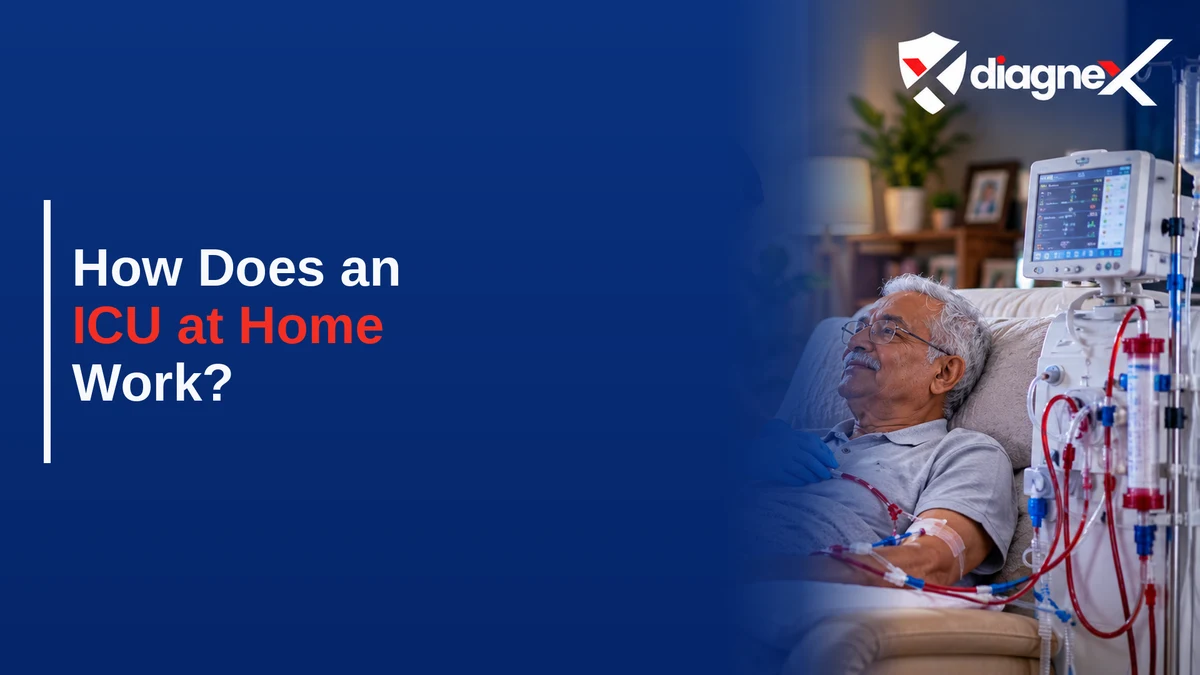
An ICU at home works by moving selected parts of high-acuity care - such as trained nursing, monitoring, oxygen or ventilatory support, suction, infusion equipment and repeated clinical procedures - into the patient’s home under a treating-professional plan. The process is not simply “rent ICU equipment and send a nurse.” A safe home ICU setup starts with patient selection. The treating team must decide that the patient is stable enough for care outside hospital. The home must then be assessed, the required equipment and staffing arranged, prescriptions and device plans clarified, the patient transferred safely, and a daily monitoring and escalation system put in place.
A hospital ICU can provide immediate imaging, laboratory testing, emergency procedures, resuscitation, specialist teams and rapid escalation that a home cannot automatically reproduce. Home ICU care therefore works best for selected patients whose required bedside support can be delivered safely at home and whose care plan includes a clear route back to hospital if the condition changes. For a broader explanation of what Home ICU means, see What Is Home ICU Care? A Complete Guide for Families.
The Short Answer: How Does Home ICU Work Step by Step?
- 1
- The treating team confirms that home is an appropriate setting
- 2
- The patient’s nursing, respiratory, monitoring and procedure needs are mapped
3. The home and room are assessed for space, power, oxygen safety and access. 4. Required equipment, medicines and consumables are arranged. 5. Nurses and other professionals are scheduled.
6. The patient is transferred from hospital to the prepared home environment. 7. The home team performs an initial assessment and verifies the care plan. 8. Daily care, monitoring, documentation and treating-team review continue.
9. The plan is stepped down, changed or escalated back to hospital as the patient’s condition changes. The exact pathway varies because “Home ICU” is not one fixed package. A stable patient needing oxygen, monitoring and 12-hour nursing may need a very different setup from a ventilator-dependent patient with a tracheostomy and 24-hour nursing.
Step 1: The Treating Team Decides Whether Home Is Appropriate
Home ICU begins with a clinical decision, not an equipment list. Before discharge or transfer, the treating doctor or hospital team should consider whether the patient can be supported safely outside the hospital. Questions may include: Is the patient haemodynamically stable?
Are oxygen or ventilator requirements reasonably stable? Does the patient need immediate access to hospital-only diagnostics? Are emergency procedures likely to be needed? Can required medicines and procedures be delivered at home? Can deterioration be recognised early?
Can the patient be transferred back to hospital if necessary? Can the family and home environment support the care model? AHRQ’s Hospital at Home framework similarly begins with eligibility assessment rather than assuming that every hospitalised patient can receive advanced care at home. A patient who is rapidly deteriorating, needs escalating organ support, requires immediate surgery or needs frequent hospital diagnostics may not be a suitable Home ICU candidate. Home preference matters, but it does not replace clinical suitability.
Step 2: The Required Level of Care Is Mapped
Once home is considered appropriate, the next step is to define exactly what the patient needs. This is where a useful Home ICU plan becomes patient-specific. The provider should not begin with “Which ICU package do you want?” It should begin with “What does this patient require, and which of those requirements can be safely supported at home?”
- Nursing hours
- Oxygen
- BiPAP or CPAP
- Mechanical ventilation
- Suction
- Tracheostomy care
- Multiparameter monitoring
- IV therapy
- Infusion pumps
- Wound care
- Catheter care
- Tube feeding
- Blood glucose monitoring
- Blood tests
- Physiotherapy
- Pressure-injury prevention
- Doctor review
- Consumables
- Emergency backup
Who Decides What Equipment Is Needed?
The treating plan should drive the equipment. The family may have preferences about brands, rental periods or room layout, but clinical equipment should not be selected solely from a catalogue. For example: Oxygen support should follow the prescribed requirement.
A ventilator should be arranged only when clinically indicated. An infusion pump should have a defined treatment purpose. A cardiac or multiparameter monitor should be linked to a monitoring plan. Suction equipment should be connected to airway or secretion-management needs. Diagnex’s Home ICU Setup pathway follows this principle: the setup is reviewed against the treating doctor’s advice and the actual room rather than being sold as one standard bundle.
Step 3: The Home and Patient Room Are Assessed
A Home ICU can fail operationally even when the treatment plan is medically reasonable if the home cannot support the equipment and staff. The home does not need to resemble a hospital. It needs to function safely as a care environment.
- Space around the bed
- Electrical outlets
- Power backup
- Ventilation
- Oxygen placement
- Access for a nurse
- Access for physiotherapy
- Storage for medicines and consumables
- Clean procedure area
- Suction and respiratory equipment placement
- Cable and tubing safety
- Bathroom access
- Patient-transfer route
- Lift or staircase access
- Ambulance or transport access
Room Layout Matters
The bed is usually the centre of the setup. Placing the bed tightly against furniture or filling the room with unnecessary devices can make care harder. A practical setup often works better than the most visually “medical” setup.
- Nurses to work safely
- Patient repositioning
- Procedures
- Equipment checks
- Emergency access
- Physiotherapy or transfers where relevant
Power Planning Happens Before the Patient Comes Home
- Ventilator
- BiPAP
- Oxygen concentrator
- Suction machine
- Infusion pump
- Multiparameter monitor
- Electric hospital bed
- MedlinePlus notes that oxygen concentrators depend on electricity and recommends backup oxygen planning for home users
- Battery runtime
- UPS or inverter capacity
- Whether a generator is needed
- Which devices are life-support critical
- Which equipment has internal batteries
- What happens during a long power outage
- Who to contact if equipment fails
Step 4: Equipment and Supplies Are Installed
Once the room and care needs are clear, the required equipment can be delivered and installed. The setup also needs consumables. A device without the necessary consumables and maintenance plan is not a complete setup.
- Hospital bed
- Pressure-relieving mattress
- Oxygen concentrator
- Oxygen cylinders
- BiPAP or CPAP
- Home ventilator
- Suction machine
- Cardiac or multiparameter monitor
- Pulse oximeter
- Syringe pump
- Infusion pump
- IV stand
- Nebuliser
- Feeding equipment
- Other patient-specific devices
- Oxygen masks or nasal cannulae
- Ventilator circuits
- Filters
- Suction catheters
- Syringes
- Dressing kits
- Gloves
- Catheters
- Feeding supplies
- IV supplies
- Disposable underpads
Equipment Should Be Tested Before the Patient Arrives
- The equipment powers on correctly
- Alarms work
Prescribed settings can be applied. Oxygen supply is available. Backup equipment is present where required. Suction works. Monitoring displays correctly.
Tubing and circuits are available. The nurse knows the device being used. Contact details for equipment support are available. This reduces the chance that the family discovers a missing component after the patient reaches home.
Step 5: Nursing and Other Professionals Are Scheduled
Home ICU is not only equipment. A large part of the model is the people who use, monitor and coordinate the equipment. The correct model depends on how much skilled nursing work is required across the day. For that decision, see Short-Visit Nurse vs Full-Shift Nurse: Which One Is Needed?
- Trained nurse
- Critical-care experienced nurse
- Attendant for non-clinical support
- Treating doctor
- Visiting doctor
- Physiotherapist
- Respiratory professional where relevant
- Phlebotomist
- Equipment technician
- Care coordinator or Care Manager
- Procedure-only visits
- 12-hour nursing
- Night nursing
- 24-hour nursing cover
- A combination of nursing and attendant support
What Does the Nurse Do in a Home ICU?
- Monitoring vital signs
- Administering prescribed medicines
- Managing IV therapy
- Observing respiratory status
- Tracheostomy-related care
- Suction-related care
- Catheter care
- Tube-feeding support
- Wound dressing
- Pressure-area prevention
- Blood glucose checks
- Fluid-balance monitoring
- Documentation
- Handover
- Escalation of changes to the treating team
Step 6: Hospital-to-Home Handover Is Completed
The safest Home ICU transition starts before the patient leaves hospital. The home team should receive the information needed to continue care without rebuilding the plan from memory. The family should also understand which medicines have stopped, which have changed and which procedures are due first after discharge. For broader transition planning, see Clinical Procedures at Home After Hospital Discharge.
- Discharge summary
- Current diagnosis
- Current medicine list
- Prescriptions
- Oxygen prescription
- Ventilator or BiPAP settings where relevant
- Tracheostomy details
- IV access details
- Catheter or tube information
- Wound-care plan
- Monitoring targets
- Recent investigations
- Follow-up plan
- Emergency and escalation instructions
- Treating-doctor contact route
The Patient Transfer Should Be Planned Around Clinical Need
Some patients can travel in a standard medical transport arrangement. The transfer method should match the patient’s stability and support needs. Home ICU should not begin with an unsafe journey from hospital to home.
- Oxygen during transfer
- Monitoring
- Trained transport staff
- Ventilator support
- Suction availability
- A higher-acuity ambulance
Step 7: The First Home Assessment Confirms the Setup
- Patient identity
- Current clinical status
- Vital signs
- Oxygen or ventilator support
- Device sites
- Medication schedule
- IV access
- Catheter or feeding tube
- Skin and pressure areas
- Room layout
- Equipment function
- Backup power and oxygen
- Consumables
- Caregiver understanding
- Emergency contacts
Baseline Readings Matter
The nurse or clinician should know what the patient’s expected baseline looks like. A single abnormal number can be less informative than a significant change from the patient’s expected pattern. That is why the care plan should define which readings require observation, which require a call and which require urgent transfer.
- Heart rate
- Blood pressure
- Oxygen saturation
- Respiratory rate
- Temperature
- Blood glucose
- Neurological status
- Urine output
- Ventilator parameters
- Pain
- Level of alertness
Step 8: Daily Home ICU Care Begins
Once the setup is stable, care becomes a daily operating system rather than a one-time installation. The schedule should reflect the patient’s actual clinical needs. A patient should not be monitored constantly simply because equipment is available, and necessary observations should not be skipped because the patient appears comfortable.
- Medication administration
- Vital-sign monitoring
- Oxygen or ventilator checks
- Airway and secretion care
- Tube feeding
- Catheter care
- Wound or pressure-area care
- Blood glucose monitoring
- IV therapy
- Physiotherapy
- Position changes
- Fluid-balance tracking
- Doctor updates
- Consumable replacement
- Equipment checks
- Documentation and nursing handover
How Does Monitoring Work in an ICU at Home?
- 1
- Measure the right things
- 2
- Compare them with the patient’s expected range
3. Know what action follows an abnormal change. A monitor displaying numbers is only useful when the team knows what those numbers mean for that patient.
- Heart rate
- Blood pressure
- Oxygen saturation
- Respiratory rate
- Temperature
- Blood glucose
- Urine output
- Fluid balance
- Neurological status
- Pain
- Ventilator parameters
- Wound or device findings
- Repeat observation
- A nurse call to the doctor
- A same-day medical review
- An urgent hospital transfer
Trend Matters More Than One Number
A single reading can be misleading. For example, oxygen saturation may vary with movement, probe position or the patient’s underlying lung disease. Blood pressure may also fluctuate with medicines, pain or hydration. The nurse should look for clinically meaningful changes and trends rather than reacting mechanically to every isolated number. The escalation threshold should still come from the patient’s clinical plan.
How Does Doctor Oversight Work?
Home ICU remains medically directed care. Decide whether the patient needs hospital assessment. Decide when the patient can step down to lower-intensity care. The exact cadence depends on patient stability. A more recently discharged or clinically complex patient may need closer review than a stable long-term patient.
- Review the patient after discharge
- Adjust medicines
- Review blood tests
- Review ventilator or oxygen requirements
- Set monitoring targets
- Order procedures
- Review infections or new symptoms
- Scheduled home visits where available
- Teleconsultation
- Phone coordination
- Review of nursing updates
- Review of investigations
- Hospital follow-up
How Do Nurses and Doctors Communicate?
- New fever
- Increasing oxygen requirement
- Low blood pressure
- New confusion
- Reduced urine output
- New wound or device concerns
- Repeated ventilator alarms
- Increasing secretions
- Medication reactions
- New swelling or bleeding
- A significant change in blood glucose
- Another deviation from the expected recovery plan
Shift Handover Keeps the Care Plan Continuous
When nursing is provided in shifts, every change of nurse creates a potential information gap. The purpose is continuity. A 24-hour service loses much of its value if each new nurse starts without knowing the previous shift.
- Current patient status
- Recent vital signs
- Oxygen or ventilator support
- Medicines given
- IV infusions
- Procedures completed
- Wound or device findings
- Fluid balance
- New symptoms
- Calls made to the doctor
- Pending medicines or procedures
- What requires closer observation next
How Are Medicines Managed?
Home ICU patients may have complex medication schedules. The home team should work from one current medication plan. Old prescriptions should not remain mixed into the active medicine list without clear labelling. Changes should come from the appropriate treating professional.
- Oral medicines
- Injections
- IV medicines
- Nebulised medicines
- Insulin
- Anticoagulants
- Antibiotics
- Pain medicines
- Other prescribed treatments
- Medicine
- Dose
- Route
- Frequency
- Infusion rate
- Treatment duration
How Does IV Therapy Work in Home ICU?
Selected patients may receive IV medicines or fluids at home. IV treatment should not be started simply because the patient appears weak or dehydrated. The treatment needs a clinical indication and authorised plan.
- Peripheral IV cannula
- PICC line
- Central venous catheter
- Port
- Infusion pump
- Syringe pump
- A clear prescription
- Appropriate vascular access
- Aseptic technique
- Correct dose and rate
- Monitoring of the IV site
- Monitoring for medicine reactions
- Clear line-care instructions
- A plan if access fails
How Does Tracheostomy or Airway Care Work?
- Observation of the stoma
- Humidification
- Suction when indicated
- Monitoring secretions
- Checking ties or fixation
- Skin care
- Ventilator connection care where relevant
- Backup airway equipment
- Airway care carries more risk than routine bedside nursing
- Who is trained to suction
- What backup equipment is available
- What signs suggest blockage or displacement
- What to do if the patient cannot be ventilated
- When emergency services are required
How Does Ventilator Care Work Day to Day?
- Ventilator settings
- Mode
- Alarm parameters
- Oxygen connection where prescribed
- Humidification
- Circuit-change or filter instructions
- Battery backup
- Power backup
- Backup ventilation plan
- Airway-care responsibilities
- Who to contact for technical malfunction
- Who to contact for clinical deterioration
What Does the Family Do?
Family members are usually important to the care model, but they are not expected to become an ICU team. Understanding what requires urgent escalation. Family members may be trained for selected tasks. They should not be expected to perform invasive or high-risk procedures unless they have received specific patient-level training and the care plan permits it.
- Understanding the care plan
- Keeping emergency numbers accessible
- Helping coordinate medicines and supplies
- Reporting changes in the patient’s usual behaviour
- Supporting nutrition and comfort
- Helping with approved daily-care tasks
- Keeping the care area organised
- Helping with appointments
What Should Families Not Be Expected to Manage Alone?
- Unfamiliar ventilator changes
- Tracheostomy emergencies
- IV cannulation
- Central-line procedures
- Complex infusion changes
- New suction plans
- Prescription changes
- Emergency resuscitation decisions
- Clinical deterioration without an escalation pathway
How Does Infection Control Work in an ICU at Home?
- IV lines
- Urinary catheters
- Tracheostomy
- Feeding tubes
- Wounds
- Suction equipment
- Reusable monitoring equipment
- Medication preparation
- Sharps
- Hand hygiene
- Clean preparation
- Aseptic or sterile technique where indicated
- Safe injection practice
- Appropriate personal protective equipment
- Cleaning of reusable equipment
- Correct sharps disposal
- Safe handling of contaminated waste
- For a detailed family-facing explanation, see How Infection Control Works During a Clinical Procedure at Home
How Are Supplies Replenished?
- Syringes
- IV sets
- Cannulas
- Dressings
- Suction catheters
- Ventilator circuits
- Filters
- Gloves
- Catheter supplies
- Feeding supplies
- Disinfectants
- Oxygen accessories
- Who monitors stock
- Who orders replacements
- How much backup stock is needed
- Which items have expiry dates
- Which items require refrigeration or controlled storage
- Who supplies emergency backup items
How Does Physiotherapy Fit Into Home ICU?
Many patients need rehabilitation alongside medical support. The patient’s rehabilitation plan should match medical stability. A patient may initially require advanced respiratory or nursing support and later shift toward greater rehabilitation as the condition improves.
- Chest clearance where indicated
- Bed mobility
- Positioning
- Range of motion
- Strength
- Transfer training
- Sitting balance
- Gradual mobilisation
How Does the Care Plan Change Over Time?
Home ICU should be reviewed rather than left unchanged indefinitely. Other needs may increase temporarily. For example: Wound care may become more frequent. Physiotherapy may intensify.
A new infection may require additional monitoring. A new device problem may need specialist review. The care model should respond to the patient rather than forcing the patient to fit the original package.
- Oxygen
- Ventilator support where clinically appropriate
- Monitoring intensity
- Nursing hours
- IV treatment
- Procedure frequency
- Equipment
Step 9: The Patient Is Stepped Down, Continued or Escalated
Step-Down Care
- 24-hour nursing to 12-hour nursing
- 12-hour nursing to procedure visits
- Ventilator support to lower respiratory support where clinically appropriate
- Continuous monitoring to intermittent monitoring
- Multiple devices to fewer devices
Continued Long-Term Home ICU
Some patients have chronic high-dependency needs and may remain on an advanced home-care model for longer periods. Complex tracheostomy needs. Long-term care still needs periodic reassessment.
- Long-term ventilation
- Severe neurological disability
- Chronic respiratory failure
Hospital Escalation
A patient may need transfer back to hospital when home is no longer sufficient. Need for urgent imaging or hospital-only diagnostics. Need for surgery or invasive procedures. Another significant acute deterioration. In India, call 112 or go to the nearest appropriate emergency facility when emergency care is required. Home ICU should never delay hospital treatment when hospital-level care is needed.
- Severe breathing difficulty
- Increasing ventilator or oxygen requirement beyond the home plan
- Airway obstruction or displacement
- Loss of consciousness
- Seizure
- New stroke-like symptoms
- Uncontrolled bleeding
- Haemodynamic instability
- Severe infection or suspected sepsis
- A major device complication
How Does ICU at Home Differ From a Normal Home Nursing Service?
- One injection
- One dressing
- One short procedure
- Day nursing
- Night nursing
- Medication support
- Basic monitoring
- Higher clinical dependency
- Advanced respiratory support
- More complex devices
- More frequent monitoring
- Infusion equipment
- Tracheostomy or airway care
- Closer doctor coordination
- More intensive nursing coverage
- More complex emergency planning
How Does ICU at Home Differ From a Hospital ICU?
The bedside may look similar in some ways. The surrounding system is different. Home ICU does not automatically reproduce this infrastructure. That is why patient selection and escalation planning are central to how ICU at home works.
- Hospital bed
- Monitoring
- Oxygen
- Ventilator
- Suction
- Infusion pumps
- Trained nursing
- Intensivists and multiple specialists
- Emergency resuscitation teams
- Imaging
- Laboratory services
- Blood bank
- Operating theatres
- Advanced invasive procedures
- Rapid organ-support escalation
What Can Go Wrong Operationally?
- Equipment delivered but not tested
- No backup power
- No backup oxygen
- Nurse unfamiliar with the equipment
- Missing consumables
- Conflicting prescriptions
- No clear doctor contact
- Poor shift handover
- No hospital escalation plan
- Family unsure which alarms matter
- Insufficient room access
- No plan for equipment maintenance
- A good setup tries to find these weaknesses before the patient comes home
What Should Families Ask Before the Patient Is Discharged?
Ask: Has the treating team agreed that home is appropriate? What equipment is required? What equipment is backup? How many nursing hours are needed?
Who is the treating doctor after discharge? How are medical reviews arranged? What are the oxygen or ventilator instructions? Which procedures continue at home? What medicines and supplies are needed?
Who provides consumables? How is power failure managed? What happens if the ventilator or oxygen system fails? Which readings require a call? Which symptoms require hospital transfer?
Which hospital should the patient return to? How will emergency transport be arranged? When will the plan be reviewed? These questions make the operating model visible before the family commits to it.
How Diagnex Approaches the ICU-at-Home Workflow
Diagnex’s Home ICU Setup pathway is built around the patient’s treating-professional plan rather than a standard equipment bundle. Diagnex does not position Home ICU as automatically equivalent to hospital ICU or as an emergency service. Diagnex-wide operations include Mumbai, Navi Mumbai, Kolkata and Howrah, but service availability can still vary by locality and patient requirement and should be confirmed for the actual case.
If the family is unsure whether the patient needs Home ICU, ordinary home nursing or another care pathway, use Find the Right Care. For the broader definition of Home ICU, read What Is Home ICU Care? A Complete Guide for Families. For post-discharge transition planning, read Clinical Procedures at Home After Hospital Discharge. For infection-control expectations, read Home Clinical Procedure Safety Checklist for Families.
- Clinical requirement
- Nursing requirement
- Equipment and respiratory support
- Home readiness
- Procedures
- Monitoring
- Consumables
- Coordination
- Follow-up
Frequently Asked Questions
How does ICU at home work?
Who decides if a patient can move to ICU at home?
What equipment is installed for Home ICU?
Does ICU at home include 24-hour nurses?
It can. Some patients need 24-hour nursing cover, while others may need 12-hour nursing or shorter clinical visits. The nursing model should match actual dependency.
How is a ventilator managed at home?
How do doctors monitor a Home ICU patient?
What happens if the patient becomes worse at home?
Can Home ICU be set up before discharge?
How long does Home ICU continue?
Is ICU at home an emergency service?
No. Home ICU is planned advanced care for selected patients. It should not replace emergency medical services or hospital critical care when those are needed.
The Bottom Line
ICU at home works as a coordinated care system. The patient is first assessed for suitability. The required nursing, equipment, respiratory support, monitoring, procedures and medical oversight are defined. The home is prepared. Equipment and backup systems are installed.
The hospital hands over the current clinical plan. Nurses deliver daily care, monitor changes, document what happens and escalate concerns. The treating team reviews the patient and adjusts the plan. As the condition changes, care is stepped down, continued or moved back to hospital. The success of Home ICU therefore depends less on how many machines are placed beside the bed and more on whether the patient, people, equipment, information and escalation pathway work together.