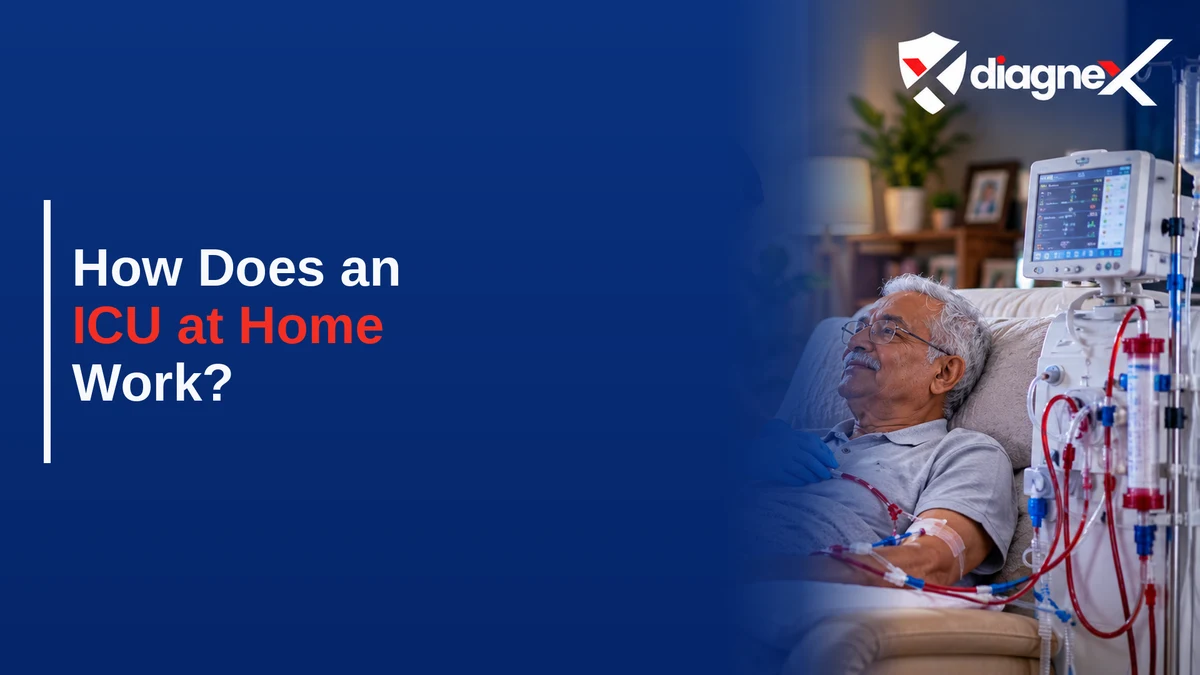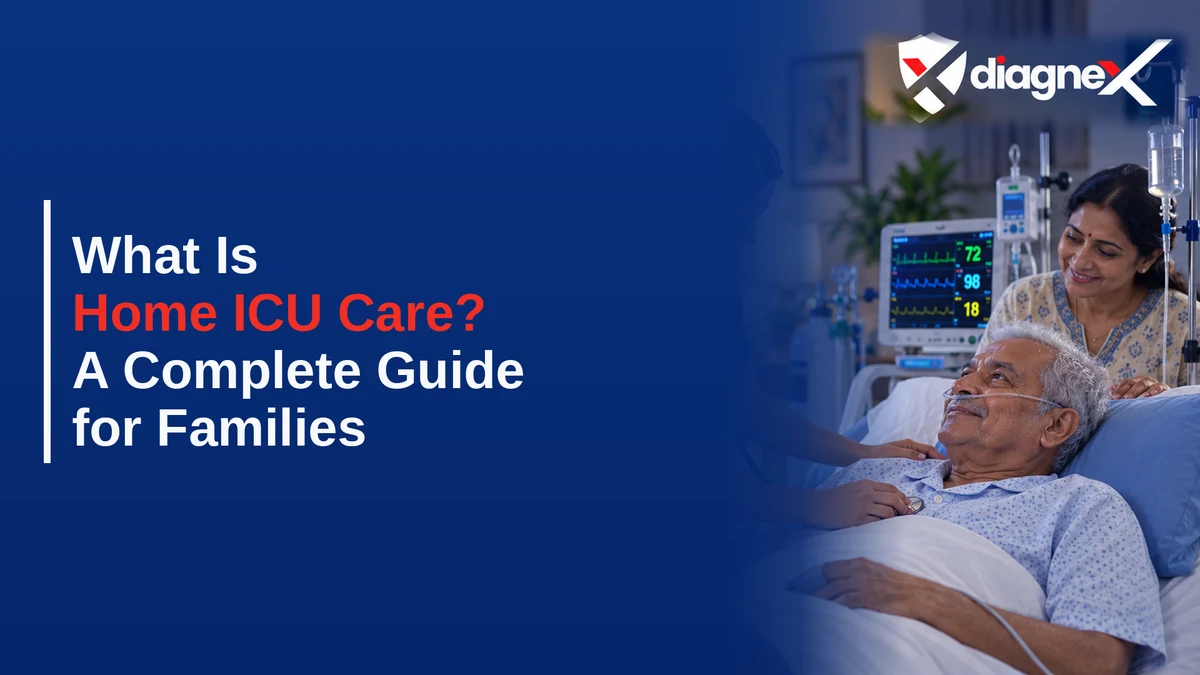
Home ICU care is a structured form of advanced care at home for selected patients who still need significant nursing, monitoring, respiratory support, medical equipment or repeated clinical procedures but do not necessarily need to remain inside a hospital ICU. The phrase can sound as though a hospital intensive care unit is simply recreated inside a bedroom. That is not the safest way to understand it.
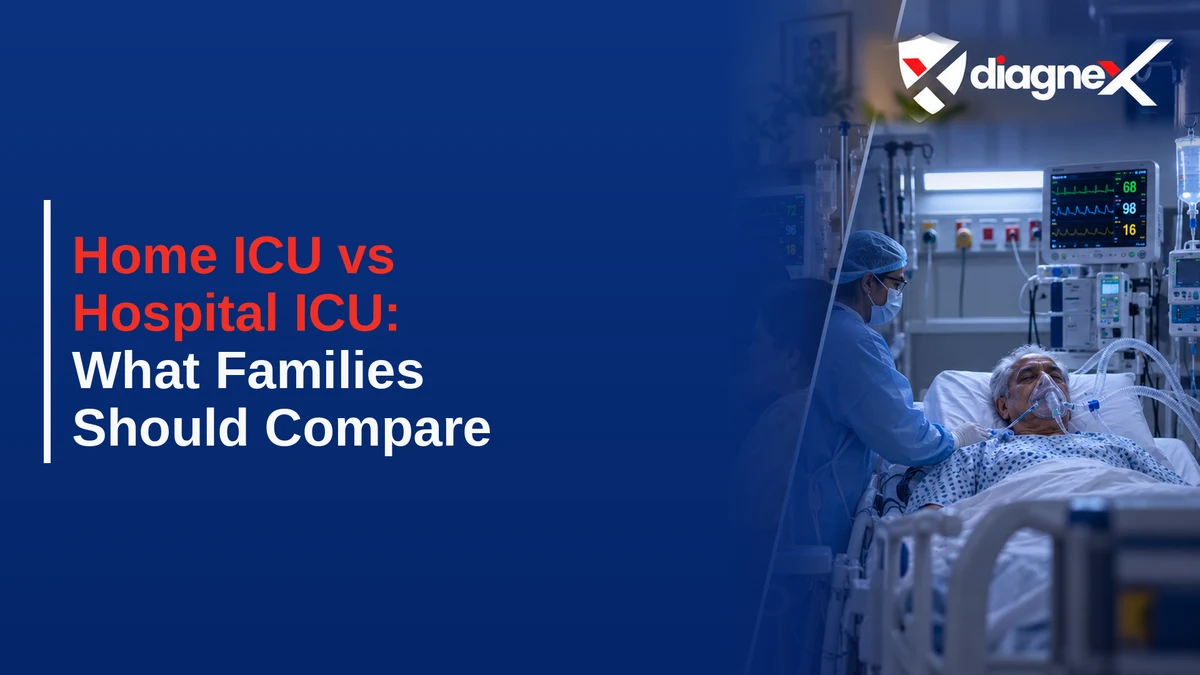
A hospital ICU has immediate access to intensivists, emergency resuscitation, imaging, laboratory testing, operating theatres, blood-bank support, multiple specialist teams and rapid escalation to other hospital departments. A home can support selected parts of high-acuity care - such as trained nursing, oxygen or ventilatory support, multiparameter monitoring, suction, infusion equipment and doctor-directed treatment - but it cannot automatically reproduce every capability of a hospital ICU. For families, the most useful definition is this:
Home ICU care is a patient-specific advanced-care arrangement that brings the equipment, trained people, monitoring and coordination required by the treating plan into the home when the patient is stable enough and the treating team agrees that home is an appropriate setting. The exact setup can range from a hospital bed, oxygen support and trained nursing after discharge to a more complex arrangement involving ventilatory support, tracheostomy care, suction, monitoring, infusion pumps and 24-hour nursing. This guide explains what Home ICU care includes, who may be suitable, what equipment and professionals can be involved, how the home needs to be prepared, and when hospital critical care remains the safer choice.
What Does “Home ICU” Actually Mean?
“Home ICU,” “ICU at home” and “critical care at home” are commonly used service terms rather than one universally standardised clinical package. That matters because two providers can use the phrase “Home ICU” for very different levels of care. The label alone is therefore not enough. Families should ask what clinical capabilities, staffing, equipment, monitoring and escalation arrangements are actually included.
- A hospital bed
- Oxygen concentrator
- Pulse oximeter
- Daytime nursing
- Physiotherapy
- Periodic doctor review
- A multiparameter monitor
- BiPAP or ventilator
- Oxygen backup
- Suction machine
- Infusion pump
- Tracheostomy-related care
- Critical-care experienced nursing
- 24-hour cover
- Repeated clinical procedures
- Closer treating-team oversight
Home ICU Is Not Automatically the Same as a Hospital ICU
This is the most important boundary to understand. A Home ICU setup may reproduce selected bedside capabilities, but it does not automatically reproduce the hospital around them. Diagnex therefore describes Home ICU Setup as patient-specific advanced care at home and explicitly states that it is not automatically the same as a hospital ICU, not a replacement for the treating doctor and not an emergency service. AHRQ’s Hospital at Home model makes a similar broader distinction: even formal hospital-level care at home requires patient selection, ongoing physician involvement, nursing support and a defined service model. Home-based acute care is not simply “hospital equipment in a house.”
- Continuous advanced monitoring
- Emergency airway management
- Resuscitation
- Invasive procedures
- Rapid blood tests
- Imaging
- Blood products
- Specialist consultations
- Operating theatre access
- Intensive organ support
- Immediate escalation across hospital departments
Home ICU vs Hospital at Home: Are They the Same?
Not necessarily. “Hospital at Home” is a formal care model in which selected patients receive acute hospital-level care at home through a structured medical program. AHRQ describes these programs as involving eligibility assessment, physician or medical-team oversight, nursing support, monitoring and other hospital-level services in the home.
“Home ICU” is often used more broadly in India to describe advanced home care built around equipment, trained nursing, respiratory support and doctor-directed treatment after the patient is considered suitable for home. The two concepts can overlap, but the terms should not be treated as interchangeable. Families should judge the actual care model rather than the marketing label.
Who May Be Suitable for Home ICU Care?
Patients Recovering After an ICU or Hospital Stay
- Oxygen
- Monitoring
- Frequent nursing
- Wound or device care
- IV-related treatment
- Physiotherapy
- Pressure-area care
- Respiratory support
For these patients, Home ICU may function as structured step-down care. The transition should ideally be planned before discharge so equipment, nursing, medicines, supplies and the first home review are ready when the patient arrives. For wider post-discharge planning, see Clinical Procedures at Home After Hospital Discharge.
Patients Needing Non-Invasive Breathing Support
Some patients use BiPAP or other non-invasive ventilation at home under specialist guidance. NHS home-ventilation services describe non-invasive ventilation as assisted mechanical ventilation provided in the home for selected patients with respiratory failure or chronic breathing problems. The machine itself is only one part of the pathway.
- Ventilator settings
- Mask selection
- Oxygen where prescribed
- Monitoring
- Secretion management
- Equipment maintenance
- Backup planning
- Specialist follow-up
Patients With an Established Tracheostomy
Selected patients with an established tracheostomy may receive ongoing care at home. MedlinePlus notes that some people with a tracheostomy and long-term ventilator needs can live at home but require substantial support from family and healthcare professionals. A stable long-term tracheostomy is different from an unstable airway. Acute tube displacement, severe breathing difficulty or other airway emergencies require urgent medical attention.
- Tracheostomy-site care
- Humidification
- Suction-related care
- Monitoring secretions
- Ventilator support where required
- Backup airway supplies
- Nursing
- Emergency planning
Patients Requiring Long-Term Ventilatory Support
Some patients need mechanical ventilation for long periods. MedlinePlus explains that certain people requiring long-term ventilator support may be managed at home, but they require significant caregiver or professional support. A ventilator should never be treated as a standalone equipment rental.
- Patient stability
- Ventilator dependence
- Airway type
- Secretion management
- Backup power
- Backup equipment
- Oxygen requirements
- Trained support
- Emergency response plan
- Specialist follow-up
Patients With Severe Mobility or Neurological Dependency
- Positioning
- Pressure-injury prevention
- Respiratory support
- Feeding-tube care
- Catheter care
- Monitoring
- Physiotherapy
- Nursing
- Prevention of avoidable complications
- For high-dependency mobility issues, see Clinical Procedures at Home for Bedridden Patients
Selected Palliative or Long-Term Support Situations
Some patients with advanced illness may have goals of care that prioritise comfort, family presence and avoiding repeated hospital transfers. In these situations, advanced home care may be considered when it aligns with the treating team’s plan and the patient’s preferences. The goal should be clear. A Home ICU setup used for palliative support is not the same as aggressive hospital critical care moved into the home.
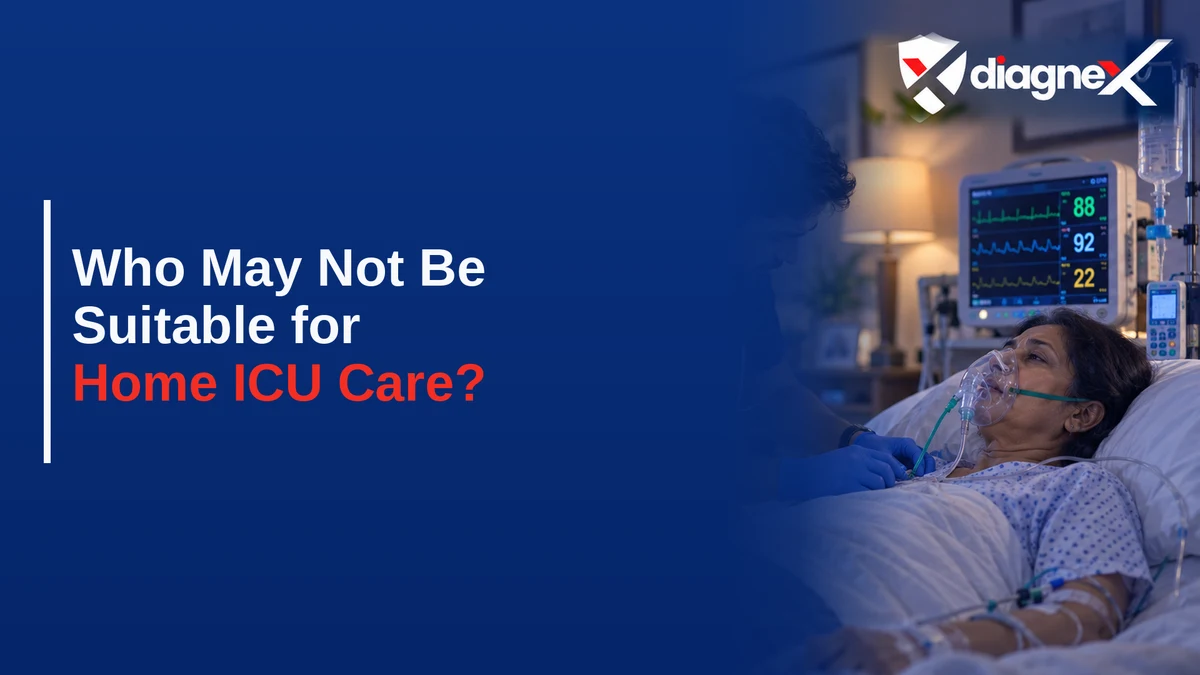
Who May Not Be Suitable for Home ICU Care?
- Is haemodynamically unstable
- Needs escalating vasopressor or advanced organ support
- Has severe or rapidly changing respiratory failure
Needs immediate access to emergency intubation or invasive procedures. Requires frequent urgent blood tests, imaging or specialist intervention. Has active major bleeding. Needs emergency surgery. Has a new severe neurological event.
Has uncontrolled seizures. Requires resuscitation-level response capability. Cannot be safely transferred back to hospital if the condition worsens. Has a home environment that cannot support required equipment or staffing. This is not an exhaustive medical eligibility list. The treating team should decide whether home is clinically appropriate. For the wider setting decision, see When Should a Procedure Be Done at Home vs in a Hospital?
What Can Be Included in a Home ICU Setup?
- Equipment
- Nursing
- Doctor-directed clinical care
- Procedures and rehabilitation
- Coordination and supplies
ICU Equipment at Home
- Automatic or manual hospital bed
- Multiparameter or cardiac monitor
- Oxygen concentrator
- Oxygen cylinders for backup or prescribed use
- BiPAP or CPAP
- Home ventilator
- Suction machine
- Syringe or infusion pump
- IV stand
- Pressure-relieving mattress
- Pulse oximeter
- Nebuliser
- Thermometer
- Other patient-specific respiratory or monitoring equipment
Not every patient needs every device. An overloaded room with unused equipment is not a better ICU. Each item should have a defined purpose in the care plan.
Hospital Bed and Positioning
- Safer positioning
- Head elevation
- Pressure-area care
- Nursing procedures
- Tube feeding
- Respiratory positioning
- Transfers
- Caregiver access
Monitoring Equipment
- Pulse oximetry
- Blood pressure
- Pulse
- Temperature
- Cardiac or multiparameter monitoring
- Blood glucose where indicated
- Other patient-specific measurements
Respiratory Support
- Oxygen therapy
- BiPAP
- CPAP for selected indications
- Mechanical ventilation
- Nebulisation
- Humidification
- Suction
- Which support is needed
- The prescribed settings
- Oxygen flow or target range where relevant
- When suction is indicated
- What alarms require action
- What backup equipment is required
- What changes require hospital review
Mechanical Ventilation at Home
A home ventilator can support selected patients who have chronic or long-term ventilatory needs. But safe ventilation at home requires much more than installing the machine. The patient’s treating team should determine whether home ventilation is appropriate.
- Patient-specific ventilator settings
- Trained nurses or caregivers
- Airway-care protocols
- Suction equipment
- Oxygen where prescribed
- Backup battery or power arrangements
- Backup oxygen where required
- Spare circuits and filters
- Emergency instructions
- Specialist review
- A plan for machine failure or acute deterioration
What Nursing Support Can Home ICU Care Require?
Nursing is often the most continuous human component of a Home ICU plan. Some patients need a few scheduled procedure visits. Others need 12-hour or 24-hour nursing cover. The nursing model should reflect actual clinical dependency rather than automatically defaulting to the longest shift. For the difference between short visits and longer shifts, see Short-Visit Nurse vs Full-Shift Nurse: Which One Is Needed?
- Repeated vital-sign monitoring
- Medication administration
- IV-related care
- Tracheostomy-related care
- Suction-related care
- Feeding-tube care
- Catheter care
- Wound dressing
- Pressure-area prevention
- Fluid-balance monitoring
- Blood-glucose monitoring
- Documentation
- Escalation of changes
- Communication with the treating team
What Does 24-Hour Home ICU Nursing Mean?
Twenty-four-hour nursing coverage usually means nursing presence is maintained across the full day through more than one shift. It should not mean one individual nurse works continuously without appropriate rest. Families should ask how the provider structures handover and who is clinically responsible when one shift ends and the next begins.
- Clear shift lengths
- Handover
- Current medication and procedure records
- Documentation of observations
- A shared escalation plan
- Continuity between nurses
What Role Does the Treating Doctor Play?
Home ICU care should remain anchored to a doctor-directed treatment plan. The home nurse can observe, perform authorised care, document and escalate. The nurse should not independently redesign the medical treatment plan. For families, this means the doctor remains clinically central even when day-to-day care happens at home.
- Diagnosis
- Treatment goals
- Medicines
- Ventilator or respiratory strategy
- Oxygen plan
- Monitoring requirements
- Investigations
- Procedures
- Follow-up
- Thresholds for hospital transfer
Does Home ICU Include a Doctor at Home All Day?
- Pre-discharge planning
- Initial home review
- Scheduled home visits where available
- Teleconsultation
- Review of reports and monitoring
- Medication changes
- Escalation decisions
- Coordination with specialists
- The exact model varies by provider and locality
What Procedures Can Be Part of Home ICU Care?
- Wound dressing
- Prescribed injections
- IV therapy
- Catheter care
- Ryle’s or nasogastric tube care
- Tracheostomy-related care
- Suction-related care
- Blood sample collection
- Blood glucose monitoring
- Nebulisation
- Device-site care
- Pressure-injury care
- Selected diagnostics or monitoring
A procedure being technically possible at home does not mean it is automatically appropriate for the patient. Prescription requirements, professional competence, infection control and escalation planning remain important. For the wider procedure guide, see Which Medical Procedures Can Be Done Safely at Home?
Nutrition and Feeding Support
High-dependency patients may need structured nutritional support. The feeding plan should come from the treating team. Caregivers should not change feed volume, concentration or schedule simply because the patient appears hungry or weak. If coughing, choking, vomiting, abdominal distension or respiratory symptoms develop during feeding, the plan may need clinical review.
- Oral feeding with assistance
- Modified-texture diets
- Ryle’s or nasogastric tube feeding
- Gastrostomy feeding
- Hydration planning
- Dietitian input
- Monitoring of tolerance and weight
Physiotherapy and Rehabilitation
A patient moving home after serious illness can lose substantial strength and mobility. Rehabilitation goals should match the patient’s diagnosis and medical stability. A patient should not remain unnecessarily bedbound simply because advanced equipment is present at home.
- Passive or active range-of-motion exercises
- Bed mobility
- Positioning
- Chest physiotherapy where indicated
- Supported sitting
- Transfer training
- Gradual mobilisation
- Strength and balance work
- Prevention of contractures
Pressure-Injury Prevention
Patients who are immobile or ventilator-dependent can have a high risk of pressure injuries. Pressure-relieving equipment supports good care but does not replace repositioning and skin assessment. For high-dependency skin and mobility issues, see Clinical Procedures at Home for Bedridden Patients.
- Individualised repositioning
- Skin checks
- Pressure-redistributing mattress
- Heel off-loading
- Moisture management
- Nutrition support
- Wound assessment
Infection Control in a Home ICU
Home ICU care often involves several invasive devices and repeated procedures. The entire home does not need to become sterile. The clinical team creates controlled working areas around procedures and devices. For a detailed guide, see How Infection Control Works During a Clinical Procedure at Home.
- Tracheostomy
- IV access
- Urinary catheter
- Feeding tube
- Wounds
- Suction equipment
- Reusable monitoring equipment
- Medication preparation
- Sharps and clinical waste
- Hand hygiene
- Appropriate clean, aseptic or sterile technique
- Safe injection practice
- Correct handling of reusable equipment
- Personal protective equipment based on exposure risk
- Environmental cleaning
- Safe waste handling
How Should a Room Be Prepared for Home ICU Care?
The room should support both clinical care and normal family life as safely as possible. The family does not need to make the room look like an ICU. The room needs to be functional, safe and compatible with the patient’s care plan.
- Enough space around the bed
- Good ventilation
- Stable electricity
- Safe oxygen placement
- Adequate lighting
- Access to hand hygiene
- A clean area for medicines and supplies
- Room for suction or respiratory equipment
- Safe cable management
- Enough access for nursing procedures
- A route for emergency transfer
- Reduced clutter
- A way to keep pets and unnecessary visitors away from procedure areas
Power Backup Is a Clinical Issue, Not Just a Convenience
Some Home ICU equipment depends on electricity. For patients who depend on respiratory equipment, power failure can become a clinical risk. MedlinePlus specifically advises home-oxygen users to have a backup plan because concentrators depend on power.
- Oxygen concentrator
- Ventilator
- BiPAP
- Suction machine
- Infusion pump
- Monitoring equipment
- Electric hospital bed
- Battery backup
- UPS or inverter support
- Generator where appropriate
- Backup oxygen
- Backup equipment
- Who to call if a device fails
- How long backup systems can run
What About Oxygen Safety?
Oxygen supports combustion. Families should follow equipment and provider safety instructions. The oxygen prescription, flow and target should come from the treating team. More oxygen is not automatically better.
- No smoking near oxygen
- Keep oxygen away from open flames
- Avoid oil or petroleum products on oxygen equipment unless specifically approved
- Store cylinders securely
- Keep equipment away from excessive heat
- Use electrical equipment safely
- Know how to switch to backup oxygen if required
What Monitoring Does a Home ICU Patient Need?
- Heart rate
- Blood pressure
- Oxygen saturation
- Respiratory rate
- Temperature
- Blood glucose
- Urine output
- Fluid balance
- Neurological status
- Pain
- Ventilator parameters
- Wound or device findings
- What is normal for this patient?
- What threshold requires a call?
- What trend requires medical review?
- What change requires hospital transfer?
- A monitor without an escalation plan adds equipment, not safety
How Often Does a Doctor Review the Patient?
There is no universal schedule. Ventilator or oxygen needs. A relatively stable long-term ventilated patient may have a different review schedule from a patient recently transferred home after a prolonged ICU stay. Families should ask for the expected review cadence before discharge.
- Diagnosis
- Stability
- Recent hospital course
- Medication changes
- Laboratory results
- Procedure burden
- Treating-team plan
How Are Blood Tests and Diagnostics Managed?
- Blood sample collection
- ECG
- Portable monitoring
- Selected other diagnostics depending on provider capability
- But Home ICU care cannot reproduce every hospital diagnostic pathway
What Happens if the Patient Deteriorates at Home?
This question should be answered before Home ICU begins. In India, call 112 or go to the nearest appropriate emergency facility when emergency care is required. Home ICU is not an emergency-response substitute.
- Which symptoms the nurse escalates immediately
- Who the treating doctor is
- Which hospital should receive the patient if transfer is required
- How transport will be arranged
- What emergency equipment is available
- What the family should do if the nurse is not present
- Which situations require calling emergency services
- Severe breathing difficulty
- Ventilator or airway failure
- Marked fall in oxygen saturation
- Loss of consciousness
- New stroke-like symptoms
- Uncontrolled bleeding
- A seizure
- Severe allergic reaction
- Rapidly worsening confusion
- Major haemodynamic instability
- Another sudden critical change
Can a Home ICU Patient Be Readmitted to Hospital?
Yes. Moving care home should not be treated as a one-way decision. Hospital readmission may be necessary if: The patient deteriorates. Monitoring needs increase.
Equipment at home is no longer sufficient. A procedure or investigation requires a facility. The airway becomes unstable. Infection becomes severe. New organ failure develops.
The care plan changes. The family can no longer safely support the home model. A good Home ICU plan includes a realistic pathway back to hospital.
How Does Home ICU Setup Usually Happen?
1. Clinical Suitability Is Confirmed
2. Care Needs Are Mapped
- Nursing hours
- Respiratory support
- Monitoring
- Devices
- Procedures
- Medicines
- Rehabilitation
- Nutrition
- Doctor review
- Caregiver responsibilities
3. The Home Is Assessed
- Room size
- Bed access
- Electricity
- Power backup
- Oxygen safety
- Equipment layout
- Bathroom and mobility access
- Emergency transfer route
4. Equipment Is Arranged
5. Nursing and Other Professionals Are Coordinated
- Nurses
- Physiotherapist
- Respiratory therapist where relevant
- Doctor follow-up
- Phlebotomy
- Equipment technicians
- Care coordination
6. Medicines and Consumables Are Prepared
- Which medicines are supplied
- Which must be purchased
- Which consumables are included
- Which items need recurring replacement
7. Handover Happens From Hospital to Home
- Discharge summary
- Medicine list
- Ventilator or oxygen plan
- Device details
- Procedure schedule
- Recent investigations
- Escalation instructions
8. The First Home Review Confirms the Setup
9. The Plan Is Reviewed Over Time
How Quickly Can a Home ICU Be Set Up?
There is no universal safe setup time. Need for home assessment. Doctor coordination. Transport. A provider advertising a fixed “ICU setup in X hours” should be able to explain what that promise includes and whether it applies to the patient’s actual requirements. Diagnex should confirm timing for the specific case rather than publishing a universal response-time guarantee.
- Patient stability
- Discharge timing
- Equipment availability
- Ventilator or oxygen requirements
- Nursing availability
- Locality
- Power-backup readiness
- Consumables
What Does Home ICU Care Cost?
- Nursing hours
- Equipment rental
- Ventilator or respiratory support
- Oxygen
- Monitoring
- Infusion equipment
- Procedures
- Doctor review
- Physiotherapy
- Consumables
- Medicines
- Diagnostics
- Emergency backup planning
- Equipment
- Staffing
- Consumables
- Medicines
- Professional visits
- Diagnostics
- Maintenance
- Backup devices
- Security deposit where applicable
- Delivery and installation
- Recurring monthly costs
What Should Families Ask Before Choosing a Home ICU Provider?
- Who decides whether the patient is suitable for Home ICU?
- Who remains the treating doctor?
- What equipment is included?
- Who sets up and maintains the equipment?
- How many nursing hours are recommended and why?
- What experience do the nurses have with this patient’s devices?
- How is ventilator or tracheostomy support handled?
- What happens during a power failure?
- What backup oxygen or respiratory equipment is available?
- Who manages consumables?
- How are medicines supplied?
- How are blood tests arranged?
- How are clinical changes documented?
- How does shift handover work?
- What is the emergency-transfer plan?
- Which hospital should the patient go to if the condition worsens?
- What is the total monthly cost and what is excluded?
Home ICU vs Home Nursing: What's the Difference?
Home nursing is a broad category. A patient can need home nursing without needing Home ICU. For broader nursing support, see the Diagnex Home Nursing pathway.
- One short procedure visit
- Daytime nursing
- Night nursing
- 12-hour shifts
- 24-hour coverage
- Advanced monitoring
- Respiratory support
- Multiple devices
- Complex procedures
- More intensive nursing
- Equipment
- Closer medical coordination
Home ICU vs a Bedridden Patient Care Plan
A bedridden patient may need extensive support without needing ICU-level equipment. Home ICU becomes more relevant when advanced monitoring, respiratory support, complex devices or higher nursing dependency are added. For that distinction, see Clinical Procedures at Home for Bedridden Patients.
- Pressure care
- Wound dressing
- Catheter care
- Tube feeding
- Physiotherapy
- Attendant support
- Periodic nursing
What Are the Main Benefits of Home ICU Care?
- Reduced repeated hospital travel
- Care in a familiar environment
- Greater family presence
- Continuation of selected high-acuity support after discharge
- More flexible rehabilitation and daily routines
- Potentially easier long-term coordination of nursing and equipment
- Reduced exposure to the hospital environment for selected stable patients
What Are the Main Limitations?
- No immediate access to the full hospital diagnostic infrastructure
- Emergency transfer takes time
Specialists are not physically present at all times. Equipment depends on home power and maintenance. Caregiver burden can be substantial. The quality of nursing and coordination becomes critical. Some complications cannot be managed at home.
Home layout can limit what equipment is practical. Costs can remain significant for long-term 24-hour care. Families should understand these limits before discharge, not discover them during a crisis.
How Diagnex Approaches Home ICU Setup
Diagnex treats Home ICU as a patient-specific advanced-care pathway rather than a standard equipment bundle. The pathway also explicitly states that Home ICU is not automatically equivalent to a hospital ICU and is not an emergency service. Diagnex-wide operations include Mumbai, Navi Mumbai, Kolkata and Howrah, but Home ICU availability can still vary by locality and requirement and should be confirmed for the specific case.
If the family is unsure whether Home ICU, ordinary home nursing or a procedure-based pathway is appropriate, use Find the Right Care rather than choosing from the service name alone. For post-discharge planning, see Clinical Procedures at Home After Hospital Discharge. For procedure safety, see Home Clinical Procedure Safety Checklist for Families. For infection-control expectations, see How Infection Control Works During a Clinical Procedure at Home.
- The treating-doctor plan
- Nursing requirements
- Equipment and respiratory support where required
- Monitoring
- Clinical procedures
- Home readiness
- Coordination
- Follow-up
Frequently Asked Questions
What is Home ICU care?
Is ICU at home the same as hospital ICU?
Who can be treated in a Home ICU?
Can a ventilator be used at home?
Does Home ICU include 24-hour nursing?
What equipment is used in a Home ICU?
Can tracheostomy care be done at home?
How is an emergency handled in Home ICU?
How long can a patient stay on Home ICU care?
There is no fixed duration. Some patients need it temporarily after discharge, while others may require longer-term advanced home support. The plan should be reviewed as the condition changes.
Is Home ICU cheaper than hospital ICU?
It can have a different cost structure, but there is no universal answer. Home ICU cost depends on nursing hours, equipment, oxygen or ventilation, consumables, medicines, doctor review and other services. Compare the full care package rather than equipment rental alone.
The Bottom Line
Home ICU care can bring selected high-acuity nursing, monitoring, respiratory support, equipment and clinical procedures into the patient’s home. But the safest definition is not “a hospital ICU in the bedroom.” It is a structured, patient-specific care model for people whose condition can be supported outside the hospital under a clear treating-professional plan. And the limits of home care matter just as much as its capabilities. Families should choose Home ICU only after understanding what the patient actually needs, which hospital capabilities are no longer required continuously, and how deterioration will be recognised and escalated.
- The equipment matters
- The nursing matters
- The home environment matters
- The emergency-transfer plan matters